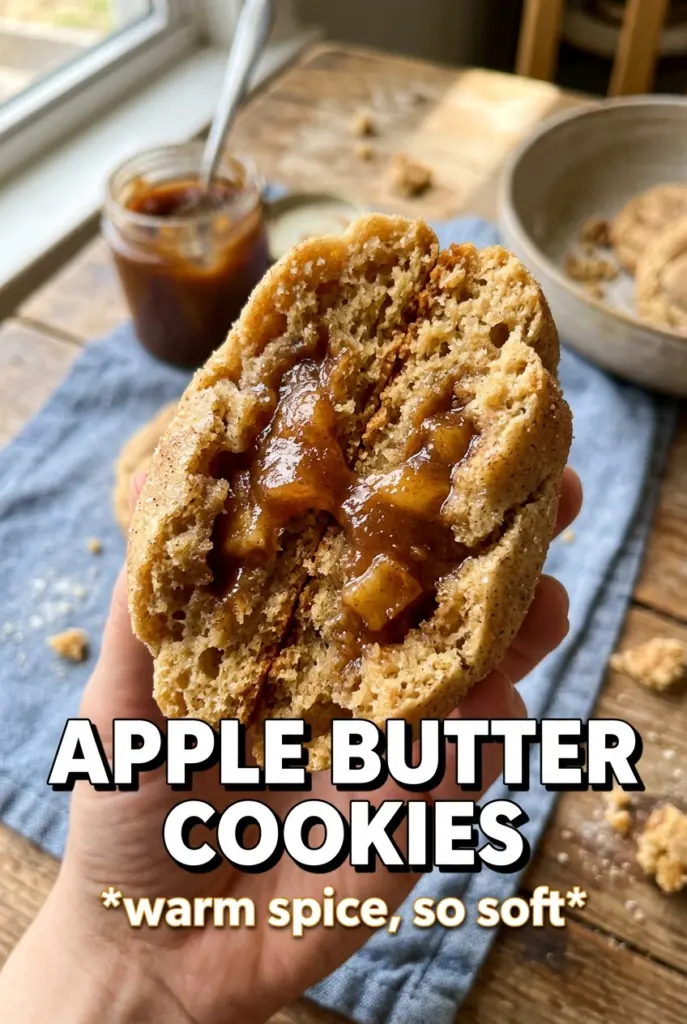
Apple butter cookies bake up soft in the center with edges that settle into a light chew and just enough cinnamon warmth to keep you reaching for another one. The apple butter does more than add flavor here; it keeps the crumb tender and gives the cookies that deep, cooked apple note you don’t get from plain applesauce. A quick roll in cinnamon sugar adds a delicate crust, and the salted caramel drizzle finishes each cookie with a little gloss and a little bite.
This dough leans soft on purpose, which is why the short chill matters if your kitchen runs warm or your apple butter is especially loose. The flour gets mixed with the spices first so the cinnamon, nutmeg, and allspice don’t clump in one bite, and the butter and brown sugar bring enough richness to keep the cookies from tasting flat. Bake them just until the edges set. If you wait for the centers to look fully done, you’ll lose the soft texture that makes these worth making.
Below you’ll find the little details that help these cookies stay tender instead of cakey, plus a few smart ways to change them up if you want to skip the caramel or make the batch fit a different pantry.
The cookies stayed soft for days, and the cinnamon sugar edge gave them this little crunch that made the salted caramel drizzle taste even better. I chilled the dough for half an hour and they baked up perfectly round.
Like these soft apple butter cookies? Save them to Pinterest for the days when you want a cinnamon-sugar cookie with a tender crumb and salted caramel finish.
The Reason These Cookies Stay Soft Instead of Drying Out
Apple butter brings concentrated moisture and cooked-down fruit flavor, which is why these cookies stay tender without turning gummy. The trick is not overworking the dough once the flour goes in. As soon as the last streaks disappear, stop mixing. If you keep going, the gluten tightens and the cookies bake up tougher than they should.
The other piece that matters is temperature. Soft butter helps the sugars cream properly, but if the dough feels sticky enough to smear on the scoop, it needs a short rest in the fridge. That pause gives the flour time to hydrate and keeps the cookies from spreading into thin, flat rounds.
What Each Ingredient Is Doing in the Bowl
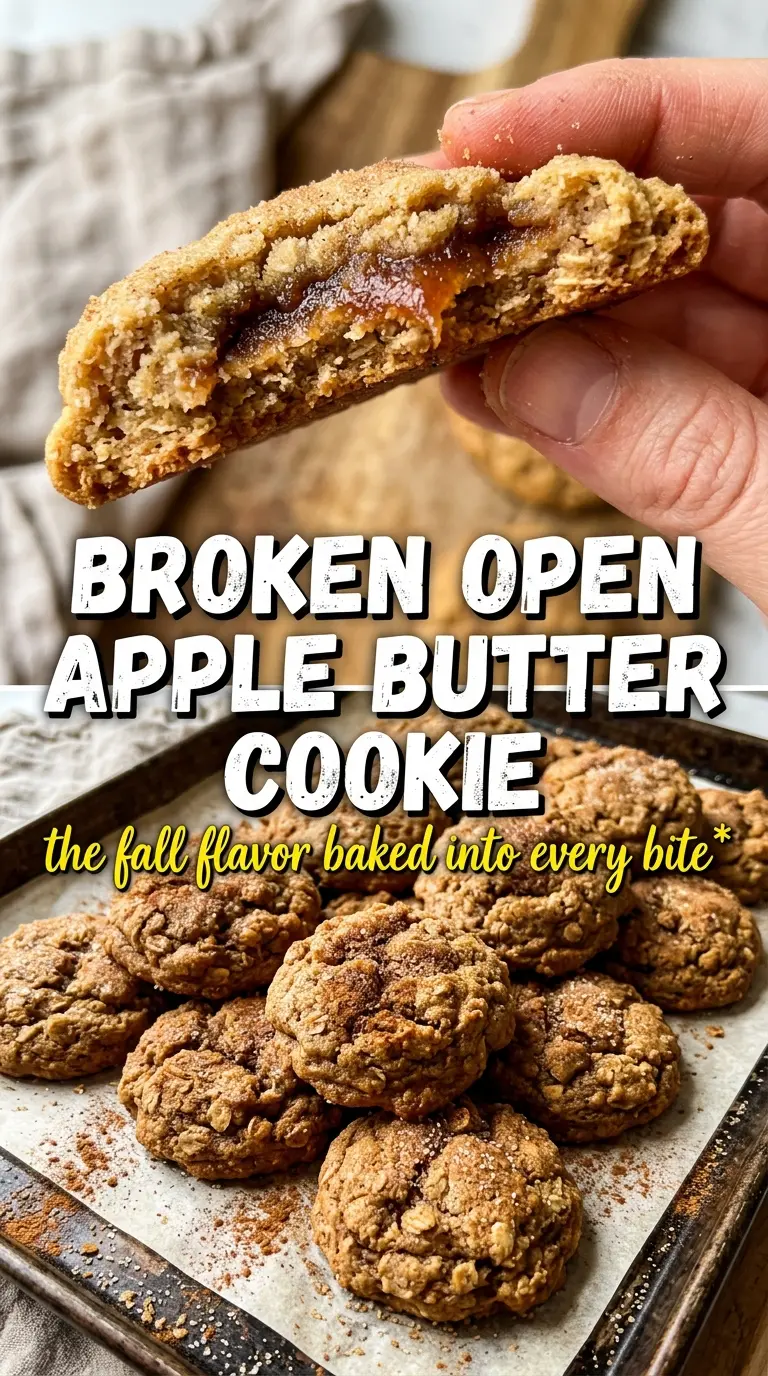
- Apple butter — This is the flavor anchor. It gives the cookies their apple depth and soft texture in a way applesauce can’t quite match, because apple butter is thicker and more concentrated.
- Brown sugar — It adds moisture and a faint molasses note that pairs well with the spice blend. If you swap in all white sugar, the cookies lose some chew and taste a little flatter.
- Butter — Use real unsalted butter here. It gives the dough structure and helps the edges bake with a light crispness while the centers stay soft.
- Flour — The amount is just enough to hold the dough together without making it bready. If your apple butter is unusually loose, add a tablespoon or two more only after chilling.
- Cinnamon, nutmeg, and allspice — These spices echo the apple butter without overpowering it. Fresh spices matter more here than in a heavily frosted cookie because there isn’t much else to hide behind.
- Salted caramel drizzle — This is the finish, not the foundation. A thin drizzle adds contrast and makes the cookies taste more layered, but they still work without it if you want a simpler cookie.
Building the Dough Without Losing the Soft Center
Start with a Smooth, Fluffy Base
Beat the butter, apple butter, brown sugar, and granulated sugar until the mixture looks lighter and a little fluffy, not greasy or separated. That step traps air, which helps the cookies rise just enough without spreading too much. Add the egg and vanilla next and mix only until they disappear into the batter. If the mixture looks curdled at this point, it usually just means the butter was a touch too cool.
Fold in the Flour Gently
Whisk the dry ingredients together first, then add them to the wet mixture in one or two additions. Stir just until the flour vanishes and the dough looks soft and slightly sticky. Overmixing here is the fastest way to end up with dense cookies, because the dough turns tighter the longer you beat it.
Chill Only If the Dough Needs It
If the dough feels sticky enough that the scoops slump immediately, refrigerate it for 30 minutes. You don’t need a hard dough; you just need one that holds a round shape long enough to hit the oven properly. If you chill it too long, let it sit at room temperature for a few minutes before rolling so the cinnamon sugar coating sticks evenly.
Bake Until the Edges Set
Roll the dough balls in the cinnamon sugar mixture and bake just until the edges look set and the tops lose their raw shine. The centers should still look a little soft when you pull the tray out. They finish setting on the pan, and that carryover heat is what keeps them tender instead of dry.
Make Them Without the Caramel Drizzle
Skip the salted caramel if you want a simpler cookie and add a little extra cinnamon to the rolling sugar instead. The cookies will taste more like a classic spice cookie with apple butter in the background, and you’ll still keep that soft center and crisp sugar edge.
Gluten-Free Version
Use a cup-for-cup gluten-free flour blend that contains xanthan gum. The cookies should hold together, though the texture will be a little more delicate and less chewy than the original.
Extra Spice, Deeper Flavor
Add another 1/4 teaspoon of cinnamon if you want the spice to sit closer to the front. Don’t push the nutmeg or allspice too far, though, or the cookies start tasting more like holiday spice than apple butter.
Storage and Reheating
- Refrigerator: Store in an airtight container for up to 5 days. The cinnamon sugar coating softens a little, but the cookies stay tender.
- Freezer: Freeze baked cookies for up to 2 months, or freeze the scooped dough balls and roll them in cinnamon sugar just before baking.
- Reheating: Warm a cookie in the microwave for 8 to 10 seconds or in a 300F oven for a few minutes. Don’t overheat them or the centers dry out and the caramel gets sticky in the wrong way.