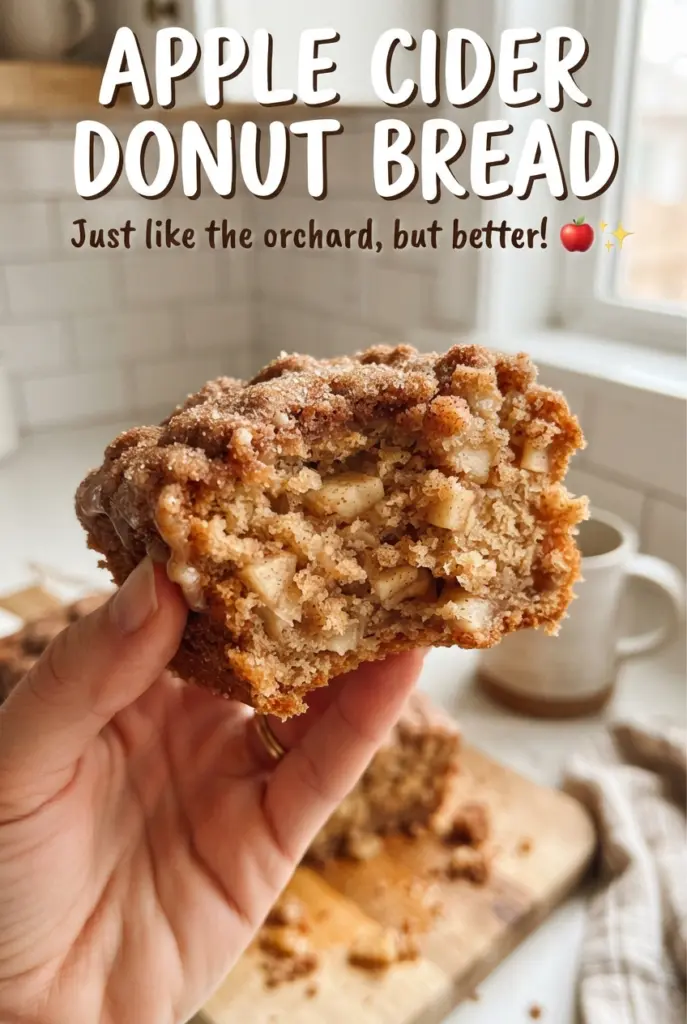
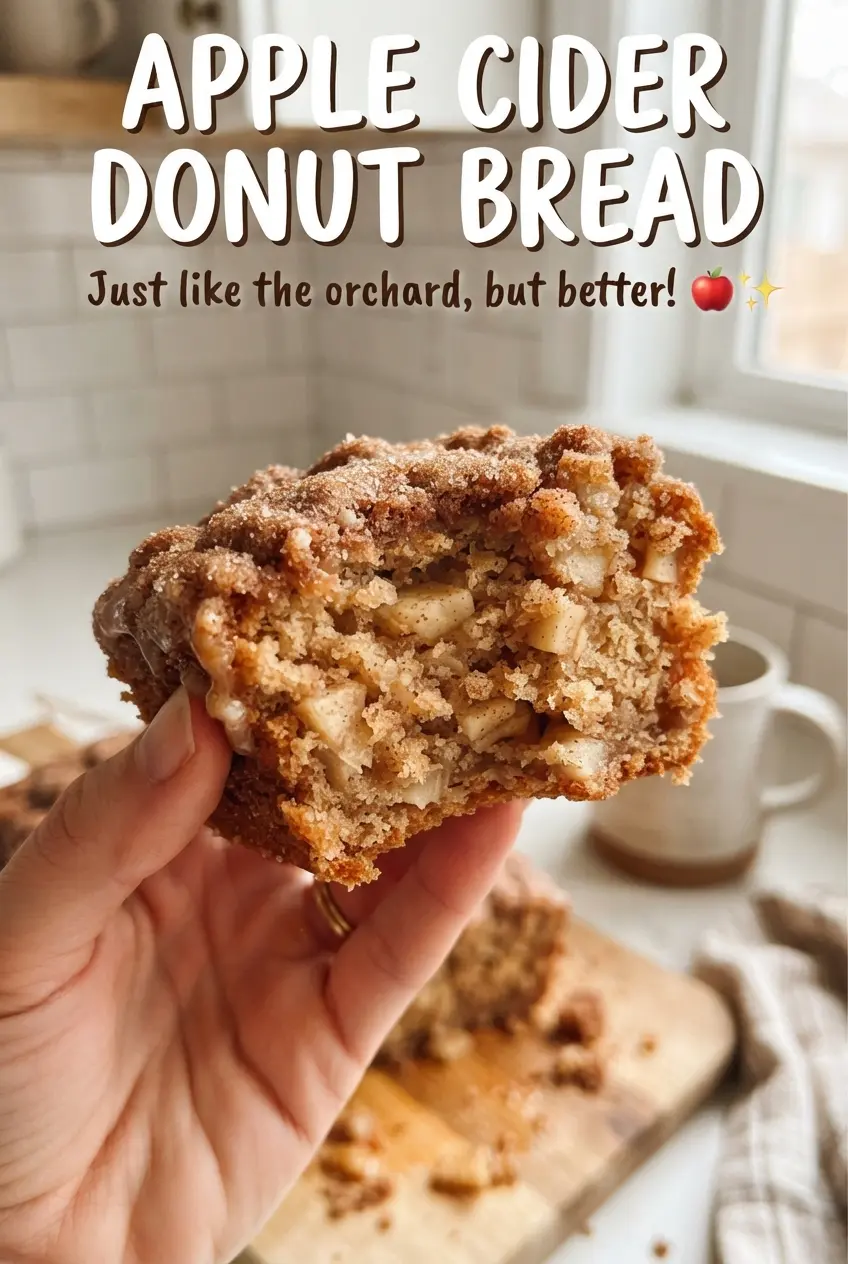
Apple Cider Donut Bread bakes up with the plush, tender crumb of a quick bread and the nostalgic finish of a cider donut. The outside gets brushed with butter and rolled in cinnamon sugar, which gives every slice that crackly, bakery-style coating that makes people cut “just one more” piece. The apple cider does more than add flavor here. Reducing it first concentrates the apple taste so it comes through after baking instead of disappearing into the batter.
The texture depends on a couple of small choices that matter. Sour cream keeps the loaf moist without making it heavy, and the reduced cider adds depth without extra liquid that could throw off the bake. The topping goes on while the loaf is still warm, which is what helps the sugar cling and form that classic donut-like crust.
Below, I’ve included the cue that tells you the cider has reduced enough, plus a few smart swaps and storage notes so the loaf stays tender instead of drying out by the second day.
The loaf came out incredibly tender, and the cinnamon sugar crust stayed crunchy even after it cooled. Reducing the cider first made the apple flavor stand out way more than I expected.
Love that cinnamon-sugar crust and tender cider crumb? Save this Apple Cider Donut Bread for the next time you want a loaf that tastes like a bakery donut in sliceable form.
The cider needs to be reduced before it goes anywhere near the batter
If you skip the reduction, the loaf can taste flat and the batter can end up looser than it should be. Apple cider sounds bold, but most of that flavor is water. Simmering it down to about half a cup concentrates the apple taste and gives the bread a deeper, more baked-in flavor that holds up against the cinnamon and nutmeg.
The other trap is adding hot cider to the eggs and butter. Let it cool before mixing it in. Warm cider can soften the butter too much and make the batter look split or greasy, which affects the final texture. You want the batter thick enough to mound in the pan, not pour like cake batter.
What each ingredient is doing in the loaf

- Apple cider — This is the flavor backbone, but only after it’s reduced. Fresh cider works best because it has more apple character to begin with; apple juice will work in a pinch, but it tastes sweeter and a little less rounded.
- Sour cream — This keeps the crumb soft and plush. Plain Greek yogurt can replace it 1:1 if that’s what you have, though the loaf will be a touch tangier and slightly less rich.
- Brown sugar — It adds moisture and a faint molasses note that makes the bread taste more like a donut and less like plain spice loaf. Dark brown sugar gives a deeper flavor if you want that.
- Butter on top — This is what makes the cinnamon sugar stick and gives the crust that crackly finish. Melted butter works better than brushing with oil because the sugar grabs it and sets into a proper coating.
- Cinnamon sugar topping — Don’t rush the warm-loaf step. If the bread cools too much, the butter sets before the sugar can cling, and you’ll lose that classic donut texture on the outside.
Building the batter without losing the tender crumb
Reducing the cider
Pour the cider into a small saucepan and simmer until it measures about half a cup. It should smell stronger and look darker, almost like apple tea, but not syrupy enough to coat the spoon heavily. Let it cool before you mix anything else, because a warm reduction can throw off the butter mixture and make the batter greasy.
Mixing the dry and wet ingredients separately
Whisk the flour, baking powder, baking soda, salt, cinnamon, and nutmeg together first so the spices are evenly distributed. In another bowl, beat the butter and brown sugar until the mixture looks fluffy and lighter in color, then add the eggs, sour cream, vanilla, and cooled cider. If the mixture looks a little curdled at this point, that’s normal and it will smooth out once the flour goes in.
Stopping at the right moment
Fold the dry ingredients in just until no streaks of flour remain. Overmixing builds gluten and turns a soft loaf chewy instead of tender. Spread the batter into the loaf pan and smooth the top so it bakes evenly. Bake until a toothpick comes out clean and the top springs back lightly when you press it with a finger.
Finishing the crust while the loaf is warm
Let the loaf rest for about 10 minutes, then brush it all over with melted butter while it’s still warm. Press the cinnamon sugar on generously, turning the loaf as needed so the coating covers the sides too. If you wait until the bread is fully cool, the topping won’t cling in the same way and you’ll lose that donut-shop finish.
How to adapt this loaf for different kitchens and schedules
Dairy-free version
Use plant-based butter and an unsweetened dairy-free yogurt in place of the sour cream. The loaf will still bake up tender, though the topping won’t have quite the same rich butter flavor, so use a little extra cinnamon sugar on the crust if you want it to taste more donut-like.
Gluten-free swap
A good 1:1 gluten-free baking blend can replace the all-purpose flour here. The texture will be a little more delicate and the crumb may be slightly tighter, but the cider and sour cream keep it from drying out as long as you don’t overbake it.
Make it into muffins
Divide the batter into a lined muffin tin and start checking for doneness around 18 to 22 minutes. You’ll get more of the crunchy sugar coating in every bite, and the bake goes faster, but you’ll lose the tall sliceable loaf shape.
Storage and Reheating
- Refrigerator: Store tightly wrapped for up to 4 days. The sugar crust softens a little in the fridge, but the loaf stays moist.
- Freezer: Freeze slices wrapped individually, then sealed in a freezer bag for up to 2 months. The topping softens after thawing, so freeze slices you plan to toast or warm later.
- Reheating: Warm slices in a 300°F oven for 8 to 10 minutes or toast gently. The biggest mistake is blasting it in the microwave, which melts the sugar coating and makes the crumb rubbery.
Answers to the questions worth asking
Apple Cider Donut Bread
Ingredients
Equipment
Method
- Simmer apple cider over medium heat for 15-20 minutes until reduced to 1/2 cup, then cool.
- Preheat the oven to 350°F, then grease and line a 9x5-inch loaf pan.
- Whisk together the all-purpose flour, baking powder, baking soda, salt, ground cinnamon, and nutmeg until evenly blended.
- Beat the softened butter and brown sugar until fluffy, about 1-2 minutes, then beat in the eggs, sour cream, vanilla extract, and the reduced cider.
- Fold in the dry ingredients just until combined, with no visible dry streaks.
- Spread the batter into the loaf pan and smooth the top for even baking.
- Bake at 350°F for 50-55 minutes, until a toothpick comes out clean.
- Cool the loaf for 10 minutes, then brush the warm loaf all over with melted butter so it adheres.
- Press the loaf into the cinnamon sugar topping mixture so you get a thick, crunchy crust.