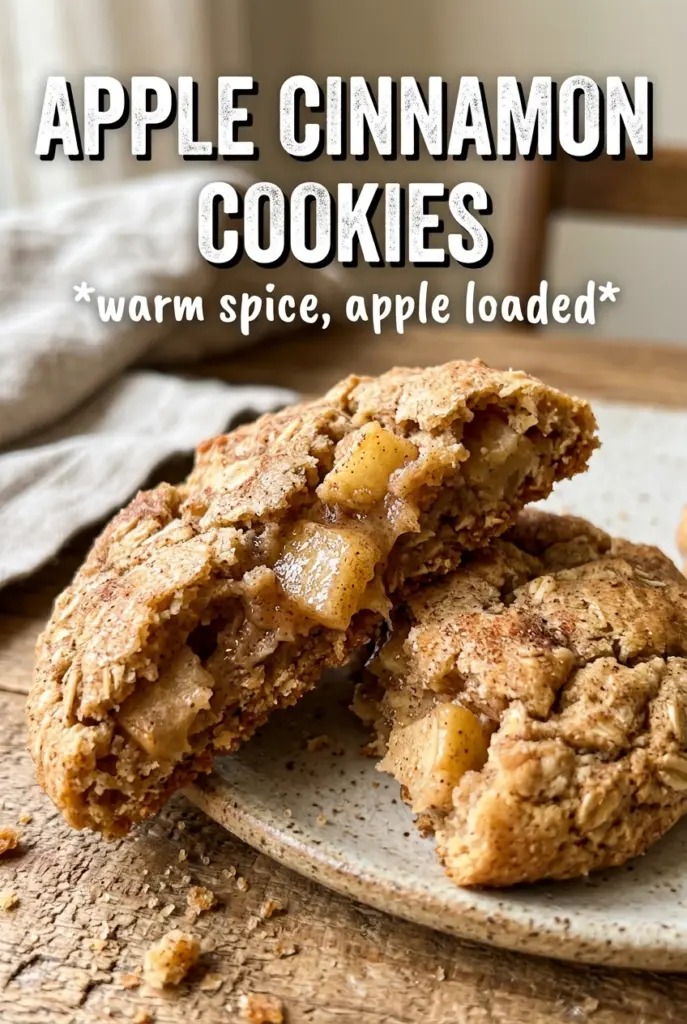
Soft, cakey apple cinnamon cookies have a way of disappearing fast, especially when the edges turn lightly crisp and the centers stay tender with little bits of apple tucked through the crumb. The cinnamon sugar on top gives each cookie a gentle crunch, and the vanilla glaze settles into every ridge instead of hardening into a shell. They taste like a cross between an apple spice cookie and a warm bakery muffin top, which is exactly why they work so well.
The key here is balancing moisture. Applesauce keeps the dough soft and gives the cookies that plush texture, but fresh diced apple adds the little pockets of fruit that make each bite taste more like real apple, not just spice. The dough starts out sticky on purpose, and the chill time matters because it gives the flour a chance to hydrate and keeps the cookies from spreading too thin in the oven.
Below, I’ll show you the small details that keep these cookies tender instead of gummy, plus the best way to glaze them so they look finished without turning messy.
The dough was sticky exactly like you said, but after chilling it scooped cleanly and baked up soft with those little apple bits still intact. The cinnamon sugar edges were the best part.
Like these apple cinnamon cookies? Save them for the days when you want soft centers, cinnamon sugar tops, and a vanilla glaze finish.
The Trick to Keeping Apple Cookies Tender Instead of Heavy
Apple cookies can go dense fast if the dough is overmixed or overloaded with fruit. The goal here is a soft cookie with enough structure to hold the diced apples without turning pasty. That’s why the butter and sugars get beaten until fluffy first, and the flour goes in only until the last streaks disappear. Once the apples are folded in, stop as soon as they’re evenly dispersed.
The other place these go wrong is bake time. Pull them when the edges are set and the centers still look slightly soft. They finish on the pan, which keeps them from drying out in the oven. If they look fully done before you remove them, they’ll be overbaked by the time they cool.
What Each Ingredient Is Actually Doing in These Cookies
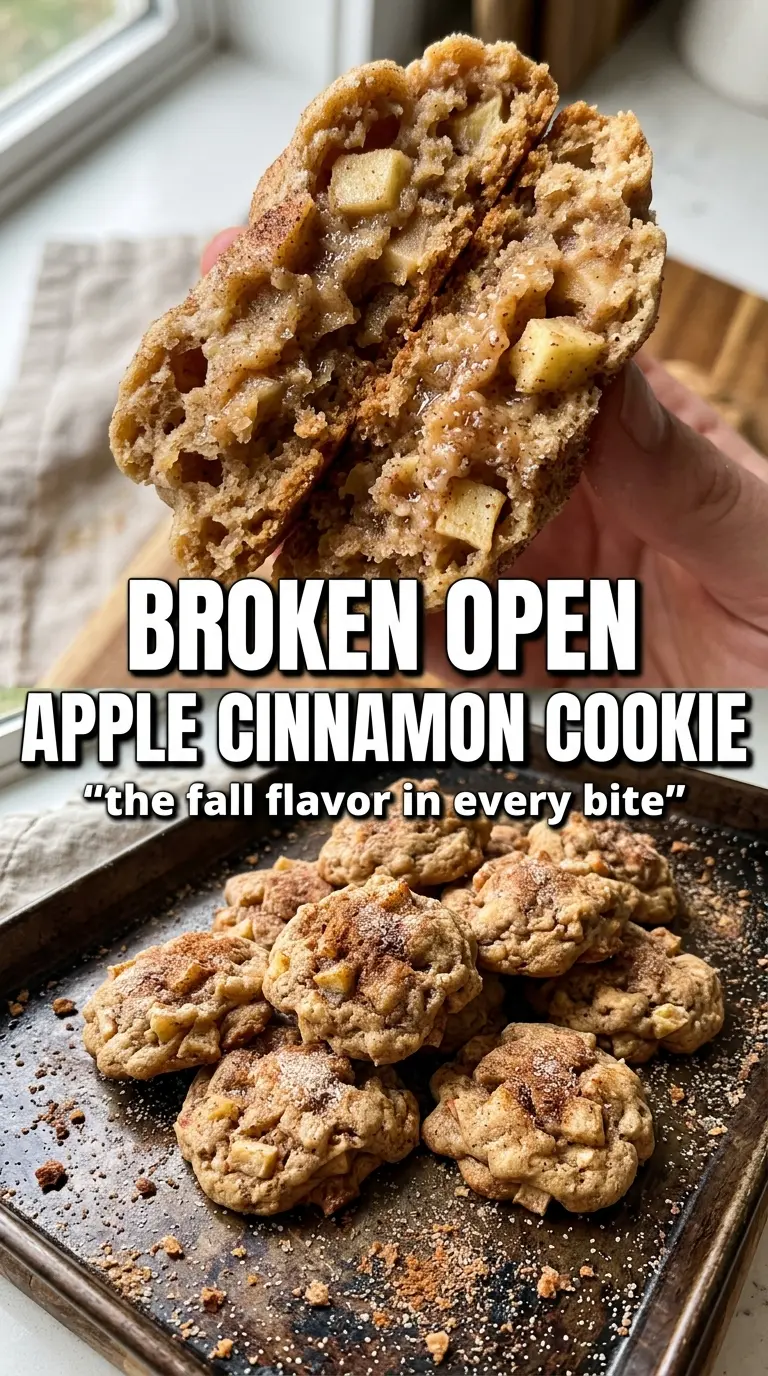
- Applesauce — This is what gives the cookies their soft, cake-like crumb. Unsweetened applesauce works best because it adds moisture without making the dough cloying. If you swap in chunky applesauce, the texture gets uneven and the dough can spread more.
- Fresh apples — These give the cookies the real apple bite that applesauce alone can’t deliver. Peel them and dice them finely so they soften in the oven instead of staying sharp and watery. A firm apple like Honeycrisp or Fuji holds up better than a mealy one.
- Brown sugar — Brown sugar brings depth and helps the cookies stay tender. It also works with the cinnamon and nutmeg to give the dough that warm, bakery-style flavor. If you use all white sugar, the cookies bake up a little drier and flatter.
- Butter — Softened butter traps air when you beat it with the sugars, which gives the cookies lift. Cold butter won’t cream properly, and melted butter makes the dough greasy and hard to shape. Softened means it gives slightly when pressed, not shiny or oily.
- Cinnamon sugar topping — This is more than garnish. It adds a lightly crisp finish that balances the soft center and makes the tops look finished even before the glaze goes on.
Building the Dough and Baking It at the Right Moment
Creaming the Butter and Sugars
Beat the softened butter with both sugars until the mixture looks pale and fluffy, not wet and grainy. This step matters because it sets up the texture before anything else goes in. If the butter is too warm, the mixture will smear against the bowl instead of aerating, and the cookies will spread more in the oven.
Folding in the Dry Ingredients and Apples
Add the flour mixture in stages and mix only until the dough comes together. Overmixing develops too much gluten and makes these cookies tough instead of tender. Fold in the diced apples at the very end so they stay intact and don’t bleed too much moisture into the dough.
Chilling, Scooping, and Rolling
Refrigerate the dough for the full hour. It will still be sticky, but it should firm up enough to scoop without running everywhere. Roll the tops in the cinnamon sugar right before baking so the coating stays on the surface and forms that thin, sparkly crust.
Baking Until Just Set
Use parchment-lined baking sheets and give the cookies room to spread a little. Bake until the edges look set and the centers no longer look wet, but stop before they turn deeply golden. Let them cool on the pan completely; moving them too soon can make them break apart while they’re still soft in the middle.
Finishing With the Vanilla Glaze
Stir the glaze until smooth and thick enough to drip slowly from a spoon. If it runs off like milk, add a little more powdered sugar. Drizzle over fully cooled cookies so the glaze sits on top instead of soaking in and disappearing.
Three Ways to Make These Apple Cinnamon Cookies Fit the Day
Skip the Glaze for a More Classic Cookie
Leave off the vanilla glaze and you’ll get a less sweet cookie with a stronger cinnamon-apple focus. The cinnamon sugar topping still gives enough finish that the cookies don’t feel plain, and they travel a little better without the drizzle.
Make Them Gluten-Free
Use a good 1:1 gluten-free flour blend with xanthan gum. The cookies will still be soft and chewy, though the crumb may be a touch more delicate. Let the dough chill fully so the blend has time to hydrate; that keeps the cookies from feeling sandy.
Use Pear Instead of Apple
A ripe but firm pear works if that’s what you have. The cookies will be a little softer and more floral, with less tartness than apple. Dice the pear small and use it right away so it doesn’t brown or release too much juice.
Storage and Reheating
- Refrigerator: Store in an airtight container for up to 4 days. The cookies soften a little as they sit because of the applesauce and fresh fruit.
- Freezer: Freeze the baked cookies without glaze for up to 2 months. Thaw at room temperature, then glaze after they’ve fully defrosted so the topping stays smooth.
- Reheating: Warm unglazed cookies for 8 to 10 seconds in the microwave if you want them soft again. Don’t overheat them or the edges will dry out before the center warms through.