
Golden puff pastry wrapped around brie turns into one of those appetizers that disappears the moment it hits the table. The shell bakes up crisp and flaky, the cheese inside softens into a molten center, and the sweet jam gives each bite a sharp little contrast that keeps it from feeling heavy. It looks polished, but it eats like the kind of snack people hover over with crackers in hand.
The trick is keeping the brie chilled until the pastry is ready and sealing the seams well enough that the cheese stays tucked inside while it bakes. A thin layer of jam is enough; too much and it can leak out before the pastry has time to brown. The egg wash matters here too, because it gives the pastry that deep, glossy finish without needing a long bake.
Below, I’ll walk through the few spots where this recipe can go wrong and how to keep the pastry crisp instead of soggy. I’ve also included a couple of easy swaps if you want to change the jam, nuts, or shape without losing that clean, bakery-style finish.
The pastry browned evenly and the brie stayed perfectly gooey inside. I used fig jam and the sweet-salty balance was spot on with crackers.
Like this baked brie? Save it to Pinterest for the nights when you want a flaky appetizer with molten cheese and a sweet jam center.
The Reason the Brie Stays Creamy Instead of Leaking Out
The pastry has two jobs: hold the cheese and bake before the brie turns into a runaway puddle. That means the seams need to be pressed together firmly, and the wrapped wheel should go seam-side down on the sheet pan so gravity works with you, not against you. If the pastry opens up in the oven, the filling won’t have enough structure to stay put, and the jam will escape long before the crust finishes browning.
The other piece is temperature. Cold brie takes longer to melt, which gives the pastry time to puff and set. If the cheese sits out too long before wrapping, the center softens too early and you end up with a collapsed parcel instead of a clean, domed bake.
What Each Ingredient Is Actually Doing in This Baked Brie
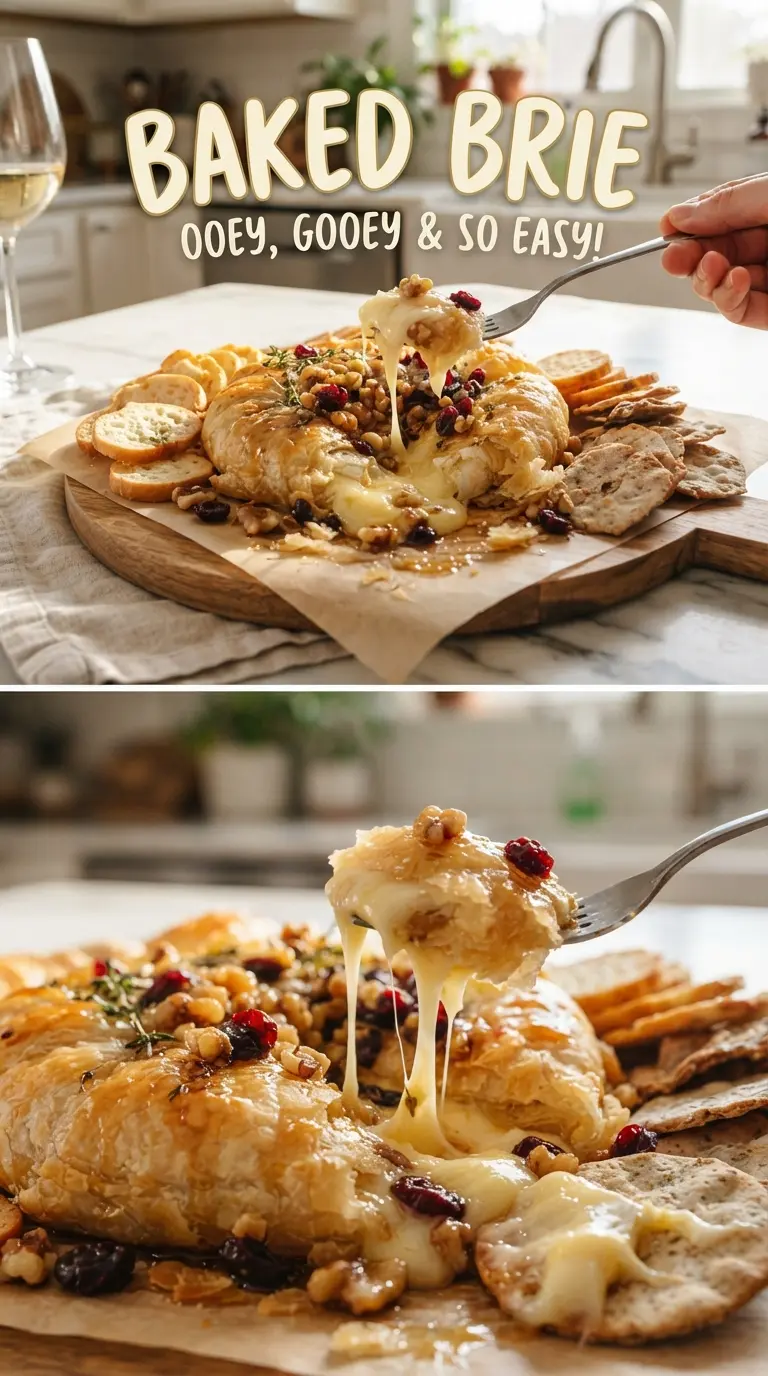
- Puff pastry — This is the crisp shell that gives the brie its structure. Thawed pastry works best when it’s still cool and supple; if it gets sticky, chill it for a few minutes before wrapping so the layers stay distinct.
- Brie — A wheel around 8 ounces is the sweet spot here. A rind-on brie melts beautifully and still holds its shape long enough to slice, but if you use a much larger wheel, the pastry needs a longer bake and the outside can darken before the center is ready.
- Raspberry or fig jam — This brings the sweet contrast that keeps each bite from tasting flat. Raspberry gives a brighter, sharper finish; fig is deeper and a little more mellow. Use a thick jam, not a runny spread, or it will seep into the pastry and soften the bottom.
- Pecans and brown sugar — The nuts add crunch and the brown sugar helps the filling taste a little more toasted and rounded. You can swap walnuts for pecans, but skip finely ground nuts; you want texture here, not paste.
- Egg wash — This is what gives the pastry that lacquered, deep-golden finish. Without it, the crust still bakes, but it looks pale and matte instead of crisp and glossy.
- Rosemary — This is garnish, but it earns its place. A small sprig makes the whole appetizer smell fresher and keeps the sweetness from taking over.
How to Wrap and Bake It Without a Soggy Bottom
Rolling the Pastry Just Enough
Roll the puff pastry only slightly, just enough to give yourself room to wrap the brie without tearing it. If you stretch it too thin, the butter layers lose some of their lift and the finished shell bakes up tighter. Keep the sheet cool and work quickly so the pastry doesn’t soften before it hits the oven.
Building the Filling in the Center
Place the brie in the middle, spread the jam over the top, then scatter the pecans and brown sugar over that. The filling belongs on top of the wheel, not underneath it, because anything under the brie is more likely to leak and soak the pastry. A thin, even layer is enough; piling it high makes the parcel harder to seal.
Sealing, Flipping, and Brushing
Fold the pastry up and over the cheese, trimming any heavy overlap so you don’t end up with thick doughy seams. Press the edges firmly together, then flip the bundle seam-side down so it can hold its shape as it bakes. Brush every exposed surface with egg wash, including the sides, and don’t rush this part — patchy egg wash means patchy browning.
Baking Until the Shell Is Deep Gold
Bake at 400°F until the pastry is deep golden brown, not just lightly colored. Pale pastry usually means the butter layers haven’t fully crisped, and brie baked only until the outside looks done can still be under-melted in the center. Let it rest for 10 minutes after baking; that pause gives the cheese enough body to slice instead of pour out in a flood.
Three Ways to Change the Filling Without Losing the Point
Fig Jam and Toasted Walnuts
Swap the raspberry jam for fig jam and use walnuts instead of pecans for a deeper, woodsy finish. The result feels a little less bright and a little more savory, which works well if you’re serving this alongside a wine or charcuterie board.
Honey and Thyme Instead of Jam
Replace the jam with a light drizzle of honey and a few thyme leaves if you want a less sweet version. Honey spreads more thinly than jam, so use restraint or it will run; the payoff is a cleaner, more herb-forward brie with a sharper contrast against the pastry.
Gluten-Free Puff Pastry
Use a gluten-free puff pastry if you need this to work for a gluten-free table. The pastry will usually brown a little differently and may need a close eye in the final 5 minutes, but the method stays the same. Keep the dough chilled and don’t overload the filling, since gluten-free pastry can be a touch more fragile at the seams.
Mini Baked Brie for Smaller Gatherings
Cut the pastry into smaller squares and use mini brie rounds if you want individual portions. These bake faster and give you more crisp edges, but they also demand tighter timing, because the cheese goes from soft to fully molten quickly. Watch for the pastry to puff and color deeply before pulling them from the oven.
Storage and Reheating
- Refrigerator: Store leftovers wrapped well for up to 3 days. The pastry softens as it sits, but the flavor holds up.
- Freezer: Freezing isn’t ideal after baking, since the pastry loses its crisp texture. If you want to get ahead, assemble the wrapped brie unbaked and freeze it solid, then bake from frozen with a few extra minutes added.
- Reheating: Warm leftovers in a 350°F oven until the pastry crisps again and the center loosens. The microwave will melt the cheese faster than it can re-crisp the shell, which leaves you with soggy pastry.
Questions I Get Asked About This Baked Brie

Baked Brie
Ingredients
Equipment
Method
- Preheat the oven to 400F and line a baking sheet with parchment. Set up your brie and pastry so you can fold quickly.
- Roll the puff pastry slightly and place the brie in the center. Keep the brie centered so the pastry folds up evenly.
- Spread the raspberry or fig jam over the brie, then sprinkle with chopped pecans and brown sugar. Aim for an even layer so every bite has jam and nut topping.
- Fold the pastry up over the brie, trimming excess and pressing the seams to seal. Make sure the seams are tightly sealed to prevent leaks.
- Flip the pastry seam-side down onto the baking sheet, then brush with the egg wash. Use a light coating so it bakes up glossy.
- Bake at 400F for 22-25 minutes until deep golden brown. Look for a puffed, crisp pastry and visible browning at the seams.
- Rest for 10 minutes so the cheese sets slightly. Let it settle before cutting so the molten center thickens a bit.
- Garnish with fresh rosemary and serve with crackers and apple slices. Provide cut-open bites with the pastry shell and set cheese.


