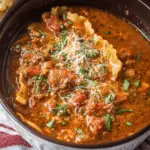
Broccoli cheddar lasagna soup lands in that sweet spot between cozy and substantial. The broth turns creamy and sharp with cheddar, the lasagna noodles soak up all that flavor, and the broccoli stays just tender enough to keep every spoonful from feeling heavy. It eats like a full meal, but it still has the comfort of a pot of soup simmering on the stove.
The key is building the base in stages. A quick flour-butter roux gives the soup body without turning it gluey, and adding the broccoli after the noodles have started to soften keeps it bright and a little crisp instead of dull and overcooked. The Dijon doesn’t make this taste mustardy; it just sharpens the cheese and keeps the whole pot from tasting flat.
Below, I’m walking through the part that matters most: how to keep the cheese smooth, how to time the noodles and broccoli so neither goes soft, and the little swaps that make this work with or without chicken.
The cheddar stayed smooth, the noodles were tender without falling apart, and the broccoli kept just enough bite. I added the chicken and my husband went back for seconds before I even sat down.
Save this broccoli cheddar lasagna soup for the nights when you want a creamy, cheesy dinner with tender noodles and a broccoli bite that still holds up.
The Creamy Base Needs Gentle Heat, Not a Boil
The mistake that breaks this kind of soup is rushing the dairy. Once the broth and cream go in, the pot only needs a gentle simmer. A hard boil can make the cream taste thin and can rough up the texture before the cheddar ever has a chance to melt in cleanly.
The other place people get into trouble is with the roux. Cook the butter and flour long enough to lose that raw flour taste, but not so long that it turns dark. You want the soup to thicken just enough to coat a spoon, because lasagna noodles need liquid to soften and the broccoli needs room to cook without the whole pot turning stodgy.
What Each Ingredient Is Actually Doing in This Soup

- Sharp cheddar — This is the main event, so use a block and shred it yourself if you can. Pre-shredded cheese is coated with anti-caking starches, and those can make the soup grainy instead of smooth. The sharpness matters here because the cream and noodles mellow everything out.
- Heavy cream — It gives the soup its body and keeps the cheddar from tasting harsh. Half-and-half will work in a pinch, but the broth will be lighter and less luxurious. Don’t swap in milk unless you’re ready for a thinner, less stable soup.
- Dijon mustard — This is a small ingredient with a big job. It doesn’t read as mustard; it wakes up the cheese and keeps the broth from tasting one-note. A teaspoon is enough.
- Lasagna noodles — Broken noodles give you the right texture fast, and they help the soup feel like lasagna without needing a separate casserole. Break them into uneven pieces so every spoonful feels a little different. If you overcook them, they’ll swell and turn pasty, so add them before the broccoli and pull the pot as soon as they’re tender.
- Broccoli florets — Cut them small so they cook through in a few minutes and stay bright green. Big florets need longer and can throw off the timing of the noodles. Frozen broccoli works if that’s what you have, but add it straight from frozen and expect a softer finish.
- Chicken breast — Totally optional, but it makes the soup more filling. Dice it small so it cooks quickly and stays tender. If you skip it, the soup still holds up because the cheese sauce and noodles carry the meal.
Building the Pot in the Right Order
Starting the Onion and Garlic
Melt the butter first, then cook the onion until it turns soft and translucent around the edges. That usually takes about four minutes. Add the garlic only for the last minute so it stays fragrant instead of bitter. If the garlic starts browning before the onion is tender, the heat is too high.
Creating the Thickener
Sprinkle in the flour and stir until it disappears into the butter and onion mixture. Let it cook for a minute or two; the mixture should look pasty and smell a little nutty, not raw. This is what gives the broth enough body to hold the cheese without turning watery.
Adding Broth, Cream, and Flavor
Pour in the broth slowly while whisking so the roux loosens without clumping. Add the cream, Dijon, and garlic powder, then bring everything to a low simmer. If the soup starts boiling hard, lower the heat right away. That’s the point where dairy can get fussy, and there’s no benefit to forcing it.
Cooking the Noodles and Broccoli
Drop in the broken lasagna noodles and cook them until they’re almost tender, then add the broccoli. The noodles need a head start because broccoli cooks much faster and can go mushy if you add it too soon. You’re looking for noodles that still have a little firmness in the center and broccoli that’s bright, green, and just tender at the stem.
Finishing with Cheese
Take the pot off the heat before stirring in the cheddar. This is the difference between a smooth soup and one that turns stringy or gritty. Add the cheese in handfuls and stir after each addition until it melts completely, then season with salt and pepper. Serve it right away while the texture is at its best.
How to Adapt It Without Losing the Comfort Factor
Make It Without the Chicken
Skip the chicken and the soup becomes a meatless main dish with plenty of body from the cheese sauce and noodles. The broccoli gives it enough texture to stay interesting, so you won’t miss the meat. If you want a little more heft, add extra broccoli or stir in white beans after the noodles are cooked.
Gluten-Free Version
Use your favorite gluten-free lasagna noodles and swap the flour for a 1:1 gluten-free blend or cornstarch slurry. Gluten-free noodles can break down faster, so start checking them a few minutes early. The broth will still be creamy, but it may thicken a little differently than the original.
Lighter Broth, Less Rich Finish
You can use half-and-half instead of heavy cream if you want a lighter soup, but the texture will be less silky and the cheddar needs gentler heat. Keep the simmer low and take the pot off the burner before adding cheese. This version is still cozy, just not as lush.
Storage and Reheating
- Refrigerator: Store leftovers for up to 4 days. The noodles will keep absorbing liquid, so the soup gets thicker by the next day.
- Freezer: It freezes, but the cream and cheese can separate a little after thawing. For the best texture, freeze before adding the cheese and cook a fresh batch of noodles if you plan ahead.
- Reheating: Warm it slowly over low heat and add a splash of broth or cream to loosen it. High heat is the fastest way to make the cheese look broken and the noodles turn too soft.
Answers to the Questions Worth Asking

Broccoli Cheddar Lasagna Soup
Ingredients
Equipment
Method
- Melt the butter in a large pot, then sauté the onion for 4 minutes until softened.
- Add the minced garlic and cook 1 minute, stirring, until fragrant.
- If using chicken, add the diced chicken and cook 4 minutes until it loses its pink color.
- Whisk in the flour and cook for 1-2 minutes to remove the raw flour taste.
- Gradually add the chicken broth and heavy cream, stirring until smooth.
- Stir in the garlic powder and Dijon mustard.
- Bring the mixture to a simmer.
- Add the broken lasagna noodles and cook 8-10 minutes until they are almost tender, stirring occasionally.
- Add the broccoli florets and cook 3-4 more minutes until bright green and tender-crisp.
- Remove from heat and stir in 2 cups of cheddar until fully melted and glossy.
- Season with salt and pepper to taste, then serve topped with the remaining cheddar.