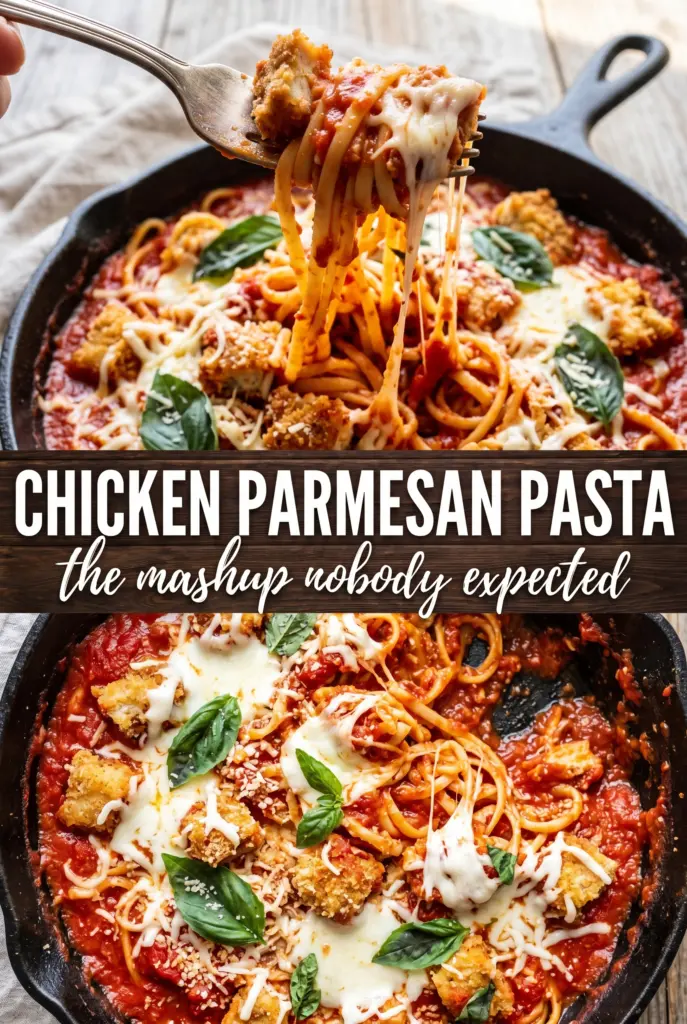
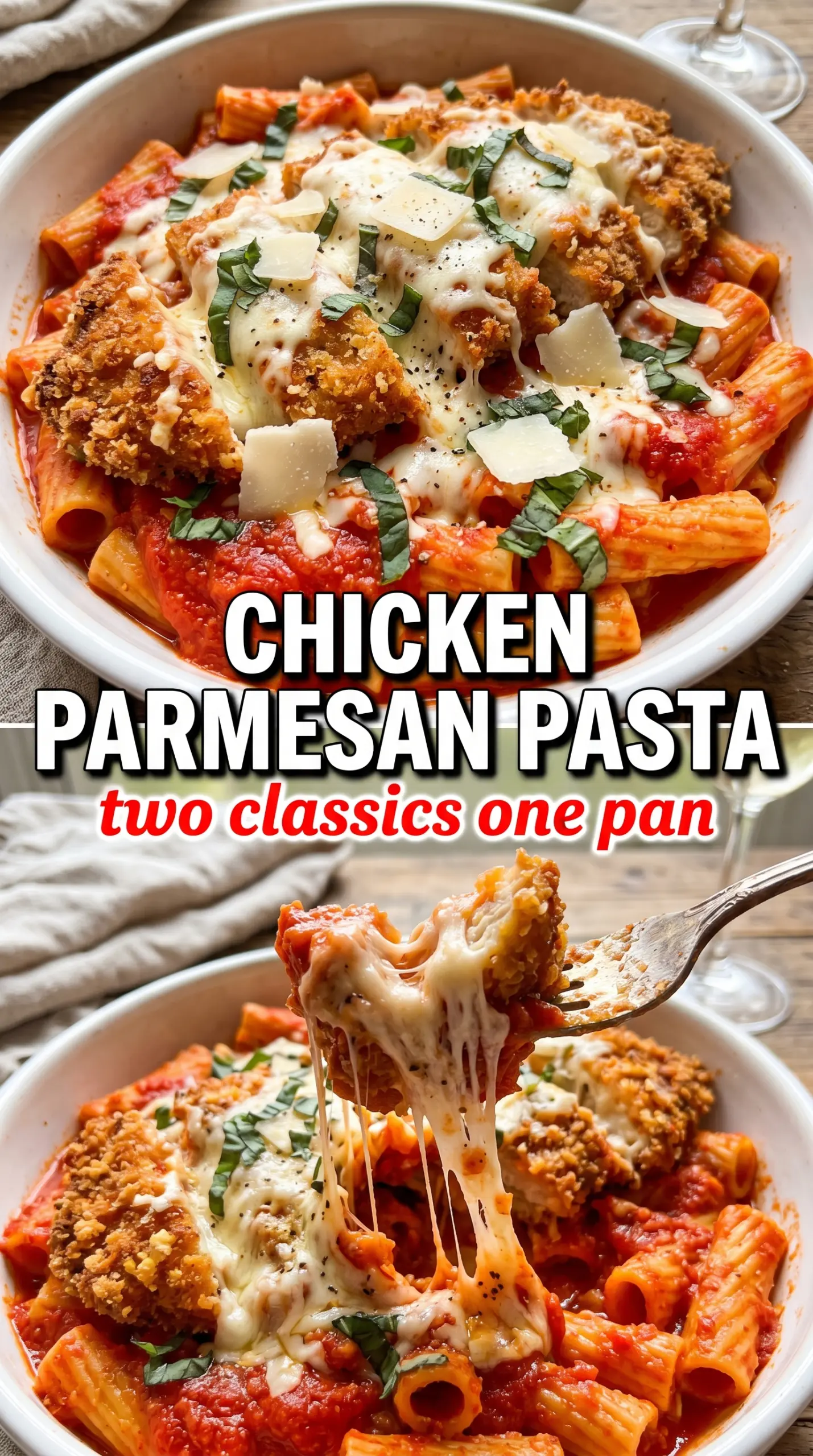
Chicken Parmesan pasta hits that sweet spot between comforting and practical: crisp, golden chicken on top of saucy penne, with mozzarella melting into every gap so each bite gets a little of everything. It eats like a baked pasta should, but it keeps the best part of chicken Parmesan intact instead of burying it under a heavy blanket of sauce.
The part that matters most here is treating the chicken and the pasta like two different jobs. The chicken gets a proper breading and a quick pan-fry so it stays crunchy enough to stand up to the sauce. The pasta gets tossed with marinara before it goes into the baking dish, which keeps the whole pan from drying out while the cheese melts on top. That order matters more than people think.
Below you’ll find the one step that keeps the chicken crisp, the ingredient details that help the dish taste like more than just pasta and cheese, and a few ways to adapt it when you need to work with what you’ve got.
The chicken stayed crunchy even after baking, and the marinara soaked into the penne without making the whole pan soggy. My son kept sneaking bites from the dish before dinner was even served.
Save this chicken Parmesan pasta for the nights when you want crispy chicken, bubbling mozzarella, and a pasta bake that actually holds its texture.
The Breaded Chicken Has to Stay Crisp Under the Cheese
The mistake with chicken Parmesan pasta is treating the chicken like a garnish. If it sits in the sauce too long before baking, the breading goes soft and the whole dish loses that contrast that makes chicken parm worth making in the first place. Pan-frying the chicken until it’s deeply golden gives you a crust that can handle the marinara and still stay flavorful after the bake.
The other thing that matters is using enough sauce to coat the penne without drowning it. You want the pasta glossy and well covered, not swimming. That way the sauce helps carry the dish while the chicken stays on top, where the oven heat can finish melting the mozzarella without turning the breading to mush.
- Chicken breasts — Cutting them into bite-sized pieces keeps the cooking time short and gives you more crispy edges. Thighs can work, but they stay a little richer and less classic.
- Italian breadcrumbs — These bring seasoning and a finer crumb than plain breadcrumbs. If you only have plain crumbs, add dried oregano, basil, and a pinch of garlic powder.
- Parmesan — A little in the breading adds salt and a nutty edge that helps the crust brown. Use the grated kind, not the powdery shelf-stable version, if you want better texture and flavor.
- Marinara sauce — This is the backbone of the dish, so choose one you’d happily eat on its own. A thinner sauce can work, but if it’s very watery, simmer it for a few minutes first so the pasta doesn’t turn loose in the baking dish.
- Mozzarella — Shredded low-moisture mozzarella melts best here. Fresh mozzarella tastes great, but it releases more moisture and can soften the top too much.
What Each Ingredient Is Actually Doing in This Chicken Pasta
- Pasta (the vehicle) — Cook to al dente so it doesn’t turn mushy. Reserve water for sauce adjustment.
- Chicken (the protein) — Cut into uniform pieces so they cook evenly. Don’t overcook or it becomes dry.
- Butter or oil (the cooking medium) — This browses the chicken and carries flavors. Don’t skip browning.
- Cream or sauce (the richness base) — This brings everything together and coats the pasta. Balance with acid.
- Cheese (optional umami and binding) — This adds depth and helps sauce cling. Add off heat so it melts smoothly.
- Garlic and herbs (the flavor layers) — Cook with oil first to bloom. These define the dish’s personality.
- Acid (lemon, wine, or vinegar) — This prevents heavy sauces from tasting flat. Add at the end.
- Final toss (the emulsification) — Toss gently so pasta stays al dente and every piece gets coated.
Pan-Fry First, Bake Second, and Don’t Rush the Order
Coating the Chicken Evenly
Set up your flour, beaten eggs, and breadcrumb-Parmesan mixture in separate bowls before you start. Dip each chicken piece in flour first so the egg clings, then coat it in egg, then press it into the breadcrumbs until every side looks covered. If the coating looks patchy, the bare spots will burn faster than the breaded parts and you’ll lose that even crunch.
Building a Deep Golden Crust
Cook the chicken in olive oil over medium-high heat until the crust is a deep golden brown and the inside is cooked through, about 3 to 4 minutes per side depending on the size of the pieces. If the pan is too crowded, the chicken steams instead of browns, so work in batches. Drain it on paper towels as soon as it comes out of the pan so the underside doesn’t trap steam.
Assembling the Pasta Base
Toss the cooked penne with the marinara before it goes into the baking dish. That step coats every piece and keeps the pasta from baking up dry around the edges. If the sauce looks sparse at this stage, add a splash more; the pasta should look saucy enough that the cheese can melt into it later.
Finishing Under the Cheese
Arrange the chicken over the pasta, then cover the top with mozzarella and Parmesan. Bake just until the cheese melts, bubbles, and takes on a few golden spots around the edges. If you leave it in too long, the chicken coating loses its edge and the cheese turns oily instead of stretchy.
Three Ways to Make This Chicken Parmesan Pasta Work for Your Kitchen
Make It Gluten-Free
Swap the flour for a gluten-free all-purpose blend and use gluten-free breadcrumbs. The coating still browns well, but it may be a little more delicate, so let the chicken sit for a minute after breading before it hits the pan.
Use Chicken Thighs for a Richer Result
Boneless skinless thighs stay juicier and bring a little more flavor, especially if you like a softer bite under the cheese. Cut them into even pieces so they cook at the same pace as the breasts in the pan.
Turn It into a Lighter Weeknight Bake
Use less mozzarella and lean on the Parmesan for a sharper finish. You can also use whole wheat penne if you want a firmer pasta that holds up well under the sauce, though it will taste a little heartier and less classic.
Storage and Reheating
- Refrigerator: Store leftovers in an airtight container for up to 4 days. The chicken coating softens a bit, but the flavor stays strong.
- Freezer: It freezes, but the texture changes. For best results, freeze in portions and expect the pasta and cheese to be softer after thawing.
- Reheating: Warm it covered in a 350°F oven until hot, then uncover for the last few minutes so the cheese doesn’t turn rubbery. The microwave works in a pinch, but it makes the coating much softer.
Answers to the Questions Worth Asking
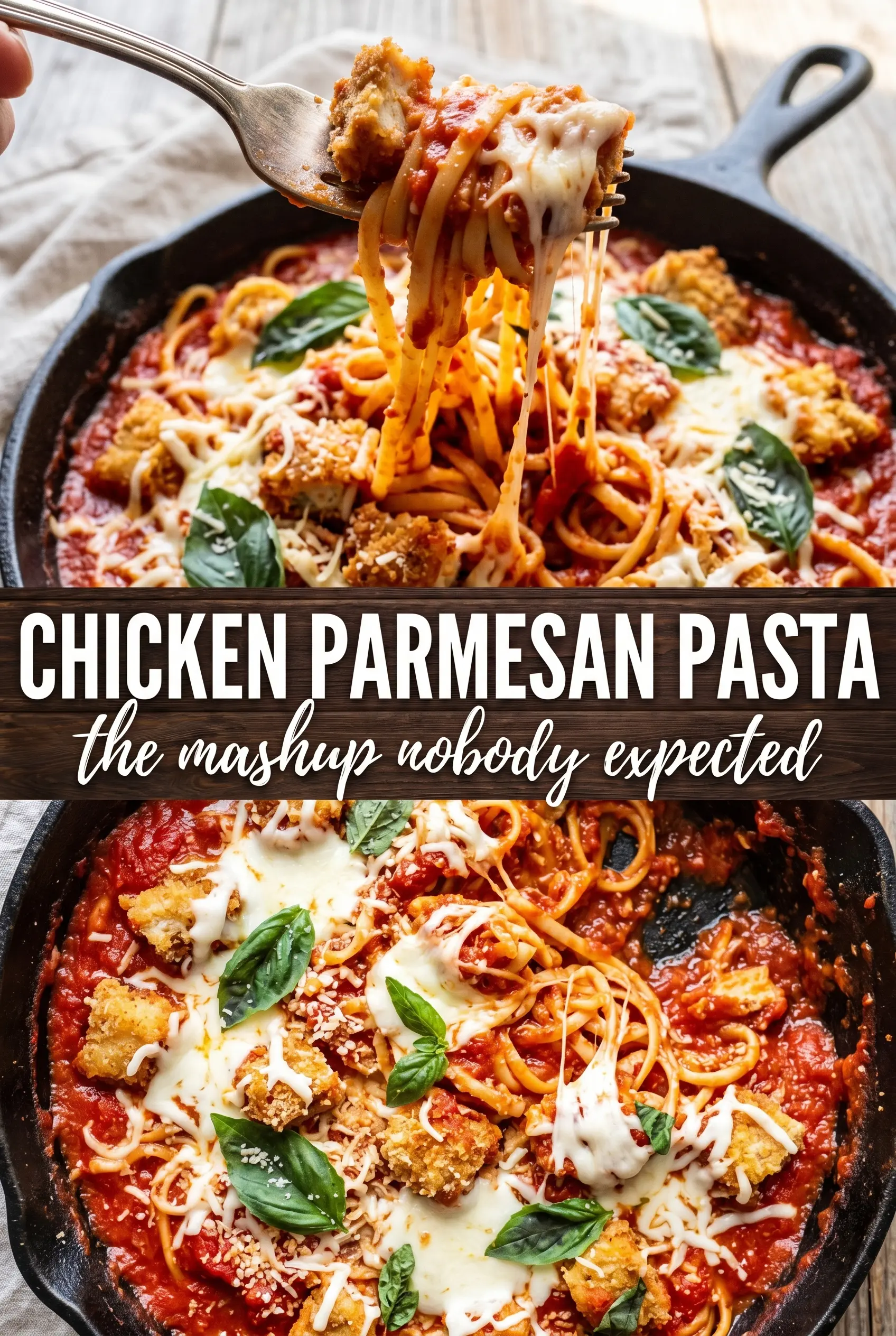
Chicken Parmesan Pasta
Ingredients
Equipment
Method
- Dredge the chicken pieces in all-purpose flour, then dip them in the beaten eggs and coat with the Italian breadcrumbs mixed with 1/2 cup Parmesan cheese.
- Pan-fry the coated chicken in olive oil over medium-high heat for 3-4 minutes per side, until golden and cooked through, then drain on paper towels.
- Toss the cooked penne with marinara sauce, then pour it into a greased 9x13 baking dish.
- Arrange the crispy chicken pieces over the sauced pasta in an even layer.
- Top with shredded mozzarella cheese and sprinkle with the additional 1/2 cup Parmesan cheese.
- Bake at 375°F for 20-22 minutes, until the cheese is melted and golden; garnish with fresh basil and serve.