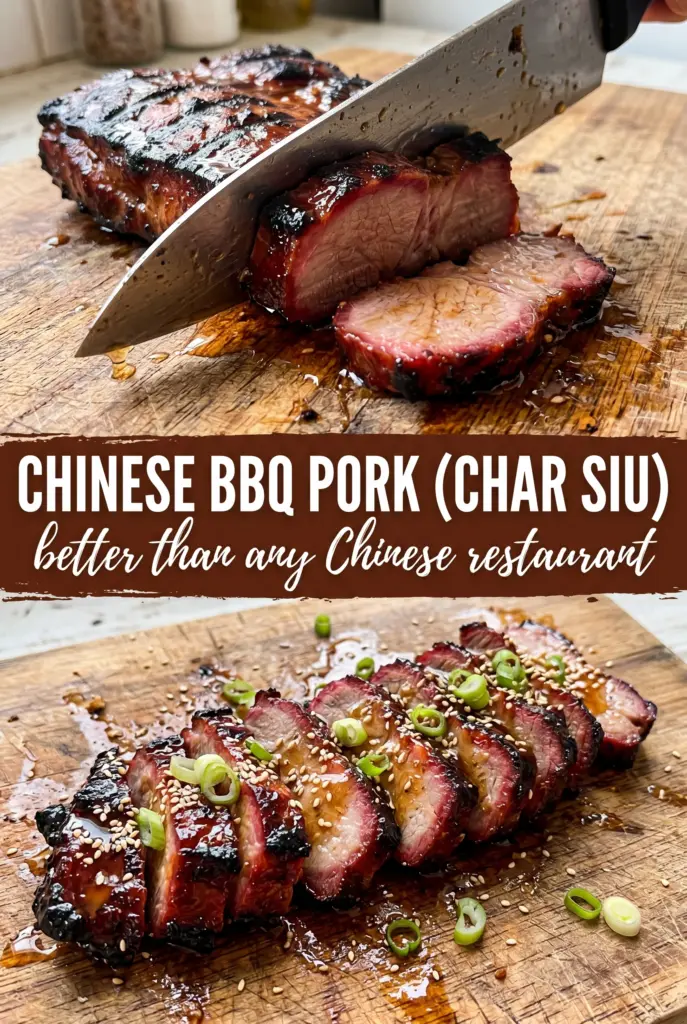
Char siu lands with that glossy, sticky edge people chase in Chinatown barbecue shops: sweet at first bite, savory underneath, and caramelized just enough to leave a little char on the tips. The pork stays tender inside if you keep the strips long and roast them hot instead of crowding them on a pan. That lacquered red finish isn’t there just for looks; it helps you get the same sweet-salty balance that makes this dish worth making at home.
The marinade does the heavy lifting here. Hoisin, soy sauce, honey, rice wine, oyster sauce, and five spice build layers that taste rounded instead of one-note, while a little brown sugar helps the surface darken as it roasts. The real trick is spacing and heat: a wire rack lets the fat drip away, and that keeps the bottom from steaming while the top turns sticky and bronzed.
Below, you’ll find the exact timing that gives you caramelized edges without drying out the pork, plus a few smart swaps if you want to make it without food coloring or with a different cut.
The glaze turned out shiny and sticky, and the pork stayed juicy all the way through. I broiled it for the last 2 minutes like you said, and the edges got that perfect char without burning the honey.
Char siu with that sticky mahogany glaze is worth keeping close for roast nights that need big flavor and a little burnished edge.
The Marinade Has to Taste Too Strong Before It Hits the Pork
Char siu is one of those dishes that looks simple and then punishes you for being casual with the seasoning. The marinade should taste a little too salty, too sweet, and a little sharp before it goes on the pork, because the meat dilutes everything as it roasts. If the mixture tastes balanced in the bowl, it usually finishes flat on the plate.
The other common mistake is marinating for looks instead of depth. Four hours gets you flavor on the surface; overnight gives you the darker, more layered taste that reads like real char siu. Pork shoulder gives you the richest result because the fat carries the glaze, but tenderloin works if you want something leaner and are careful not to overcook it.
- Hoisin sauce — This is the backbone of the glaze, with sweetness, fermented depth, and that thick texture that clings to the meat. There isn’t a true substitute that gives the same finish, but a mix of barbecue sauce and a little miso can stand in if you’re in a pinch.
- Chinese rice wine or dry sherry — This keeps the marinade from tasting heavy and helps the pork smell clean as it roasts. Dry sherry is the easiest pantry swap if you can’t find rice wine.
- Five spice powder — Use a fresh jar if you can. Stale five spice goes dusty fast, and char siu depends on that warm anise-clove note to keep the sweetness from taking over.
- Red food coloring — Optional, but it gives the classic red sheen people expect from char siu. The pork will still taste right without it; you’ll just get a deeper brown glaze instead of that lacquered red finish.
What Each Ingredient Is Actually Doing in This Pork Dish
- Pork (cut properly for the method) — Pat dry so it browns instead of steams. Even thickness ensures uniform cooking.
- Oil or butter (the browning medium) — High-heat oil essential for proper searing. Creates pan flavor.
- Seasonings (salt, pepper, spices) — Build flavor boldly. Pork carries the entire profile.
- Aromatics (garlic, onion, ginger) — Cook with fat to bloom flavors. Become foundation of dish.
- Sauce or liquid (the moisture keeper) — Keeps lean pork from drying. Balance richness with acid.
- Vegetables (if using) — Layer by cooking time so everything finishes together. Hard vegetables first.
- Acid (vinegar, wine, citrus) — Brightens sauce and prevents heavy flavor. Add near end.
- Proper doneness (145°F, slightly pink center) — Pork is safe at this temp and stays juicy. Higher temps dry it out.
Roasting the Pork So the Glaze Catches Before It Burns
Mix the Marinade Until It Looks Smooth
Stir the hoisin, soy sauce, honey, wine, oyster sauce, brown sugar, sesame oil, five spice, coloring if using, and garlic until the mixture looks glossy and even. Any clumps of brown sugar will stick in one spot and burn before the rest of the pork is done, so break those up now. The marinade should coat the spoon in a thin, syrupy layer.
Marinate for Depth, Not Just Surface Color
Cut the pork into long strips so the edges caramelize while the center stays juicy. Coat every side, cover, and chill for at least 4 hours; overnight gives the best color and flavor. If the meat sits in a shallow puddle instead of being fully coated, turn it once or twice so the glaze reaches every surface.
Roast on a Rack So the Bottom Stays Dry
Set the pork on a wire rack over a foil-lined sheet pan and keep the rack in the upper third of the oven. That setup lets air move around the meat and keeps the glaze from pooling underneath, which is how you get soggy bottoms instead of sticky edges. Roast hot at 425°F, and use a second pan or foil below to catch drips before they smoke.
Brush, Flip, and Finish With Real Color
After the first 15 minutes, flip the strips and brush them with reserved marinade mixed with a little honey. That second coating is what gives char siu its lacquered finish, but it needs the first roast to set the surface so it doesn’t wash off. Broil for 2 to 3 minutes at the end only if you want deeper char; stay right there, because honey can go from glossy to burnt in a minute.
Make It Without Red Food Coloring
Skip the coloring and let the marinade do the work. The pork will roast to a deep mahogany brown instead of bright red, but the taste stays exactly where it should be. If you want a slightly darker glaze, brush on a little extra honey during the last few minutes of roasting.
Use Pork Tenderloin for a Leaner Version
Tenderloin cooks faster and gives you a softer, leaner slice, but it dries out if you roast it past the point of just-done. Start checking early and pull it when the center is still slightly pink, then rest it before slicing. You lose some richness compared with shoulder, but you gain a cleaner bite and quicker cook time.
Make It Gluten-Free
Use a gluten-free soy sauce or tamari and check the oyster sauce label before you start. The rest of the marinade already works in your favor, so this swap keeps the same sticky finish without changing the method. The flavor stays savory and sweet, just with a little less salt edge if your tamari runs mild.
Storage and Reheating
- Refrigerator: Store in an airtight container for up to 4 days. The glaze softens a little as it chills, but the flavor holds well.
- Freezer: It freezes well for up to 2 months. Wrap sliced pork tightly or freeze in a flat bag with a little of the juices so the meat doesn’t dry out when thawed.
- Reheating: Warm it covered in a 300°F oven with a spoonful of water or juices until heated through. The biggest mistake is blasting it in the microwave, which makes the glaze tacky and the pork chewy.
Answers to the Questions Worth Asking
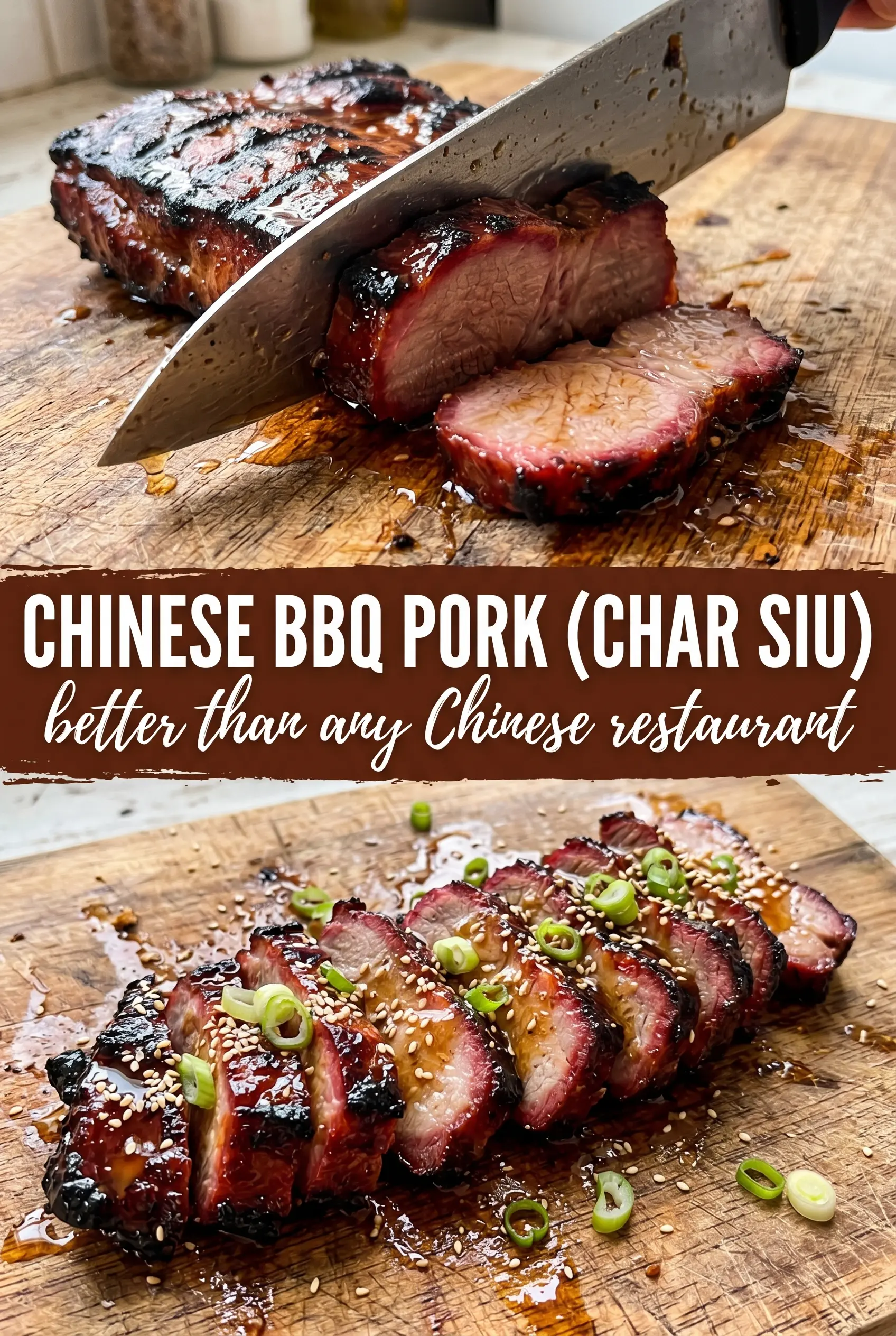
Chinese BBQ Pork (Char Siu)
Ingredients
Equipment
Method
- Mix hoisin sauce, soy sauce, honey, Chinese rice wine or dry sherry, oyster sauce, brown sugar, sesame oil, five spice powder, red food coloring (optional), and garlic, minced until smooth.
- Reserve about 1/2 cup of the marinade for glazing if needed during roasting.
- Coat the pork shoulder or tenderloin strips thoroughly in the marinade, cover, and refrigerate for 4–8 hours or overnight to let the pork absorb flavor.
- Preheat the oven to 425°F and place a foil-lined baking sheet on a rack in the upper third to catch drips; set a wire rack on top.
- Place the marinated pork shoulder or tenderloin on the wire rack over the sheet and set aside the remaining marinade.
- Roast for 15 minutes, until the glaze looks set and glossy.
- Flip the pork, brush with the reserved marinade mixed with a spoonful of honey, and roast 12–15 more minutes until edges are caramelized.
- Broil for 2–3 minutes for deeper char, then slice and serve.