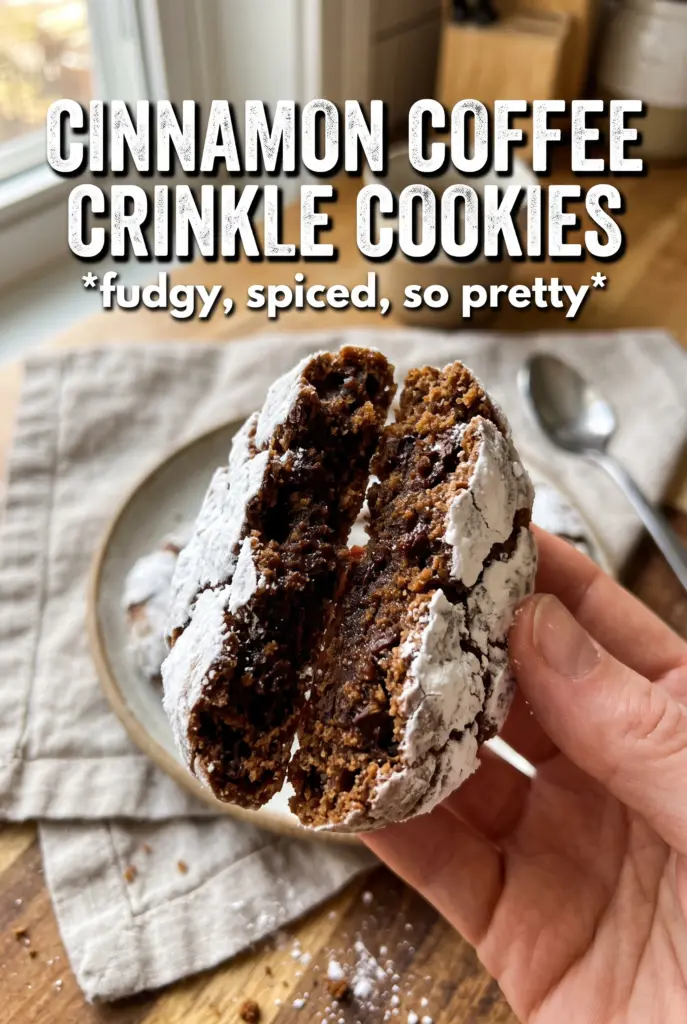
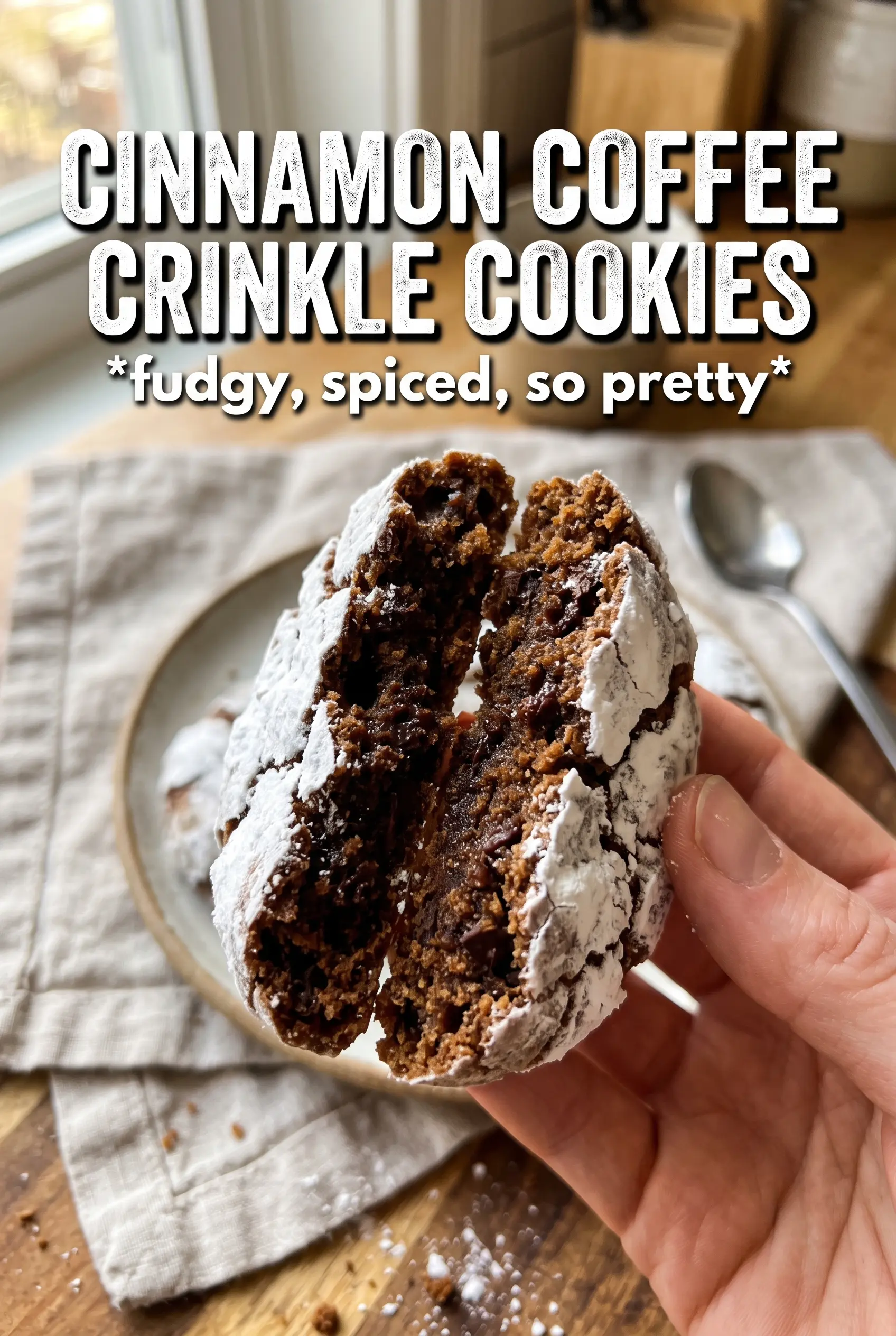
Deeply crinkled cinnamon coffee cookies land with a crisp, powdered-sugar shell and a soft center that stays tender for days. The espresso doesn’t make them taste like straight coffee; it pulls the cinnamon forward and gives the cookies a darker, warmer edge that keeps you reaching for one more.
The trick here is the dough. Melted butter gives you a denser, chewier cookie, but the hour in the fridge keeps it from spreading too fast and helps those dramatic cracks open in the oven instead of melting into flat rounds. Rolling the dough in granulated sugar first gives the powdered sugar something to cling to, which is what keeps the coating bright and snowy after baking.
Below, I’ve included the small details that matter most: how to keep the dough manageable, why the coating works in two layers, and what to change if you want to lean more into coffee or more into cinnamon.
The crinkles were perfect and the powdered sugar stayed bright instead of melting in. I loved the way the espresso made the cinnamon taste deeper without turning the cookies bitter.
Love the crackly tops and cinnamon-espresso finish on these cookies? Save this recipe for the next time you want a chewy crinkle cookie with a bold coffee kick.
The Reason These Cookies Crinkle Instead of Spread
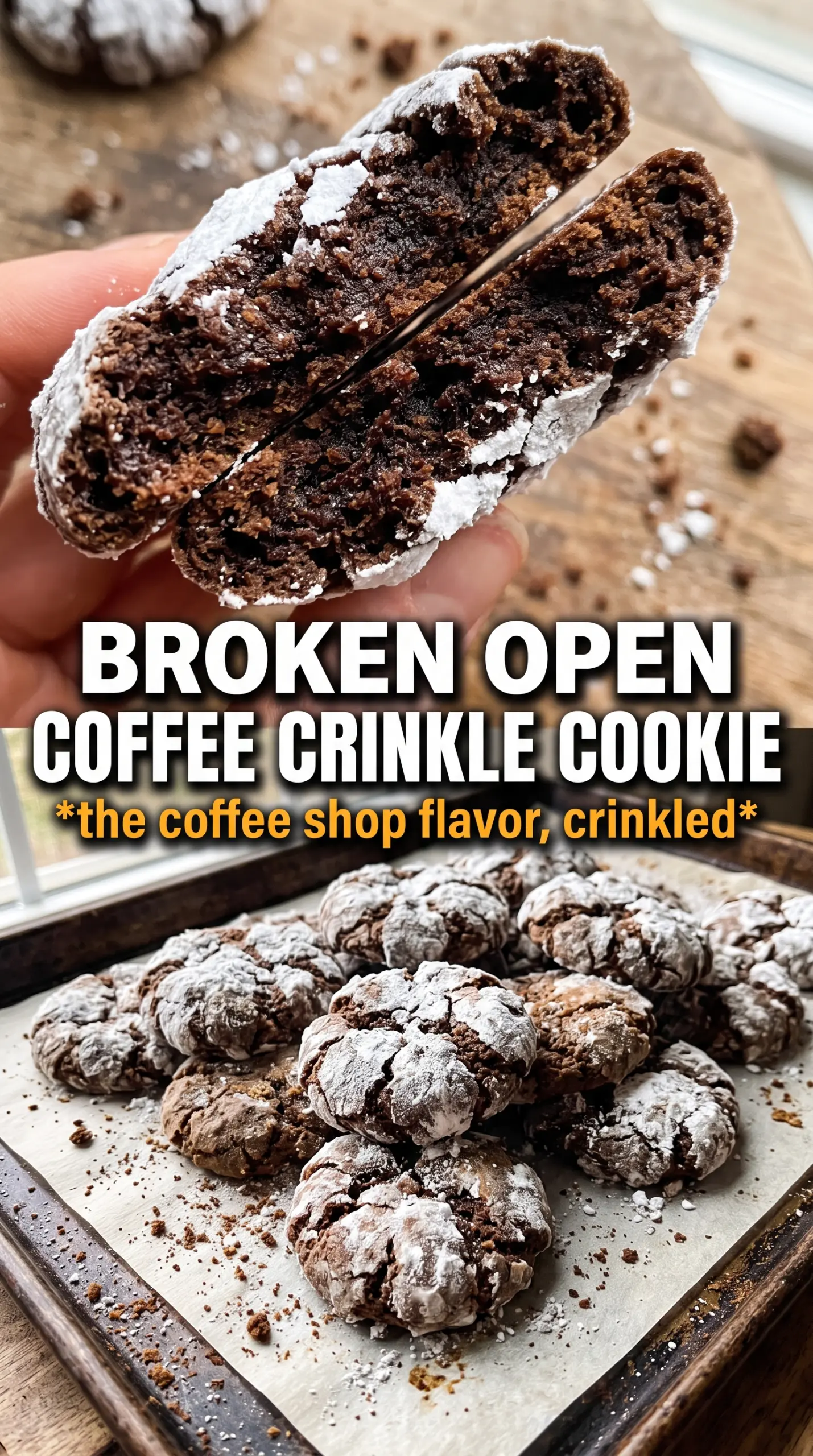
The crackly top doesn’t happen by luck. It comes from the contrast between a sticky, sugar-rich dough and a hot oven, with the cold dough balls setting before the outside can fully collapse. If you skip the chill, the cookies still taste good, but they’ll bake wider, the cracks will be less defined, and the powdered sugar coating won’t look nearly as dramatic.
Melted butter is part of the structure here. It creates a dough that feels softer and looser than a creamed-butter cookie, which is exactly why the chill matters. The first sugar coating also matters more than most people realize: it helps the powdered sugar stay in a thick, snowy layer instead of disappearing into the dough as it bakes.
What Each Ingredient Is Doing in the Dough
- Espresso powder — This is the ingredient that gives the cookies their deep coffee edge without adding extra liquid. Instant coffee can work in a pinch, but espresso powder is finer and stronger, so the flavor comes through cleanly. If you use instant coffee, grind it finer if needed and expect a softer, less intense coffee note.
- Melted butter — Melted butter keeps the dough chewy and rich, but it also makes the dough stickier than a traditional cookie dough. Don’t swap in oil here; you’ll lose the firm-set edges and the flavor that butter brings when baked with sugar.
- Brown sugar and granulated sugar — The brown sugar adds moisture and a deeper caramel note, while the granulated sugar helps the cookies spread just enough and keeps the texture lighter. Using all brown sugar will make them puffier and softer, but you’ll lose some of the clean crackle.
- Freshly brewed espresso or strong coffee — A tablespoon is all you need, and it should be cooled before it goes in. Hot coffee can melt the butter mixture too much and make the dough harder to portion.
- The coating mixture — The extra granulated sugar before the powdered sugar is the difference between a coating that looks crisp and one that melts into the dough. The cinnamon in the coating ties the outside flavor to the cookie itself, so each bite starts with spice before the coffee comes through.
Chilling the Dough So the Cracks Come Out Right
Mix the Dry Ingredients First
Whisk the flour, espresso powder, cinnamon, baking powder, and salt until the color looks even and there are no dark streaks of espresso powder left behind. This keeps the coffee flavor from clumping in one bite and the cinnamon from staying patchy. If you rush this part, the dough can bake with uneven spice pockets and a few bitter spots.
Build the Wet Base
Stir the melted butter with both sugars until the mixture looks glossy and thick, then add the eggs, cooled espresso, and vanilla. The eggs should disappear into the mixture before the flour goes in. If the butter is still hot, the eggs can loosen too much and the dough will feel greasy instead of sticky.
Fold and Chill
Add the dry ingredients and fold just until no dry flour remains. The dough should be soft and sticky, not pourable. Cover it and chill for a full hour; that pause firms the butter, hydrates the flour, and gives you dough balls that hold their shape long enough to crack in the oven instead of flattening out early.
Roll, Coat, and Bake Hot
Scoop the dough into small balls, then roll each one first in granulated sugar and then generously in the cinnamon powdered sugar mixture. Place them on parchment-lined sheets with space between each cookie, and bake until the edges are set and the tops are deeply crinkled. Pull them out before the centers look fully finished; they keep setting on the pan, and overbaking is what turns these from chewy to dry.
How to Adapt These Cinnamon Coffee Crinkle Cookies
Make Them More Coffee-Forward
Increase the espresso powder by 1/2 teaspoon and keep the brewed coffee as written. That pushes the flavor darker and more aromatic without making the dough bitter, but don’t add much more liquid or the cookies lose their crinkled shape.
Gluten-Free Version
Use a cup-for-cup gluten-free flour blend with xanthan gum already included. The cookies will still crinkle and stay chewy, but the texture will be a little more delicate, so let them cool on the pan before moving them.
No Espresso Powder on Hand
Use instant coffee granules, crushed very fine, in the same amount. The flavor will be a little softer and less concentrated, but it still gives you the dark background that makes the cinnamon taste deeper.
Storage and Reheating
- Refrigerator: Store baked cookies in an airtight container for up to 5 days. The sugar coating softens a little after the first day, but the cookies stay chewy.
- Freezer: Freeze the unbaked dough balls after coating them. Freeze on a tray first, then move them to a bag; bake from frozen and add 1 to 2 extra minutes.
- Reheating: If you want that just-baked softness back, warm a cookie for 5 to 8 seconds in the microwave. Don’t overdo it or the powdered sugar coating will melt and the center will turn gummy.
Questions I Get Asked About These Crinkle Cookies
Cinnamon Coffee Crinkle Cookies
Ingredients
Equipment
Method
- Whisk all-purpose flour, espresso powder, cinnamon, baking powder, and salt in a mixing bowl until evenly combined, with no visible flour streaks.
- Whisk melted unsalted butter and both sugars until smooth, then whisk in eggs, cooled espresso, and vanilla extract until glossy.
- Fold the flour mixture into the wet ingredients until the dough is fully incorporated and sticky with a thick, scoopable consistency.
- Refrigerate the dough for 1 hour to firm it for easier rolling and stronger crinkle formation.
- Preheat the oven to 350F and line baking sheets with parchment.
- Mix cinnamon into the powdered sugar coating in a bowl so the coating is evenly speckled brown.
- Scoop dough into 1-1/2 tablespoon balls and roll each in granulated sugar first to create an even base for the powdered coating.
- Roll the sugared balls generously in the powdered sugar-cinnamon mixture so the tops are thoroughly coated and cracked-looking.
- Bake at 350F for 10-12 minutes until the cookies are visibly crinkled and set at the edges, but do not overbake.