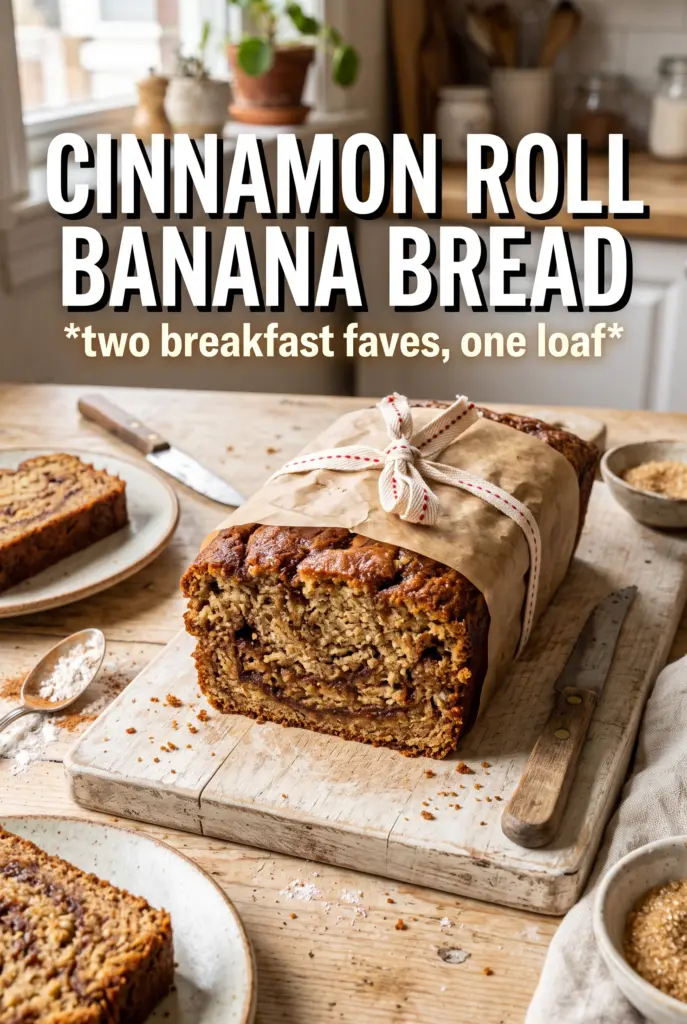
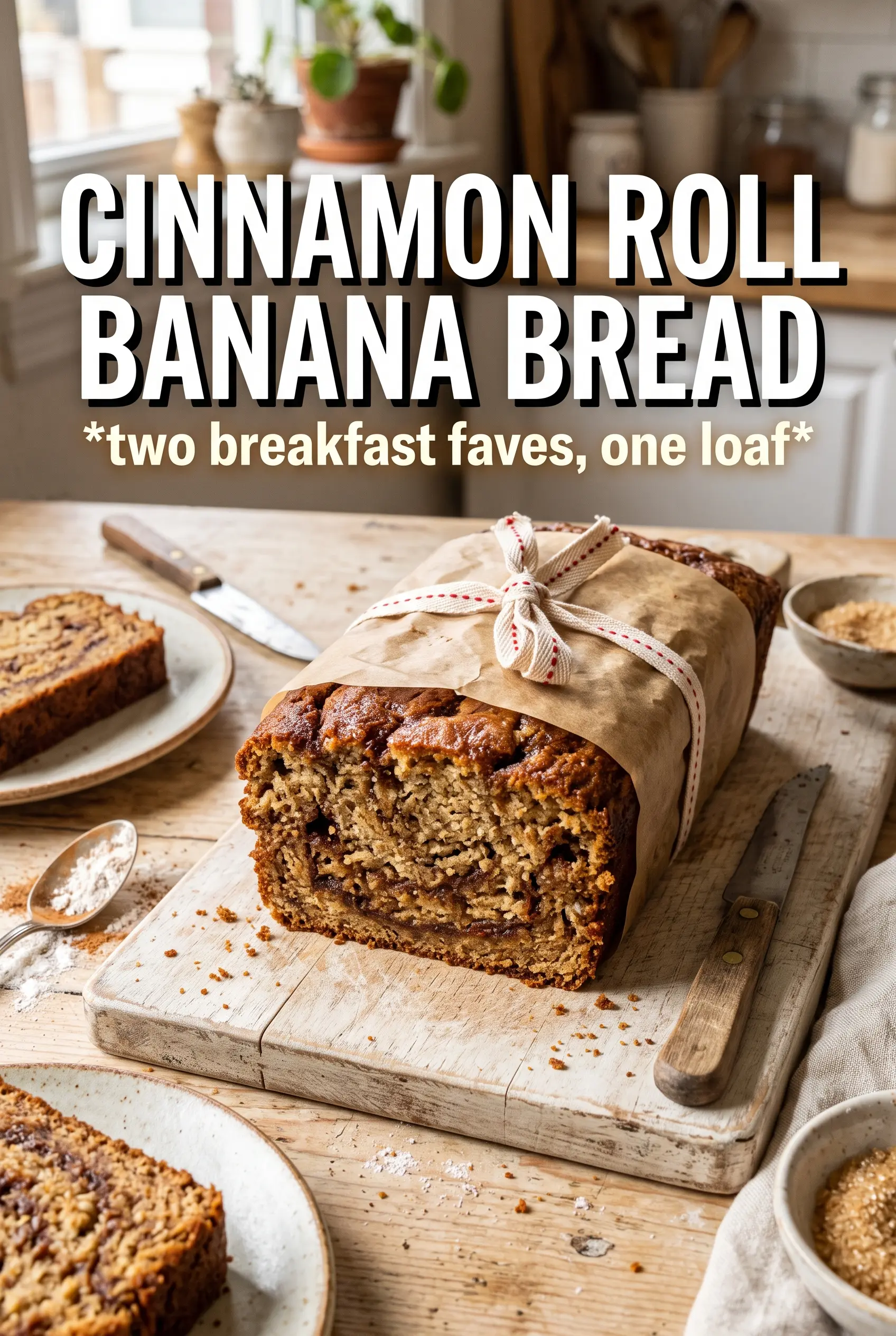
Cinnamon Roll Banana Bread bakes up with the kind of tender crumb that makes people pause after the first slice. The banana bread stays soft and moist, but the ribbon of cinnamon sugar running through the middle gives every bite that sticky, swirled-cinnamon-roll feeling without the work of yeast dough. A thick cream cheese glaze over the top finishes it with just enough tang to keep the sweetness in check.
What makes this version work is the balance. Sour cream keeps the loaf plush without making it heavy, and the butter-sugar base gives the batter enough structure to hold up to the swirl instead of collapsing around it. The cinnamon paste needs to be thick enough to stay layered in the batter, not so loose that it melts into a muddy streak. That little detail is what keeps the swirl dramatic instead of disappearing.
Below you’ll find the small cues that matter most: how ripe the bananas should be, how to layer the swirl so it stays defined, and when to pull the loaf so the center stays tender instead of dry.
The cinnamon swirl stayed in a clean ribbon instead of sinking, and the glaze set just enough to drip down the sides without soaking into the loaf. I had a slice warm from the pan and it tasted like a bakery bakery loaf.
Like this cinnamon roll banana bread? Save it to Pinterest for the loaf with the bold cinnamon swirl and cream cheese glaze.
The Swirl Needs a Barrier, Not Just a Stir
A cinnamon swirl turns messy fast when it’s treated like a batter mix-in. The trick here is layering the paste between two portions of banana bread batter so it stays suspended in the loaf, then giving it just one or two knife passes to marble the center. That keeps the swirl distinct and prevents the cinnamon sugar from disappearing into the crumb.
The other failure point is texture. If the swirl paste is too thin, it melts and sinks. If it’s too dry, it clumps instead of spreading. The target is a soft, spreadable paste that holds its shape long enough to sit in the middle of the pan while the loaf sets around it.
What Each Ingredient Is Actually Doing in This Loaf
- Very ripe bananas — These bring the moisture and the deep banana flavor. Green-tinged bananas won’t give you the same sweetness or softness, and the loaf will taste flatter.
- Sour cream — This is what keeps the crumb tender and gives the bread a little extra richness without making it greasy. Plain Greek yogurt works in a pinch, but the loaf will be a touch tangier and slightly less plush.
- Butter and sugar — Beating them together first helps the loaf bake up with a lighter texture instead of a dense, paste-like crumb. Don’t rush that step; the mixture should look fluffy and paler before the eggs go in.
- Brown sugar swirl paste — Brown sugar gives the swirl its molasses note and helps it stay soft in the center. Granulated sugar works, but you lose the caramel depth that makes the middle taste like cinnamon rolls.
- Cream cheese glaze — This balances the sweetness and makes the finished loaf taste finished, not just sweet. If the cream cheese is too cold, the glaze goes lumpy, so let it soften before you mix it.
How to Keep the Center Swirl Defined from Batter to Slice
Build the Banana Base First
Start by beating the butter and sugar until the mixture looks light and fluffy, then add the eggs, mashed bananas, sour cream, and vanilla. The batter should look thick and slightly glossy before the dry ingredients go in. If the bananas are under-mashed, you’ll get uneven pockets of fruit and the loaf will bake with weak spots. Fold the flour mixture in just until no dry streaks remain; overmixing here tightens the crumb and makes the loaf tough.
Make the Swirl Paste Thick Enough to Sit Still
Stir the softened butter, brown sugar, and cinnamon into a smooth paste. It should spread like a thick frosting, not pour like sauce. If it’s loose, chill it for a few minutes before assembling the loaf. That small pause helps the swirl stay layered instead of seeping into the batter.
Layer, Swirl, and Stop Before It Blurs
Spread half the batter in the pan, add the cinnamon paste in an even layer, then top with the remaining batter. Use a knife to make a few slow figure-eight passes through the center, but don’t chase perfection. Too much swirling blends the layers into one muddy stripe and cuts the contrast you want when you slice it. The top should look gently marbled, not mixed through.
Bake Until the Middle Springs Back
Bake at 350°F until a toothpick comes out clean or with a few moist crumbs, usually 60 to 65 minutes. The top should be deeply golden and the loaf should pull slightly from the sides of the pan. If the top browns too fast before the center is done, tent it loosely with foil for the last 15 minutes. Let the loaf cool in the pan briefly before lifting it out, then glaze it while it’s still warm so the icing melts into the ridges without disappearing completely.
Three Ways to Tweak the Loaf Without Losing the Swirl
Dairy-Free Version
Swap the butter for a plant-based butter block, the sour cream for thick coconut yogurt, and the cream cheese glaze for a dairy-free cream cheese icing. The loaf still bakes up tender, but the glaze will taste a little less tangy and a little more coconut-forward depending on the brand you use.
Gluten-Free Swap
Use a 1:1 gluten-free baking flour that contains xanthan gum. The loaf will still hold together, but it may need a few extra minutes in the oven and should cool fully before slicing so the crumb can set.
Muffin-Style Bake
Bake the batter in a lined muffin tin and drop a little swirl paste into the center of each cup. You’ll lose the dramatic loaf slice, but you gain faster bake time and more of those sticky cinnamon pockets around the edges.
Storage and Reheating
- Refrigerator: Store covered for up to 4 days. The loaf gets a little denser in the fridge, but the flavor holds well.
- Freezer: Freeze slices tightly wrapped for up to 2 months. I skip the glaze before freezing and add it after reheating for the best texture.
- Reheating: Warm slices in the microwave for 15 to 20 seconds or in a low oven until just heated through. Don’t overheat them or the crumb dries out and the glaze turns sticky in the wrong way.
Answers to the Questions Worth Asking
Cinnamon Roll Banana Bread
Ingredients
Equipment
Method
- Preheat the oven to 350F and grease a 9x5 loaf pan. Set the pan aside so it’s ready to fill.
- Stir the cinnamon roll swirl ingredients (softened butter, brown sugar, and cinnamon) into a smooth paste. The mixture should look thick and spreadable.
- Beat the softened butter and granulated sugar until fluffy, about 2-3 minutes. You should see a lighter, airy texture before adding the wet ingredients.
- Add the eggs, mashed bananas, sour cream, and vanilla, then beat until smooth. The batter should be glossy and evenly combined.
- Fold in the all-purpose flour, baking soda, salt, and cinnamon until just combined. Stop mixing as soon as no dry streaks remain.
- Pour half the batter into the prepared pan and spread it into an even layer. Keep the top fairly flat for a clean swirl.
- Spread the cinnamon swirl paste over the batter, leaving a thin, even layer. Make sure it reaches near the edges.
- Pour the remaining batter on top and smooth it gently. Cover the swirl so it bakes into the center ribbon.
- Swirl the top with a knife in 3-4 gentle passes. Stop before you fully mix layers—aim for visible marbling.
- Bake at 350F for 60-65 minutes, until a toothpick comes out clean. The loaf should look golden and feel set in the center.
- Mix cream cheese, powdered sugar, milk, and vanilla until smooth. Adjust with a splash more milk only if needed for drizzling.
- Drizzle the cream cheese glaze over the loaf while it’s warm. Let it set briefly before slicing for clean pieces.