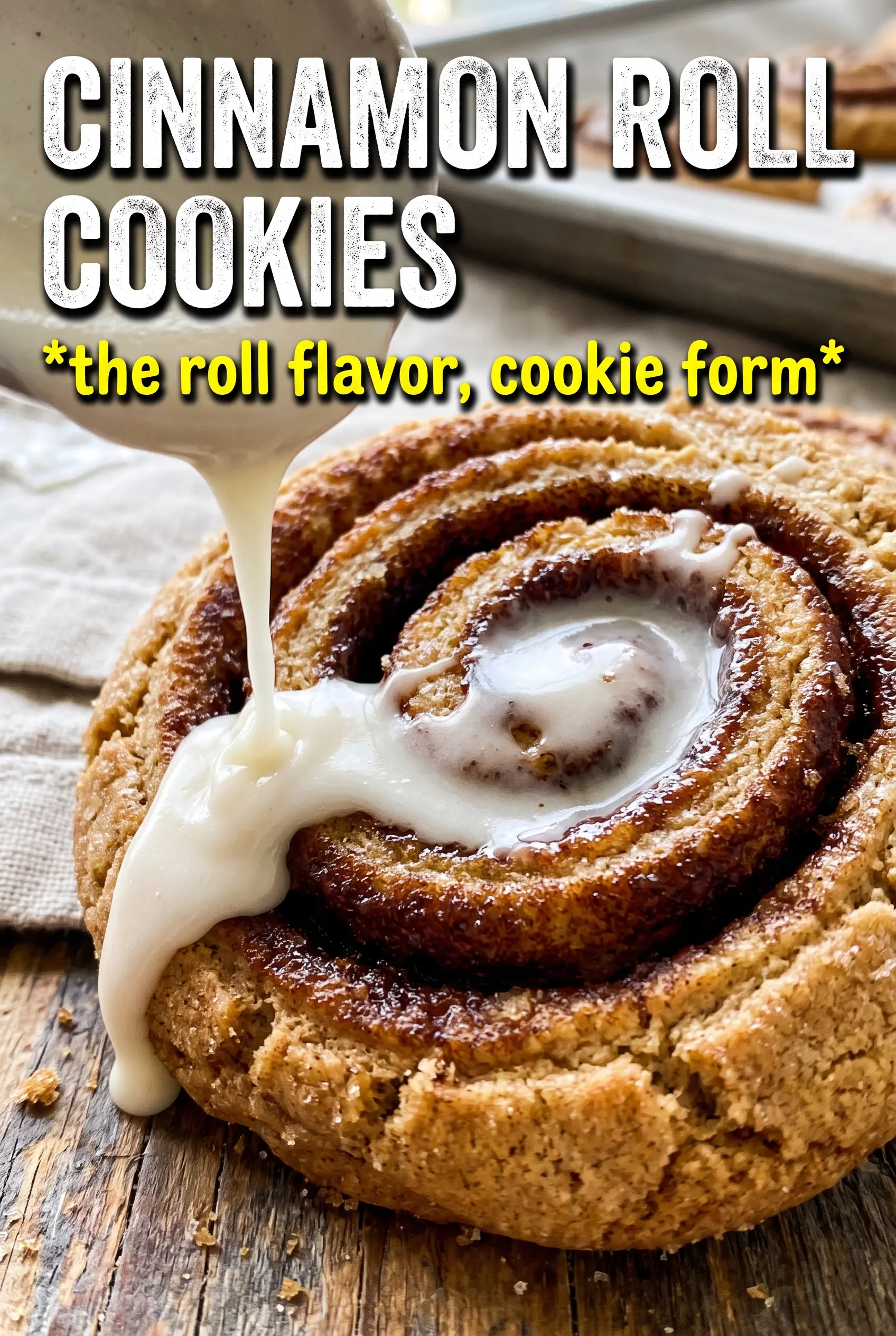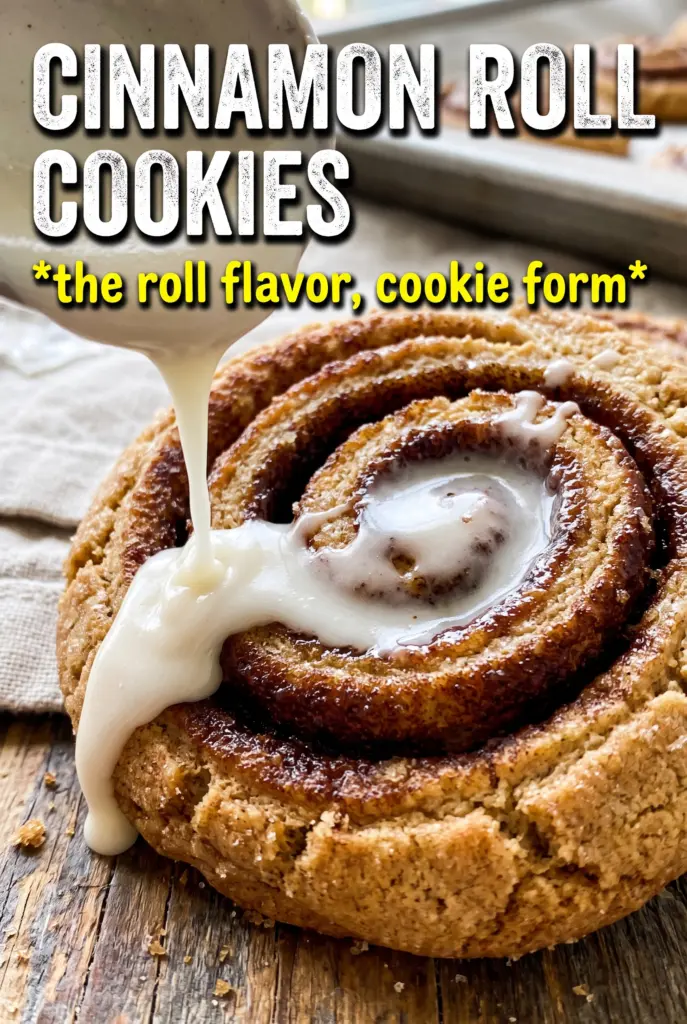
Cinnamon roll cookies bake up with the same warm swirl people love in a bakery cinnamon roll, but in a form that’s easier to portion, share, and keep on hand. The edges turn lightly crisp while the centers stay soft, and the cinnamon-sugar spiral gives every bite a buttery, caramel-like middle. Finished with cream cheese glaze, they land somewhere between a cookie and a little coffee-shop treat, which is exactly why they disappear fast.
The key is treating the dough like slice-and-bake cookies, not a loose drop cookie. Chilling the rolled logs gives you clean spirals and keeps the filling from squeezing out in the oven. Softened butter in the filling matters too; it spreads without tearing the dough, then melts into that ribbon of cinnamon and brown sugar as the cookies bake.
Below, I’ve included the small details that keep the swirls tight, the texture tender, and the glaze smooth enough to drizzle instead of clump. If you’ve ever had cinnamon swirl cookies unroll in the oven, the fixes here will save you a lot of frustration.
The swirl held together beautifully after chilling, and the glaze set up just enough that they weren’t messy to pack in lunch boxes the next day.
Like these cinnamon roll cookies? Save them to Pinterest for the days when you want a soft, swirled cookie with cream cheese glaze and no yeast dough.
The Mistake That Blurs the Swirl Before the Cookies Bake
The filling looks simple, but this is where most cinnamon swirl cookies lose their shape. If the butter is too soft, the sugar slides around and the log never tightens properly. If it’s too cold, it tears the dough and leaves gaps that bake up uneven instead of creating that clean spiral cross-section.
Rolling the dough between parchment does two jobs at once: it keeps the surface smooth and prevents extra flour from sneaking in and drying out the cookie. The other thing that matters is the chill. One hour is enough to firm the log so it slices cleanly, but if your kitchen is warm or the dough feels tacky, give it a little longer. Soft dough in the oven is what turns a neat swirl into a lopsided ribbon.
What Each Ingredient Is Actually Doing in the Swirl and the Glaze

- All-purpose flour — This gives the cookies enough structure to roll, slice, and hold the spiral. Bread flour makes them tougher, and cake flour makes them too fragile for clean cutting.
- Unsalted butter — Butter is doing the heavy lifting in both the dough and the filling. In the dough, it keeps the cookie tender; in the filling, it helps the cinnamon sugar melt into a smooth layer instead of staying sandy.
- Brown sugar — This is what gives the filling that sticky, caramel note. Packed brown sugar matters here because loose sugar won’t press into an even layer as well.
- Cream cheese — The glaze needs cream cheese for tang and body. A milk-and-powdered-sugar glaze works in a pinch, but it won’t give you the same bakery-style finish or balance the sweetness as well.
- Cinnamon — Use the good stuff here. A fresher cinnamon tastes rounder and warmer, and because it’s one of the few strong flavors in the cookie, stale cinnamon shows.
How to Roll, Chill, and Slice Without Losing the Spiral
Make the Dough Smooth Before You Split It
Beat the butter and sugar until the mixture looks pale and fluffy, then add the egg and vanilla. Stop as soon as the dough comes together once you add the dry ingredients; overmixing after the flour goes in makes the cookies less tender. Divide the dough in half so each log stays manageable and rolls out evenly.
Spread the Filling in a Thin, Even Layer
Roll each portion into a 10×8 rectangle on parchment, and keep the corners as squared off as you can. Spread the softened butter all the way to the edges, then sprinkle the brown sugar and cinnamon in an even layer. If the filling clumps in one spot, that section will ooze out while baking and the spiral won’t stay tight.
Roll Tight, Then Chill Hard
Start from the long side and roll firmly, using the parchment to help guide the dough without squeezing it flat. You want the log tight enough that there are no big air pockets, but not so compressed that the filling gushes out the ends. Wrap the log and chill it for the full hour; if you slice too early, the rounds smear and flatten instead of standing up in neat spirals.
Bake Until the Edges Just Turn Gold
Slice the chilled logs into 1/2-inch rounds and bake at 350°F until the edges look lightly golden and the centers still look a touch soft. That slight underbake is what keeps the middle tender after cooling. Let them sit on the pan briefly before moving them, because hot swirled cookies can bend if you try to lift them too soon.
Glaze While the Cookies Are Still Warm
Mix the cream cheese glaze until smooth and drizzle it over the warm cookies, not piping hot cookies. Warm cookies help the glaze settle into the ridges without melting into a puddle, while fully cooled cookies won’t let it spread as nicely. If the glaze feels thick, add milk a teaspoon at a time until it falls from the spoon in a slow ribbon.
Three Ways to Adjust These Cookies Without Losing the Cinnamon Roll Feel
Dairy-Free Version
Use plant-based butter in both the dough and filling, then swap the cream cheese and milk for dairy-free versions in the glaze. The cookies will still slice and swirl well, but the glaze will taste a little less tangy unless you use a dairy-free cream cheese with some sharpness.
Extra-Spiced Filling
Add a pinch of nutmeg or cardamom to the cinnamon sugar if you want a deeper bakery-style flavor. Keep the amount small so the swirl still tastes like cinnamon rolls instead of spice cookies.
Glaze It Thicker or Thinner
For a thicker finish, use a little less milk and let the glaze sit for a minute before drizzling. For a thinner, more bakery-like drip, add a splash more milk. The flavor stays the same either way, but the look changes fast.
Storage and Reheating
- Refrigerator: Store glazed or unglazed cookies in an airtight container for up to 5 days. The glaze will firm up in the fridge, and the cookie centers stay soft.
- Freezer: Freeze the baked cookies, well wrapped, for up to 2 months. You can also freeze the unbaked logs and slice them straight from the freezer for fresh cookies later.
- Reheating: Warm a cookie in the microwave for 8 to 10 seconds, just until the filling smells fragrant again. Longer heating makes the glaze melt and the cookie go from soft to greasy.