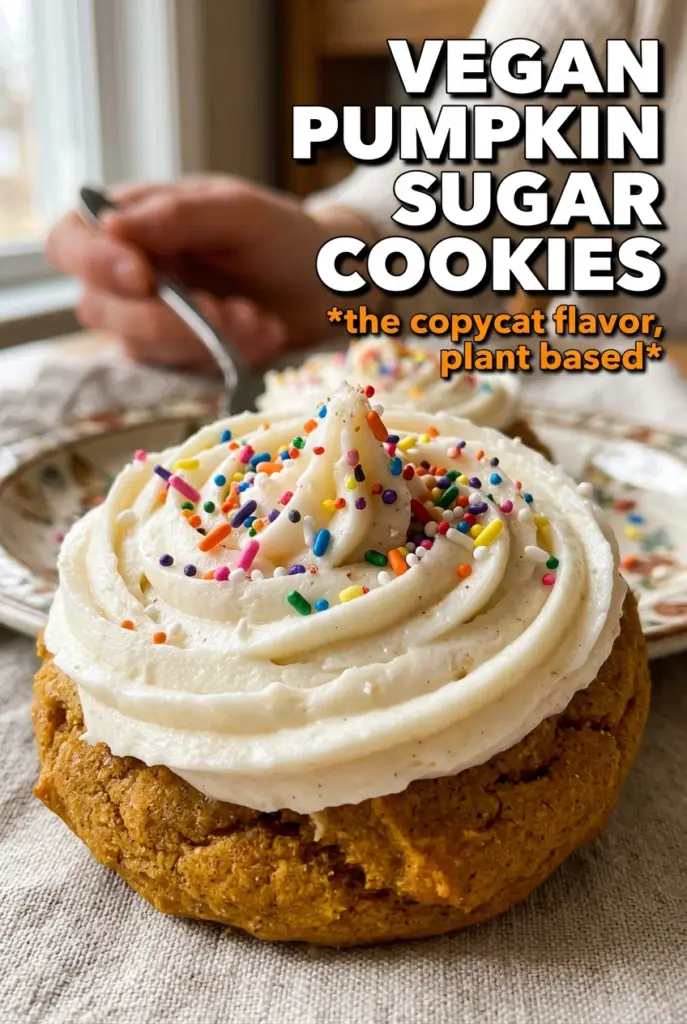
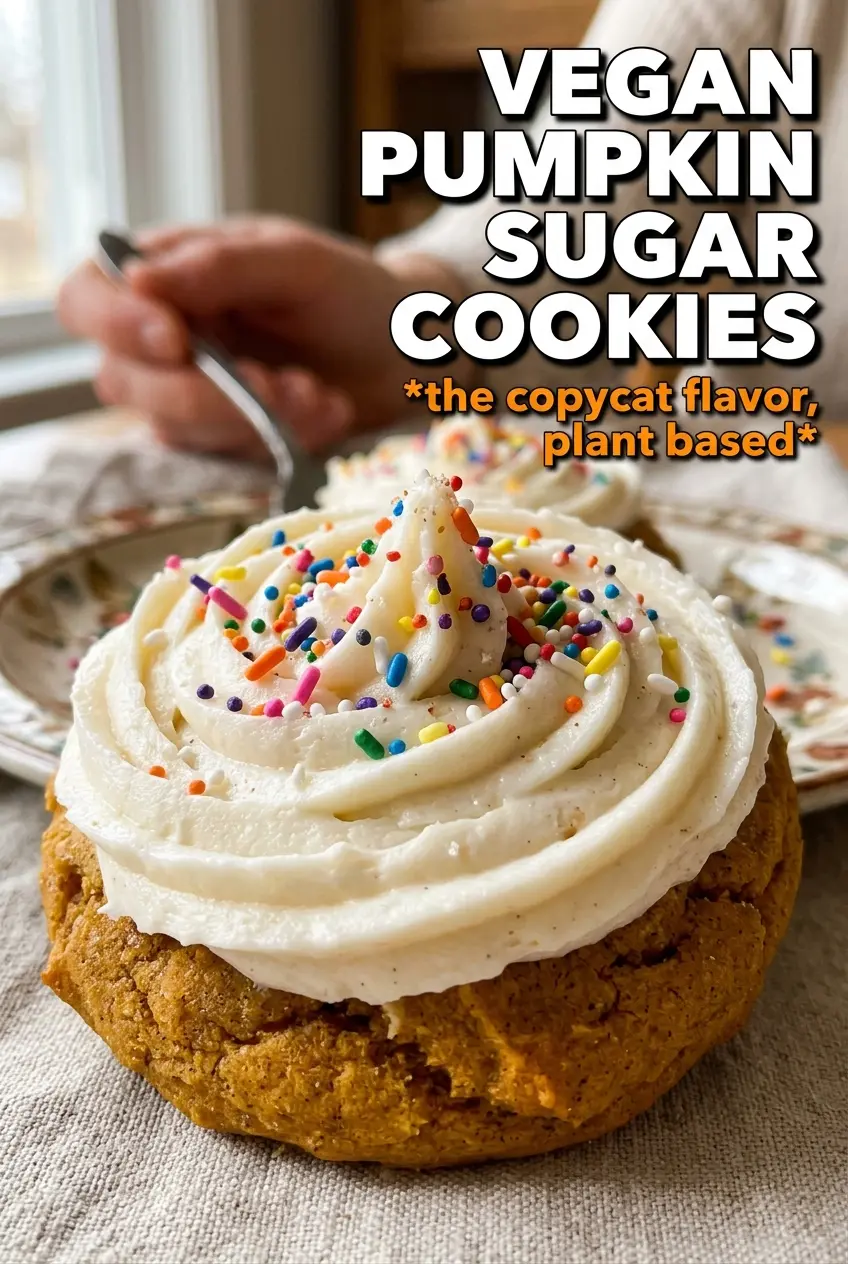
Soft, pillowy pumpkin sugar cookies with that familiar bakery-style crumb are the kind of treat that disappear fast once they hit the counter. The edges stay tender, the centers bake up thick instead of cakey, and the orange cream cheese-style frosting gives each cookie the same nostalgic look people expect from the refrigerated kind — only fresher, richer, and fully vegan.
The texture comes from a smart mix of softened vegan butter and solid coconut oil. Vegan butter brings the flavor, while coconut oil helps the cookies hold that soft, almost shortbread-like shape without spreading too much. Pumpkin puree goes in for color and subtle earthiness, but not enough to make the dough wet or heavy. That balance is what keeps these cookies from turning bready or dense.
Below you’ll find the little details that matter most: how to keep the dough soft but workable, why the cookies should come off the tray before they look fully done, and how to frost them so they look bakery-cute instead of messy.
The cookies stayed soft for days and the frosting set up just enough that I could stack them after chilling. The pumpkin spice came through without tasting cakey, which is exactly what I wanted.
Save these vegan pumpkin sugar cookies for the soft, frosted cookie craving that needs a bakery look without the dairy.
The Trick to Keeping Vegan Pumpkin Cookies Soft Instead of Puffy and Dry
Most pumpkin cookies go wrong in one of two directions: they spread into flat little puddles, or they bake up like muffins in cookie form. The fix here is the fat combination and the modest amount of pumpkin. Vegan butter gives flavor, but solid coconut oil helps the cookies set with structure, so the dough holds its shape long enough in the oven to bake thick and tender. Too much pumpkin would add moisture and push the texture toward cake.
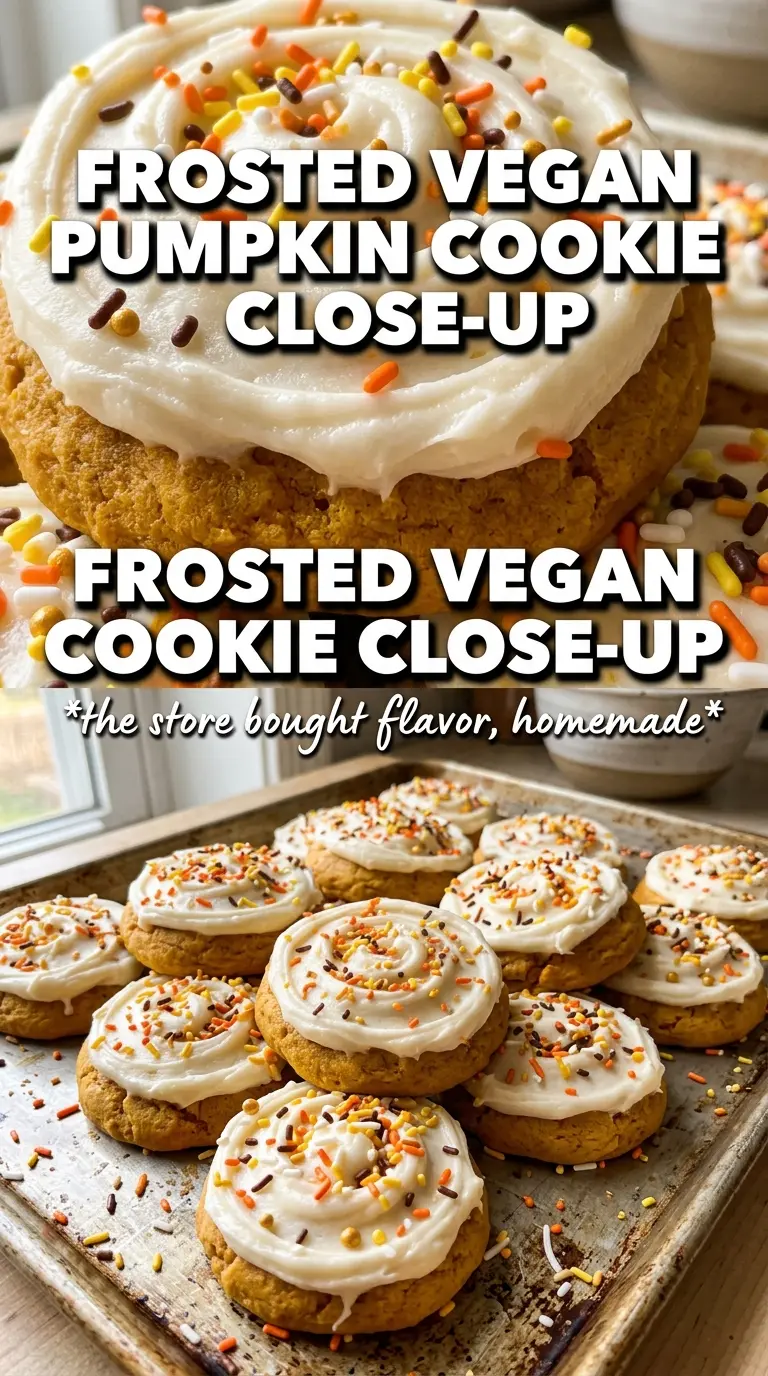
That soft dough is supposed to look a little messy. If it feels stiff enough to roll cleanly by hand, it’s probably already too dry. The right dough scoops easily, presses slightly flat, and still looks plush before it goes into the oven. Pull the cookies when the edges are just set and the centers still look slightly underbaked; they’ll finish on the hot pan.
What Each Part of the Dough Is Actually Doing
- All-purpose flour — This gives the cookies their soft-but-sturdy structure. Bread flour would make them too chewy, and a gluten-free blend needs a binder to behave the same way.
- Vegan butter — Use a stick-style vegan butter if you can. It brings the classic butter flavor and helps the cookies spread just enough, while tub-style spreads can make the dough greasy.
- Coconut oil — Keep it solid, not melted. Solid coconut oil helps the cookies hold a thicker shape and gives that tender bakery-style bite.
- Pumpkin puree — This adds color, moisture, and gentle pumpkin flavor. Use pure pumpkin puree, not pumpkin pie filling, or the cookies will come out too sweet and spiced in the wrong way.
- Vegan cream cheese frosting — This is the part that makes the cookies taste like the refrigerated classic. A tangy vegan cream cheese works best because it balances the sweetness and keeps the frosting from tasting flat.
Mixing the Dough Without Overworking It
Start with the dry ingredients
Whisk the flour, baking powder, baking soda, spices, and salt together until the color looks even and the spices are fully dispersed. That keeps you from getting one bite that tastes like straight cinnamon and another that tastes plain. If the spice clumps stay behind, they won’t break up later.
Cream the fats until they look fluffy
Beat the vegan butter, solid coconut oil, and sugar until the mixture lightens and looks creamy around the edges of the bowl. You’re not trying to whip in a ton of air here; you’re trying to dissolve the sugar a bit and spread the fat evenly. If the coconut oil is too warm and slushy, the dough will bake up flatter, so start with it just firm enough to press.
Fold in the flour just until the dough comes together
Add the dry ingredients and stop mixing as soon as no streaks of flour remain. The dough should feel soft and scoopable, not smooth like a frosting or stiff like bread dough. Overmixing makes these cookies tougher and can push the texture toward dense and dry.
Bake for set edges and soft centers
Scoop the dough into mounds, press each one slightly flat, and bake until the edges look set and the tops lose their raw sheen. They should not look deeply browned. If you wait for a full golden color, the cookies will overbake before the centers stay soft.
Cool completely before frosting
Let the cookies cool all the way on a rack or the frosting will melt and slide. The cookies firm up as they cool, which is part of what gives them that classic bakery-cookie texture. Frosting them early is the fastest way to ruin the look and the texture.
How to Change the Recipe Without Losing the Soft-Baked Texture
Dairy-Free as Written
This recipe is already built for a dairy-free kitchen if you use vegan butter, vegan cream cheese, and plant milk. The important part is choosing a vegan butter that behaves like a stick of butter, not a soft spread, because the firmer fat helps the cookies keep their shape.
Skip the Frosting for a Less-Sweet Cookie
The cookies still taste complete without frosting if you want something less rich. You can roll the dough balls in a little granulated sugar before baking for a light sparkle and a crisper edge, but the final cookie will taste closer to a soft pumpkin snickerdoodle than the full copycat version.
Gluten-Free Version
A 1:1 gluten-free baking blend can work here, but the cookies may spread a little more and feel slightly more delicate. Chill the dough for 20 to 30 minutes before scooping if the batter seems loose, and handle the baked cookies gently until they’re fully cool.
Storage and Reheating
- Refrigerator: Store frosted cookies in an airtight container for up to 4 days. Separate layers with parchment so the frosting doesn’t smear.
- Freezer: Freeze the unfrosted cookies for up to 2 months. The frosted version can freeze, but the frosting texture softens a bit after thawing, so I freeze them only if I have to.
- Reheating: Let frozen cookies thaw at room temperature, then add frosting if needed. Don’t microwave frosted cookies; the icing turns slick and the cookie underneath loses that soft-baked edge.
Questions I Get Asked About This Recipe
Copycat Vegan Pillsbury Pumpkin Sugar Cookies
Ingredients
Equipment
Method
- Preheat the oven to 350°F and line baking sheets with parchment. Use two sheets if needed so the cookies bake in an even batch.
- Whisk together the all-purpose flour, baking powder, baking soda, pumpkin pie spice, cinnamon, and salt. Whisk until the spices are evenly distributed with no streaks of seasoning.
- Beat the softened vegan butter and solid coconut oil with the granulated sugar until creamy. The mixture should look lighter and smoother as you beat.
- Add pumpkin puree, plant milk, and vanilla extract to the creamy mixture. Mix just until combined and the batter looks uniformly orange-tinted.
- Fold the flour mixture into the wet ingredients until a soft dough forms. Stop when no dry flour remains; the dough will look pillowy and slightly sticky.
- Scoop the dough into 1-1/2 tablespoon balls and press them slightly flat. Keep spacing on the sheet so the cookies spread without merging.
- Bake at 350°F for 10-12 minutes until the edges just set. The centers should still look slightly soft rather than fully dry.
- Cool the cookies completely before frosting. Let them cool fully so the frosting doesn’t melt or slide.
- Beat the vegan cream cheese frosting ingredients (vegan cream cheese, powdered sugar, orange food coloring, and vanilla) until smooth. Stop when the frosting is thick enough to hold swirls.
- Frost generously on top of the cooled cookies and add sprinkles. The goal is bold coverage with visible orange swirls over each cookie.