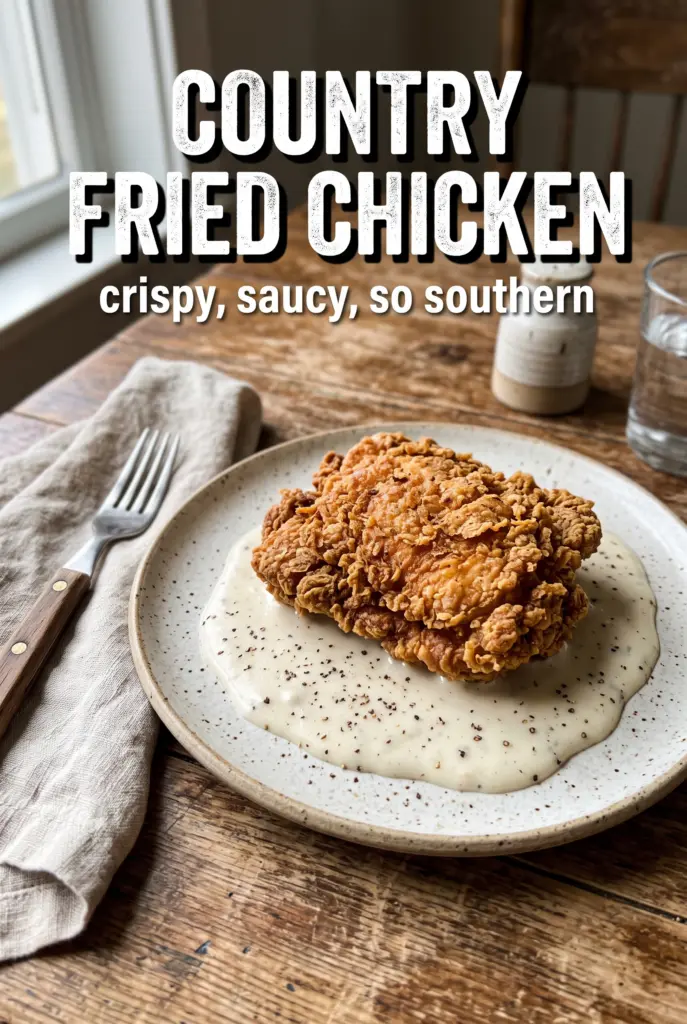
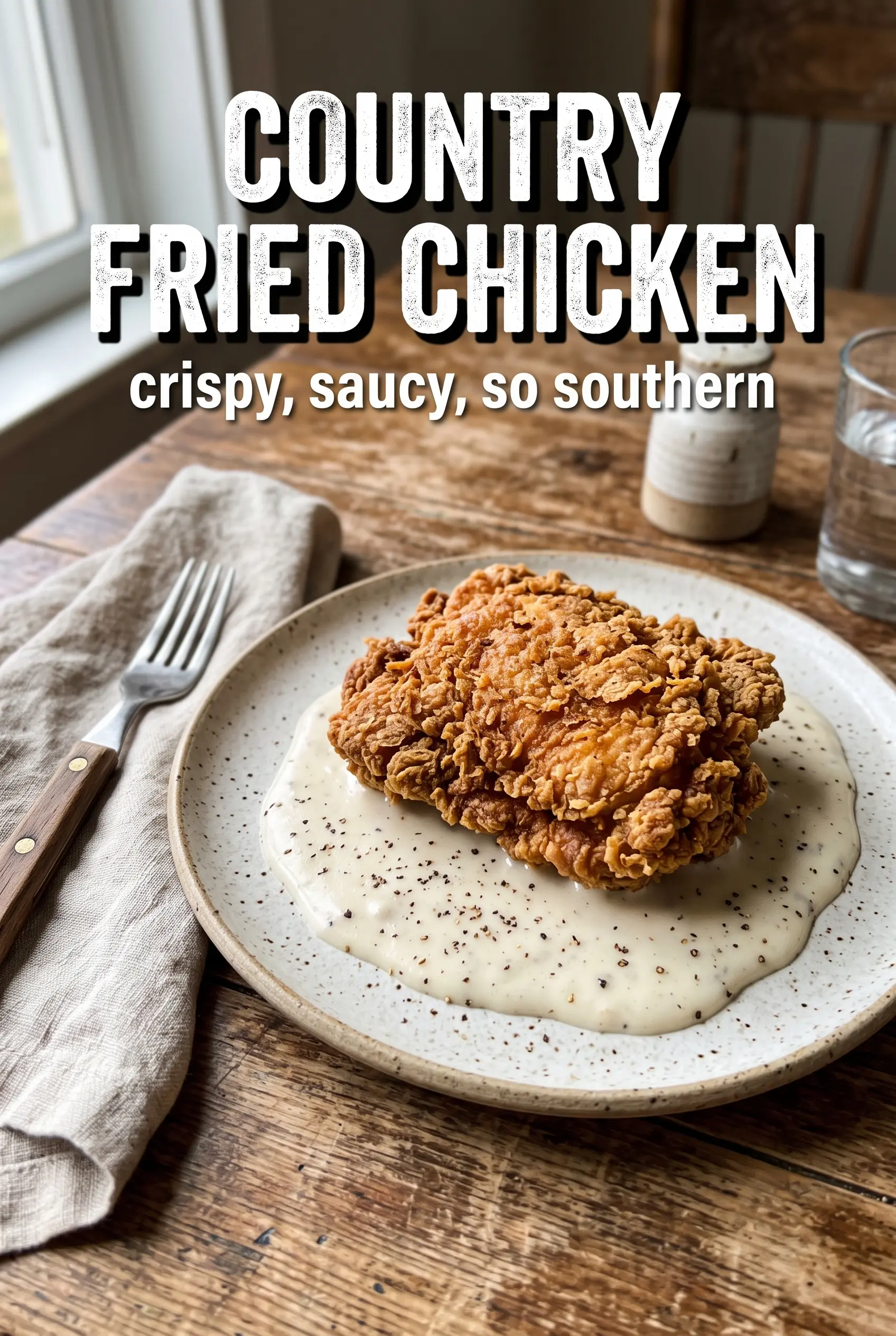
Country fried chicken earns its place at the table because the crust stays shatteringly crisp even after the gravy goes on. The chicken underneath turns juicy and tender from the buttermilk soak, and the coating has that deep, craggy, seasoned finish that makes you go back for another piece before you’ve even set the fork down. When it’s done right, the gravy doesn’t soften the crust into mush; it settles into the ridges and clings to every bite.
The key is in the dredge and the fry temperature. Cornstarch keeps the coating lighter and a little more brittle, while the buttermilk helps the seasoning stick and gives the chicken time to relax so it cooks evenly. Frying at 325°F gives the crust time to brown before the meat overcooks, which matters a lot with bone-in pieces. If the oil runs too hot, the outside will darken before the chicken is cooked through; too cool, and the crust turns greasy instead of crisp.
Below, I’ll walk through the part that makes the biggest difference: how to get that rough, layered crust that fries up beautifully, plus the gravy method that keeps the pan drippings working in your favor.
The crust stayed crisp under the gravy, and the chicken came out juicy all the way to the bone. I used the full hour in buttermilk and the coating fried up with those little craggy bits that held onto the pepper gravy perfectly.
Save this country fried chicken for the nights when you want a shatteringly crisp crust, tender bone-in chicken, and plenty of peppery gravy.
The Crust Stays Crisp Because the Chicken Fries at the Right Speed
The biggest mistake with country fried chicken is rushing the heat. If the oil is too hot, the coating browns before the bone-in pieces cook through. If it’s too cool, the flour drinks up oil and the crust turns heavy instead of crunchy. A steady 325°F gives you time for the flour, cornstarch, and spices to fry into a rough, hard shell while the chicken stays juicy inside.
The other piece people skip is letting the dredge really cling. Press the flour mixture onto the damp chicken so it forms those uneven little ridges. That’s where the crunch lives. A smooth, even coating never fries up with the same texture.
What Each Ingredient Is Actually Doing in This Dish

- Bone-in chicken pieces — Bone-in pieces stay juicier and hold up better during frying than boneless cuts. If you want the best texture, keep the skin on if your pieces have it; it helps the crust develop more flavor and adds another layer of crunch.
- Buttermilk marinade — Buttermilk tenderizes the chicken and gives the dredge something tacky to grab onto. The hot sauce doesn’t make it spicy at this amount; it just adds a little edge to the seasoning. If you don’t have buttermilk, use milk mixed with 2 tablespoons lemon juice or vinegar, but the coating won’t cling quite as well.
- Cornstarch in the dredge — This is the ingredient that keeps the crust light and crisp. All flour gives you a softer coating, but cornstarch helps the crust fry up with more bite and less chew.
- Smoked paprika, garlic powder, onion powder, and cayenne — These build a seasoned crust that doesn’t depend on the gravy for flavor. The cayenne adds warmth, not heat that overwhelms. If you want a milder version, cut it in half rather than leaving it out completely.
- Whole milk and chicken broth for the gravy — Whole milk gives the gravy body and a smooth finish, while broth keeps it from tasting flat. Low-fat milk works in a pinch, but the gravy will be thinner and less rich.
Building the Fry and the Gravy Without Losing the Crunch
Let the Chicken Sit in the Buttermilk Long Enough
Give the chicken at least an hour in the buttermilk mixture, and overnight is even better if you’ve planned ahead. The chicken should come out coated but not dripping; let the excess slide off before it hits the flour. If the pieces are soaking wet, the dredge turns pasty and slides off in the oil.
Press the Flour into the Damp Spots
Whisk the dredge well so the spices are evenly distributed, then press each piece into the flour mixture instead of just tossing it around. Lift the chicken and squeeze a little coating onto any bare spots so the crust forms unevenly and thickly. Those rough patches are what fry into the best crunchy bits. A smooth, thin coating won’t give you the same texture.
Fry Low and Steady in Cast Iron
Use a large cast-iron skillet and keep the oil around 325°F. Add the chicken without crowding the pan; too many pieces at once drop the temperature and make the crust greasy. Turn the chicken only when the underside has set into a deep golden crust that releases easily from the pan. If it sticks, it needs another minute.
Build the Gravy in the Same Pan
Pour off most of the frying oil, leaving a little behind with the browned bits in the skillet. Melt the butter, whisk in the flour, and cook it for a minute or two so the gravy doesn’t taste raw. Add the milk and broth gradually while whisking so the sauce stays smooth. If it turns lumpy, the liquid went in too fast or the pan was too hot; lower the heat and keep whisking until it smooths out.
Oven-Finished Chicken for Larger Pieces
If your chicken pieces are especially large, fry them until deeply golden, then finish in a 375°F oven until they reach 165°F inside. That keeps the crust from over-browning before the meat is done. It’s the best fix when the outside looks perfect but the bone-in center still needs time.
Gluten-Free Coating
Swap the all-purpose flour for a 1:1 gluten-free flour blend and keep the cornstarch. The crust will still crisp well, though it may brown a little faster, so watch the pan closely. The gravy also thickens just fine with the same gluten-free blend.
Dairy-Free Version
Use a plain unsweetened dairy-free milk with a splash of lemon juice for the marinade, then make the gravy with unsweetened oat milk or chicken broth alone. You’ll lose some of the classic richness, but the seasoning and frying method still give you a solid, crispy result.
Country Gravy with Extra Pepper
If you like a sharper gravy, add more black pepper after the milk and broth thicken instead of loading it all in at the beginning. Pepper blooms a little in the butter, but the finish should taste bold and a touch rustic. That peppery bite is part of what makes the chicken taste complete.
Storage and Reheating
- Refrigerator: Store the chicken and gravy separately for up to 3 days. The crust will soften in the fridge, but it still reheats well.
- Freezer: The fried chicken freezes better than the gravy. Freeze the chicken on a tray, then bag it once solid; freeze the gravy separately only if you don’t mind a slightly changed texture after thawing.
- Reheating: Reheat chicken on a rack in a 375°F oven until hot and crisp again. Warm the gravy slowly on the stove with a splash of milk or broth, whisking often. The common mistake is microwaving everything together, which turns the crust soggy fast.
Questions I Get Asked About This Recipe
Country Fried Chicken
Ingredients
Equipment
Method
- In a bowl, mix buttermilk with hot sauce, salt, and black pepper until combined. Add the bone-in chicken pieces, cover, and refrigerate for 1 hour (up to overnight), turning once if you like.
- In a shallow bowl, whisk all-purpose flour, cornstarch, garlic powder, onion powder, smoked paprika, cayenne, salt, and black pepper until evenly colored.
- Remove chicken from the buttermilk marinade and let excess drip off, then dredge pieces in the flour mixture, pressing the coating to adhere. Arrange dredged chicken on a rack or tray while the oil heats.
- Heat vegetable oil in a large cast-iron skillet to 325F. Fry chicken 12-15 minutes per side, until deeply golden and cooked through (165F internal), using tongs to avoid knocking off the crust.
- Reduce heat slightly and melt butter in the same skillet. Whisk in flour and cook 1-2 minutes to remove the raw flour taste, then gradually whisk in whole milk and chicken broth and cook until thick.
- Season the gravy with plenty of salt and lots of black pepper. Keep warm so it pours easily over the chicken.
- Serve the fried chicken smothered in country gravy and finish with cracked black pepper for a fresh, speckled look.