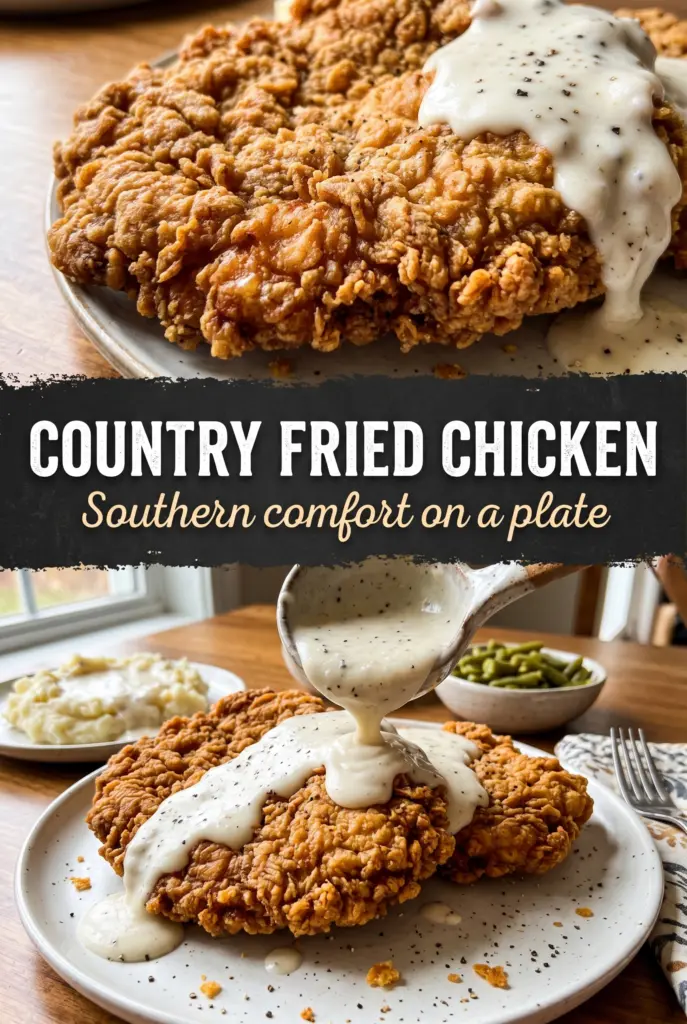
Shatteringly crisp on the outside and juicy all the way to the bone, country fried chicken earns its place in the dinner rotation because the crust stays crunchy and the meat stays tender. The seasoned flour clings in thick, craggy layers, and that deep golden coating is exactly what you want when you cut into a piece and hear the crackle.
The buttermilk soak does more than add tang. It loosens the surface of the chicken just enough for the flour to grab on, which is how you get that rugged, old-school crust instead of a thin dusty coating. The hot sauce doesn’t make the chicken spicy in a loud way; it just wakes up the seasoning so the gravy and the chicken taste fuller together.
Below, I walk through the double-dredge that gives this chicken its crunch, the oil temperature that keeps the crust from going greasy, and the little gravy move that turns the pan drippings into something worth spooning over everything on the plate.
The crust stayed crisp even after I poured the gravy on, and the chicken was still juicy after frying. The double dip in flour made all the difference.
Save this country fried chicken for the nights when you want a crackly crust, creamy gravy, and a plate that disappears fast.
The Crust Stays Crunchy When You Stop Fighting the Flour
Most fried chicken goes wrong before it even hits the skillet. The coating gets rubbed on too lightly, the oil isn’t hot enough, or the chicken sits in the breading until it turns pasty and starts sliding off. This version avoids that by building a thick flour shell with a second dredge, which gives you the rough, craggy texture that fries into real crunch instead of a thin shell.
The other trap is heat. If the oil is too cool, the crust drinks up grease and turns heavy. If it’s too hot, the outside darkens before the chicken cooks through. A steady 350°F gives the coating time to set and brown while the meat stays juicy, and letting the chicken rest in the flour for a moment before frying helps the coating cling instead of flaking away in the pan.
What Each Ingredient Is Actually Doing in This Dish

- Bone-in chicken pieces — Bone-in breasts or thighs stay juicier than boneless cuts and give you more forgiving frying time. Thighs handle frying beautifully, but breasts work too if you keep an eye on the thermometer and pull them at 165°F.
- Buttermilk — This is the soak that softens the surface and helps the flour stick. If you don’t have buttermilk, mix 2 cups milk with 2 tablespoons lemon juice or vinegar and let it sit for 5 minutes, but the tang and body of real buttermilk still give the best coating.
- Hot sauce — It doesn’t make the chicken spicy; it sharpens the marinade and adds a little depth. Use your favorite vinegar-based hot sauce, not a thick sweet one.
- All-purpose flour — This is the backbone of the crust and the gravy. A higher-protein flour can make the coating a little tougher, so standard all-purpose is the right choice here.
- Smoked paprika, garlic powder, onion powder, cayenne, black pepper — These season the crust from the inside out, so every bite tastes seasoned all the way through instead of just salty on the surface. Don’t cut them too far; fried chicken needs enough seasoning to stand up to the gravy.
- Vegetable oil — Use a neutral oil with a high smoke point. You need enough depth for the chicken to fry evenly without scorching the flour before the center cooks.
- Pan drippings — Those browned bits left in the skillet are the base of the gravy, and they matter. If you strain or wipe them out, the gravy loses the roasted chicken flavor that makes country gravy worth serving.
- Whole milk — Whole milk gives the gravy body and a clean, creamy finish. Lower-fat milk will work in a pinch, but the gravy won’t be as silky.
How to Build the Crunch Before the Gravy Goes On
The Buttermilk Soak
Put the chicken in the buttermilk and hot sauce long enough for the surface to soften and pick up a little tang. Thirty minutes works when you’re in a hurry, but an overnight soak gives the coating a better grip and a deeper seasoned bite. If the chicken comes straight from the fridge, give it a few minutes on the counter before dredging so the coating doesn’t seize up unevenly in the oil.
The Double Dredge
Lift each piece out of the marinade and let the excess drip off before it goes into the flour. Press the flour on firmly, then dip it back into the buttermilk and flour again for that thick, craggy crust. The biggest mistake here is shaking off too much flour between dips; you want clumps and ridges, because that’s what turns crisp instead of smooth.
The Fry and the Gravy
Heat the oil to 350°F and keep it there. Add the chicken carefully so the temperature doesn’t crash, and fry until the crust is deep golden and the thickest part reaches 165°F. Let the pieces drain briefly before making the gravy in the same skillet with the drippings and flour, whisking in milk slowly so it turns smooth instead of lumpy. If the gravy looks too thick, add a splash more milk. If it tastes flat, it needs salt and a good grind of pepper, not more flour.
How to Adapt This for Different Kitchens and Different Plates
Dairy-Free Version
Swap the buttermilk for unsweetened dairy-free milk mixed with 2 tablespoons lemon juice or vinegar, then use a rich unsweetened oat milk for the gravy. The crust will still fry up crisp, but the gravy will be a touch less lush than the original.
Gluten-Free Coating
Use a cup-for-cup gluten-free flour blend in place of the all-purpose flour. The crust won’t shatter quite the same way as wheat flour, but it will still get crunchy if you keep the oil steady and don’t crowd the pan.
Extra-Spicy Chicken
Increase the cayenne to 1 1/2 teaspoons and add a pinch of black pepper to the buttermilk soak. That gives the crust a sharper finish without muddying the gravy.
Storage and Reheating
- Refrigerator: Store leftovers in an airtight container for up to 3 days. The crust softens, but it still tastes good.
- Freezer: Fried chicken freezes well without the gravy. Wrap pieces tightly and freeze for up to 2 months.
- Reheating: Reheat on a wire rack in a 375°F oven until hot and crisp, about 15 to 20 minutes. Skip the microwave if you want the coating to stay crunchy. Warm the gravy separately on low heat with a splash of milk.
Answers to the Questions Worth Asking
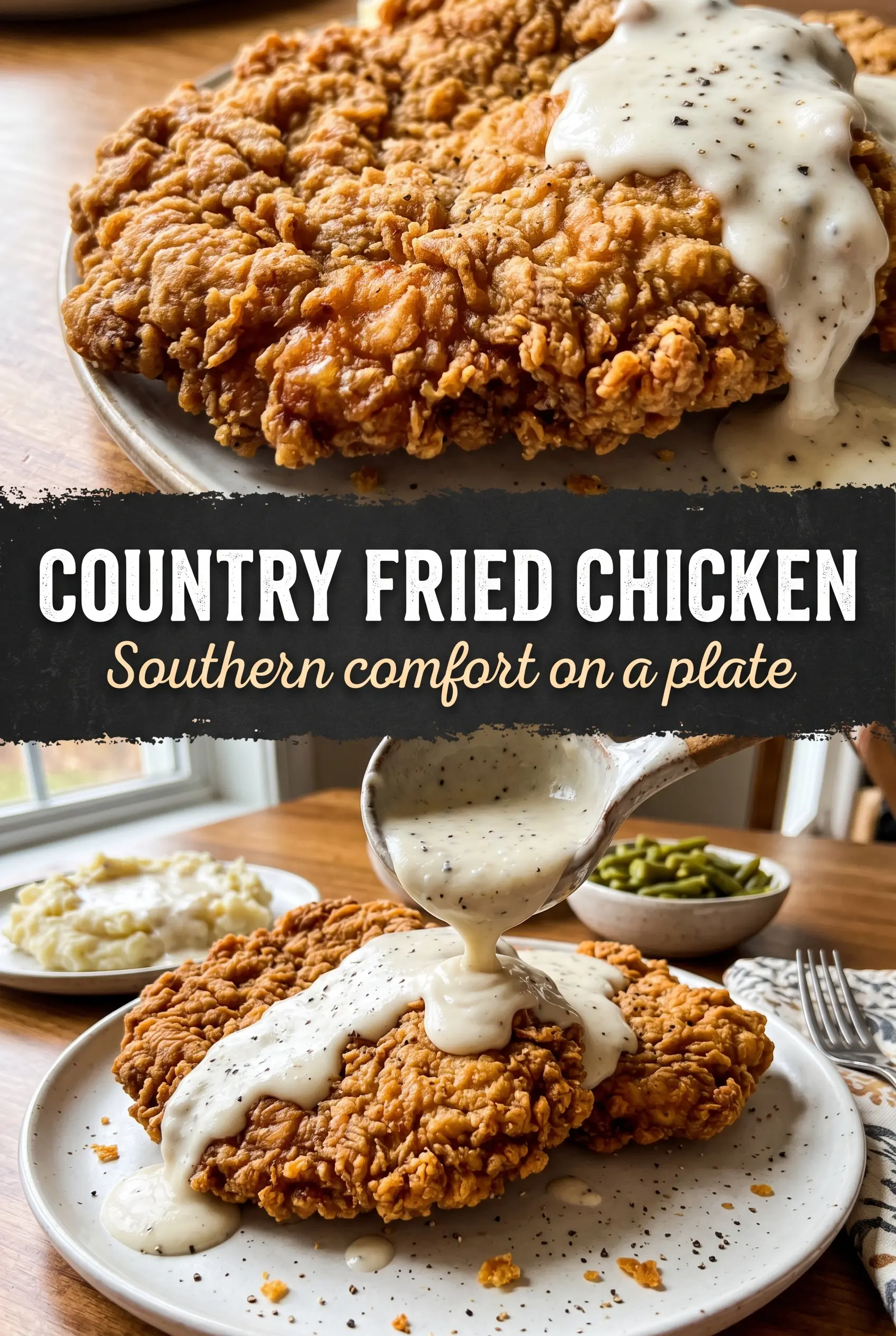
Country Fried Chicken
Ingredients
Equipment
Method
- Soak the bone-in chicken pieces in buttermilk and hot sauce for at least 30 minutes or overnight, fully submerging as much as possible for even seasoning.
- Whisk together the all-purpose flour, garlic powder, onion powder, smoked paprika, cayenne pepper, salt, and cracked black pepper in a shallow dish until the mixture is evenly speckled.
- Remove the chicken from buttermilk, letting excess drip off, then dredge firmly in the seasoned flour until well coated.
- Repeat the dip-and-dredge for extra crunch so the coating layer is thicker and adheres better.
- Heat 2–3 inches of vegetable oil to 350°F in a large cast iron skillet until the oil holds steady at the target temperature.
- Fry the chicken for 10–12 minutes per side, until deeply golden and the internal temperature reaches 165°F, flipping once when each side is set and crisp.
- Drain the fried chicken on paper towels until excess oil is removed and the coating stays crisp.
- Whisk pan drippings and flour in a skillet over medium heat for 1 minute to cook off the raw flour taste.
- Gradually whisk in whole milk and cook until thickened, stirring continuously to prevent lumps and to reach a smooth, pourable consistency.
- Season the white gravy with salt and pepper to taste, then keep it warm while you plate.
- Serve the chicken immediately with white gravy poured over the top so the gravy pools around the base of the crispy coating.