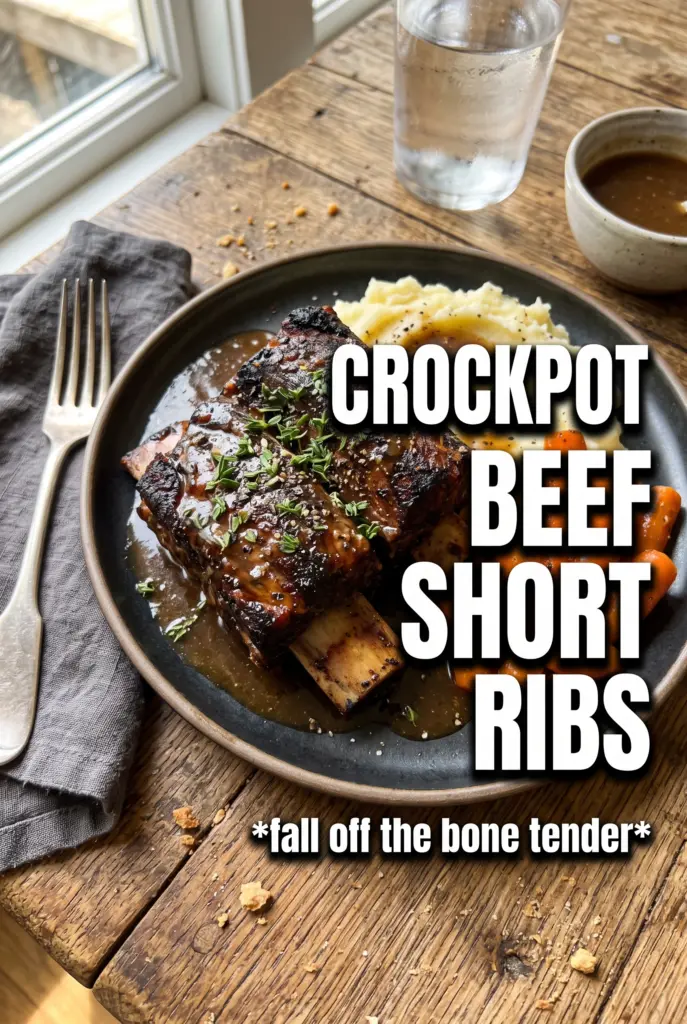
Slow-cooked beef short ribs turn into the kind of dinner that makes the whole kitchen smell like you’ve been working on it all day, even though most of the work happens up front. The meat goes from firm and marbled to spoon-tender, and the sauce underneath picks up every browned bit from the skillet, every bit of wine, and all the sweetness from the vegetables. Piled over mashed potatoes, it’s the kind of meal that lands heavy in the best way.
The sear matters here. Short ribs can handle long cooking, but they still need that deep brown crust before they go into the Crockpot or the braising liquid will taste flat. The wine and tomato paste give the sauce backbone, while the carrots, celery, and onion melt down into the broth and round out the edges. A little cornstarch at the end is what turns the cooking liquid into a proper glossy gravy instead of a thin broth.
Below, I’m walking through the parts that make this work reliably: how to build real flavor before the slow cook starts, what each ingredient is doing, and how to thicken the sauce without turning it dull or gluey.
The ribs were fall-apart tender after 8 hours, and the sauce thickened up beautifully with the cornstarch at the end. I served it over mashed potatoes and my husband went back for seconds.
Save these Crockpot Beef Short Ribs for the nights when you want fall-off-the-bone meat and a deep red wine sauce over mashed potatoes.
The Sear That Keeps the Sauce from Tasting Flat
Short ribs have enough fat and connective tissue to become tender in the slow cooker, but tenderness alone isn’t the goal. You want a braising liquid with depth, and that starts before the Crockpot lid ever goes on. Browning the ribs hard in a hot skillet builds the savory base that the broth alone can’t give you. If you skip that step or crowd the pan, you’ll end up with pale meat and a sauce that tastes boiled instead of braised.
The other place this goes sideways is heat. A slow cooker is great at softening meat, but it won’t reduce and concentrate flavors the way a stovetop pot does. That’s why the tomato paste, wine, and browned drippings matter so much here. They give the sauce body while the ribs cook low and slow, so the final gravy tastes like it took all day in the best possible way.
What Each Ingredient Is Actually Doing in This Dish
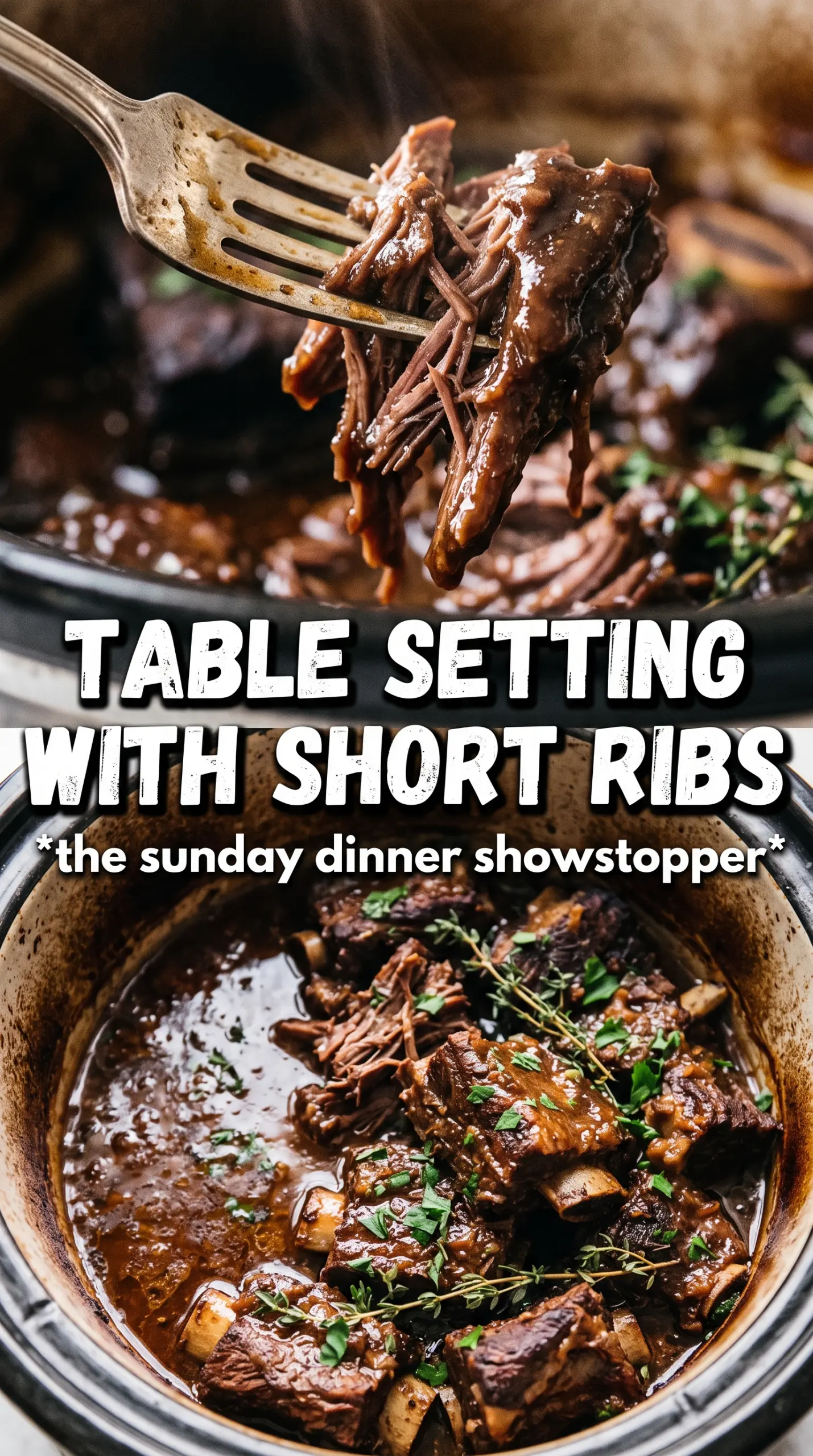
- Beef short ribs — Bone-in ribs give you the richest flavor and the best texture after a long braise. Boneless will work in a pinch, but they won’t be quite as silky or deeply beefy.
- Red wine — This adds acidity and complexity, and it keeps the sauce from tasting heavy. Use a dry wine you’d actually drink; cooking doesn’t hide a bad bottle.
- Tomato paste — A little paste goes a long way toward giving the sauce color and a concentrated, savory backbone. Cooked slowly with the broth, it rounds out the braising liquid instead of making it taste tomato-forward.
- Onion, carrot, and celery — This is the flavor base that melts into the sauce while the ribs cook. Dice them small so they soften fully and disappear into the gravy instead of staying chunky and sharp.
- Cornstarch — This is the cleanest way to thicken the liquid at the end without boiling the sauce down for too long. Mix it with cold liquid first, then stir it in on High so it thickens evenly.
Building the Braise So the Meat Falls Off Cleanly
Brown the ribs first
Season the short ribs generously with salt and pepper, then sear them in hot olive oil until each side is deeply browned. You’re looking for a dark crust, not just a tan surface. If the pan is crowded, the ribs will steam and you’ll lose that crust, so work in batches if you need to. Those browned bits left in the skillet are part of the sauce, so don’t wipe the pan clean.
Set up the slow cooker base
Spread the onion, garlic, carrots, and celery across the bottom of the Crockpot, then nestle the ribs on top. This keeps the meat from sitting directly in a dense pile of vegetables and helps the sauce circulate around everything. Whisk the broth, wine, tomato paste, and Worcestershire sauce together before pouring them in so the tomato paste doesn’t clump. The liquid should come partway up the ribs, not drown them completely.
Cook low until the meat gives way
Add the thyme, rosemary, and bay leaves, then cover and cook on Low for 7 to 8 hours. Don’t rush this on High unless you have to; low heat gives the connective tissue time to soften without tightening the meat. When they’re ready, the ribs should lift apart with a spoon and the bone should release easily. If the meat still feels firm, it needs more time.
Finish the sauce before serving
Pull the ribs and bay leaves out first, then skim off any excess fat from the surface of the braising liquid. Stir in the cornstarch slurry and cook on High for about 15 minutes until the sauce turns glossy and lightly coats a spoon. If it stays thin, the slurry probably needed another minute or two to heat through. Spoon that sauce over mashed potatoes while it’s still hot.
How to Adapt These Short Ribs Without Losing the Good Part
Alcohol-Free Short Ribs
Swap the red wine for extra beef broth plus 1 tablespoon of balsamic vinegar. You’ll lose some of the wine’s depth, but the vinegar brings back enough brightness to keep the sauce from tasting one-note.
Gluten-Free Version
This dish is naturally close to gluten-free already, but check that your Worcestershire sauce and beef broth are certified gluten-free. Cornstarch works well as the thickener here, so you don’t need any flour to get a proper gravy.
Make It Ahead for Easier Dinner
You can sear the ribs and chop the vegetables the day before, then store everything separately in the fridge. That cuts the active prep down fast, and the flavor doesn’t suffer because the long braise still happens fresh in the slow cooker.
Skip the Potatoes and Serve It Another Way
Mashed potatoes are classic because they catch the sauce, but creamy polenta or buttered egg noodles work too. Anything soft enough to soak up the braising liquid will give you the same comforting result.
Storage and Reheating
- Refrigerator: Store leftovers in an airtight container for up to 4 days. The sauce gets even richer overnight, and the fat will rise and firm up on top.
- Freezer: These short ribs freeze well for up to 3 months. Freeze the meat and sauce together in a sealed container, and thaw it overnight in the fridge before reheating.
- Reheating: Warm gently on the stovetop or in a covered dish in a 325°F oven until hot through. Don’t boil it hard or the meat can dry out and the sauce can separate.
Questions I Get Asked About This Recipe
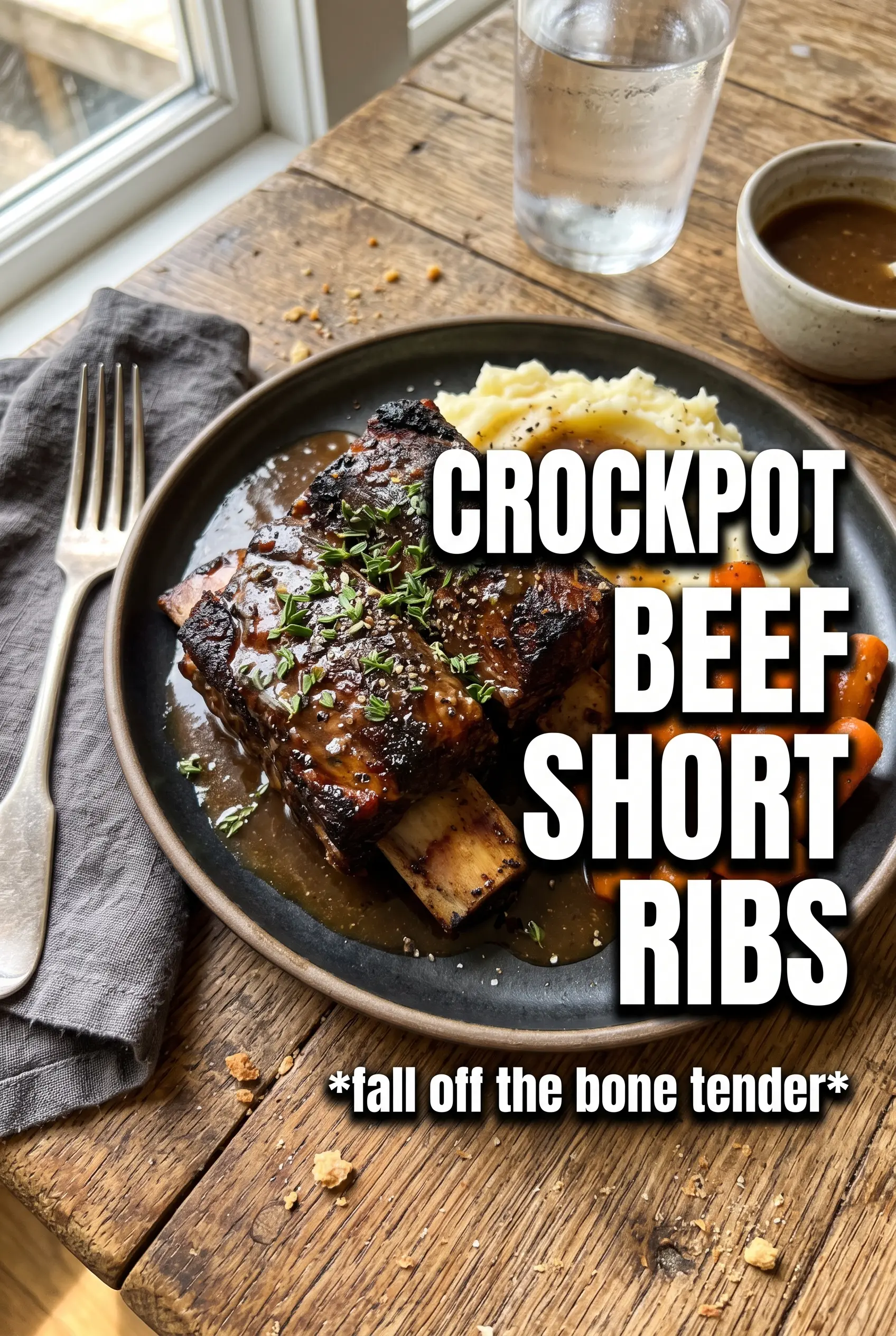
Crockpot Beef Short Ribs
Ingredients
Equipment
Method
- Season the short ribs generously with salt and pepper, then heat olive oil in a hot skillet. Sear until deeply browned on all sides, using a hot skillet for strong color.
- Place the diced onion, minced garlic, diced carrots, and diced celery in the crockpot. Spread them into an even layer so the vegetables soften as the ribs braise.
- Nestle the seared ribs on top of the vegetables. Arrange them so they sit mostly in a single layer for even cooking.
- Whisk beef broth, red wine, tomato paste, and Worcestershire sauce until smooth. Pour the braising liquid over the ribs so they are partially submerged.
- Add dried thyme, dried rosemary, and bay leaves to the crockpot. Make sure the herbs and bay leaves are distributed through the braising liquid.
- Cook on Low for 7–8 hours until the meat is falling off the bone. Keep the lid closed to maintain steady low heat.
- Remove the ribs and bay leaves, then skim fat from the braising liquid. Skimming helps keep the sauce from feeling greasy.
- Thicken the braising liquid with a cornstarch slurry, then cook on High for 15 minutes. Stir as it thickens until the sauce turns glossy and coats the back of a spoon.
- Serve the ribs over mashed potatoes with the rich braising sauce. Spoon sauce over the top so the potatoes soak up the braising liquid.