Tangy, creamy dill pickle potato salad earns its place on the table because it wakes up the whole plate. The potatoes stay tender but not mushy, the chopped pickles bring crunch in every bite, and the dressing hits that sharp, salty, dill-heavy note that keeps you going back for one more spoonful. It tastes familiar at first, then the pickle juice comes through and makes you realize this isn’t the usual picnic salad.
The trick is balancing the dressing so it tastes bright before it chills. Pickle juice does the heavy lifting here, but Dijon keeps the flavor from going flat and mayo gives the salad body without turning it heavy. I also like using red potatoes because they hold their shape after boiling and don’t collapse once the dressing goes in.
Below you’ll find the small timing detail that keeps the potatoes from getting waterlogged, plus a few smart swaps if you want to adjust the tang, the crunch, or the richness.
The dressing clung to every potato cube and the pickle juice gave it this sharp, clean finish that didn’t taste heavy at all. I chilled it for two hours like suggested and the flavor was even better the next day.
Save this dill pickle potato salad for picnics, potlucks, and any side dish spread that needs extra tang and crunch.
The Part Most Potato Salads Get Wrong: Dressing Too Late
Potato salad falls apart when the potatoes go from hot to cold without any seasoning in between. Warm potatoes absorb more flavor, which is exactly why this salad tastes better if you dress it while they’re still just warm enough to drink in the pickle juice and mustard. If you wait until everything is fully chilled, the dressing sits on the outside and the center tastes bland.
The other trap is overcooking the potatoes. Red potatoes should be tender when pierced but still intact at the edges. If they’re cooking into a starchy mash, the dressing will turn heavy and the pickles will get lost instead of standing out.
- Dress while warm — The potatoes should be drained and cooled just enough that they won’t melt the mayonnaise, but still warm enough to soak up the seasoning.
- Use pickle juice with purpose — It’s not just extra liquid. It sharpens the dressing and gives the salad its signature tang.
- Cut the potatoes evenly — Similar-sized pieces cook at the same rate, so you avoid some falling apart while others stay firm.
What Each Ingredient Is Actually Doing in This Salad
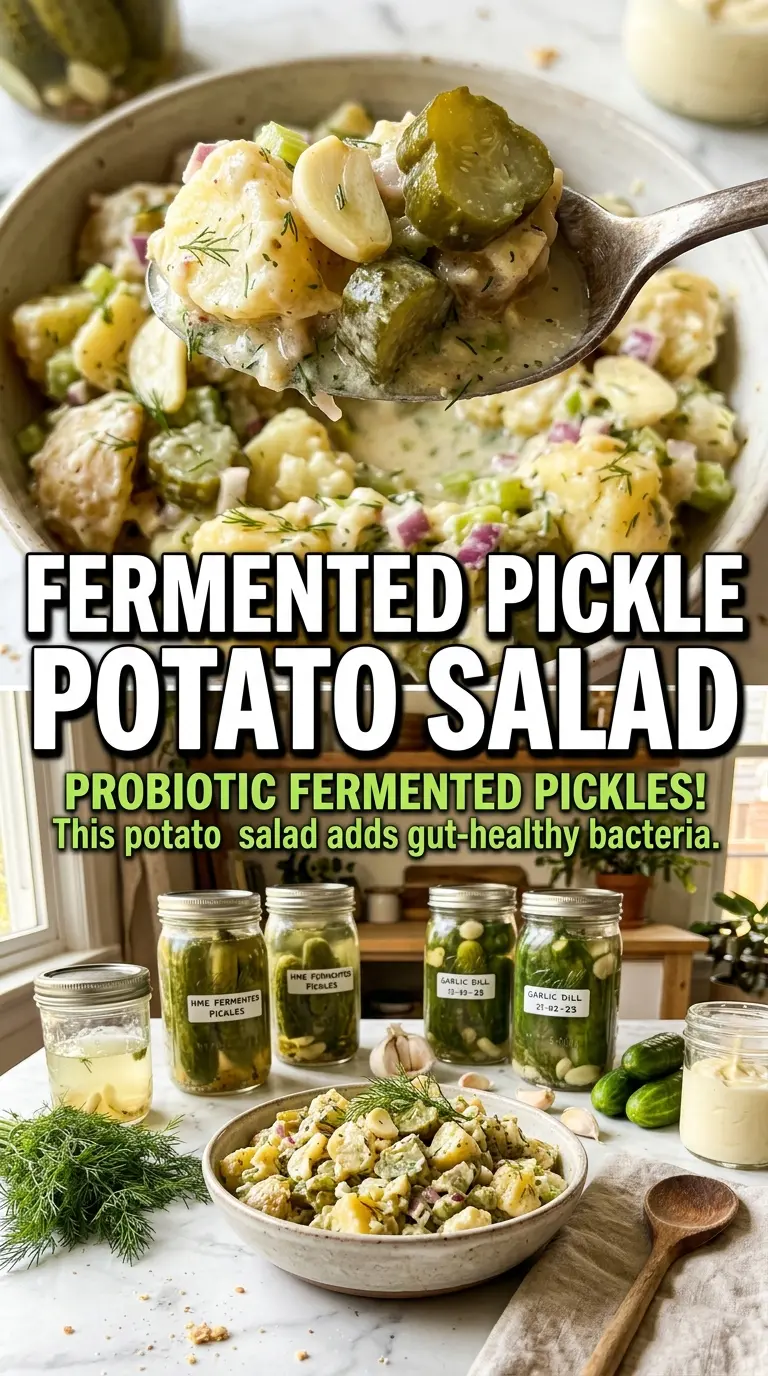
- Red potatoes — These hold their shape better than russets and give you a salad with definition instead of a bowl of mashed potatoes. Yukon golds also work if that’s what you have, but they’ll turn a little silkier.
- Dill pickles — Use pickles you actually like eating. Their flavor leads the whole dish, and their crunch keeps the salad from feeling one-note.
- Pickle juice — This is the fastest way to build that tangy backbone. If yours is especially salty or sharp, start with a little less and add more after tasting the dressing.
- Dijon mustard — Dijon rounds out the acidity and helps the mayonnaise emulsify into a smoother dressing. Yellow mustard will work in a pinch, but it tastes more blunt and less balanced.
- Fresh dill — Dried dill won’t give the same bright finish. Fresh dill is one of the places where quality matters because it lifts the whole bowl right before serving.
- Celery and red onion — These add crunch and bite so the salad doesn’t feel soft from top to bottom. Finely dice the onion so it blends in instead of taking over.
Building the Tang So It Soaks Into Every Bite
Cooking the Potatoes Without Breaking Them
Start the potatoes in salted water and cook them until a knife slides in with only a little resistance. If they’re boiling hard enough to tumble apart, lower the heat; a gentle simmer keeps the cubes intact. Drain them well, then let steam escape for a few minutes so the dressing doesn’t turn watery when it hits the bowl.
Mixing the Dressing Before It Meets the Potatoes
Stir the mayonnaise, pickle juice, and Dijon together until smooth before adding it to the salad. That small step matters because mustard can clump if it goes in unevenly, and the pickle juice needs to be dispersed through the mayo instead of pooling at the bottom. Taste it now. It should taste a touch bold, because the potatoes will soften the edge once they’re folded in.
Folding, Not Smashing
Add the pickles, celery, onion, and dressing to the potatoes and fold gently with a spatula. If you stir like you’re mixing batter, the edges will break down and the salad turns pasty fast. Fold in the dill at the end so it stays bright and visible instead of darkening in the bowl.
Letting the Chill Time Do Its Job
Two hours in the refrigerator changes this from a dressed potato bowl into a proper potato salad. The flavors settle, the onion softens just enough, and the pickle note spreads through every bite. If you serve it straight away, it’ll taste disconnected and sharper than intended.
How to Adapt This for Different Tables and Different Fridges
Make It Lighter With Part Greek Yogurt
Swap half the mayonnaise for plain Greek yogurt if you want a sharper, lighter salad. The texture gets a little tangier and less plush, so it works best if you keep the full amount of pickle juice and taste before serving. Too much yogurt without enough mayo can make the dressing look loose.
Dairy-Free Version That Still Feels Creamy
This recipe is already naturally dairy-free if your mayonnaise is dairy-free, which most standard mayos are. That makes it an easy option for mixed crowds. Just check the jar if you’re using a specialty brand, because a few add milk derivatives for extra richness.
Swap in Sweet Pickles for a Softer Tang
If you prefer a sweeter profile, use half sweet pickles and half dill pickles. The salad will lose some of its sharp edge and taste rounder, but it won’t have the same punchy pickle-forward bite. Add the juice cautiously, since sweet pickle brine can push the dressing in a different direction fast.
Storage and Reheating
- Refrigerator: Store covered for up to 4 days. The potatoes soften a bit as it sits, and the dill flavor gets stronger by day two.
- Freezer: Don’t freeze this salad. The mayonnaise separates and the potatoes turn grainy after thawing.
- Reheating: This salad is meant to be served cold. If it’s been in the fridge for a while, let it sit at room temperature for 15 to 20 minutes so the dressing loosens and the flavors open up.
Questions I Get Asked About This Recipe

Dill Pickle Potato Salad
Ingredients
Equipment
Method
- Bring a large pot of water to a boil, add the cubed red potatoes, and boil at 100°C/212°F for 10–15 minutes until easily pierced with a fork.
- Drain the potatoes and spread them on a sheet pan to cool for 10–15 minutes, until steam subsides and the surface looks dry.
- In a large bowl, combine the cooled red potatoes with chopped dill pickles, diced celery, and finely diced red onion, tossing until the mix is evenly speckled.
- In a separate bowl, whisk mayonnaise, dill pickle juice, Dijon mustard, and salt and pepper until the dressing turns smooth and glossy.
- Pour the dressing over the potato mixture and toss until every piece is coated, then fold in the chopped fresh dill so green flecks stay visible.
- Cover and refrigerate the salad for 2 hours so it thickens slightly and the flavors meld, looking more cohesive and creamy by the end of chilling.
- Stir once and serve cold, with visible pickle chunks and dill flecks throughout.