
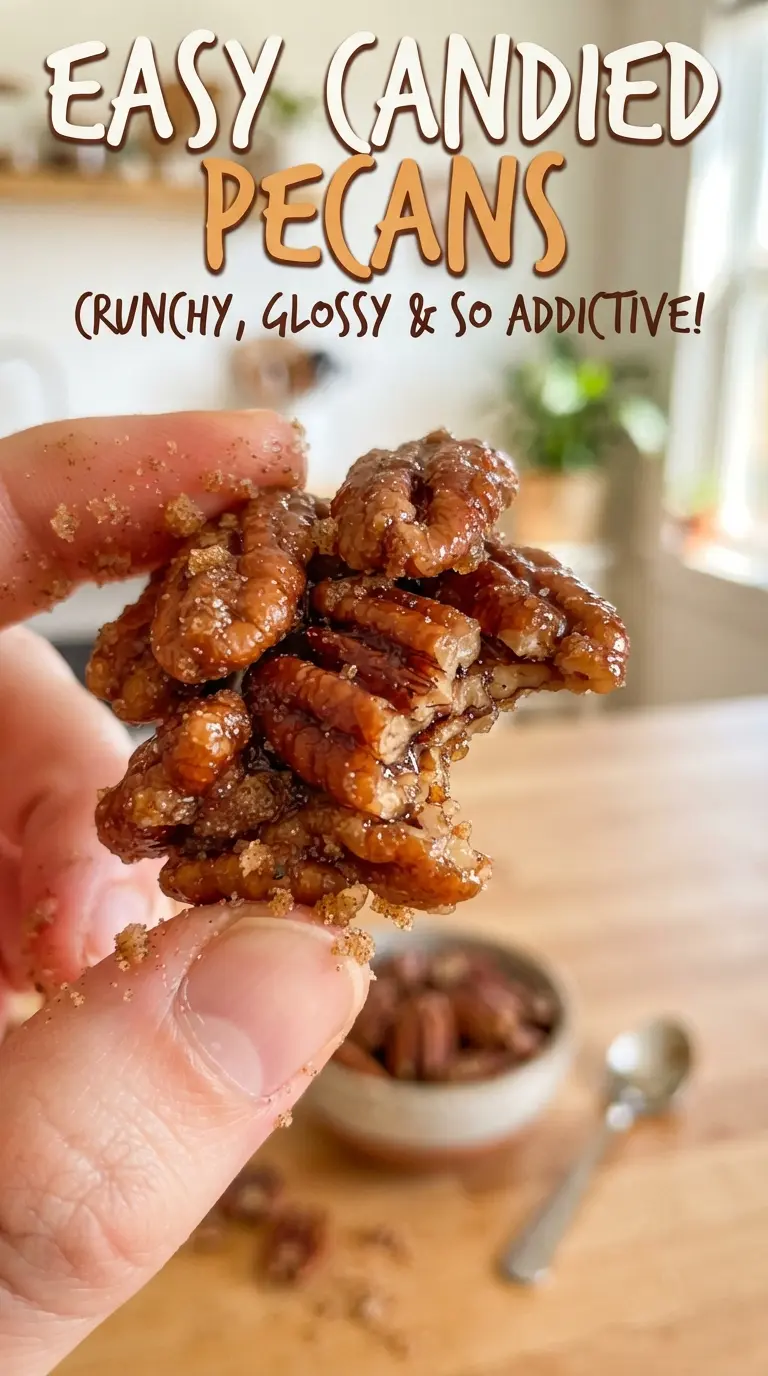
Candied pecans turn out best when they’re glossy, crisp, and deeply scented with cinnamon, not sticky or clumped in sugary patches. The low oven does most of the work here, drying the coating slowly so the sugar sets into a crackly shell instead of melting into a wet mess. When they cool, they get that glassy snap that makes people keep reaching for just one more handful.
The egg white matters more than it looks like it should. It gives the sugar something to cling to and helps the coating bake into a thin, even layer around every pecan half. A touch of vanilla softens the cinnamon-sugar edge, and stirring during the bake keeps the nuts from welding themselves into one giant sheet.
Below, I’ve included the few small details that make the difference between decent candied nuts and the kind you end up putting in jars for snacking, salads, and gift tins. The cooling step matters just as much as the baking step, so don’t judge them until they’re completely cool.
The coating baked up crackly instead of sticky, and once the pecans cooled they had that perfect cinnamon-sugar crunch. I made a double batch for a salad and a snack jar, and both disappeared fast.
These candied pecans bake up crunchy and cinnamon-sweet — save this batch for snacking, salads, or gifting in a jar.
The Trick to a Crackly Coating Instead of a Sticky Clump
The biggest mistake with candied nuts is rushing the heat. If the oven runs too hot, the sugar melts before it dries, and you end up with a syrupy shell that never quite sets. At 250F, the coating has time to dry out as the sugar crystals cling to the egg-white film, which is what gives you that crisp finish instead of a hard, glassy sugar crust.
Stirring every 15 minutes matters for more than even browning. It breaks up the nuts before the coating can fuse into slabs and keeps the cinnamon sugar from collecting in one spot on the pan. If you see wet patches near the end, keep baking until the surface looks dry and sandy-looking before cooling.
What the Egg White, Cinnamon, and Vanilla Are Doing Here
- Pecan halves — Use halves instead of pieces if you want the best crunch and the prettiest finished look. Pieces work, but they break more easily and can over-brown faster because they’re smaller.
- Egg white — This is the binder that makes the sugar stick in a thin, even coat. Without it, the sugar falls off before it has a chance to bake into a crisp shell.
- Vanilla extract — It doesn’t make the pecans taste sweet in a loud way; it rounds out the cinnamon and keeps the coating from tasting flat. Pure vanilla is worth using here because there are so few ingredients.
- Cinnamon — Ground cinnamon gives the familiar warm finish, but don’t overdo it or it can turn bitter in a dry coating. Fresh cinnamon makes a difference if yours has been sitting in the cabinet a long time.
- Sugar — Regular granulated sugar is the right choice because it dries into a crisp shell. Brown sugar will make the coating softer and more prone to sticking.
Stirring, Baking, and Cooling So the Sugar Sets Right
Whisking the Binder
Whisk the egg white, water, and vanilla until they look foamy and loose, not streaky. You’re not trying to build meringue here; you just want enough froth for the sugar to grab onto. If the egg white stays too slick, the coating slides off and pools in the pan instead of hugging the nuts.
Coating the Pecans
Toss the pecans until every surface looks damp and shiny. Then add the sugar mixture and keep tossing until the nuts look dusty and evenly covered. Any bare spots will bake up unevenly, so spend an extra minute here instead of trying to fix it halfway through baking.
Drying Them Out in the Oven
Spread the nuts in a single layer on parchment and bake until the coating looks dry, not wet, and the smell shifts from raw sugar to toasted cinnamon. Stir every 15 minutes so the nuts don’t clump and the sugary coating doesn’t glue itself to the paper. If your oven runs hot, check them a little early; burnt sugar shows up fast in the last stretch.
Letting the Crunch Set
Pull the pan out and let the pecans cool completely on the parchment. They finish crisping as they cool, and moving them too soon will leave you with tacky nuts that stick together. Once they’re cool, break apart any clusters and store them airtight so humidity doesn’t soften the shell.
How to Change the Batch Without Losing the Crunch
Maple-Cinnamon Candied Pecans
Swap 2 to 3 tablespoons of the granulated sugar for maple syrup and keep the oven low. The nuts will taste deeper and a little more caramel-like, but the coating will be slightly less dry than the original, so spread them carefully and give them the full cooling time.
Dairy-Free and Gluten-Free as Written
This recipe already works for both dairy-free and gluten-free diets because the coating comes from egg white and sugar, not butter or flour. Just check that your vanilla extract and cinnamon are pure and not blended with anything unnecessary.
Spiced Snack Mix Version
Use the same coating on a mix of pecans, almonds, and cashews for a more varied snack. Cashews pick up the sugar especially well, while almonds stay a little firmer, so the batch will have more texture contrast.
Storage and Reheating
- Refrigerator: Store in an airtight container at room temperature for up to 2 weeks; the fridge can introduce moisture and soften the coating.
- Freezer: Candied pecans freeze well for up to 3 months in a sealed freezer bag or container. Thaw at room temperature with the lid off so condensation doesn’t form on the sugar shell.
- Reheating: If they soften, spread them on a parchment-lined pan and warm at 250F for 5 to 8 minutes, then cool completely again. Don’t use high heat, or the sugar can melt and turn sticky instead of crisping back up.
Answers to the Questions Worth Asking

Easy Candied Pecans
Ingredients
Equipment
Method
- Preheat the oven to 250F, then line a sheet pan with parchment so the pecans won’t stick.
- Whisk the egg white, water, and vanilla extract until frothy to create an even coating base.
- Toss the pecan halves with the frothy egg mixture until evenly coated, with a light sheen on every piece.
- Mix the sugar, ground cinnamon, and salt, then toss the coated pecans until you see a sandy cinnamon-sugar layer clinging all over.
- Spread the pecans in a single layer on the parchment for even baking and minimal clumping.
- Bake at 250F for 1 hour, stirring every 15 minutes so the cinnamon sugar bakes into a crackly coating.
- Cool the candied pecans completely on the pan until crunchy, then break apart and store airtight.


