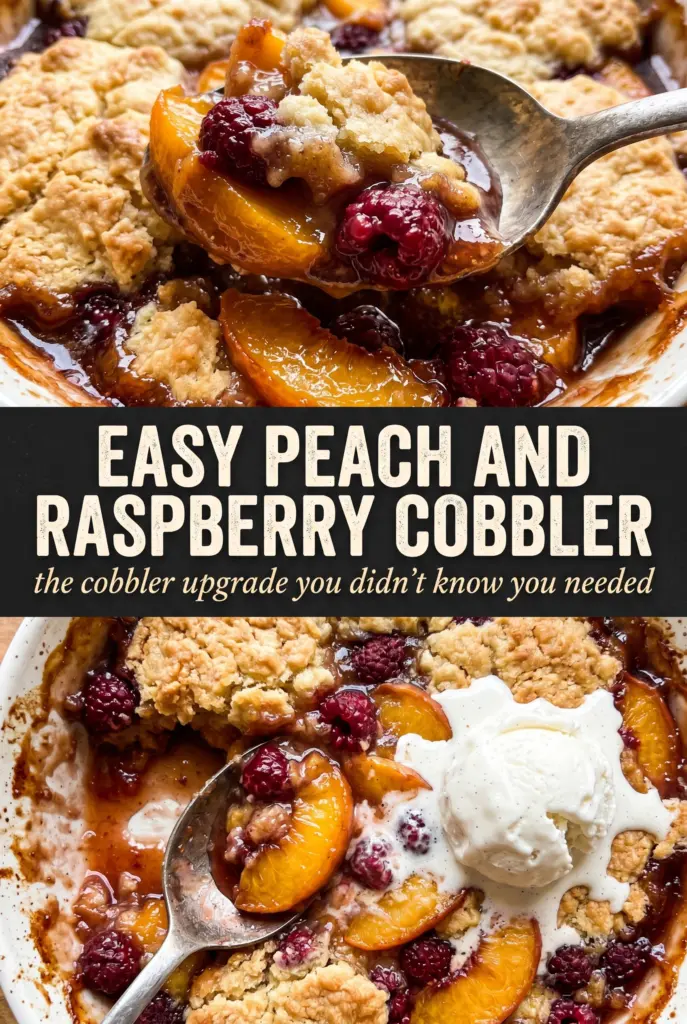
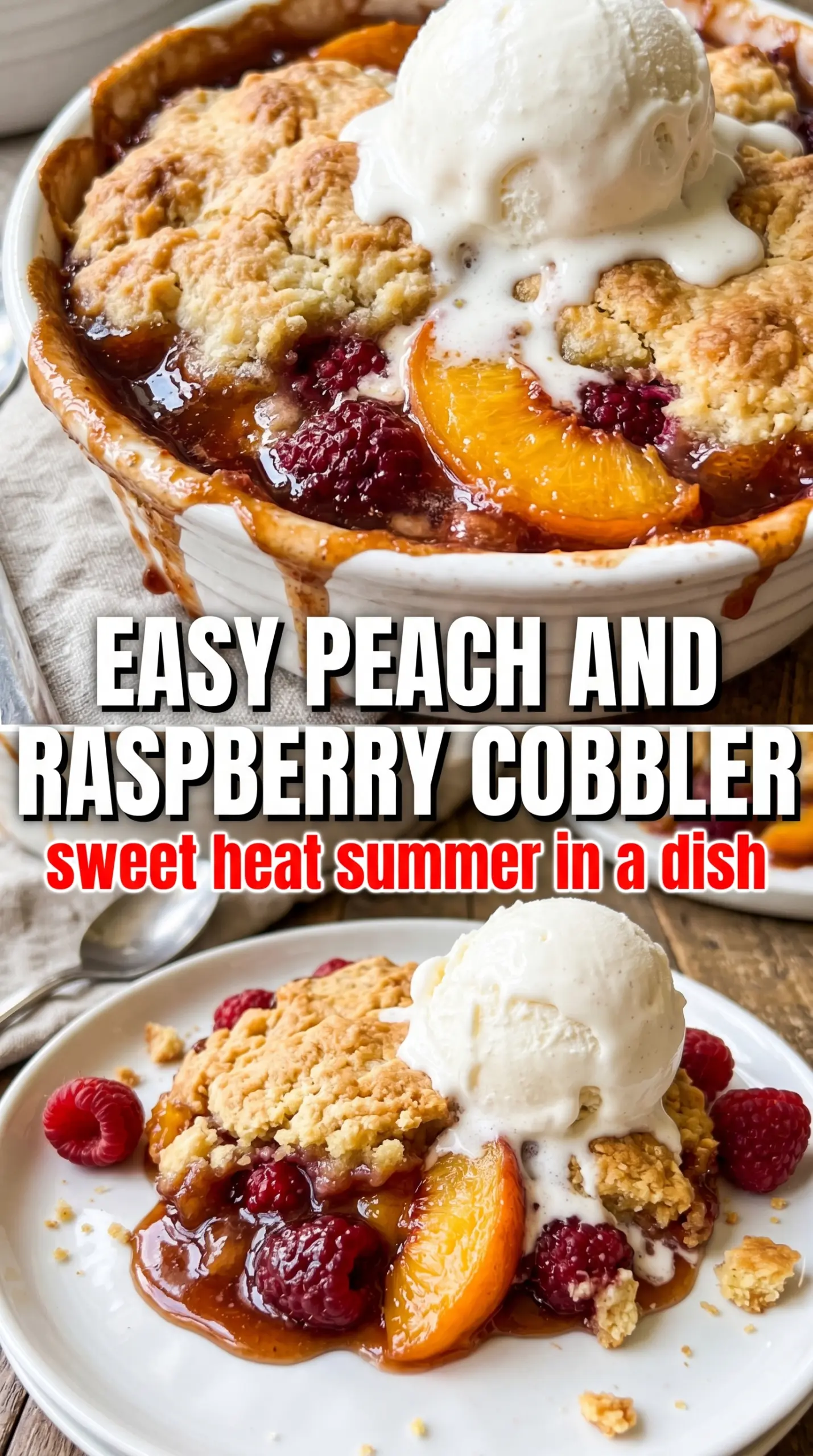
Golden cobbler crust, bubbling peach syrup, and streaks of raspberry that cut through every spoonful make this the kind of dessert people go back for before the pan has even cooled. The batter rises up around the fruit as it bakes, turning into a tender top that catches the juicy filling in all the right places. You get soft peaches, bright berries, and a crust that stays light instead of soggy.
The trick here is restraint. The melted butter goes into the baking dish first, then the batter is poured over it without stirring. That layering is what gives you those buttery edges and the crisped bottom that cobbler needs. The fruit is tossed with a little sugar, lemon juice, and cornstarch so the juices turn glossy and thick instead of running all over the pan.
Below, I’ve included the little details that matter most: how to keep the raspberries from disappearing into the filling, what the batter should look like before it goes in the oven, and a few ways to adapt this if your peaches are extra sweet or a little firm.
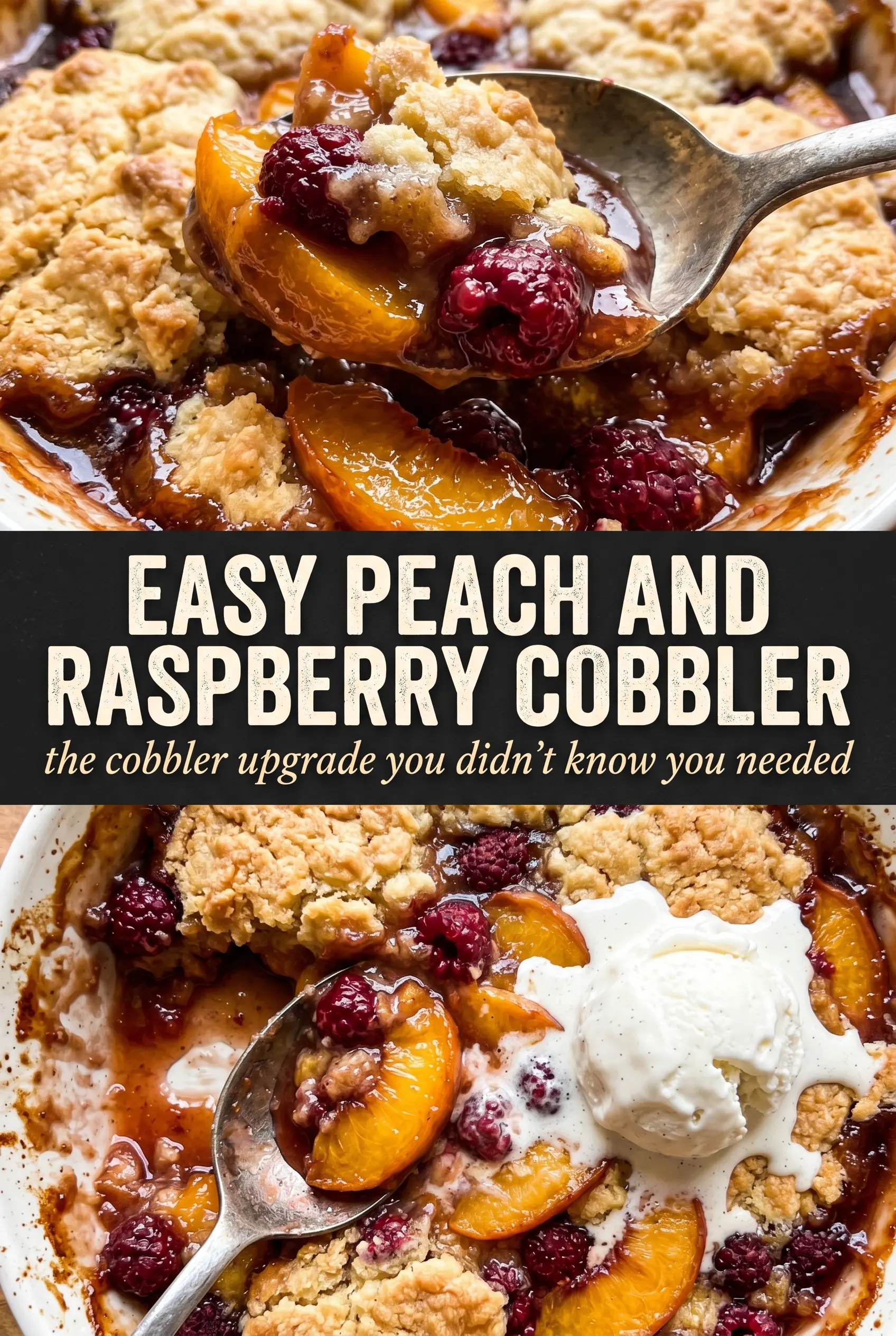
The peaches stayed soft without turning mushy, and the raspberries gave the filling that tart little pop I wanted. The crust baked up golden around the edges and soaked up just enough juice to stay tender instead of dry.
Save this peach and raspberry cobbler for the night you want bubbling fruit and a golden crust with almost no fuss.
The Reason This Cobbler Stays Juicy Instead of Watery
Fresh peaches bring plenty of juice on their own, but raspberries can flood the pan fast if you skip the thickener. A teaspoon of cornstarch is enough here because the fruit layer isn’t huge, and the melted butter beneath the batter gives the filling a rich edge without making it greasy. The oven does the rest, turning the fruit syrup glossy while the top bakes into a soft crust that still has some bite at the edges.
The other mistake with cobbler is overmixing the batter. You want it just combined, not smooth and elastic. Overworked batter can bake up tough, while a lightly mixed batter rises tender and lets the fruit stay the star.
- Peaches — Peel and slice them so they soften evenly. If they’re a touch firm, that’s fine; they’ll finish in the oven. Very ripe peaches can be used, but they release more liquid, so don’t skip the cornstarch.
- Raspberries — They bring the tart contrast that keeps the cobbler from tasting flat. Frozen raspberries work in a pinch; add them straight from the freezer so they don’t break down into mush before baking.
- Butter — Melted butter in the dish is what gives the bottom and edges their rich, almost caramelized finish. Use unsalted butter so you can control the salt in the batter.
- Cornstarch — This is the small amount that keeps the fruit juices from turning soupy. Flour can thicken, but it makes the filling look cloudy. Cornstarch keeps the syrup clear and glossy.
- Whole milk — The fat matters here. Lower-fat milk will still work, but the crust won’t be quite as tender. If you need a dairy-free swap, unsweetened oat milk is the closest in body.
What Each Ingredient Is Actually Doing in This Peach Cobbler
- Fresh peaches (the star fruit) — Use ripe but firm peaches. Overripe turns to mush.
- Sugar (the sweetness and sauce base) — This draws juices from peaches and creates syrup. Adjust based on ripeness.
- Lemon juice (the brightness and acid) — This prevents the filling from tasting one-dimensional. Keeps peaches from browning.
- Thickener (flour, cornstarch, or tapioca) — This keeps filling from being runny. Don’t skip this.
- Biscuit or crumble topping (the texture element) — This creates contrast with soft fruit. Biscuits are cake-like; crumbles are crispy.
- Butter in topping (the richness) — Cold butter creates flakier biscuits. Creates golden finish.
- Spices (cinnamon, nutmeg, or ginger) — These warm up peach without overpowering. Use sparingly.
- Baking temperature (375-400°F, 40-50 minutes) — Hot enough to cook fruit and brown topping without burning.
Building the Cobbler So the Fruit Rises Through the Crust
Start with the Butter Layer
Pour the melted butter into the baking dish first and leave it there. The batter goes directly on top, and that separation is what creates the cobbler’s signature layers. If you stir the butter into the batter, you lose the crisp edge and end up with a denser, flatter top.
Mix the Batter Just Until It Comes Together
Whisk the flour, sugar, baking powder, salt, and milk until there are no dry pockets left, then stop. A few small lumps are fine. The batter should look pourable, like a thick pancake batter, not whipped or smooth as cake batter. That slight roughness helps it bake up tender instead of rubbery.
Spoon the Fruit Over Everything
Drop the peaches and raspberries over the batter, then pour on every bit of the juices from the bowl. Do not stir. The fruit sinks and the batter rises around it in the oven, which is what gives you those juicy pockets under a golden top. If you mix the layers, the cobbler bakes up more like a cake and loses its texture.
Bake Until the Center Is Bubbling
Pull the cobbler when the crust is deeply golden and the filling is bubbling up around the edges and through the middle. The bubbling matters more than the clock because it tells you the fruit has thickened. If the top looks done but the filling is quiet, give it a few more minutes so the cornstarch can fully activate.
Three Small Changes That Still Keep the Cobbler Working
Make It Dairy-Free
Swap the butter for a plant-based baking stick and use unsweetened oat milk in the batter. You’ll still get a tender top and a rich base, though the edges won’t brown quite as deeply as they do with dairy butter.
Use Frozen Fruit When Fresh Peaches Aren’t Around
Frozen peaches and raspberries can stand in, but don’t thaw them first. Toss them with the sugar, lemon juice, and cornstarch while still frozen so they don’t dump too much liquid into the dish before baking.
Reduce the Sugar for Very Sweet Peaches
If your peaches are peak-sweet, drop the fruit sugar by a couple of tablespoons and keep the lemon juice. That little bit of acidity keeps the cobbler tasting bright instead of syrupy.
Storage and Reheating
- Refrigerator: Store covered for up to 4 days. The top softens a bit as it sits, but the flavor stays excellent.
- Freezer: It freezes well in portions. Cool completely, wrap tightly, and freeze for up to 2 months. The fruit will be a little softer after thawing, but still good.
- Reheating: Warm individual servings in the oven at 325F until heated through. The microwave works, but it softens the crust fast, so use short bursts if that’s your only option.
Questions I Get Asked About This Cobbler
Easy Peach and Raspberry Cobbler
Ingredients
Equipment
Method
- Preheat the oven to 350F and set out a 9x13 baking dish for assembly.
- Toss peaches and raspberries with 1/4 cup sugar, lemon juice, and cornstarch until the fruit looks evenly coated.
- Pour melted butter into the 9x13 baking dish and swirl to make sure the bottom is covered.
- Whisk flour, remaining 1/4 cup sugar, baking powder, salt, and milk until just combined.
- Pour the batter over the butter—do not stir.
- Spoon the fruit mixture and all juices over the batter—do not stir.
- Bake for 40-45 minutes at 350F until the crust is golden and the filling is bubbling through.
- Let it cool briefly, then serve warm with vanilla ice cream.