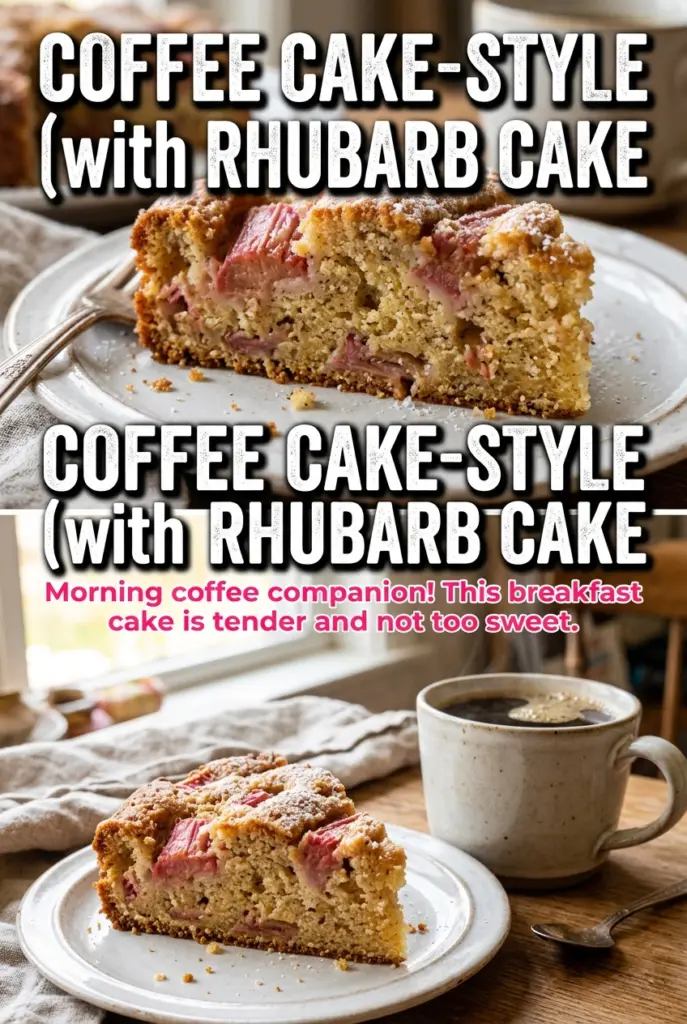
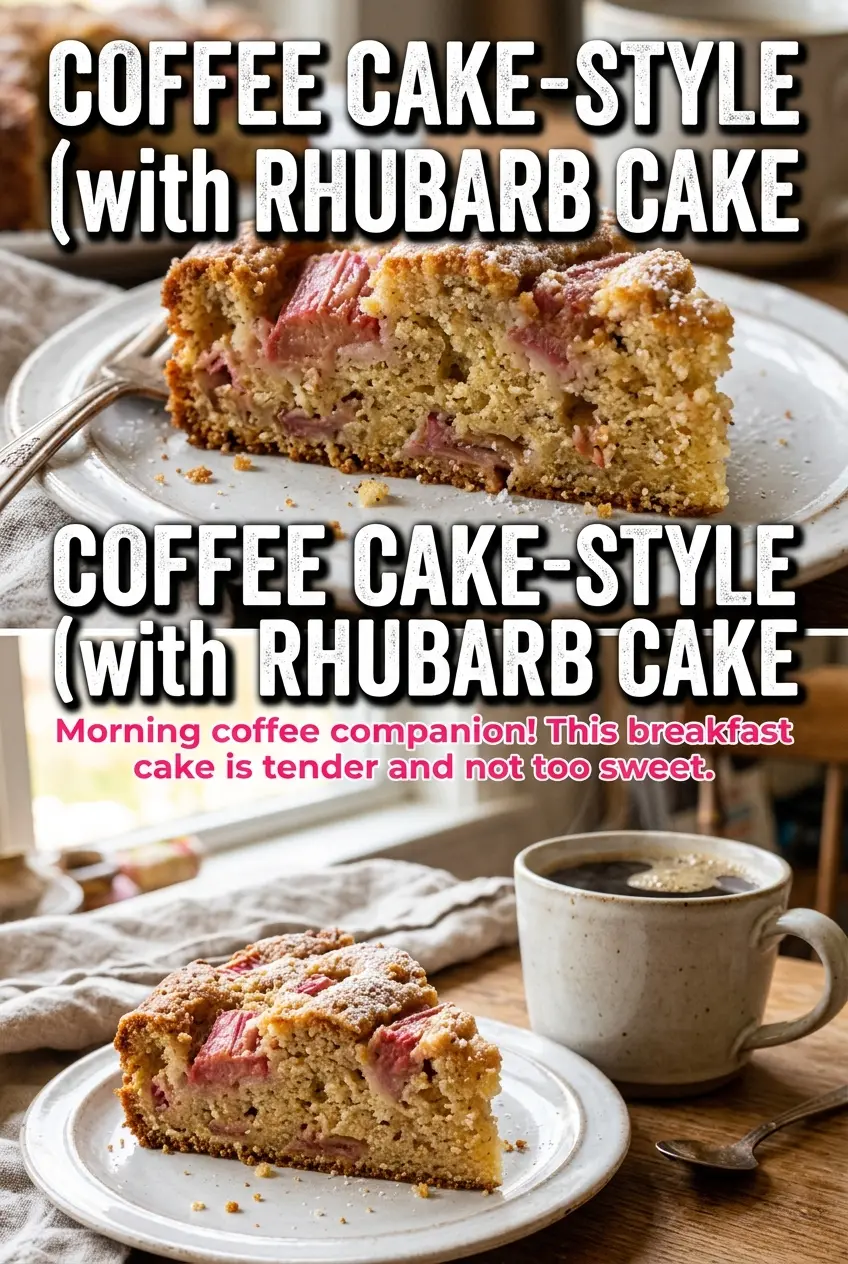
Tender crumb, tart rhubarb, and a cinnamon sugar top make this breakfast cake the kind of pan I reach for when I want something homey without extra fuss. It bakes up like a simple coffee cake, but the rhubarb keeps each bite bright and alive instead of leaning too sweet or heavy.
The batter comes together fast, and that matters here. Melted butter keeps the mixing easy and gives the crumb a soft, almost plush texture, while the rhubarb goes in at the end so it stays in neat little pockets instead of bleeding through the whole cake. I use fresh rhubarb diced small enough to soften in the oven but still hold its shape.
Below, I’ve included the one baking detail that keeps the top from getting pale and the center from going gummy, plus a few swaps that work if your rhubarb is especially tart or you need to bake this ahead for breakfast the next day.
The rhubarb stayed tender without turning mushy, and the cinnamon sugar top baked into a little crackly crust. I’ve made it twice already and it slices cleanly after cooling, which is exactly what I wanted for breakfast.
Like this rhubarb breakfast cake? Save it to Pinterest for a quick morning bake with tart fruit and a cinnamon sugar finish.
The Part That Keeps Rhubarb Cake from Turning Dense
Breakfast cakes like this can go heavy fast if the batter gets overmixed or if the rhubarb is too wet. The flour only needs to disappear into the wet ingredients; once you start stirring past that point, you build structure instead of tenderness, and the cake loses that soft crumb you want for a morning slice.
The other trap is the fruit itself. Rhubarb throws off liquid as it bakes, so cutting it into small, even pieces matters. Large chunks can leave pockets that sink; very wet diced rhubarb can loosen the batter enough that the center bakes up pasty while the edges finish first.
- Gentle mixing — stop as soon as you stop seeing dry flour. A few streaks are better than a tough cake.
- Small rhubarb dice — about pea to blueberry size gives you even softening without collapsing the crumb.
- Even pan spread — the batter is thick enough to hold the fruit where you put it, so level it before the sugar goes on top.
What Each Ingredient Is Actually Doing in This Cake
- All-purpose flour — gives the cake its structure without making it bready. Cake flour would make it softer but more delicate, and it can lose the sturdy breakfast-cake feel.
- Melted butter — keeps the mixing simple and gives a richer crumb than oil. If you use oil instead, the texture stays moist but loses some of that buttery flavor on the finish.
- Milk — loosens the batter just enough to spread in the pan. Whole milk gives the best texture, but 2% works fine here.
- Vanilla — rounds out the tartness of the rhubarb and makes the cake taste more like a bakery-style coffee cake. It won’t replace the fruit’s sharp edge, but it softens it in the right way.
- Fresh rhubarb — this is the whole point of the cake, and fresh stalks bake up cleanest. Frozen rhubarb works if you thaw and drain it first; otherwise the extra water can make the center soggy.
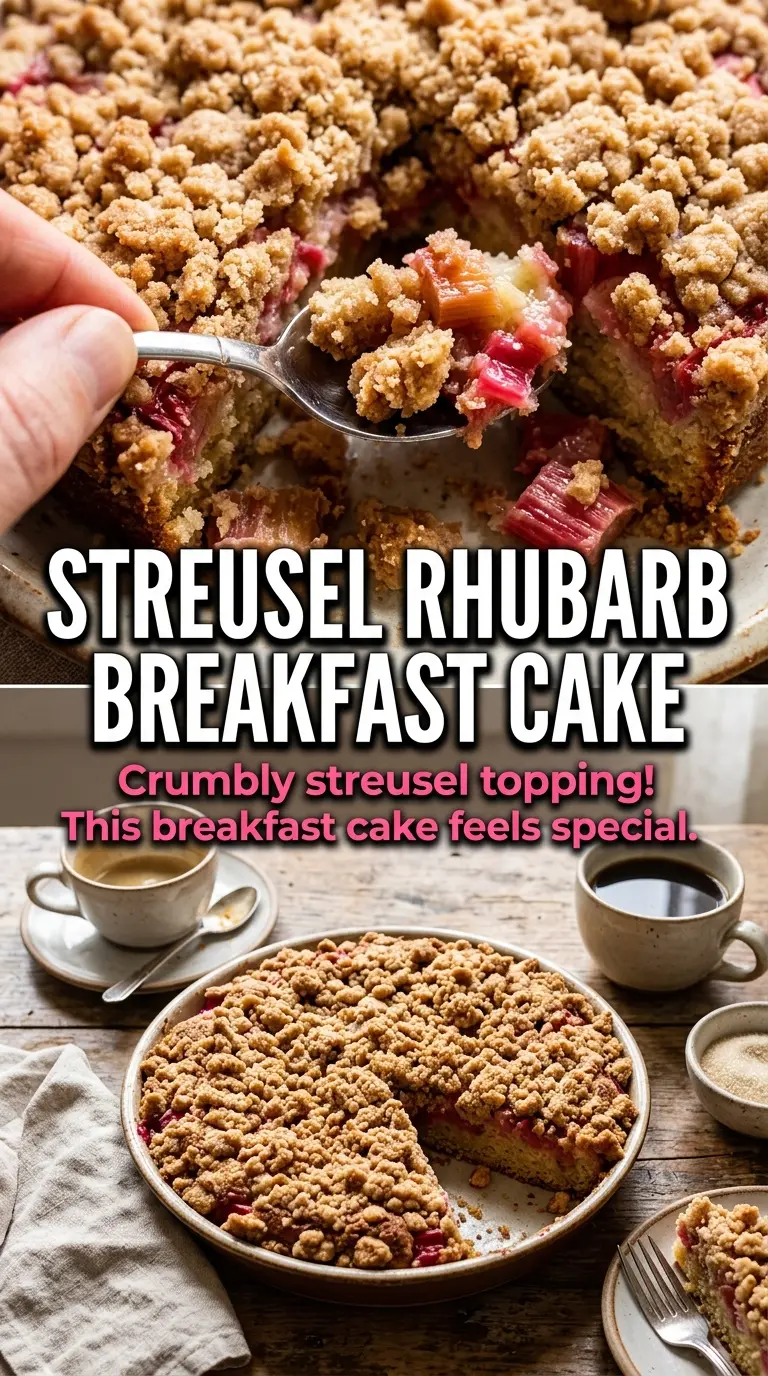
- Cinnamon sugar topping — adds a thin, crackly finish that gives the soft crumb some contrast. It also helps the top look baked and finished before the cake cools.
Getting the Batter and Topping to Bake into One Clean Slice
Mix the dry and wet bowls separately
Whisk the flour, sugar, baking powder, and salt in one bowl so the leavener is evenly distributed. In the second bowl, stir the butter, egg, milk, and vanilla until the mixture looks smooth and emulsified. If you skip the separate bowls and dump everything together at once, the batter can clump around the flour and bake unevenly.
Fold in the rhubarb last
Once the wet and dry ingredients are just combined, add the rhubarb and fold only until the pieces are evenly tucked through the batter. The batter will be thick, and that’s what you want. If it looks loose, the rhubarb is probably too wet, and the cake may need a few extra minutes in the oven.
Watch the top, not just the timer
Bake until the top is golden and a toothpick in the center comes out clean or with a few moist crumbs. The edges should pull slightly from the pan, and the cinnamon sugar will look set rather than dusty. If the center still jiggles, give it a few more minutes; pulling it too early is the fastest way to end up with a gummy middle.
Let it cool before slicing
Ten minutes of cooling helps the crumb set, so the squares hold together instead of crumbling on the first cut. Warm is still the right way to serve it, but straight from the oven is too fragile. A little patience here gives you neat slices and keeps the rhubarb from sliding out.
How to Adjust This Cake for Different Kitchens and Different Mornings
Make it with frozen rhubarb
Thaw the rhubarb first, then drain off as much liquid as you can before folding it in. Frozen fruit releases more moisture, so this small step keeps the batter from turning slack and helps the center bake at the same pace as the edges.
Dairy-free version
Use a neutral plant milk and replace the butter with melted coconut oil or a dairy-free butter alternative. You’ll keep the same basic structure, though coconut oil will add a faint coconut note and dairy-free butter will land closer to the original flavor.
A slightly sweeter pan
If your rhubarb is especially sharp, toss the diced fruit with 1 to 2 tablespoons of the sugar before adding it to the batter. That softens the edge without making the whole cake sugary, and it’s better than increasing the sugar in the base, which would change the crumb.
Storage and Reheating
- Refrigerator: Store covered for up to 4 days. The crumb stays moist, but the topping softens a little after the first day.
- Freezer: Freeze individual slices wrapped tightly for up to 2 months. Thaw in the refrigerator so the fruit layer doesn’t turn watery on the counter.
- Reheating: Warm slices in a 300°F oven for about 8 minutes or in the microwave in short bursts. High heat makes the cake tough and can make the rhubarb burst open and weep.
Answers to the Questions Worth Asking
Easy Rhubarb Breakfast Cake
Ingredients
Equipment
Method
- Preheat oven to 375°F and grease an 8x8-inch baking pan so batter releases easily. A light sheen of grease should coat the corners and sides.
- Whisk together all-purpose flour, sugar, baking powder, and salt in a large bowl until the mixture looks evenly speckled. Stop when no dry lumps remain.
- In a separate bowl, mix butter, melted, egg, milk, and vanilla extract until smooth and combined. The mixture should look uniform and glossy.
- Pour the wet ingredients into the dry ingredients and stir until just combined. Stop as soon as you no longer see dry flour.
- Fold in fresh rhubarb, diced gently so the pieces stay intact. You should see red-green chunks throughout the batter.
- Spread the batter into the prepared pan in an even layer so it bakes uniformly. Level the surface with a gentle shake or small taps.
- Sprinkle sugar and cinnamon evenly over the top as a crumble-like layer. The topping should cover most of the surface.
- Bake at 375°F for 30-35 minutes, until golden and a toothpick comes out clean. The edges should look set while the center springs back lightly.
- Cool the cake for 10 minutes before slicing and serving warm. The crumb should firm up slightly and not look wet in the middle.