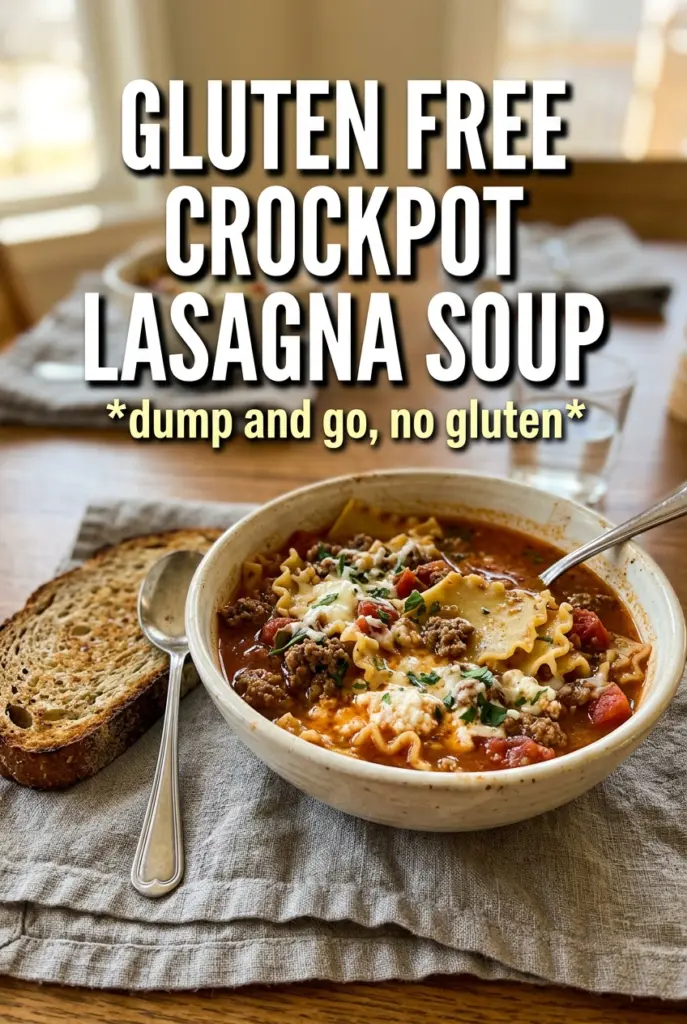
Gluten free crockpot lasagna soup brings all the comfort of a baked lasagna into one spoonable bowl, with a rich tomato broth, savory sausage, and tender pasta that still has a little bite. The best part is the cheese dollop melting into the hot soup at the table. That’s what turns it from a simple slow cooker dinner into something that tastes layered and complete.
The trick is keeping the gluten-free pasta out of the pot until the end. It needs far less time than regular noodles, and if it goes in too early it turns soft and bloated instead of pleasantly chewy. Browning the sausage first also matters, because that step builds flavor you can’t get from dumping everything in raw. The broth ends up deeper, the tomato base tastes cooked instead of flat, and the whole pot feels like it had more effort put into it than it actually did.
Below, I’ve included the timing cue that keeps the noodles from overcooking, plus a few smart swaps if you need to work with what’s in the pantry. If you’ve had gluten-free pasta fall apart in soup before, this version is built to avoid exactly that.
The broth got rich and hearty, and the gluten-free noodles held up better than I expected since I added them at the end. That ricotta-mozzarella topping melted in perfectly and made it taste just like lasagna in a bowl.
Save this gluten free crockpot lasagna soup for a hearty dinner with tender noodles and a creamy ricotta topping.
The Noodle Timing That Keeps Gluten-Free Pasta from Falling Apart
Gluten-free pasta has a much narrower window than regular lasagna noodles. Leave it in the crockpot for the full cook and it turns mushy, especially in a broth that stays hot even after the heat is off. The safest approach is to add it late, when the tomato base is already fully flavored and you only need enough time to soften the noodles without letting them dissolve.
The other thing that helps is checking it early and often once the pasta goes in. Different brands behave differently, and broken lasagna noodles can soften faster than penne. If the soup looks right but the pasta still has a little firmness, let it ride for a few more minutes. If it’s tender, stop there. The residual heat will keep working while you ladle bowls.
- Browning the sausage first — this builds the savory base and keeps the soup from tasting like it was assembled from canned ingredients alone.
- Certified gluten-free broth — some broths hide wheat-based additives, so this is one place where the label matters.
- Broken lasagna noodles — they give you the right texture and shape, but GF penne is the easiest backup if the noodles you want aren’t available.
- Tomato paste — this adds body and a cooked tomato depth that makes the broth taste fuller.
What Each Ingredient Is Actually Doing in the Pot
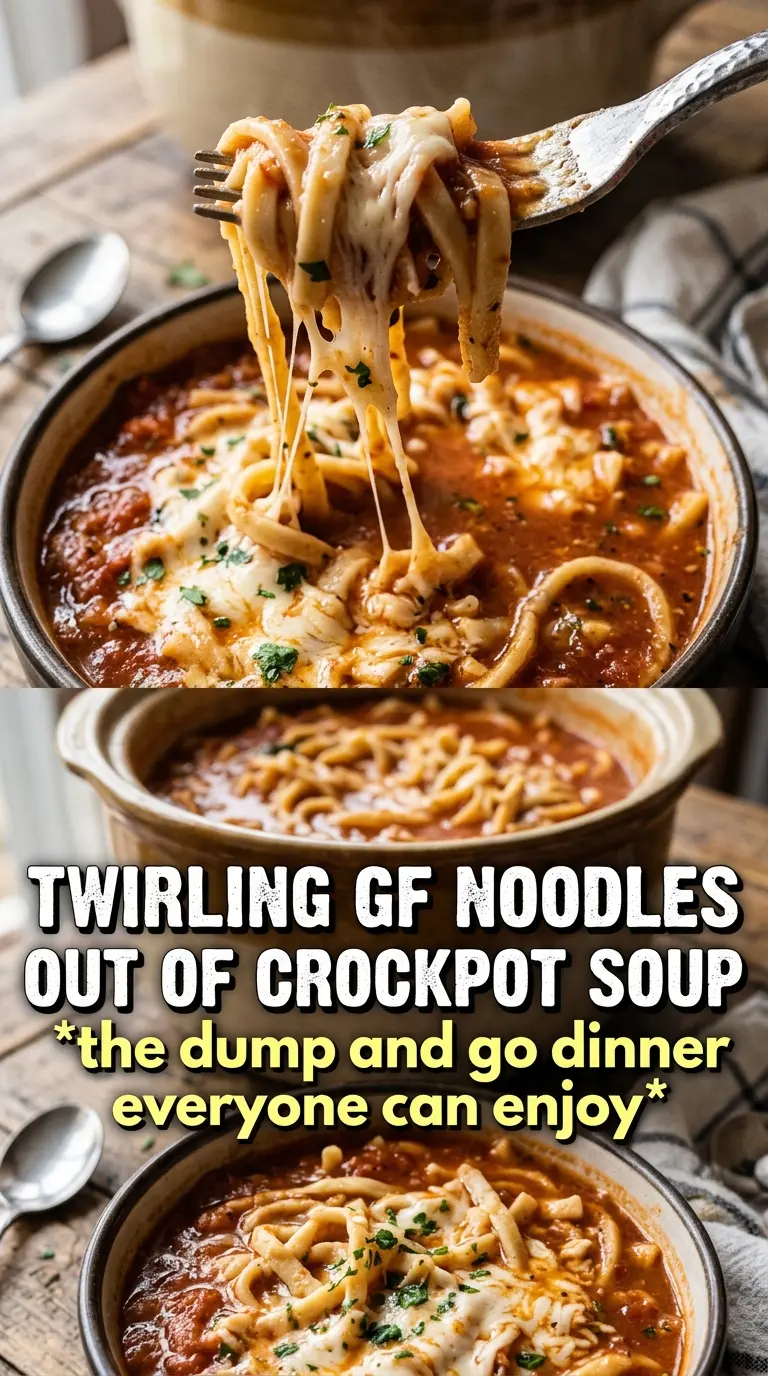
- Italian sausage — this is the main source of seasoning and richness. Mild or hot both work, but sausage with good fat content gives the broth a deeper, rounder taste than lean meat.
- Crushed tomatoes and diced tomatoes — the crushed tomatoes make the soup thick enough to feel lasagna-like, while the diced tomatoes keep a little texture in the broth. If you only have crushed tomatoes, it still works; the soup will be smoother.
- Onion and garlic — they need to go in with the base so their flavor has time to soften into the broth. Fresh garlic beats garlic powder here because the slow cooker mutes it a little.
- Ricotta, mozzarella, and parmesan — this topping matters more than it sounds like it should. Ricotta brings creaminess, mozzarella gives the melt, and parmesan adds the salty edge that makes the bowl taste finished.
- Gluten-free lasagna noodles or GF penne — use a brand you trust. Some GF pastas hold shape better than others, and the ones made with rice and corn usually behave more predictably in soup than very delicate blends.
How to Build the Soup So It Stays Hearty, Not Mushy
Start with the browned sausage
Cook the sausage until it’s deeply browned, then drain it before it goes into the slow cooker. That step keeps the broth from getting greasy and gives you those browned bits that melt into the tomato base. If the sausage stays pale, the whole soup tastes flatter than it should.
Let the slow cooker do the flavor work
Add the sausage, onion, garlic, tomatoes, broth, tomato paste, Italian seasoning, basil, and red pepper flakes, then cook until the broth tastes rounded and the onion is soft. Low is the gentlest route, especially if you’re using a sausage with some fat. High works when you’re short on time, but the slower cook gives the tomato base a fuller, less sharp taste.
Add the pasta only when the soup is ready for it
Stir in the broken gluten-free noodles during the last 30 to 35 minutes. Keep the lid on so the heat stays steady, but check the pasta a few minutes early if your brand cooks fast. If the soup looks done but the noodles still have a bite, give them a few more minutes instead of turning the cooker up too aggressively, because GF pasta goes from tender to tired fast.
Finish with the cheese dollop
Mix the ricotta, mozzarella, parmesan, and basil in a bowl, then add a big spoonful to each serving. That cold cheese against the hot broth gives you the lasagna effect without turning the soup heavy. If you stir it all into the pot, the texture disappears and you lose the contrast that makes each bowl special.
How to Adapt This for Different Pans, Palates, and Diets
Dairy-Free Topping
Use a dairy-free ricotta and mozzarella-style shreds, then finish with chopped basil and a little extra salt. You’ll lose some of the creamy richness from parmesan, but the soup still eats like lasagna if the tomato base is well seasoned.
Milder or Spicier Sausage
Use sweet sausage for a softer, more tomato-forward bowl, or hot sausage if you want a little burn in the background. If your sausage is heavily seasoned, cut back on the red pepper flakes so the soup doesn’t start tasting crowded.
Vegetarian Version
Swap the sausage for browned mushrooms and use vegetable broth instead of chicken broth. The soup will be a little lighter and less savory, so add an extra spoonful of tomato paste and a touch more parmesan in the topping if you still want that lasagna depth.
Storage and Reheating
- Refrigerator: Store the soup without the cheese topping for up to 4 days. The pasta will keep absorbing broth, so it thickens as it sits.
- Freezer: Freeze the soup base before adding pasta for the best texture. Gluten-free noodles get soft after thawing, so cook fresh pasta into the reheated soup instead.
- Reheating: Warm it gently on the stove over medium-low heat with a splash of broth or water. If you blast it hard, the pasta can break down and the soup turns starchy.
Answers to the Questions Worth Asking
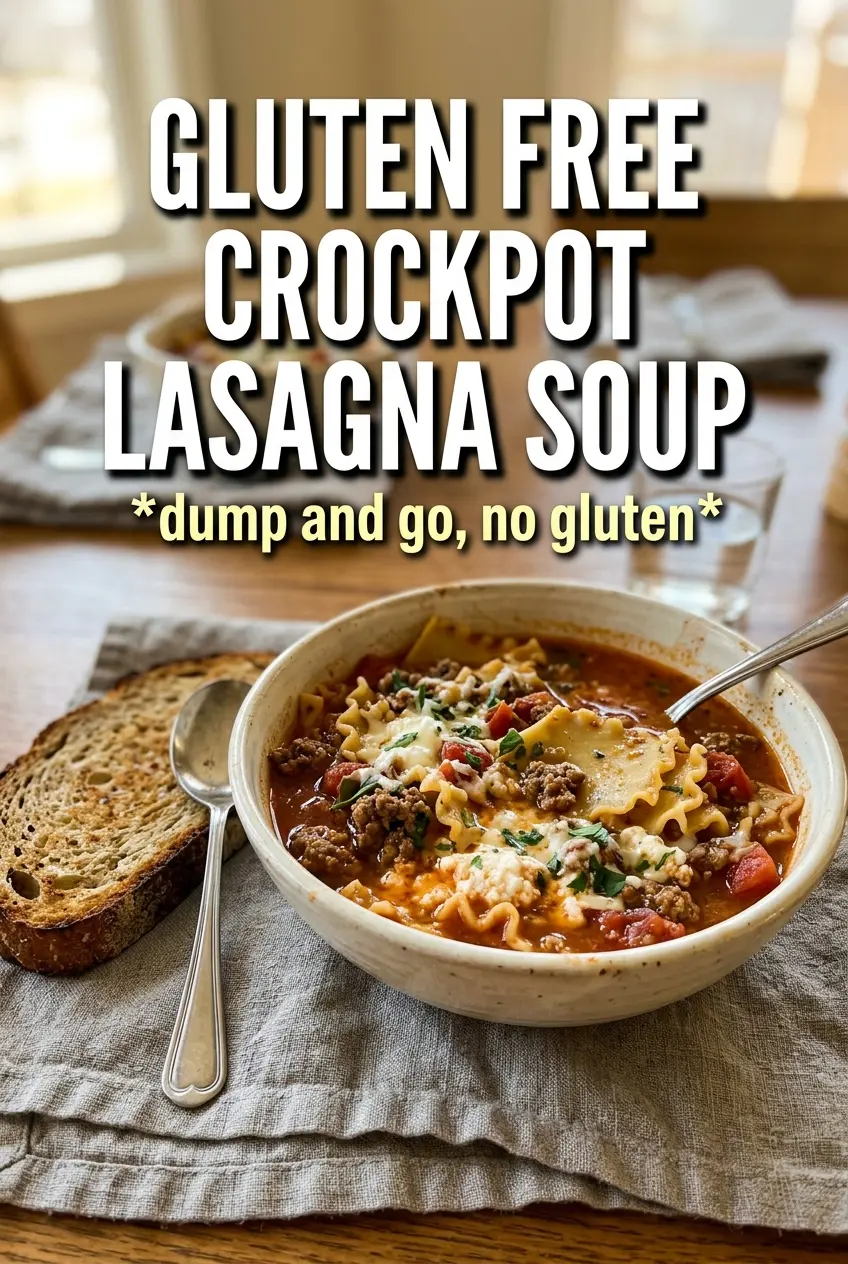
Gluten Free Crockpot Lasagna Soup
Ingredients
Equipment
Method
- Brown the Italian sausage in a cast iron skillet over medium-high heat until no longer pink, about 8 to 10 minutes, then drain off excess fat. Add the browned sausage to the Crockpot.
- Add the diced onion and minced garlic to the Crockpot along with crushed tomatoes, diced tomatoes, chicken broth, and tomato paste. Stir to combine.
- Sprinkle in Italian seasoning, dried basil, and red pepper flakes, then stir again. Make sure everything is evenly distributed.
- Cook on Low for 5 to 7 hours, or High for 2.5 to 3 hours. Keep the lid on during cooking to maintain temperature.
- In the last 30 to 35 minutes, add the broken gluten-free lasagna noodles or GF penne to the Crockpot. Increase to High if needed to keep the soup at a steady simmer.
- Cook until the GF pasta is tender, about 30 to 35 minutes, and check frequently because GF pasta can overcook. Adjust timing only if your pasta finishes early.
- Season with salt and pepper to taste. Stir thoroughly and taste before serving.
- Mix ricotta, shredded mozzarella, parmesan, and chopped fresh basil in a bowl. Portion a generous dollop into each bowl.
- Ladle the hot lasagna soup into bowls and top each with the cheese dollop. Let it melt slightly from the heat before eating.