
Grilled pork tenderloin with peaches lands on the plate with that hard-to-beat mix of smoky, juicy, and lightly sweet. The pork stays tender when it’s pulled at the right temperature, and the peaches turn soft and caramelized on the grill, picking up just enough char to balance the glaze. Slice it open and you get that rose-pink center next to glossy fruit that tastes like it belongs right there.
What makes this version work is the way the peach mixture gets cooked down before it ever touches the grill. Raw fruit puree can taste thin and watery, but a quick simmer concentrates the peaches and gives the honey, Dijon, soy sauce, and vinegar a chance to turn into an actual glaze instead of a loose marinade. That matters here, because pork tenderloin cooks fast and doesn’t have time to rescue a sauce that hasn’t been built properly.
Below, I’m walking through the one part that matters most: getting enough flavor on the pork without overcooking it, plus the simple trick for grilling the peaches so they hold their shape and turn syrupy instead of mushy.
The glaze thickened up beautifully and clung to the pork instead of running off the grill. I was nervous about the peaches getting mushy, but they caramelized in just a few minutes and tasted amazing with the sliced tenderloin.
Keep this grilled pork tenderloin with peaches handy for the nights when you want a fast dinner with a real peach glaze and caramelized fruit on the side.
The Trick to Keeping Pork Tenderloin Juicy on the Grill
Pork tenderloin is lean, which means it goes from perfect to dry fast if the heat runs too hot or the cook goes too long. The safest move is to marinate it briefly, then grill it over medium-high heat while turning often so the outside picks up color without building one hard, overcooked edge. You want the glaze to lacquer the meat, not burn into a bitter shell.
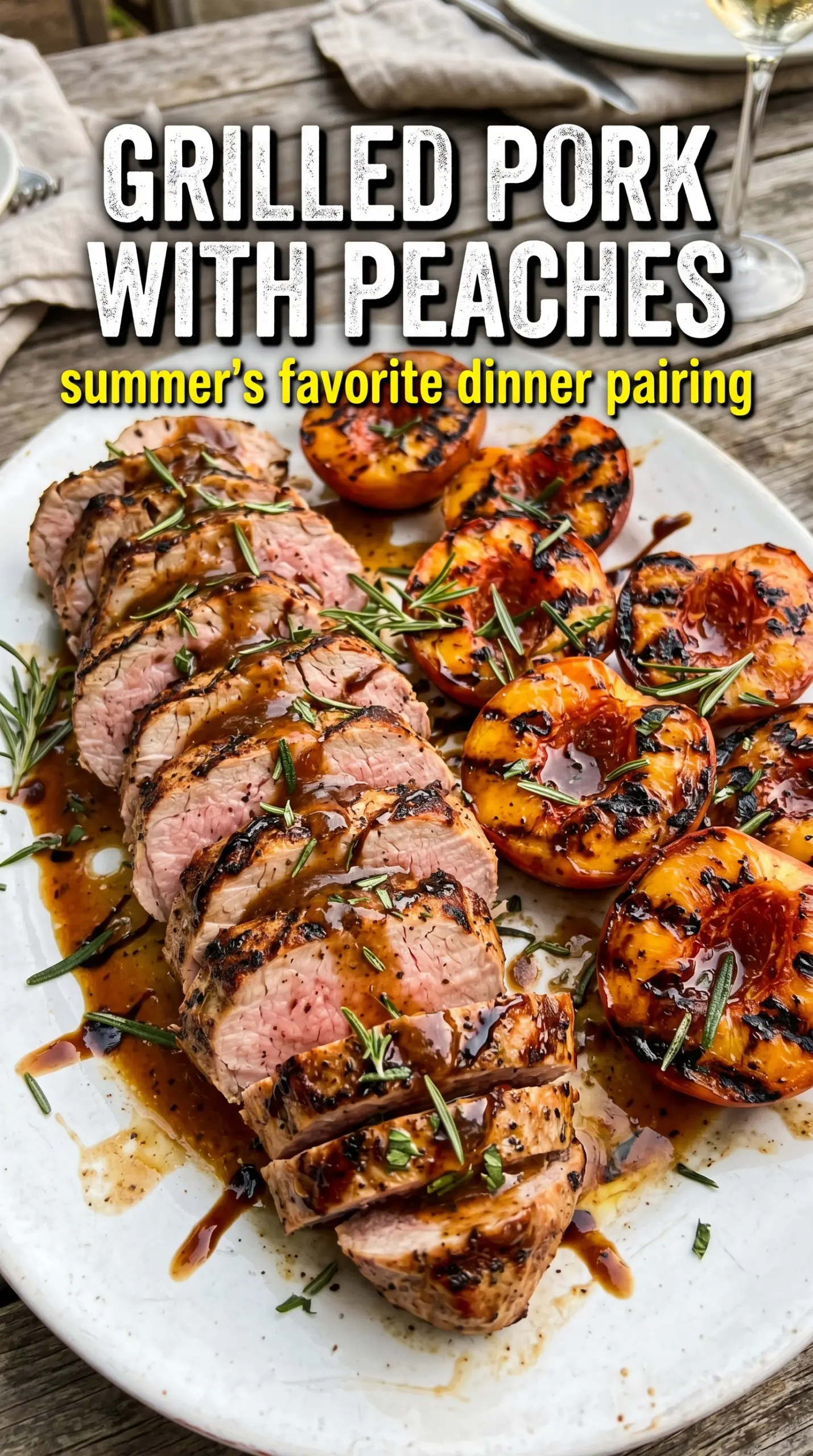
The other common failure is slicing too soon. Pork tenderloin needs that 10-minute rest so the juices settle back into the meat instead of running across the cutting board. Pull it at 145°F, then let the carryover heat finish the job. That’s how you get the juicy center shown in the photos instead of a dry, gray middle.
What the Peach Glaze Is Doing in Every Bite
- Peaches — Fresh ripe peaches bring the body of the glaze and the fruit you’ll grill alongside the pork. If they’re underripe, the sauce tastes flat and the grilled halves won’t soften properly. The best swap is frozen peach slices thawed and drained, but they work best in the glaze rather than on the grill.
- Dijon mustard — Dijon sharpens the sweetness and helps the glaze cling to the meat. Yellow mustard won’t give the same depth, and the flavor comes out sharper and less rounded. If you need a substitute, grainy mustard works, though the glaze will be a little looser.
- Soy sauce — This is the salty backbone that keeps the peach glaze from tasting like dessert. It adds color, too, which matters when you’re basting on the grill. Tamari works well if you need a gluten-free version, and it keeps the same savory balance.
- Apple cider vinegar — A small amount keeps the glaze bright and stops the honey from turning heavy. Don’t swap in balsamic here; it would fight the peaches instead of supporting them. If that’s all you have, use a little less and taste before adding more.
- Honey — Honey gives the glaze shine and helps it caramelize on the grill. It also thickens as it simmers, which is why the sauce doesn’t slide off the pork. Maple syrup will work in a pinch, but the flavor gets deeper and less peach-forward.
Building the Glaze Before It Hits the Grill
Cooking Down the Peaches
Start by simmering the peach puree with the honey, Dijon, soy sauce, vinegar, garlic, and smoked paprika until it thickens slightly. You’re not looking for a jam, just a glaze that coats a spoon and leaves a trail when you drag a finger through it. If it still looks thin and watery, it’ll run off the pork instead of clinging to the surface. A few minutes on the stove does more than twice that time on the grill.
Marinating Without Softening the Meat Too Much
Use half the glaze on the pork and keep the rest clean for basting. That split matters, because the glaze that touched raw meat can’t safely be used as a finishing sauce unless it’s boiled again. Thirty minutes is enough to season the tenderloin without making the texture mushy. Longer isn’t better here; pork tenderloin is delicate and doesn’t need an overnight soak.
Grilling and Basting at the Same Time
Lay the tenderloins on a medium-high grill and turn them every five minutes so the glaze caramelizes evenly. Baste with the reserved glaze as you go, but keep the lid moving and watch for flare-ups from the honey. If the fire gets too aggressive, move the pork to a cooler spot for a minute before returning it to the heat. You’re aiming for a deep golden exterior with a little char, not blackened edges.
Finishing the Peaches
Grill the peach halves cut-side down alongside the pork for just a few minutes until they soften and take on dark grill marks. If they sit too long, they collapse and lose that clean, sliced look next to the meat. Pull them when the cut side is caramelized and the flesh gives slightly when pressed. They should still hold their shape when you serve them.
How to Adapt This Peach Pork for Different Nights
Make It Gluten-Free
Swap the soy sauce for tamari or a certified gluten-free soy sauce. The glaze keeps the same salty depth, and nothing else in the recipe needs to change.
If You Want a More Savory Finish
Add an extra pinch of smoked paprika and a little black pepper to the glaze. That pushes the recipe away from sweet-and-fruity and more toward barbecue territory without losing the peach character.
Use Pork Loin Instead
Pork loin can stand in, but it needs longer on the grill and a closer eye because it’s thicker and less forgiving than tenderloin. The flavor works the same, but the texture will be a little less silky and more sliceable.
How to Make It Dairy-Free and Naturally Light
The recipe is already dairy-free, so the main thing is keeping the glaze balanced and not overloading the plate with extra heavy sides. Serve it with grilled vegetables or rice to let the pork and peaches stay the focus.
Storage and Reheating
- Refrigerator: Store leftovers in an airtight container for up to 3 days. The pork stays tender if you don’t slice it too thin.
- Freezer: The pork freezes well for up to 2 months, but the peaches soften a lot after thawing. Freeze the sliced pork separately from the peaches if you want the best texture.
- Reheating: Rewarm gently in a covered skillet over low heat with a spoonful of extra glaze or a splash of water. High heat dries out tenderloin fast and makes the glaze sticky instead of glossy.
Answers to the Questions Worth Asking

Grilled Pork Tenderloin with Peaches
Ingredients
Equipment
Method
- Combine peach puree, honey, Dijon mustard, soy sauce, apple cider vinegar, minced garlic, and smoked paprika in a saucepan and simmer over medium heat for 5 minutes, stirring, until thickened and glossy.
- Season pork tenderloins with salt and pepper to taste.
- Marinate the pork with half the peach glaze for 30 minutes, turning once if needed so the surface stays coated.
- Preheat the grill to medium-high heat.
- Grill the pork tenderloins for 18-22 minutes, turning every 5 minutes, and baste with the remaining glaze.
- Continue grilling until the internal temperature reaches 145°F, using a thermometer to confirm the thickest part.
- Grill the peach halves cut-side down alongside the pork for 4-5 minutes until caramelized.
- Rest the pork for 10 minutes before slicing to keep the juices in the tender center.
- Slice the pork and serve with the grilled peach halves and any extra sauce from the glaze.