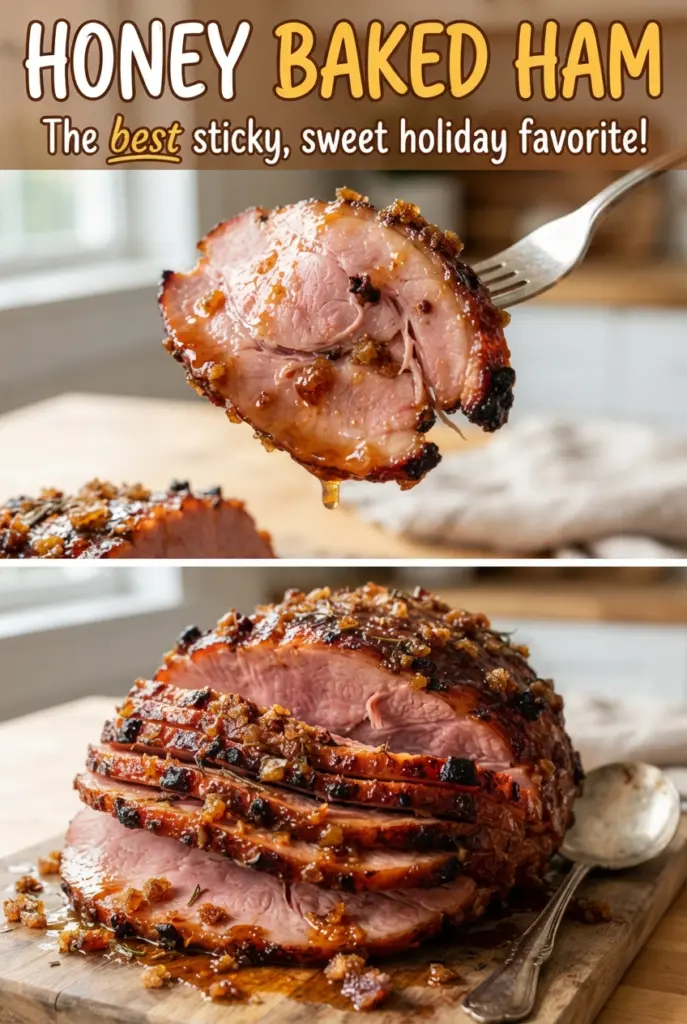
Sticky, glossy honey baked ham lands on the table with a crackly crust and slices that stay juicy all the way through. The best part is the contrast: salty, smoky ham underneath, then that sweet-spiced shell that shatters a little when you cut into it. It looks like a special-occasion centerpiece, but the method is straightforward enough to repeat any time you want dinner to feel a little more celebratory.
This version leans on a fully cooked spiral-sliced ham, which does most of the heavy lifting for you. The real work is in the glaze layering: honey and butter help the sugar cling, while cinnamon, cloves, ginger, nutmeg, allspice, and paprika build a deep, warm crust instead of a one-note sweet coating. Baking low first warms the ham without drying it out, then a hotter finish sets the glaze into that caramelized shell everyone goes for first.
Below, I’ve included the timing that keeps spiral ham from going dry, the one detail that helps the crust turn crackly instead of sandy, and a few smart swaps if you need to change the spices or scale the recipe up.
The honey butter soaked into the slices without making the crust soggy, and the spice sugar formed that crackly top I always hoped for. I followed the timing exactly and the ham was still juicy after resting.
Save this honey baked ham for the next holiday dinner when you want a crackly spiced crust and juicy spiral slices.
The Trick to a Crackly Crust Without Drying Out the Ham
The biggest mistake with spiral ham is rushing the glaze before the meat is warmed through. If you start with high heat, the exterior can darken before the center is hot, and the sugar can turn gritty instead of forming a lacquered crust. The low first bake gives the ham time to heat gently, which protects those thin sliced layers from drying out.
The second part that matters is the repeated glazing. One layer of honey butter and spiced sugar tastes good; three quick passes build a crust that looks cooked into the ham instead of sitting on top of it. Don’t skip the foil at the beginning, either. It traps moisture early, then comes off once the ham is ready for the finishing heat.
What the Glaze Ingredients Are Really Doing

- Honey — This is the glaze’s shine and stickiness. It helps the sugar cling to the ham and gives the crust that glossy finish. Maple syrup can work in a pinch, but it tastes darker and less classic.
- Butter — Butter carries the honey and helps the coating spread evenly over the ridges of the spiral slices. You can use salted or unsalted; if you use salted, the finish will taste a touch more savory.
- Brown sugar + granulated sugar — The two sugars work together. Brown sugar brings deeper caramel notes, while white sugar helps the crust set more firmly. If you only use brown sugar, the coating can stay a little softer.
- Cinnamon, cloves, ginger, nutmeg, allspice, paprika — This spice blend keeps the glaze from tasting flat. Cloves and allspice are powerful, so measure them carefully; too much and the ham starts to taste perfumed instead of balanced. Paprika adds color more than heat.
- Bone-in spiral-sliced ham — Bone-in ham stays juicier and brings better flavor than boneless. Spiral slicing matters because it gives the glaze places to settle between the slices, which is what makes every serving taste seasoned all the way through.
Building the Glaze So It Bakes On, Not Off
Warming the Ham Gently First
Set the ham cut-side down in the roasting pan and cover it tightly with foil. That placement helps the slices hold onto moisture instead of drying from the cut edges outward. Bake at 325°F until the center hits about 120°F. If the ham is already hot when you uncover it, the final glaze step goes faster and the crust has a better chance of setting without overcooking the meat.
Making the Honey Butter and Sugar Layer
Melt the honey and butter together just until smooth, then mix the sugars with the spices in a separate bowl. Keeping them separate matters because the butter helps the honey brush on evenly, while the dry sugar mixture gives you that sandy coating that turns crisp in the oven. If the sugar clumps, break it up with your fingers before you start glazing so it falls into the slices instead of sitting in piles.
Finishing at High Heat
Remove the foil and brush the ham generously with the honey butter, then pat on the spiced sugar. Raise the oven to 400°F and return the ham for 5 minutes, repeating the glazing twice more. The crust should shift from wet and grainy to deep golden and crackly; if it still looks pale after the last pass, give it one more short burst, but watch closely because sugar can go from caramelized to burnt fast.
Resting Before You Slice
Let the ham rest for 15 minutes before serving. That pause gives the glaze a chance to set and keeps the juices from running out the moment you cut into it. If you slice too soon, the crust can slide off in sheets and the center will lose a lot of moisture onto the cutting board.
How to Adapt This Honey Baked Ham for Different Tables
Less Sweet, More Savory
Cut the granulated sugar by half and keep the brown sugar and spices. You’ll still get a caramelized crust, but the finish lands more in the savory-sweet lane and won’t read as candy-coated. This works especially well if you’re serving the ham with salty sides like mashed potatoes or scalloped potatoes.
Dairy-Free Version
Swap the butter for a neutral dairy-free butter substitute or even a little extra honey thinned with a tablespoon of water. The glaze will still cling and caramelize, though it won’t taste quite as rich. If you use plain oil, the coating can slide off the ham instead of forming a tight crust.
When You Need a Bigger Ham
For a ham larger than 9 pounds, keep the glaze amounts the same for the first round and add a little extra honey-butter if you run short during the last two passes. The timing is still based on internal temperature, not just weight, so use the thermometer as your guide. Bigger hams usually need a longer gentle warm-up before the final high-heat glaze.
Storage and Reheating
- Refrigerator: Store leftovers in an airtight container for up to 4 days. The glaze softens a bit in the fridge, but the flavor holds well.
- Freezer: Freeze sliced ham in portions for up to 2 months. Wrap tightly and thaw in the refrigerator so the texture stays tender instead of watery.
- Reheating: Warm slices covered in a low oven at 300°F with a splash of pan juices or water. High heat dries spiral ham fast, so skip the microwave unless you’re warming a single slice for a quick sandwich.
Questions I Get Asked About This Recipe
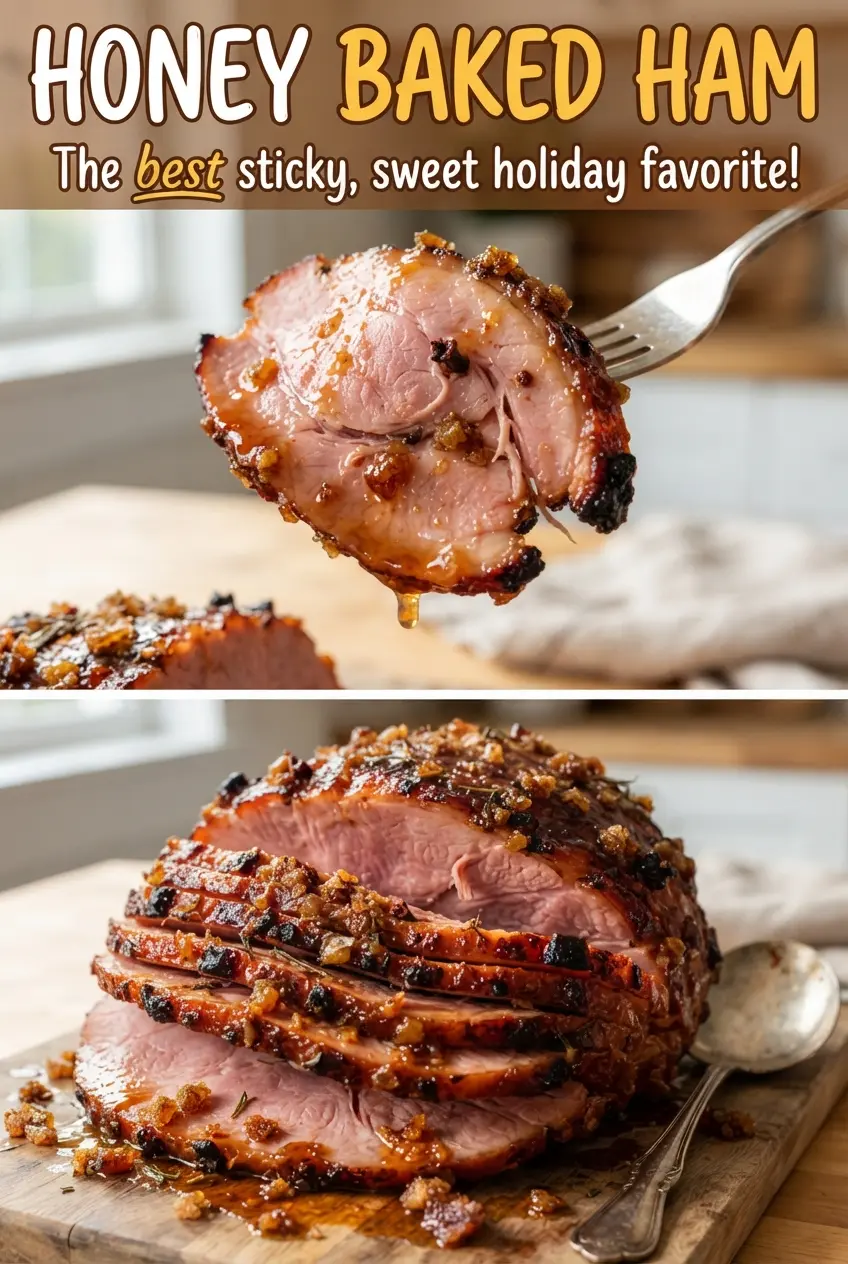
Honey Baked Ham
Ingredients
Equipment
Method
- Preheat the oven to 325°F. Place the ham cut-side down in a roasting pan and cover tightly with foil, ensuring a snug seal to trap heat.
- Bake for 12-14 minutes per pound, checking for progress but staying with the time guide. Cook until the ham reaches 120°F inside for the best base heat before glazing.
- Melt honey and butter together until smooth. This creates a glossy honey-butter glaze for sticking the sugar crust.
- Mix granulated sugar and brown sugar with cinnamon, cloves, ginger, nutmeg, allspice, and paprika in a separate bowl. Stir until the spices are evenly distributed, creating a uniform coating.
- Remove the foil and brush the ham generously with honey butter, catching the curves of the spiral slices. Pat on a layer of the spiced sugar so it adheres and starts to melt into a crust.
- Raise the oven to 400°F. Bake for 5 minutes, then look for melted edges and the first signs of caramelization before the next coat.
- Brush the ham again with honey butter, then pat on another layer of spiced sugar. Bake 5 more minutes to deepen color and thicken the crackly surface.
- Brush once more with honey butter and add a final layer of spiced sugar. Bake until the crust is deep golden and crackly, and the ham reaches 140°F in the center.
- Rest the ham for 15 minutes before serving. This lets juices set so slices stay glossy and hold their shape.