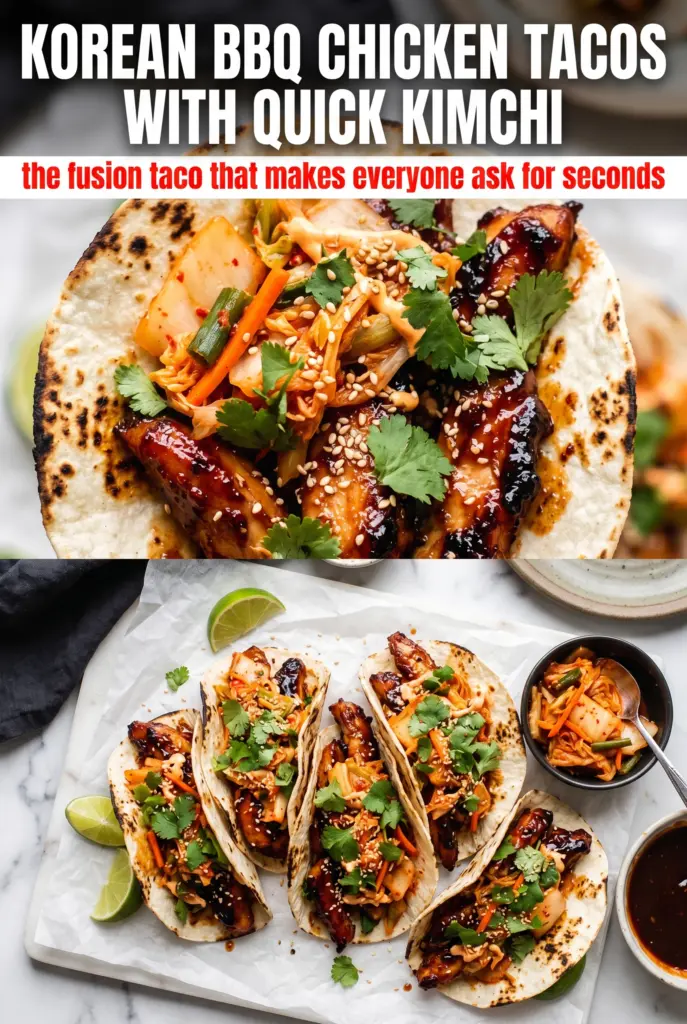
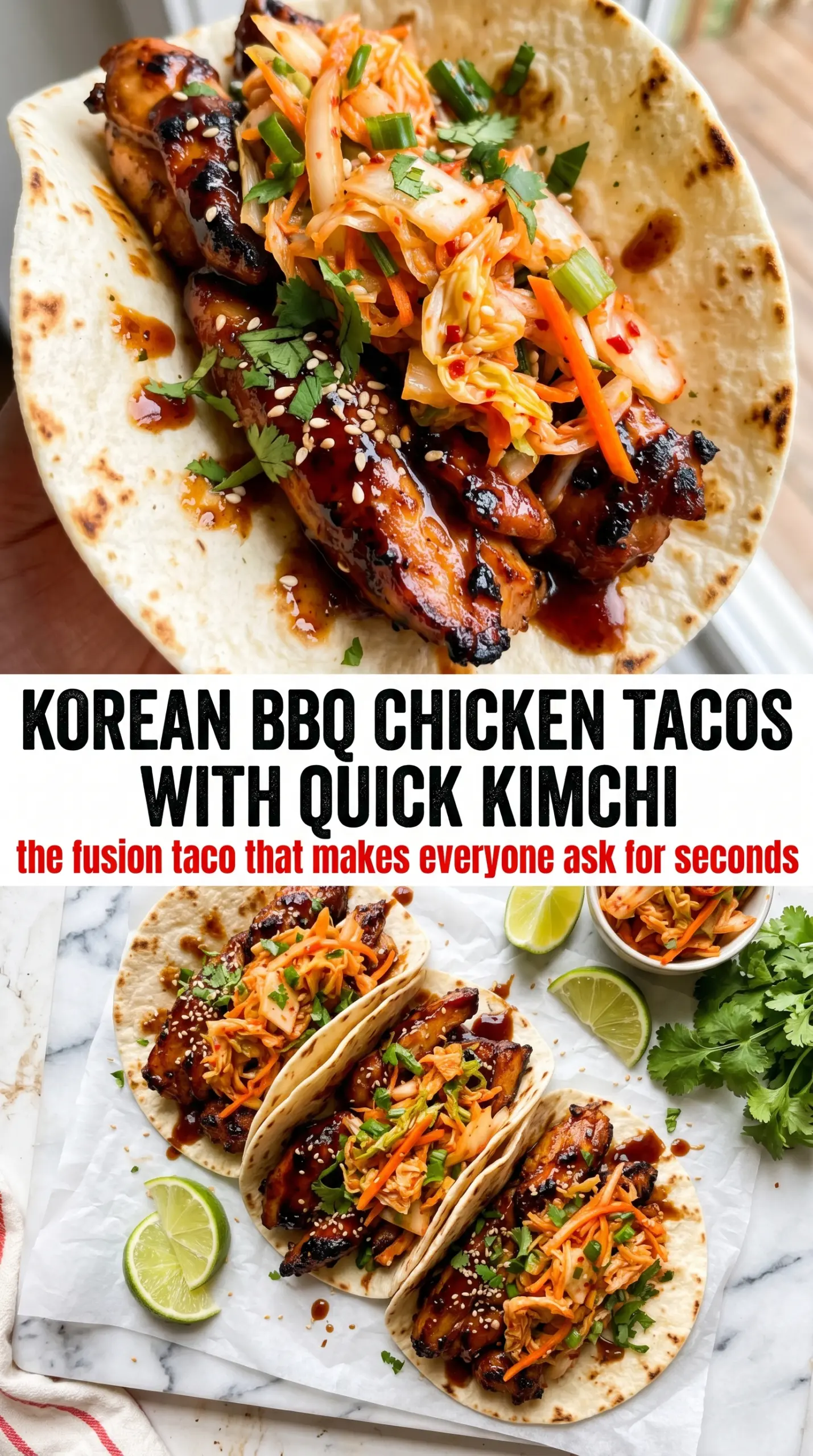
Korean BBQ chicken tacos land with that rare combination of sticky, spicy, tangy, and fresh that makes a plate disappear fast. The chicken turns glossy and caramelized in the pan, then gets balanced by quick kimchi that brings crunch and bite without needing a long ferment. Wrapped in warm tortillas, the whole thing eats like takeout with a better texture and brighter finish.
The key is building the glaze at the end, not the beginning. Gochujang, honey, and soy sauce can scorch if they sit in a screaming-hot pan for too long, so the chicken gets most of its cooking done first, then the sauce goes in just long enough to coat and tighten into a shiny glaze. The quick kimchi follows the same logic: a short rest with salt, vinegar, chili, and sesame oil softens the cabbage just enough while keeping it crisp.
Below you’ll find the exact timing that keeps the chicken juicy, the one skillet habit that gives you deeper flavor, and a few smart swaps if you want to adjust the heat, the sweetness, or the tortillas.
The chicken got that sticky, caramelized edge I was hoping for, and the quick kimchi stayed crisp enough to cut through the sauce. My husband kept saying the balance was perfect.
Save these Korean BBQ Chicken Tacos with Quick Kimchi for a sticky, fast dinner with big flavor and crisp cabbage on top.
The Trick to Getting the Chicken Glazed Without Burning the Sauce
The mistake with sticky Korean-style chicken is usually heat management. If the sauce goes in too early, the honey and gochujang can darken before the chicken finishes, and you end up with scorched spots instead of a shiny glaze. Cooking the chicken first gives the pieces time to pick up color and render a little moisture before the sauce tightens around them.
The sauce should look loose when it first hits the pan, then bubble quickly and cling to the chicken in a thin lacquer. If it starts to look dry or pasty before the meat is cooked through, the heat is too high. Pull the pan back for a few seconds and stir; the glaze will smooth out again as soon as the moisture redistributes.
What the Chicken, Gochujang, and Quick Kimchi Each Bring to the Table
- Chicken thighs — Thighs stay juicy while the sauce reduces around them. Breast meat can work, but it cooks faster and dries out sooner, so cut the pieces a little larger and watch the pan closely if you swap.
- Gochujang — This is the flavor backbone. Nothing else gives the same fermented heat, depth, and slight sweetness, so if you substitute, the dish loses its signature character. For a milder version, use less and add a little extra honey and soy sauce to keep the glaze balanced.
- Sesame oil — Use the real toasted kind. It brings the nutty finish that makes the sauce taste complete, and a little goes a long way. Untoasted sesame oil won’t give the same result.
- Napa cabbage — The thin slices soften fast enough to become kimchi-like in 15 minutes, but they stay crunchy enough to cut through the glaze. Green cabbage works in a pinch, though it needs a little more time to soften and tastes sharper.
- Rice vinegar — This keeps the quick kimchi bright and prevents the filling from feeling heavy. Lemon juice can step in if needed, but it changes the flavor and reads more sharp than mellow.
Building the Glaze and Kimchi So They Finish Together
Mix the quick kimchi first
Start with the cabbage, chili flakes, garlic, sesame oil, rice vinegar, and salt in a bowl, then toss until every ribbon is coated. The cabbage should look lightly dressed, not swimming. Let it sit while you cook the chicken; that short rest softens the edges without turning it limp. If it sits much longer, it gets more pickled and less crisp, which changes the whole taco.
Cook the chicken before the sauce goes in
Heat the skillet until it is hot enough that the chicken sizzles on contact, then cook the pieces until they lose their raw pink color and start getting a little color at the edges. This first stage builds flavor and keeps the final glaze from becoming a sticky mess too soon. If the pan looks crowded and the chicken starts steaming, work in batches. Browning needs space.
Let the glaze tighten at the end
Pour in the soy sauce mixture and keep the chicken moving until the sauce reduces and coats the pieces in a glossy layer. You want a bubbling sauce that leaves a shiny trail when you stir through it, not a thin puddle at the bottom of the pan. Once it reaches that point, take it off the heat. Another minute can push it from glossy to tacky.
Warm the tortillas right before serving
Dry tortillas in a hot skillet for a few seconds per side until they’re soft with a few browned spots and a little puff. Warm tortillas fold better and taste far better than cold ones, especially with a sticky filling. Stack them under a clean towel so they stay pliable while you finish the tacos.
How to Adapt These Tacos When You Need a Different Version
Gluten-Free Swap
Use certified gluten-free soy sauce or tamari and choose corn tortillas instead of flour. The filling stays just as sticky and savory, but the tortillas will be a little more delicate, so warm them gently and keep the tacos tightly filled.
Milder Heat Version
Cut the gochujang back to 2 tablespoons and add 1 extra tablespoon of honey. You’ll still get the fermented depth, but the glaze leans sweeter and gentler, which works well if you’re serving people who are nervous about spice.
Chicken Breast Instead of Thighs
Chicken breast works if you cut it into slightly larger pieces and pull it as soon as it’s cooked through. The tradeoff is less juiciness, so keep the sauce moving at the end and don’t let it sit in the pan once it has thickened.
Storage and Reheating
- Refrigerator: Store the chicken and kimchi separately for up to 3 days. The cabbage softens a little more each day, but the flavor stays bright.
- Freezer: The chicken freezes well for up to 2 months, but the quick kimchi does not. Freeze the chicken on its own and make a fresh cabbage topping when you’re ready to serve.
- Reheating: Warm the chicken gently in a skillet over medium-low heat with a splash of water to loosen the glaze. Microwaving on high can make the sauce seize and the chicken go rubbery.
Questions I Get Asked About This Recipe
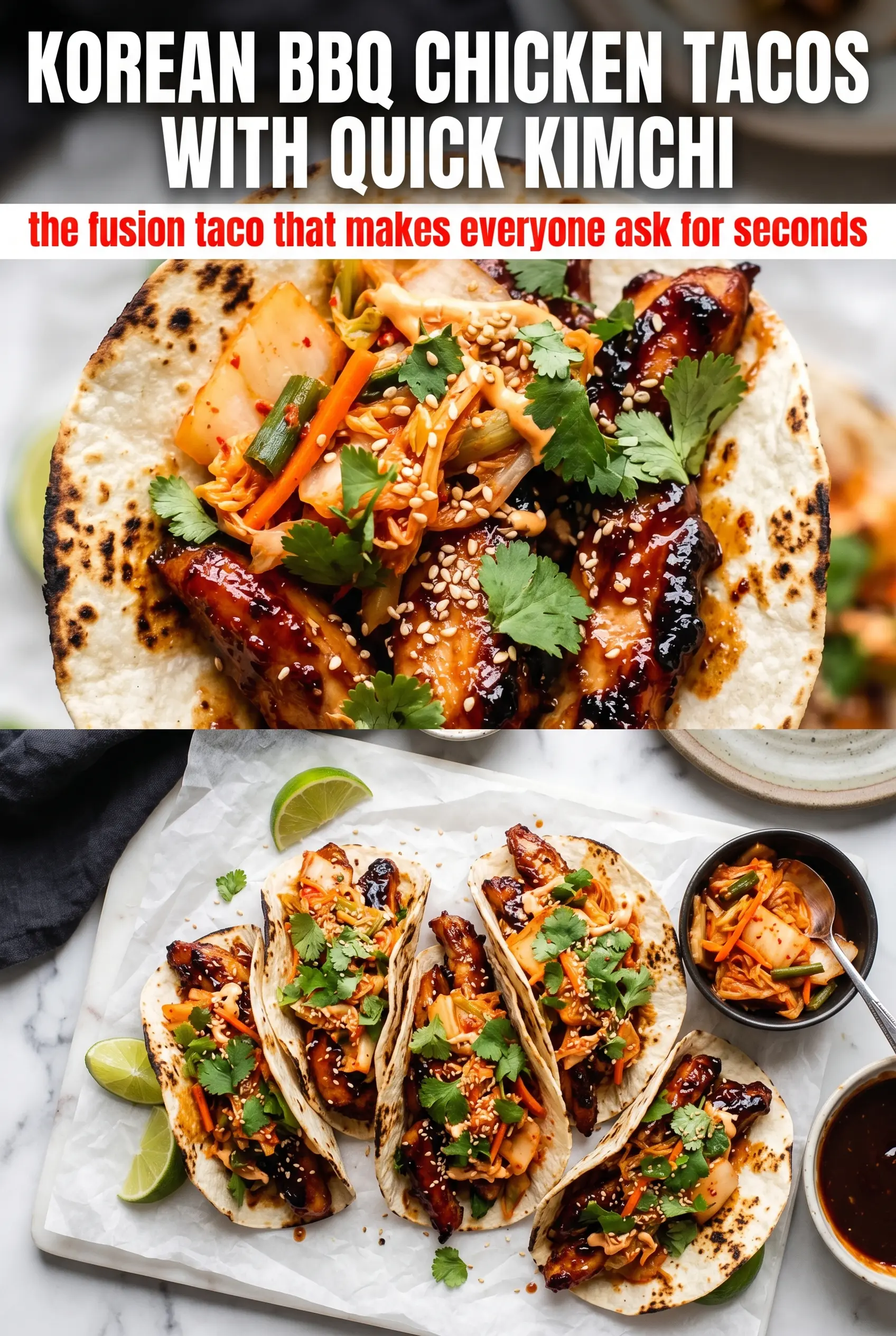
Korean BBQ Chicken Tacos with Quick Kimchi
Ingredients
Equipment
Method
- In a bowl, combine napa cabbage, red chili flakes, garlic, sesame oil, rice vinegar, and salt. Let it sit for 15 minutes while you cook the chicken, so the cabbage softens and turns glossy with chili-vinegar flavor.
- Mix soy sauce, gochujang, honey, sesame oil, garlic, ginger, and rice vinegar in a bowl. Heat a large skillet or wok over high heat until very hot.
- Cook chicken pieces on the hot skillet for 8-10 minutes until mostly cooked, flipping as needed for even browning. You should see browning on the edges but not full caramelization yet.
- Add the gochujang mixture to the skillet and cook for 3-4 minutes more until caramelized and cooked through. Stir often so the glaze thickens and coats each piece, creating a sticky sheen.
- Warm flour tortillas in a dry skillet over medium heat for about 15-30 seconds per side. They should become pliable with light browning spots.
- Fill each tortilla with Korean BBQ chicken, then top with quick kimchi. Garnish with sliced scallions and additional sesame seeds so the tacos look bright and speckled.
- Serve immediately while the glaze is tacky and the tortillas are warm. The contrast of hot chicken and quick kimchi is best right after assembly.