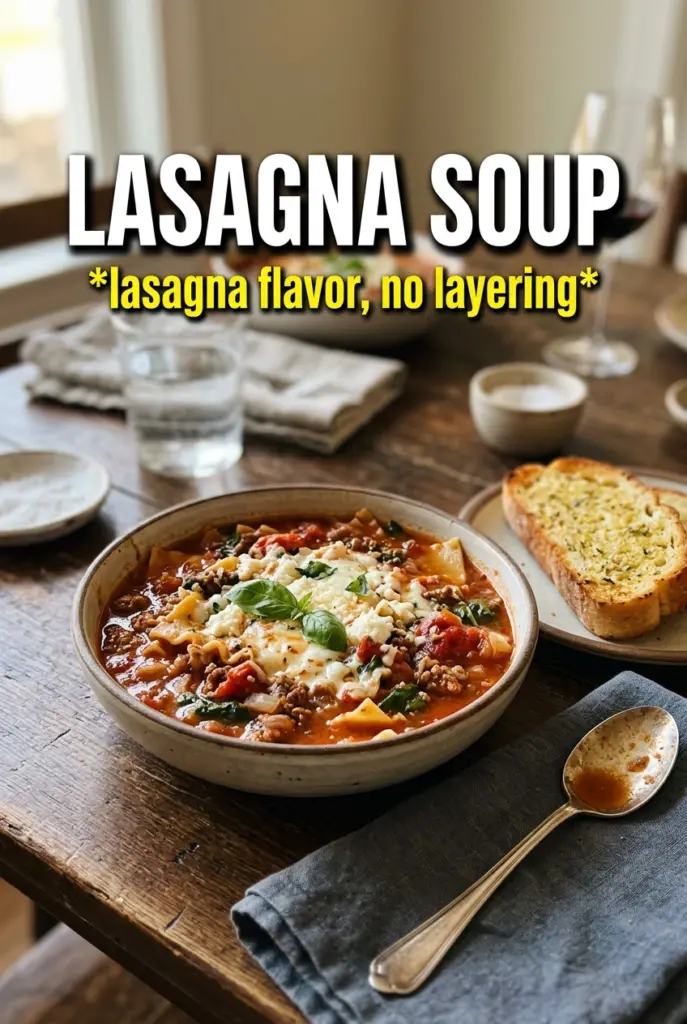
Lasagna soup gives you the best parts of a bubbling pan of lasagna without the layering, waiting, or extra dishes. You get a rich tomato broth, tender ribbons of pasta, savory sausage, and that creamy cheese topping that melts into the bowl and makes the whole thing taste like comfort food with a little more swagger. It’s the kind of dinner that feels familiar the first time you make it, then ends up in the regular rotation because it’s straightforward, satisfying, and hard to mess up.
The key is building flavor in the pot before the broth ever goes in. Browning the sausage gives you the savory base, and cooking the tomato paste for a minute or two deepens the sauce so it tastes cooked, not thin and canned. Broken lasagna noodles work here because they trap the broth the same way layered pasta holds sauce in a baked version, and the cheese mixture on top gives you that classic lasagna finish without needing an oven.
Below, I’ve included the small choices that matter most — how to keep the noodles from going soft, what to do if you want a richer broth, and a few smart swaps if you need to work with what’s already in the pantry.
The broth was rich and tomatoey, and the noodles stayed tender without turning mushy. I loved how the ricotta topping melted in and made it taste just like lasagna in a bowl.
Save this lasagna soup for the nights when you want all the comfort of baked lasagna without assembling a pan.
The Reason the Noodles Go in Last
Lasagna noodles are sturdy, but they still keep cooking after the heat goes off. If you simmer them too early, they soak up broth and turn the soup thick and heavy instead of brothy and spoonable. Adding them near the end keeps the texture closer to a true bowl of lasagna: soft enough to eat comfortably, but still intact.
The other thing that matters here is the tomato base. Tomato paste needs a minute in the hot pot before the liquid goes in, because that quick cook removes the raw edge and gives the broth a deeper, rounder taste. If you skip that, the soup still works, but it tastes flatter and less finished.
What Each Ingredient Is Doing in the Pot

- Italian sausage — This is the backbone of the soup. It seasons the broth from the start, and the rendered fat carries the onion, garlic, and tomato flavors. Mild or hot sausage both work; use hot if you want more heat without adding extra red pepper flakes.
- Crushed tomatoes plus diced tomatoes — The crushed tomatoes make the broth body and color, while the diced tomatoes add little bursts of texture. If you only have one type, the soup still works, but the mix gives it a more layered feel.
- Tomato paste — Don’t treat this like a throwaway spoonful. It adds concentrated tomato flavor and helps the broth taste richer and less watery. Cook it with the sausage and onion for a minute or two until it darkens slightly.
- Ricotta, mozzarella, parmesan, and basil — This topping is what makes the soup taste like lasagna instead of just tomato pasta soup. Ricotta gives the soft creaminess, mozzarella brings the melt, and parmesan adds salt and depth. Mix it right before serving so it stays thick and dollops cleanly on the hot soup.
- Lasagna noodles — Break them into rough pieces, not neat little squares. Uneven edges catch the broth better, and they look more natural in the bowl. If you only have another sturdy pasta, use it, but the soup won’t have quite the same lasagna feel.
Building the Broth Before the Pasta Takes Over
Browning the Sausage First
Start with a hot pot and let the sausage get real color before you add anything else. You want browned bits on the bottom, not pale crumbles floating in fat, because that caramelization gives the soup its savory base. If the sausage steams instead of browns, the heat is too low or the pot is overcrowded. Break it up as it cooks, then drain off excess fat if the pot looks greasy.
Waking Up the Tomato Base
Cook the onion in the same pot so it picks up the sausage flavor, then add the garlic just long enough for it to smell fragrant. After that, stir in the tomato paste and let it darken a shade or two. That step is what keeps the broth from tasting like canned tomatoes poured into water. Once the broth and tomatoes go in, scrape the bottom well so every browned bit dissolves into the soup.
Cooking the Noodles at a Gentle Simmer
Bring the soup to a boil first, then lower it to a steady simmer before the noodles go in. A hard boil can smash the pasta and make the broth cloudy and starchy. Keep the simmer active but not aggressive, and taste a noodle near the end so you catch it when it’s tender with a little bite left. If the soup thickens more than you want, add a splash of broth before serving.
Finishing with the Cheese Dollop
Mix the ricotta, mozzarella, parmesan, and basil together until it looks thick and spoonable. Ladle the soup into bowls first, then add a generous dollop on top so it softens from the heat without disappearing completely. If you stir the cheese into the whole pot, it can get stringy and muddy the broth. The bowl-by-bowl finish keeps the texture cleaner and gives each serving that classic lasagna topping.
Three Ways to Make This Bowl Fit the Night
Make it lighter with ground turkey
Swap the Italian sausage for ground turkey and add an extra pinch of Italian seasoning plus a little more salt. You’ll lose some of the built-in richness, so the soup tastes leaner, but it still works well if you want a lighter bowl. If you go this route, don’t skip the tomato paste step because that extra depth matters more without sausage fat.
Make it gluten-free with sturdy GF pasta
Use a gluten-free lasagna-style noodle or another sturdy gluten-free pasta, but watch it closely because many GF pastas soften faster than wheat noodles. It helps to undercook them slightly before they go into the soup, since they’ll keep absorbing broth as the pot sits. The flavor stays the same, but the texture needs a little more attention.
Make it creamier without changing the structure
Stir a splash of heavy cream into the broth at the very end if you want a softer, richer finish. Do it after the noodles are cooked and the heat is low, or the dairy can separate and dull the tomato flavor. This version tastes closer to a pink, velvety tomato soup with lasagna flavors underneath.
Storage and Reheating
- Refrigerator: Store for up to 4 days. The noodles will keep absorbing broth, so expect a thicker soup on day two.
- Freezer: Freeze the broth without the noodles and cheese topping for best texture. Pasta gets soft after thawing, so cook fresh noodles when you reheat if you want the best bowl.
- Reheating: Warm gently over medium-low heat with a splash of broth or water to loosen it. Don’t boil it hard, or the noodles will break down and the sausage can dry out.
Questions I Get Asked About This Recipe
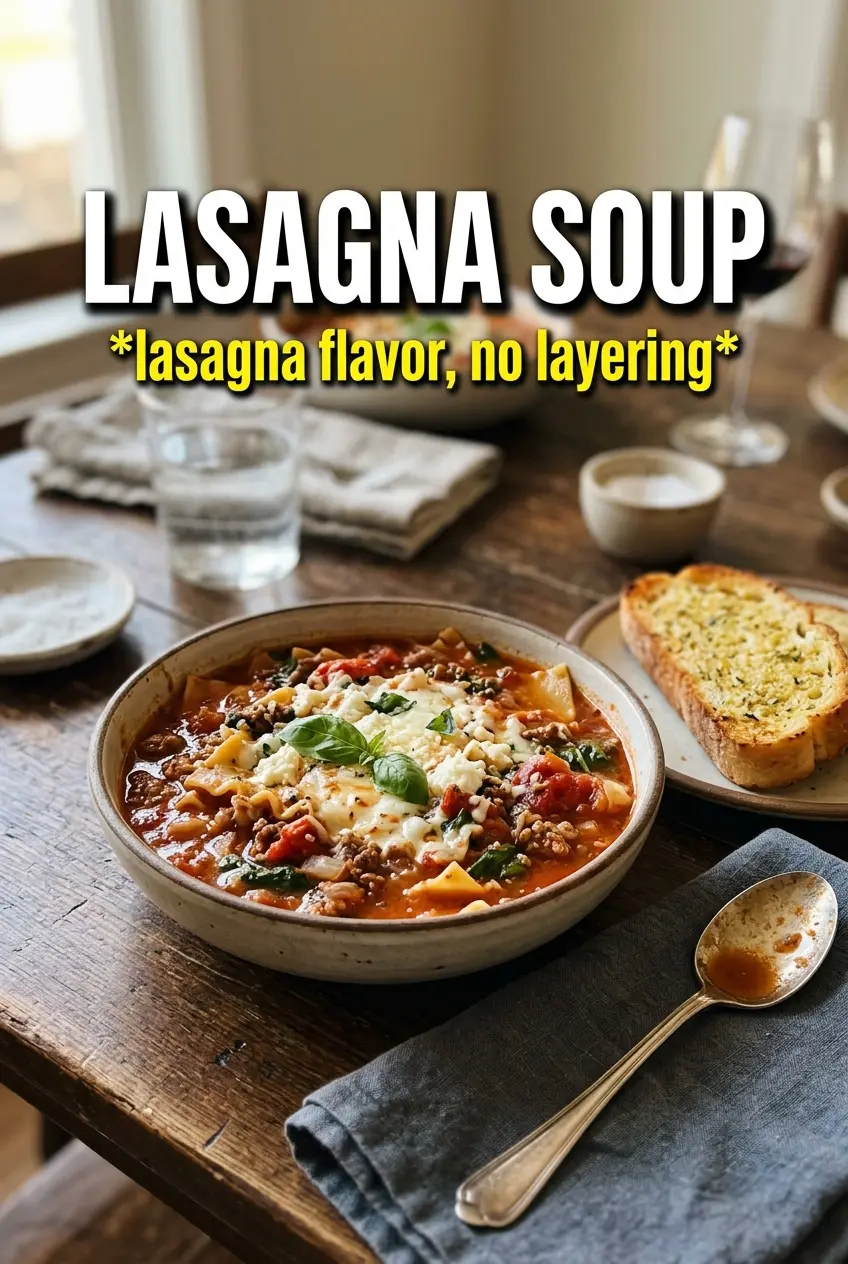
Lasagna Soup
Ingredients
Equipment
Method
- Brown the Italian sausage in a large pot over medium-high heat, breaking it into crumbles, until no longer pink. Drain excess fat to keep the soup from feeling greasy.
- Sauté the onion in the same pot for 4 minutes. Stir in the minced garlic and cook for 1 minute until fragrant.
- Stir in the tomato paste and cook for 1-2 minutes until it darkens. This deepens the tomato flavor before adding liquids.
- Stir in crushed tomatoes, diced tomatoes, broth, Italian seasoning, dried basil, and red pepper flakes. Bring the mixture to a boil over medium-high heat.
- Add the broken lasagna noodles and simmer for 10-12 minutes until tender. Stir occasionally so noodles cook evenly.
- Season with salt and pepper to taste. Keep simmering briefly if needed to balance the flavor.
- Mix the ricotta, shredded mozzarella, parmesan, and fresh basil together. Stir until the mixture is cohesive and spoonable.
- Ladle the soup into bowls and top with a generous dollop of the cheese mixture. Let the center melt slightly before eating.