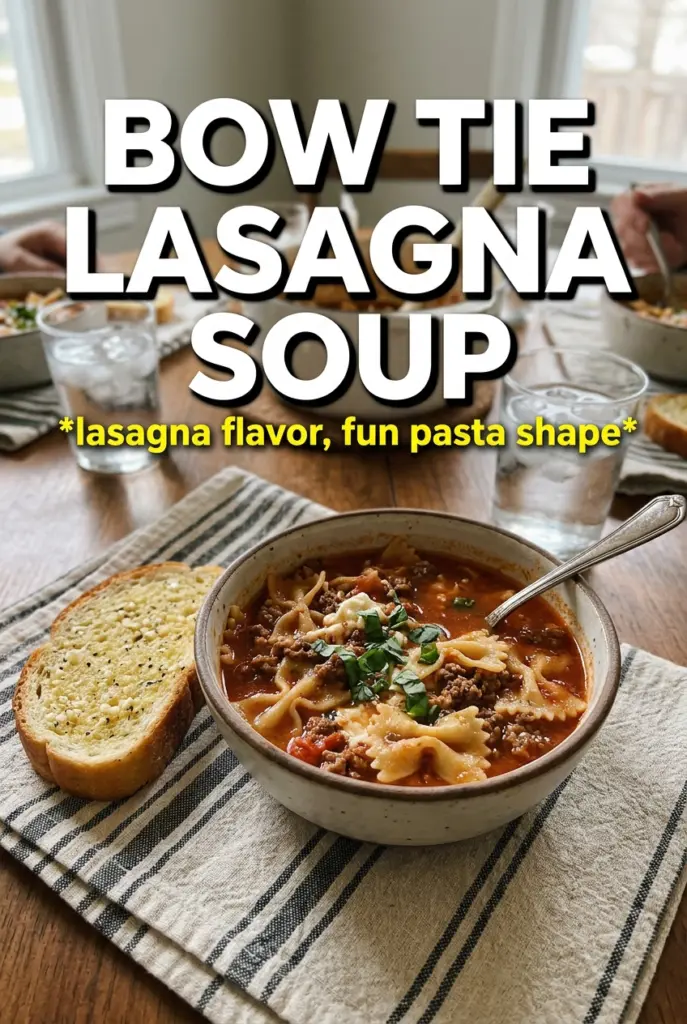
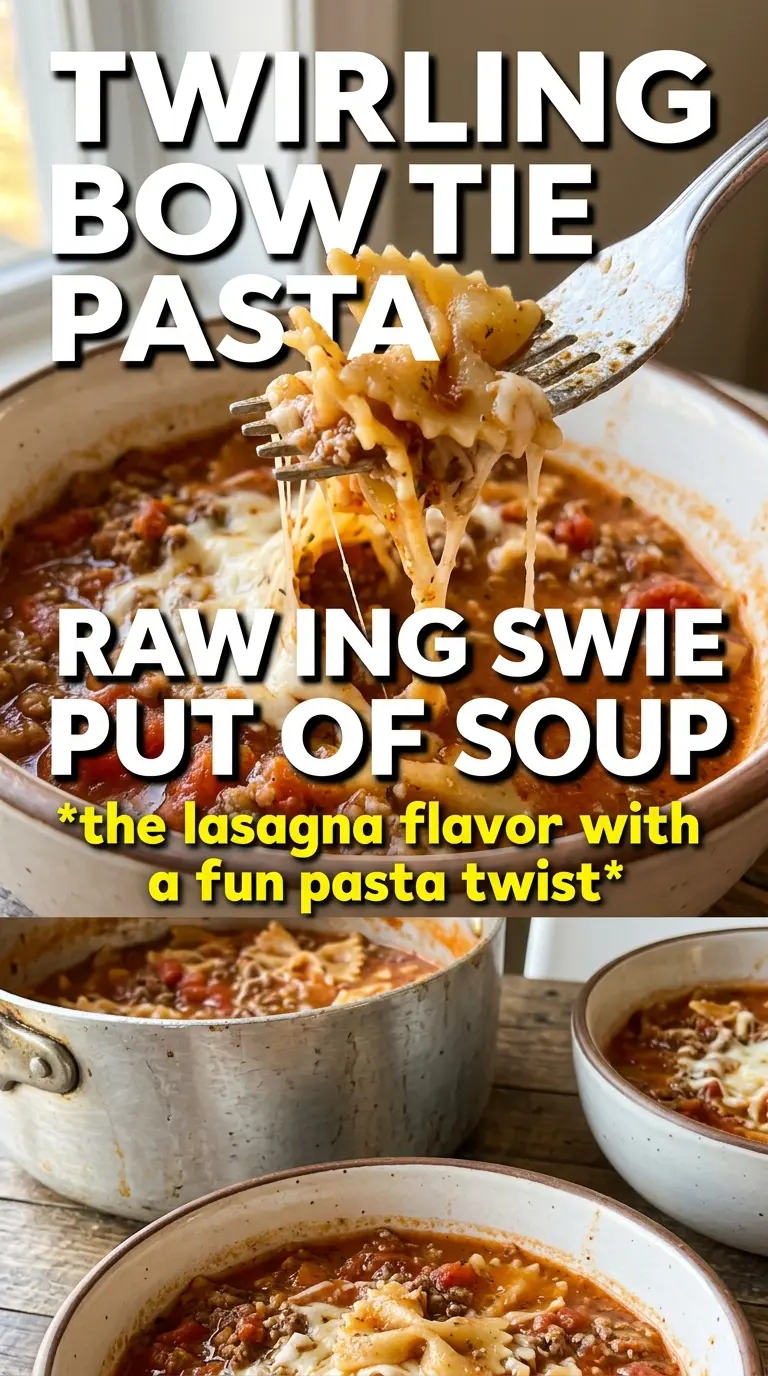
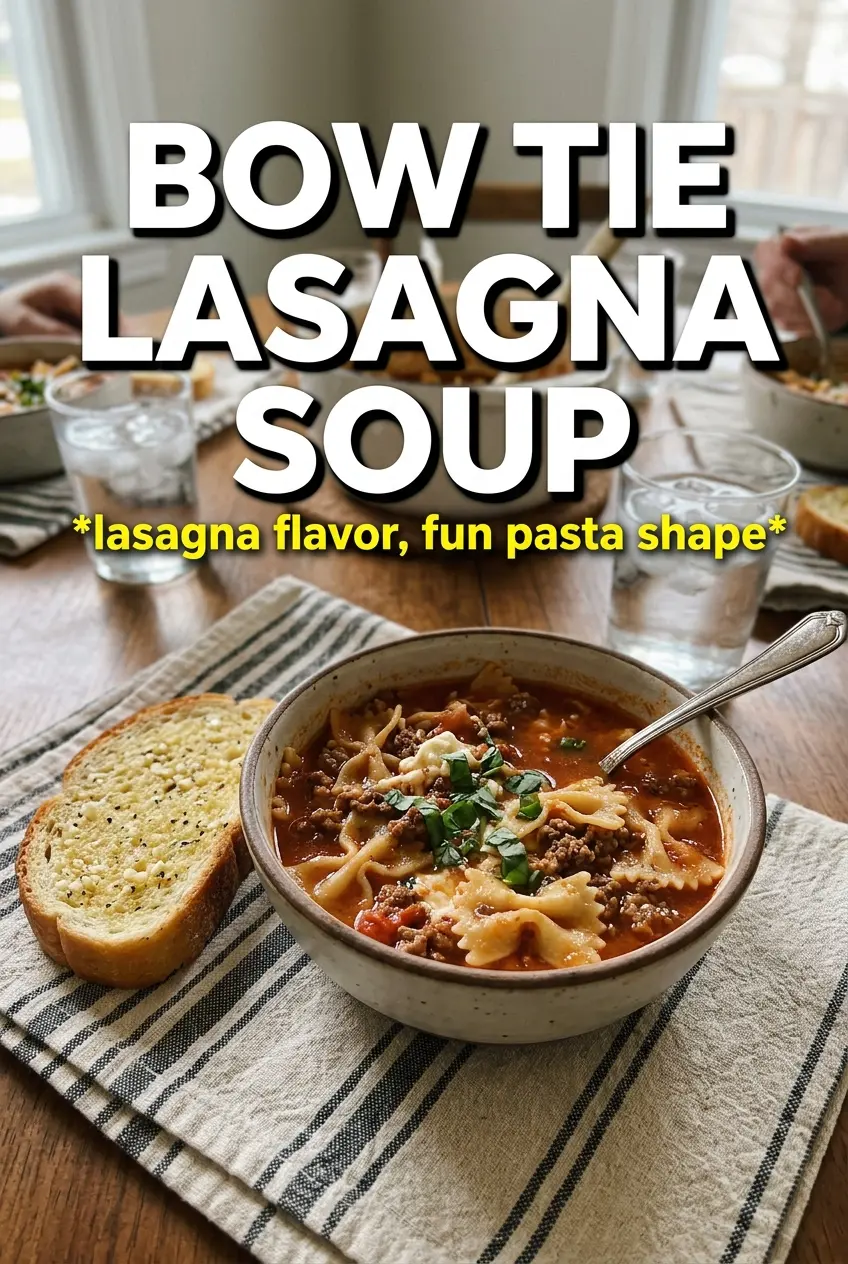
Lasagna soup with bow tie pasta gives you the same cozy, tomato-rich comfort as baked lasagna, but in a bowl you can finish in half the time. The broth turns silky and savory, the sausage adds depth, and the farfalle catches little pockets of sauce in every fold. The cheese dollop on top melts into the hot soup just enough to feel indulgent without turning heavy.
This version works because the tomato paste gets cooked before the liquid goes in, which gives the broth a deeper, rounder flavor instead of something thin and flat. The pasta cooks right in the soup, so it picks up the seasoning as it softens. Bow ties are a smart swap for lasagna noodles when you want a spoonable dinner with less fuss, though they do drink up more liquid, so the broth-to-pasta ratio matters.
Below, I’ll show you how to keep the soup brothy instead of thick and gummy, plus a few smart swaps if you want to make it lighter, spicier, or a little more flexible for what’s already in your pantry.
The broth stayed rich and the bow ties held their shape instead of turning mushy. I added an extra splash of broth before serving and the ricotta on top made it taste just like lasagna in soup form.
Save this lasagna soup with bow tie pasta for a fast, brothy dinner with a creamy ricotta topping and real lasagna flavor.
The Part That Keeps Bow Tie Pasta From Turning the Soup Into a Stew
The biggest mistake with this kind of soup is letting the pasta sit too long in the pot. Farfalle has enough surface area to soak up broth fast, and once it crosses that line, the texture goes from hearty to swollen and heavy. Cook it until just al dente, then serve right away if you want the broth to stay loose and spoonable.
The other thing that matters is building flavor before the liquid goes in. Browning the sausage first gives you the savory base, and cooking the tomato paste for a minute or two removes that raw, metallic edge. If your soup tastes flat, it usually means one of those two steps got rushed.
- Italian sausage — This is the backbone of the soup. A good sausage brings seasoning, fat, and enough richness that you don’t need much else to make the broth taste full. Mild or hot both work; hot sausage gives the best payoff if you like a little heat.
- Tomato paste — Cook it with the onion and garlic, not after the broth goes in. That short sauté time deepens the tomato flavor and keeps the soup from tasting sharp.
- Crushed tomatoes plus diced tomatoes — The crushed tomatoes give the soup body, while the diced tomatoes leave some texture behind. If all you have is one or the other, the soup still works, but the combo gives you the best balance.
- Ricotta, mozzarella, and parmesan — This trio turns the bowl into something that tastes like lasagna without needing a baking dish. Use whole-milk ricotta if you can; it melts into the soup with a creamier finish. Part-skim works, but it won’t be quite as lush.
- Farfalle — Bow ties are sturdy enough to hold up in broth and catch little bits of sausage and tomato. If you swap in a different pasta, choose one with ridges or a shape that doesn’t collapse fast.
What Each Ingredient Is Actually Doing in This Recipe
- Primary ingredient (the star) — Quality matters most. Choose the best you can find.
- Cooking medium (oil, butter, or broth) — This carries flavors and prevents dryness.
- Seasonings (salt, pepper, spices, herbs) — Layer flavors so nothing overpowers. Build depth gradually.
- Aromatics (garlic, onion, herbs) — Cook with fat to bloom flavors. Become the foundation.
- Supporting ingredients — Complement the main ingredient without overpowering it.
- Sauce or liquid (if applicable) — Brings flavors together. Balance richness with acid.
- Acid (lemon, vinegar, wine, or other) — Brightens and prevents flat-tasting results.
- Final finish (garnish, glaze, or sauce) — Prevents one-dimensional taste and adds visual appeal.
Building the Broth Before the Pasta Goes In
Brown the Sausage Until It Actually Catches Color
Cook the sausage in a large pot over medium-high heat until it loses its pink color and starts to develop browned spots on the bottom. Those browned bits are where the flavor lives, so don’t stir constantly. If there’s a lot of fat after browning, drain off some of it, but leave a little behind so the onion can soften in it.
Cook Out the Tomato Paste
Add the diced onion and let it soften for about 3 minutes, then stir in the garlic and tomato paste. The paste should darken slightly and smell sweet, not raw. If you add the broth too early, the paste stays flat and the soup misses that deeper, cooked tomato note.
Simmer the Tomatoes and Seasoning
Pour in the crushed tomatoes, diced tomatoes, broth, Italian seasoning, dried basil, and red pepper flakes, then bring everything to a boil before lowering it to a steady simmer. The soup should look lively, with little bubbles breaking across the surface, not raging hard enough to splatter. Taste the broth before the pasta goes in; that’s the last easy moment to adjust salt, especially if your sausage was on the salty side.
Cook the Bow Ties to the Right Bite
Add the farfalle and cook until it is just tender with a little resistance in the center, usually 8 to 10 minutes. Stir a few times so the pasta doesn’t clump on the bottom. If the soup looks too thick before the pasta is done, add extra broth in small splashes; bow ties absorb more liquid than lasagna noodles, and that’s the part people underestimate.
How to Make This Bowl Work With What You’ve Got
Make It Spicier
Use hot Italian sausage and increase the red pepper flakes. That gives the broth more backbone without changing the texture. If you like heat but don’t want it to take over, add the extra flakes at the end so you can stop where the flavor feels balanced.
Make It Lighter
Swap in turkey Italian sausage and use part-skim ricotta. You’ll lose some richness, but the tomato broth and herbs still carry the dish. A splash of extra broth at the end helps keep the lighter version from tasting lean.
Make It Gluten-Free
Use your favorite gluten-free farfalle and watch the cooking time closely. GF pasta can go from firm to soft faster than wheat pasta, and some brands keep absorbing liquid after the heat is off. If you’re making it ahead, cook the pasta separately and stir it into each bowl when serving.
Storage and Reheating
- Refrigerator: Store leftovers for up to 4 days. The pasta will keep soaking up broth, so expect the soup to thicken.
- Freezer: The soup base freezes well, but the pasta softens after thawing. For the best texture, freeze the soup without pasta and cook fresh bow ties when you reheat it.
- Reheating: Warm it gently on the stove over medium-low heat with a splash of broth or water. High heat can make the pasta go mushy and the soup can turn too dense if you don’t loosen it first.
Questions I Get Asked About This Recipe
Lasagna Soup With Bow Tie Pasta
Ingredients
Equipment
Method
- Brown Italian sausage in a large pot over medium-high heat until no longer pink, then drain off excess fat.
- Sauté onion for 3 minutes until softened, then add garlic and tomato paste and cook for 2 minutes, stirring until fragrant.
- Add crushed tomatoes, diced tomatoes, chicken broth, Italian seasoning, dried basil, and red pepper flakes; bring to a boil.
- Add farfalle (bow tie) pasta and cook 8-10 minutes until al dente, stirring occasionally so it doesn’t stick.
- Season with salt and pepper to taste.
- Mix ricotta, shredded mozzarella, and parmesan into a thick cheese dollop.
- Serve soup in bowls and add a generous spoonful of the cheese dollop, then top with fresh basil.
- If the soup thickens too much (bow tie pasta absorbs more liquid than lasagna noodles), stir in extra chicken broth.