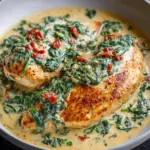
Golden seared chicken breasts tucked into a sun-dried tomato cream sauce have a way of stealing the whole dinner table. The chicken stays juicy, the sauce turns glossy and spoonable, and the Parmesan plus basil give it that rich, savory finish that keeps people going back for “just one more bite.” This version earns its keep because it doesn’t lean on gimmicks. It builds real flavor in the skillet, where the browned bits from the chicken turn into the backbone of the sauce.
The trick is keeping the heat under control once the cream and cheese go in. Too much heat and the sauce can turn grainy or separate before it ever gets luxuriously thick. I also like to use oil-packed sun-dried tomatoes because they bring a deeper, softer tomato flavor and a little of that seasoned oil helps carry the sauce. The chicken goes back into the pan at the end so it can finish gently without drying out.
Below you’ll find the exact points that matter most: how to get the sear without overcooking the chicken, how to keep the cream sauce smooth, and a few smart swaps if you need to work with what you’ve got on hand.
The sauce thickened up beautifully and the sun-dried tomatoes gave it a deep, savory flavor. I served it over mashed potatoes and my husband asked if we could have it again the next night.
Save this Marry Me Chicken for the nights when you want a creamy sun-dried tomato skillet dinner that tastes like it took twice as long as it did.
The Sear Is the Whole Sauce Base Here
Marry Me Chicken looks like a cream-sauce recipe, but the real flavor starts before the cream ever hits the pan. If the chicken goes into a weak skillet or gets crowded, it steams instead of browns, and you lose the savory foundation that makes the sauce taste full and rounded. A properly seared breast gives you color, drippings, and those stuck-on bits that dissolve when the broth goes in.
The other place people get tripped up is rushing the sauce after the chicken comes out. That pan should stay hot enough to soften the garlic and bloom the tomatoes, but not so hot that the cream hisses and splits on contact. Think steady simmer, not boil. The sauce should coat the back of a spoon and look silky before the chicken returns to finish cooking.
What Each Ingredient Is Doing in This Dish

The chicken breasts are the main canvas here, but size matters. If one breast is much thicker than the others, pound it lightly or slice it into cutlets so everything finishes at the same time. That keeps the outside from overcooking while you wait for the center to hit temperature.
- Sun-dried tomatoes in oil — These are worth buying in oil-packed form because they bring both concentrated tomato flavor and a little built-in richness. Drain them, then slice them so they melt into the sauce instead of staying chewy in big strips.
- Heavy cream — This gives the sauce its body and protects it from breaking better than milk or half-and-half would. If you swap in a lighter dairy, the sauce will be thinner and more likely to curdle once Parmesan goes in.
- Parmesan — Grate it fresh if you can. Pre-shredded cheese often has anti-caking agents that can make the sauce grainy instead of smooth.
- Chicken broth — This loosens the browned bits in the pan and keeps the sauce from feeling heavy. A low-sodium broth is the smart choice here so the cheese and seasoned chicken can control the salt.
- Red pepper flakes — You don’t need much, but that little bit of heat keeps the cream from tasting flat. If you want a calmer version, cut it back rather than removing it entirely.
Building the Sauce Without Breaking It
Season and Sear the Chicken
Season the chicken generously on both sides, then get it into a hot skillet with the olive oil. You want a deep golden crust that releases cleanly from the pan, not pale chicken that sticks and tears. If the skillet is crowded, cook in batches; otherwise the chicken will throw off moisture and undo the browning you need. Pull it once it reaches 165°F, then let it rest on a plate while you build the sauce.
Cook the Garlic and Tomatoes in the Drippings
Add the garlic and sun-dried tomatoes to the same pan and cook just until fragrant, about a minute. The garlic should smell sweet, not sharp or burnt. This is where the sauce starts to taste layered instead of just creamy. If the pan looks dry, the tomato oil and the drippings from the chicken will pick up the flavor nicely.
Finish the Cream Sauce Slowly
Pour in the chicken broth and scrape up every browned bit from the bottom of the skillet. Then lower the heat before adding the cream, Parmesan, Italian seasoning, and red pepper flakes. The sauce needs a gentle simmer to thicken; hard boiling can make the dairy split or the cheese turn sandy. When it looks glossy and lightly coats a spoon, it’s ready for the chicken.
Return the Chicken and Let It Finish Gently
Set the chicken back into the sauce and spoon it over the top so every piece gets coated. Let it simmer for a couple of minutes, just long enough to warm through and marry the flavors without overcooking the meat. The sauce should cling to the chicken in a thick layer, and the basil goes on at the end so it stays fresh and bright.
Three Practical Ways to Adapt Marry Me Chicken
Make It Gluten-Free Without Changing the Texture
This recipe is naturally gluten-free as written, so the main job is protecting the sauce from hidden gluten in packaged broth or Parmesan. Use a broth you trust and check the labels on your cheese and seasonings. The finished dish stays just as creamy and spoonable.
Use Chicken Thighs for a Richer, More Forgiving Dinner
Boneless thighs work well if you want a little more richness and a wider window before they dry out. They may need a few extra minutes in the pan, but the sauce handles that just fine. The result is a deeper, slightly more savory version of the same skillet dinner.
Lighten the Sauce a Bit
If you want a less heavy finish, replace part of the cream with extra broth, but don’t swap all of it out. The sauce will be thinner and a little less velvety, though still good over pasta or mashed potatoes. Keep the Parmesan freshly grated so it helps the sauce thicken instead of turning it grainy.
Add Spinach or Mushrooms for More Volume
A handful of spinach wilted in at the end or sliced mushrooms browned after the chicken both fit this skillet well. Mushrooms add a deeper savory note, while spinach keeps the dish lighter and stretches it a little farther. Cook vegetables before the cream goes in so they don’t water down the finished sauce.
Storage and Reheating
- Refrigerator: Store leftovers in an airtight container for up to 3 days. The sauce will thicken as it chills.
- Freezer: Cream sauces don’t freeze perfectly, and this one can separate after thawing. If you do freeze it, expect a slightly less smooth texture and reheat gently.
- Reheating: Warm it slowly in a covered skillet over low heat with a splash of broth or cream. High heat is the mistake that breaks the sauce and toughens the chicken.
Answers to the Questions Worth Asking

Marry Me Chicken
Ingredients
Equipment
Method
- Season chicken breasts generously on both sides with salt, pepper, garlic powder, Italian seasoning, and smoked paprika.
- Heat olive oil in a large cast iron skillet over medium-high heat, then sear chicken for 5-6 minutes per side until golden and the internal temperature reaches 165°F.
- Remove the chicken from the pan and keep it warm while you make the sauce.
- Cook garlic and sun-dried tomatoes in the same pan for 1 minute.
- Pour in chicken broth and deglaze, scraping up browned bits from the bottom of the skillet.
- Stir in heavy cream, Parmesan cheese, dried Italian seasoning, and red pepper flakes.
- Simmer the sauce 4-5 minutes, stirring as needed, until thickened and glossy.
- Return chicken to the pan and spoon sauce over each breast.
- Simmer 2 more minutes until the chicken is warmed through and coated in sauce.
- Garnish with fresh basil and serve over pasta or mashed potatoes.