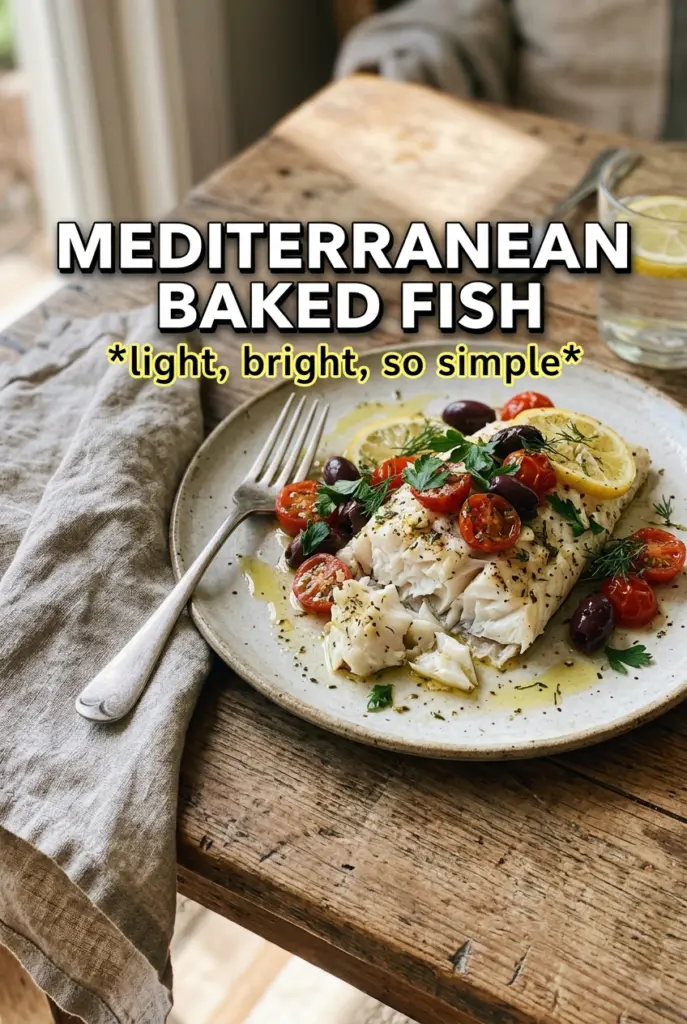
Flaky white fish, sweet roasted tomatoes, briny olives, and capers make this Mediterranean baked fish taste like it came out of a restaurant oven, but it lands on the table with almost no fuss. The fish stays tender because it bakes right on top of the vegetables instead of drying out in a separate pan, and the juices from the tomatoes, wine, and olive oil turn into a light sauce that you’ll want to spoon over every bite.
The key is giving the vegetables a head start. That first 10 minutes in the oven softens the tomatoes, wakes up the garlic, and starts the sauce before the fish ever goes in. By the time the fillets are nestled into the pan, the base is hot and flavorful, so the fish cooks quickly and picks up all that Mediterranean brightness without getting overdone.
Below, I’ve included the small details that matter most here: how to keep the fish from turning watery, which substitutions hold up best, and what to watch for so you pull the pan at the right moment.
The vegetables turned into this bright, savory sauce and the cod stayed flaky all the way through. I loved that the tomatoes burst and the lemon at the end made the whole pan taste fresh, not heavy.
Save this Mediterranean baked fish for a fast one-pan dinner with flaky cod, blistered tomatoes, and a bright lemon finish.
The Step That Keeps the Fish from Going Watery
The vegetables need their own head start because they release moisture fast. If you add the fish too early, the pan turns soupy and the fillets poach in tomato liquid instead of baking cleanly. That first roast lets the tomatoes blister, the garlic soften, and the olives and capers season the oil before the fish goes in.
The other thing that matters is pan size. Spread everything in a single layer in a 9×13 dish so the fish sits partly on the vegetables, not buried under them. If the fillets are crowded, steam gets trapped and the tops stay pale instead of turning opaque and tender.
What Each Ingredient Is Actually Doing in This Dish
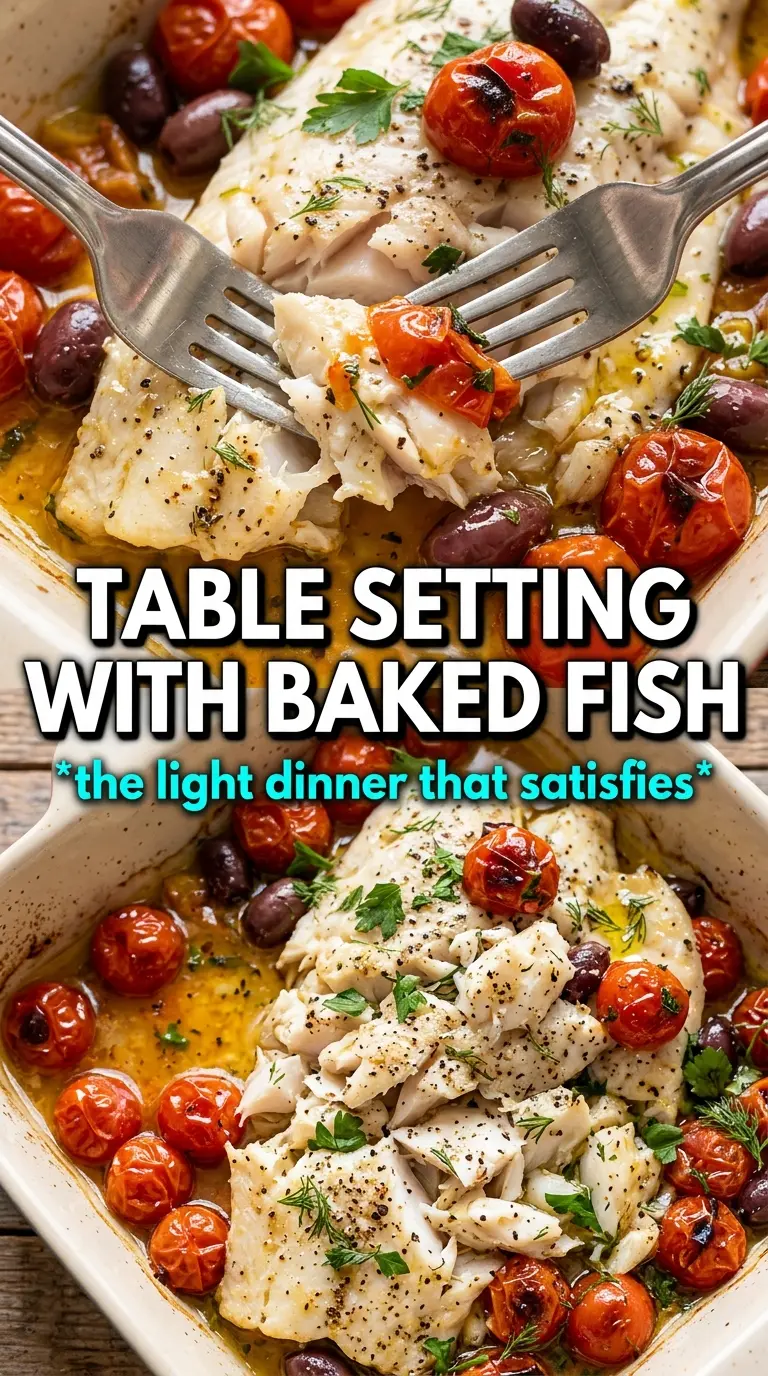
- White fish fillets — Cod gives you the most forgiving, flaky result, while halibut and sea bass stay a little firmer. Use fillets that are similar in thickness so they finish at the same time. If one piece is much thinner, tuck it toward the edge of the dish where the heat is gentler.
- Cherry tomatoes — These are the backbone of the sauce. They burst in the oven and give you sweet, juicy pockets that balance the briny olives and capers. Grape tomatoes work too, but larger tomatoes should be cut smaller so they soften in time.
- Kalamata olives and capers — This is where the dish gets its Mediterranean edge. The olives bring depth and the capers bring sharp saltiness, so don’t overdo extra salt at the beginning. If you need a swap, use another briny olive, but the flavor will be less rich and a little cleaner.
- Roasted red peppers — They add sweetness and a soft, silky texture that rounds out the pan sauce. Jarred peppers are perfect here because they’re already tender and seasoned by the roasting process. Fresh peppers won’t give the same concentrated sweetness without extra cooking time.
- Dry white wine or broth — This loosens the vegetables just enough to create sauce and keeps the garlic from scorching. Wine gives the brightest finish, but broth works if you want to keep it alcohol-free. Use a dry broth, not something heavily seasoned, or the dish can taste flat and muddy.
Building the Pan Sauce Around the Fish
Roast the Vegetables First
Stir the tomatoes, olives, capers, roasted red peppers, garlic, wine, olive oil, oregano, and red pepper flakes right in the baking dish so every bit gets coated. Roast it until the tomatoes just start to slump and the garlic smells sweet, not raw. If the garlic slices are browning hard before the fish goes in, the heat is too high or the slices are too thin.
Set the Fish on the Hot Base
Season the fillets with salt and pepper, then nestle them into the vegetables without fully burying them. You want some of the fish touching the sauce and some of the top exposed so it bakes instead of stews. If the fish is very thick, add a couple of extra minutes at the end; if it flakes at the edges, it’s done.
Pull It the Moment It Flakes
Bake just until the fish flakes easily with a fork and looks opaque all the way through. The center should still feel moist, not dry and chalky. Overbaking is the most common mistake here, and once the fish goes past done, no amount of lemon will bring the tenderness back.
Make It Dairy-Free Without Losing Richness
This recipe is naturally dairy-free, which is part of why it tastes so clean and bright. The olive oil, tomatoes, and fish juices carry the sauce on their own, so you don’t need cream or butter for body. If you want a little more richness, finish with an extra drizzle of good olive oil right before serving.
Swap the Fish Based on Thickness
Cod cooks fast and flakes apart easily, while halibut and sea bass stay a little firmer and need the longer end of the bake time. If you use salmon instead of white fish, the flavor turns richer and the texture gets more substantial, but the Mediterranean sauce still works beautifully. Keep the fillets close in size so the pan finishes evenly.
Make It Lower-Carb and More Filling
This dish already fits a lower-carb dinner as written, but you can stretch it with extra vegetables like zucchini slices or fennel wedges under the fish. They’ll soak up the sauce and give the pan more volume without changing the cooking method. Just cut them thin enough that they soften in the same window as the tomatoes.
Storage and Reheating
- Refrigerator: Store leftovers in an airtight container for up to 2 days. The fish stays tasty, but the texture softens a bit as it sits.
- Freezer: I don’t recommend freezing this one. The tomatoes and fish both change texture after thawing, and the sauce loses its fresh finish.
- Reheating: Warm gently in a 300F oven, covered, just until the fish is heated through. High heat dries it out fast, so skip the microwave if you want the fillets to stay tender.
Questions I Get Asked About This Recipe
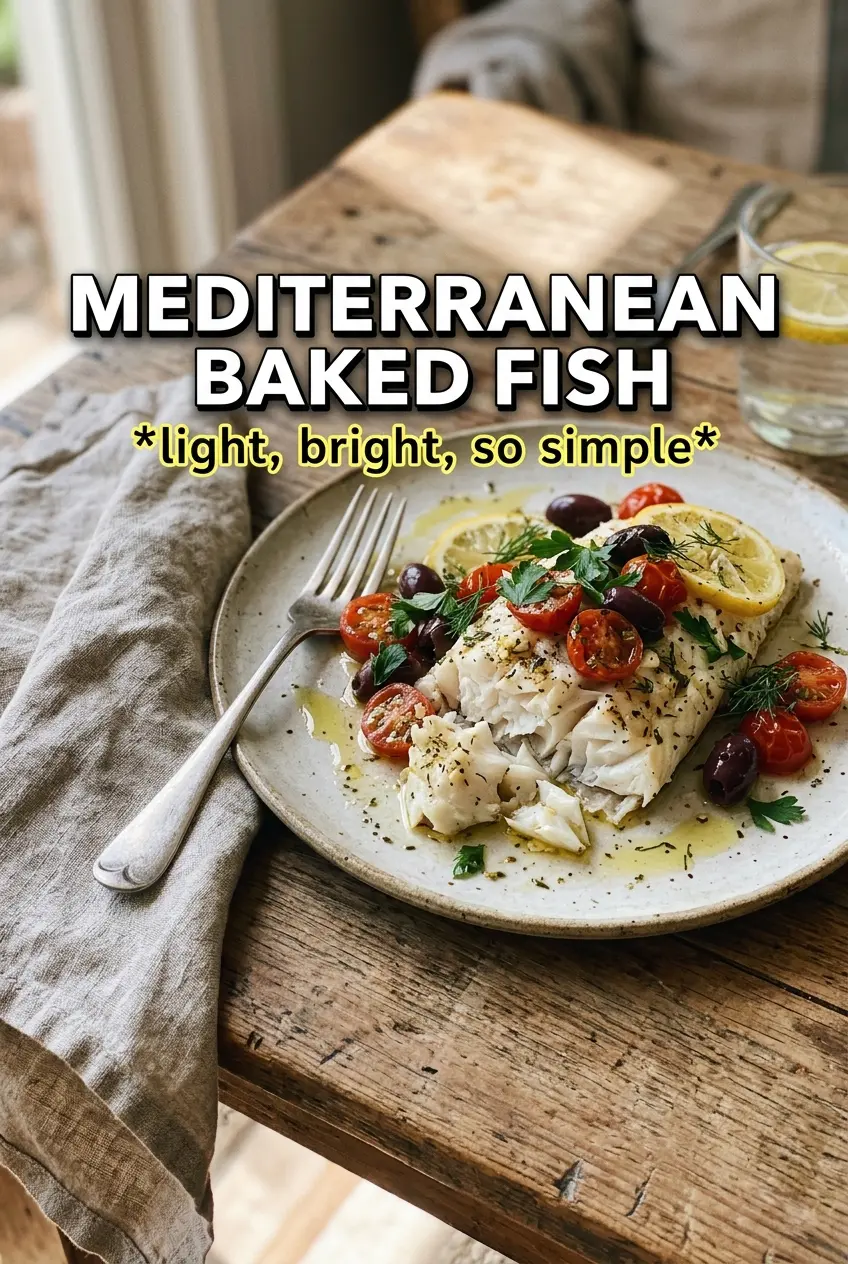
Mediterranean Baked Fish
Ingredients
Equipment
Method
- Preheat the oven to 400°F and grease a 9x13 baking dish with olive oil or nonstick spray, then set it aside for loading. Visual cue: the oven should fully reach 400°F before you add ingredients.
- Combine the cherry tomatoes, Kalamata olives, capers, roasted red peppers, garlic, dry white wine or broth, olive oil, oregano, and red pepper flakes in the baking dish. Spread into an even layer so vegetables roast at the same pace.
- Roast the vegetable mixture for 10 minutes at 400°F until the tomatoes begin to soften and the garlic smells fragrant. Visual cue: bubbling around the edges and slightly glossy tomato juices.
- Season the fish fillets with salt and pepper to taste, then nestle them into the roasted vegetable mixture. Visual cue: the fillets should sit partially surrounded by the tomatoes and peppers.
- Bake for 12-15 minutes at 400°F until the fish flakes easily with a fork. Visual cue: the center turns opaque and flakes at the thickest part.
- Garnish with fresh parsley and serve with lemon wedges. Visual cue: bright green parsley on top and lemon wedges at the table for squeezing.