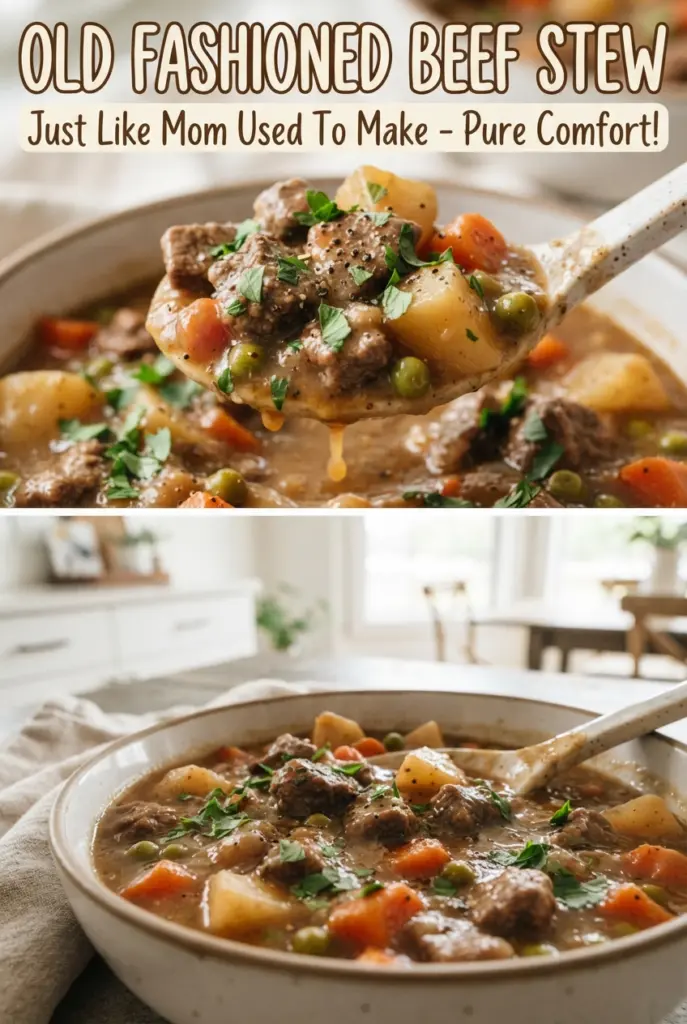
Old fashioned beef stew earns its place in the rotation because it turns a handful of sturdy ingredients into a deep, spoon-coating dinner with tender beef, soft potatoes, sweet carrots, and a gravy that tastes like it had all day to think about itself. The best versions don’t rush the browning or drown the pot in liquid. They build flavor in layers, then let time do the heavy lifting.
This version starts by coating the beef in flour, salt, and pepper before it hits the oil, which gives you better browning and helps thicken the stew later without a separate roux. Tomato paste goes in with the onion and garlic so it can caramelize a little before the broth is added. That small step makes the broth taste fuller and less flat. The pearl onions go in near the end so they stay intact and sweet instead of disappearing into the pot.
Below you’ll find the small choices that keep the stew rich instead of muddy, plus the timing that gives you tender beef without turning the vegetables to mush.
The gravy thickened up beautifully and the beef was fall-apart tender after the full simmer. I added the potatoes right on time and they held their shape instead of turning to mush.
Save this old fashioned beef stew for the nights when you want a thick, slow-simmered dinner with tender beef and classic vegetables.
The Browning Step That Gives This Stew Its Depth
The biggest mistake with beef stew is crowding the pot and steaming the meat instead of browning it. You want a dark crust on the outside of each batch. That crust is where the stew gets its deep, savory backbone, and it only happens when the beef has room and the pan is hot enough to hiss the second it goes in.
The flour coating does two jobs here. It helps the beef brown with a little extra surface texture, and it gives the finished broth a quiet thickening effect as the stew simmers. If the flour looks patchy on the meat, that’s fine. What matters is getting the cubes into hot oil in a single layer and leaving them alone long enough to form color before turning.
- Beef chuck is the right cut because it has enough connective tissue to turn tender during a long simmer. Lean stew meat can work, but it doesn’t give the same rich texture.
- Tomato paste deepens the broth once it’s cooked with the onion and garlic for a minute. Raw tomato paste tastes sharp; cooked tomato paste tastes round and savory.
- Pearl onions go in near the end so they keep their shape and stay sweet. Regular chopped onion would melt away here, which is why this ingredient matters.
What Each Ingredient Is Actually Doing in the Pot
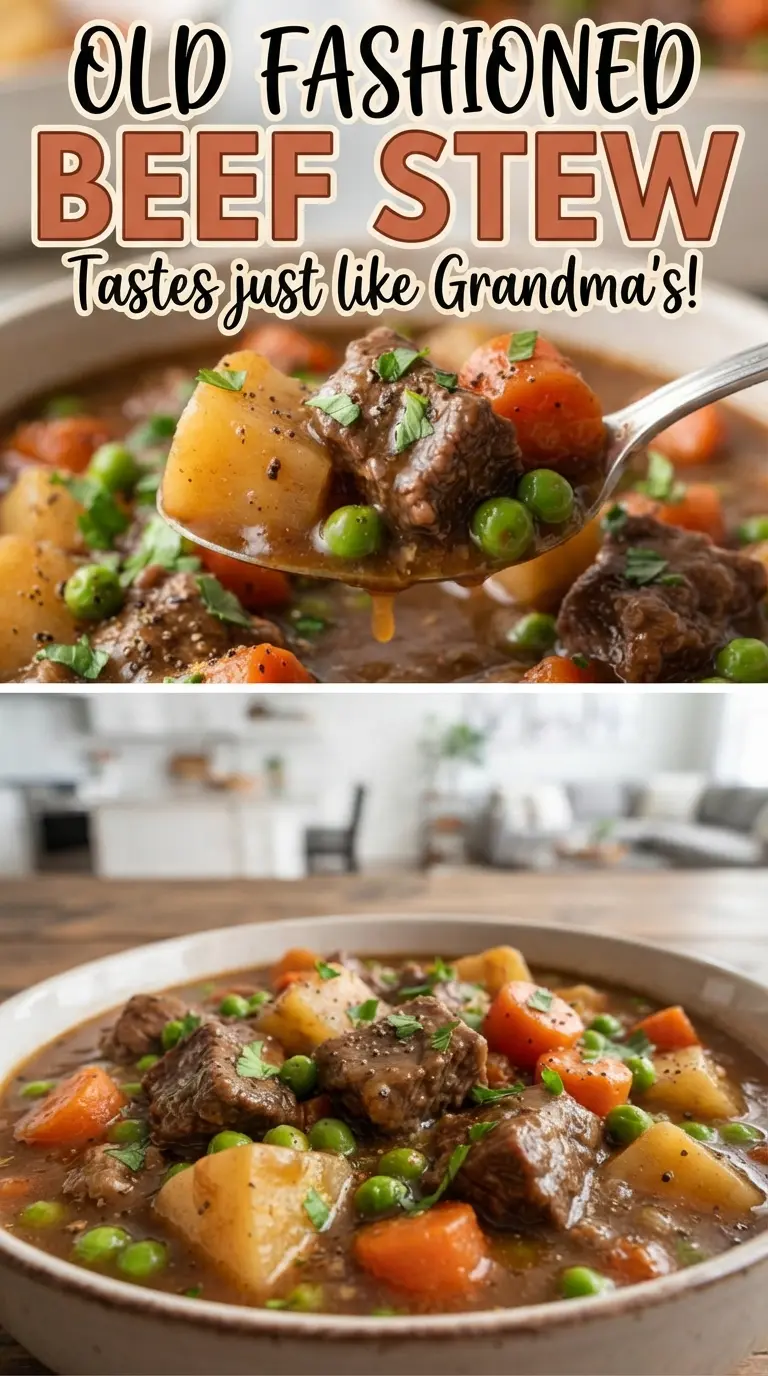
- Flour lightly coats the beef and helps build body in the broth. If you need a gluten-free version, use cornstarch only at the very end as a slurry, but the stew will have a slightly different texture and less of that classic, mellow thickness.
- Worcestershire sauce adds sharp, savory depth that keeps the broth from tasting flat. There isn’t a perfect substitute, but soy sauce plus a tiny splash of vinegar gets close in a pinch.
- Russet potatoes soften enough to help thicken the stew without dissolving completely. Waxy potatoes will hold firmer, but they won’t give you the same creamy edge to the gravy.
- Bay leaves, thyme, and paprika make the stew taste finished without shouting for attention. They work in the background, which is exactly what you want in a long-simmered pot.
How to Build the Gravy Without Losing the Vegetables
Browning the Beef in Batches
Heat the oil until it shimmers, then add the beef in a single layer and leave space between the pieces. If the pan looks crowded, split it into more batches. The goal is deep brown edges, not gray meat. Pull each batch when it has a dark crust on multiple sides, then keep going until all the beef is browned.
Cooking the Aromatics and Tomato Paste
Once the onion goes in, scrape up any stuck browned bits as it softens. After about five minutes, stir in the garlic and tomato paste and cook for a full minute. The paste should darken slightly and smell sweeter. If it still smells sharp, it needs a little more time before the broth goes in.
The Long Simmer That Softens the Chuck
Add the broth, water, Worcestershire, sugar, paprika, thyme, and bay leaves, then return the beef to the pot. Bring it up to a gentle simmer, not a hard boil. A hard boil tightens the meat and clouds the broth. Cover the pot and cook low and slow until the beef is almost tender enough to cut with a spoon.
Adding the Potatoes, Carrots, and Pearl Onions at the End
The vegetables go in only after the beef has had its long head start. Potatoes and carrots need enough time to turn tender, but not so much that they collapse. The pearl onions go in with them and stay intact. When the stew is done, the broth should be thick enough to cling to the beef and vegetables instead of pooling thinly at the bottom of the bowl.
Three Ways to Adjust This Stew Without Losing the Classic Feel
Gluten-Free Version
Skip the flour on the beef and brown it plain, then thicken the finished stew with a cornstarch slurry near the end. You’ll lose a little of the round, built-in thickness from the flour coating, but the stew will still be hearty and rich.
Wine-Deepened Version
Replace 1 cup of the broth with dry red wine after the tomato paste cooks and let it reduce for a few minutes before adding the rest of the liquid. The stew will taste a little darker and more layered, especially after the long simmer.
Make It Ahead for Better Flavor
This stew tastes even better the next day because the broth settles and the beef soaks up more of the seasoning. Cook it completely, chill it overnight, and reheat gently before serving. The vegetables will soften a bit more on day two, but the tradeoff is deeper flavor.
Vegetable Swap for What’s in the Fridge
You can use parsnips or turnips in place of some of the potatoes or carrots if you want a slightly earthier stew. Add them in the same stage as the potatoes so they soften at the same pace.
Storage and Reheating
- Refrigerator: Store for up to 4 days. The stew will thicken as it chills, and the potatoes will soften a bit more each day.
- Freezer: Freezes well for up to 3 months, though the potatoes may become a little softer after thawing. Cool it completely before freezing in airtight containers.
- Reheating: Reheat gently on the stove over low heat with a splash of water or broth if needed. A hard boil can break the potatoes and make the beef taste stringy.
Answers to the Questions Worth Asking
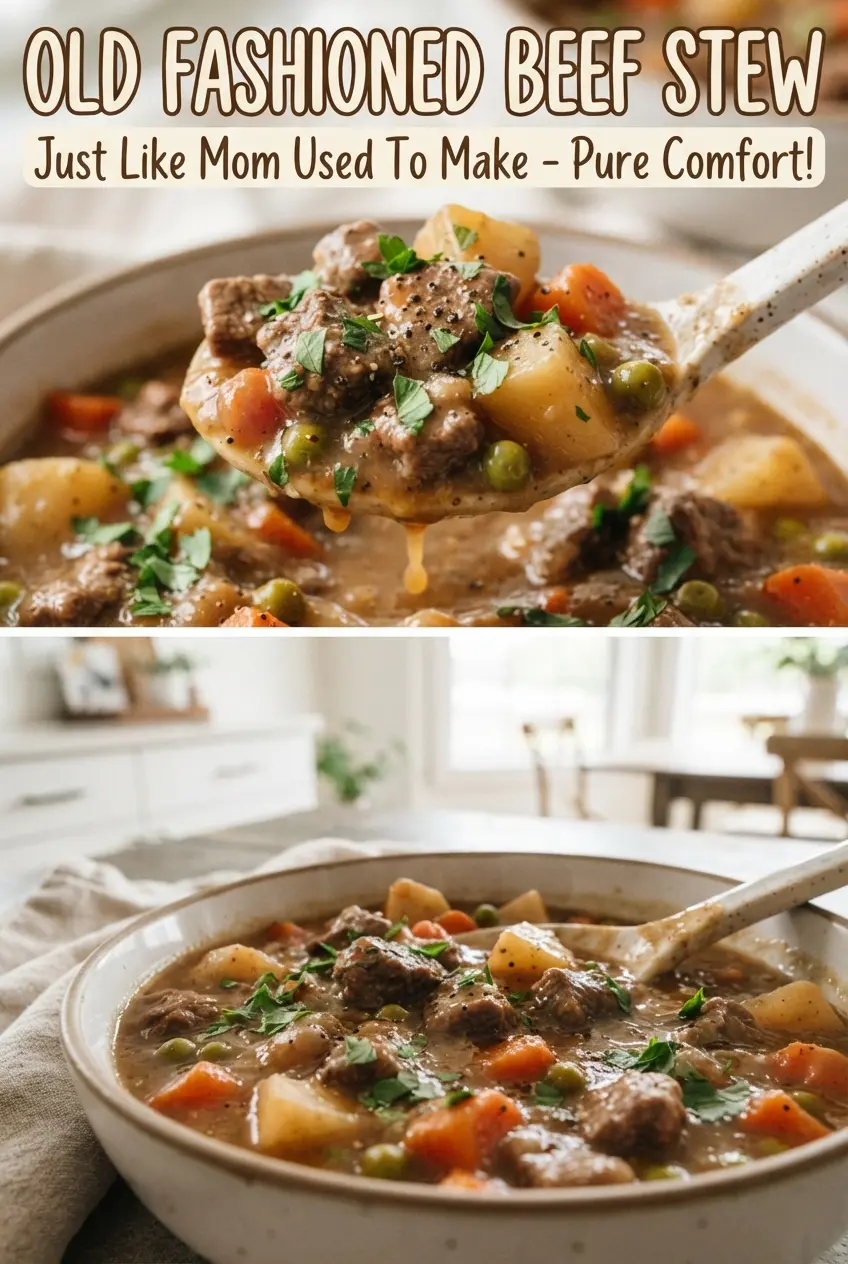
Old Fashioned Beef Stew
Ingredients
Equipment
Method
- Toss beef with flour, salt, and pepper until the cubes are evenly coated. Heat vegetable oil in a Dutch oven over high heat until shimmering, then brown the beef in batches until deep brown on all sides.
- Return all browned beef to the Dutch oven. Scrape up any browned bits left in the pot while you finish the batch browning.
- Reduce heat to medium and add chopped onion, stirring to coat in the remaining fat. Cook for 5 minutes, then stir in minced garlic and tomato paste and cook for 1 minute.
- Add beef broth, water, Worcestershire sauce, sugar, paprika, dried thyme, and bay leaves. Scrape up the browned bits from the bottom, then bring the liquid to a gentle simmer.
- Return to the beef, cover, and simmer gently for 2 hours. Keep the stew at a steady low simmer so the meat stays tender.
- Add russet potatoes, carrots, and frozen pearl onions. Simmer for 45 minutes, until the vegetables are tender and the gravy has thickened.
- Remove bay leaves from the stew. Season to taste with additional salt and black pepper if needed, then serve hot.


