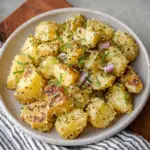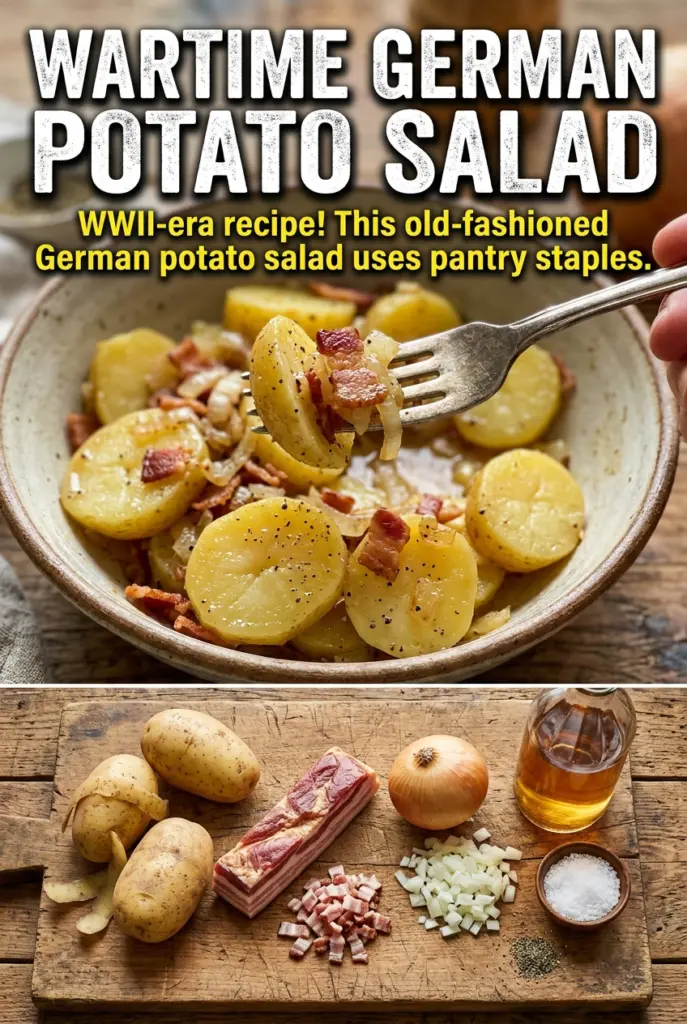
Warm German potato salad lands on the table with the kind of comfort that doesn’t need dressing up: tender potatoes, crisp bacon, sweet onions, and a tangy vinegar dressing that soaks into every slice. It’s the sort of side dish that disappears fast because it tastes bold without being heavy, and it’s just as good next to grilled sausages as it is with roast chicken or pork.
What makes this version work is the balance. The potatoes are cooked until tender but still hold their shape, so they don’t collapse when the hot dressing goes on. Bacon drippings carry the onion flavor, a little flour gives the dressing body, and the vinegar keeps the whole dish bright instead of greasy. It’s an old-school method, and it still earns its place because it turns simple ingredients into something with real personality.
Below, I’ve included the details that matter most: how to keep the potatoes from turning mushy, why the dressing should go on hot, and the few small swaps that still keep the spirit of the dish intact.
The dressing thickened up just enough to coat the potatoes without turning gluey, and the bacon stayed crisp even after I tossed everything together. I served it warm with sausages and there wasn’t a spoonful left.
Save this warm German potato salad for the nights when you want a tangy bacon-onion side that holds its own next to grilled meat.
The Dressing Should Hit Hot Potatoes, Not Wait Around
The biggest mistake with German potato salad is letting the dressing cool before it meets the potatoes. Once the flour-thickened vinegar dressing sits too long, it tightens up and stops soaking in evenly. The potatoes need to be warm and freshly drained so they can absorb the tangy liquid while they’re still open and receptive.
That’s also why the bacon drippings matter. They carry the onion flavor and give the dressing a savory backbone that plain oil can’t match. If the sauce tastes flat, it usually means one of two things: the vinegar was too timid, or the potatoes weren’t hot enough when you combined everything.
What Each Ingredient Is Doing in This Bowl

- Russet potatoes — They turn soft and absorbent, which is exactly what you want for a warm dressed potato salad. Slice them evenly so they cook at the same pace; uneven pieces lead to some potatoes falling apart while others stay firm.
- Bacon — This is the fat and the salt source, and it’s worth using a bacon you actually like eating on its own. Thick-cut bacon works, but regular slices crisp faster and break up more cleanly into the salad.
- Onion — Diced onion cooks down in the drippings and loses the sharp raw bite. Yellow onion is the best all-purpose choice here; if you use white onion, expect a little more bite.
- Beef broth and vinegar — The broth rounds out the dressing so it doesn’t taste harsh, while the vinegar gives the classic German tang. If you only have chicken broth, it works, but the finished dish will taste a little lighter.
- Flour — This is what keeps the dressing from sliding off the potatoes. Don’t skip it unless you’re intentionally making a thinner dressing; without it, the liquid tends to pool at the bottom of the bowl.
- Parsley — Add it at the end for freshness and color. It won’t fix a weak dressing, but it keeps the final dish from tasting all bacon and acid.
Building the Dressing So It Coats, Not Clumps
Cooking the Potatoes Just Past Tender
Boil the potato slices until they’re tender enough for a fork to slide through, but stop before they start to crumble at the edges. If they overcook, they’ll break apart when you toss them with the hot dressing and the salad will turn heavy instead of spoonable. Drain them well and let steam escape for a minute or two so the dressing doesn’t get watered down.
Rendering the Bacon and Softening the Onions
Cook the bacon until crisp, then take it out before you move on. That bacon fat is the whole base of the dressing, so don’t pour it off unless there’s an extreme amount in the pan. The onions should cook in the drippings until they’re soft and glossy, not browned hard; if they color too fast, the dressing starts tasting bitter.
Thickening the Vinegar Dressing
Sprinkle the flour over the onions and stir it in so it disappears before the liquid goes in. Add the broth, vinegar, sugar, salt, and pepper, then simmer just until the dressing turns slightly thick and glossy. If you dump the liquid in without cooking the flour first, you’ll get little raw flour lumps and a dressing that tastes starchy instead of clean.
Finishing While Everything Is Still Warm
Crumble the bacon, add it to the potatoes, and pour the hot dressing over the top right away. Toss gently so the slices stay intact and every piece gets a little shine from the dressing. Finish with parsley and serve it warm, because this style loses some of its charm once it sits cold and the dressing tightens.
How to Adapt This for Different Tables
Make It Ahead for a Crowd
You can cook the potatoes, bacon, and dressing a little ahead, but hold the final toss until closer to serving. If the potatoes sit in the dressing for hours, they keep absorbing liquid and the texture softens more than you want. Warm it gently before serving so the bacon flavor and vinegar brightness come back up.
Gluten-Free Version
Swap the flour for a gluten-free all-purpose blend or a small cornstarch slurry. Cornstarch thickens a little more sharply, so use less than you would flour and simmer just until the dressing lightly coats a spoon. The flavor stays the same, but the texture is a touch cleaner and less rustic.
Lighter Bacon Flavor
Use six slices of bacon instead of eight and add a tablespoon of butter if the pan looks dry. You’ll still get the savory base, but the salad leans a little more tangy and a little less smoky. That’s a good move if you’re serving it with richer meats.
Storage and Reheating
- Refrigerator: Store leftovers in an airtight container for up to 3 days. The potatoes will firm up a bit as they chill, and the dressing may thicken.
- Freezer: I don’t recommend freezing this salad. Potatoes change texture in the freezer and turn mealy once thawed.
- Reheating: Warm it gently in a skillet over low heat with a splash of broth or water to loosen the dressing. Microwave heat can make the potatoes break down and the bacon turn tough.
Answers to the Questions Worth Asking
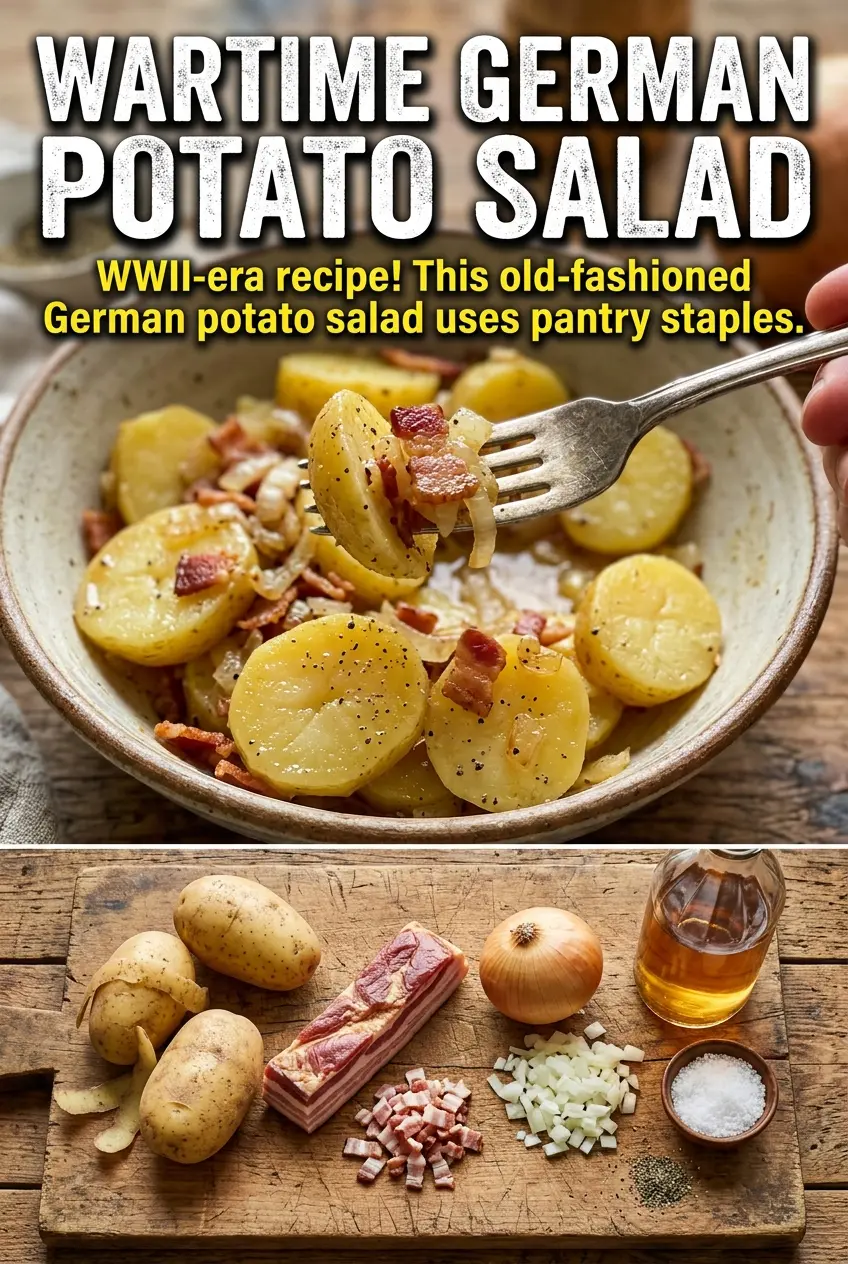
Old-Fashioned German Potato Salad
Ingredients
Equipment
Method
- Bring the potatoes to a boil in a Dutch oven, then cook until they are tender when pierced with a fork, about 10 to 15 minutes. Keep the pot at a steady boil so the slices soften evenly.
- Drain the potatoes thoroughly and leave them in the strainer so excess steam doesn’t thin the dressing. They should be hot for best soaking.
- Cook the bacon in the Dutch oven until crispy, about 8 to 10 minutes, and reserve the drippings in the pan. Visual cue: browned, crisp edges.
- Sauté the diced onion in the reserved bacon drippings until softened and lightly translucent, about 5 to 7 minutes. Stir often so the onion doesn’t brown.
- Sprinkle the flour over the onion and stir to coat, cooking for about 1 to 2 minutes at a gentle simmer. The mixture should look slightly thickened and smooth.
- Add the beef broth, white vinegar, sugar, salt, and pepper to the pan, then whisk or stir until combined. Bring the mixture to a simmer so it thickens evenly.
- Simmer the dressing until thickened enough to lightly coat a spoon, about 3 to 5 minutes. Visual cue: it should look glossy and thicker than broth.
- Crumble the bacon and add it to the hot potatoes. Toss gently so bacon distributes throughout the slices.
- Pour the hot dressing over the potatoes and bacon while everything is steaming. Stir to coat, then adjust briefly for even coverage.
- Garnish with the chopped fresh parsley and serve warm right away. The salad should be piping hot for the most traditional texture.