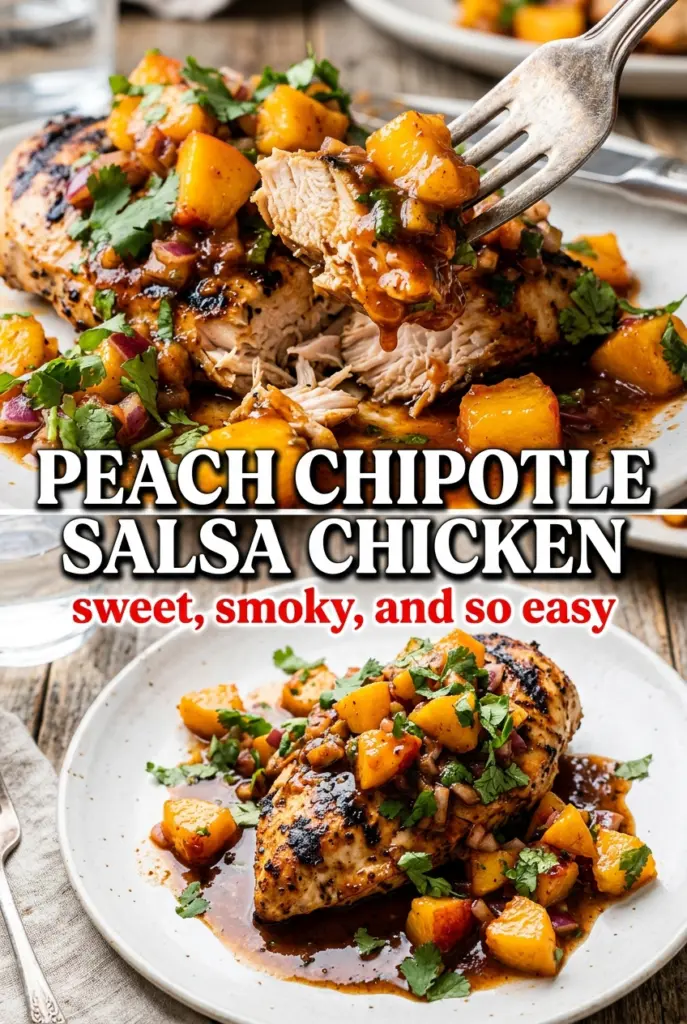
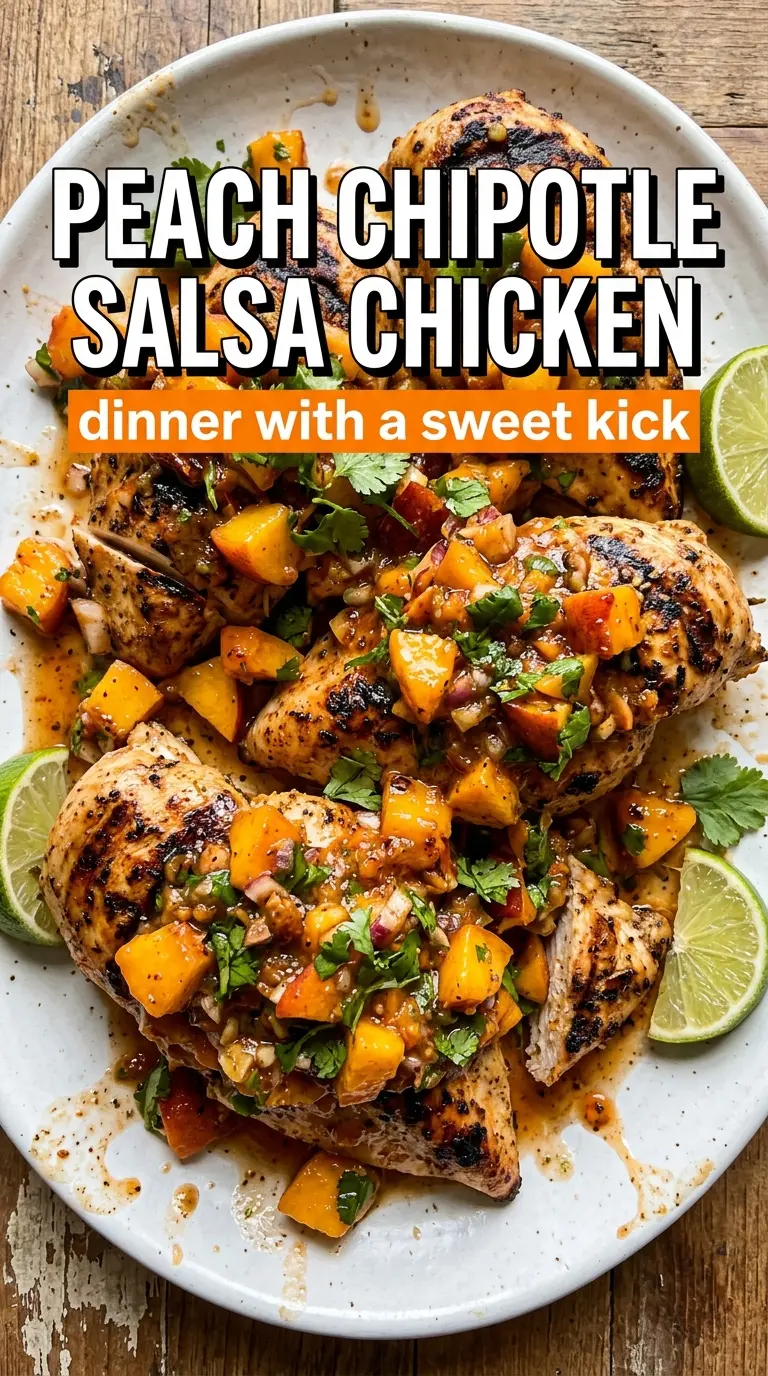
Juicy baked chicken breasts topped with peach chipotle salsa land on the plate with a sticky, smoky-sweet finish that tastes like a lot more effort than it takes. The peaches break down just enough in the oven to make a glossy sauce around the chicken while still keeping some chunky texture, and the chipotle keeps the sweetness from tipping too far in one direction. It’s the kind of dinner that gets cleaned up fast because every bite has a little heat, a little fruit, and a lot of sauce.
The trick here is starting with ripe peaches and not drowning the chicken in extra liquid. The salsa doesn’t need to be cooked first; it softens and caramelizes right in the oven, which keeps the flavor bright and the texture lively. A little honey rounds out the chipotle, but lime and red onion keep the whole dish from tasting flat.
Below, I’ll walk through the one part that keeps the chicken from drying out, plus a few swaps that still give you that sweet-spicy Tex-Mex balance when peaches aren’t perfect.
The salsa baked down into this glossy, sticky topping and the chicken stayed juicy all the way through. I loved that the chipotle heat didn’t overpower the peaches — my husband asked me to put this in the regular rotation.
Save this peach chipotle salsa chicken for a sticky, smoky-sweet baked dinner that turns simple chicken breasts into something special.
The part that keeps the chicken juicy instead of stringy
The biggest mistake with baked chicken breasts is treating the salsa like a wet blanket. Here, the fruit and honey create a glaze as they roast, but the chicken still needs direct contact with the hot oven air around the edges to cook evenly. That’s why a lightly greased baking dish matters and why the chicken shouldn’t be buried under a thick mound of salsa before it goes in.
Peaches bring moisture, but they also bring structure when they’re diced small enough to soften without turning to puree. Chipotle and adobo need space to spread through the fruit, so the flavor gets into the whole dish instead of landing in one hot spot. If your peaches are very juicy, hold back a spoonful of the salsa mixture and add it after baking so the top still caramelizes instead of steaming.
- Peaches — Use ripe but not collapsing peaches. You want sweetness and juice, but the pieces still need enough body to roast into a chunky topping. If peaches are underripe, the salsa tastes sharp and the texture stays hard.
- Chipotle peppers in adobo — This is where the smoky heat comes from. One pepper gives gentle warmth; two gives noticeable heat. If you only have chipotle powder, it works in a pinch, but you’ll lose the saucy depth that adobo brings.
- Adobo sauce — A little goes a long way. It rounds out the chipotle and helps the salsa cling to the chicken. Don’t skip it unless you plan to season more aggressively with smoked paprika and a pinch of salt.
- Lime juice — This keeps the peaches from tasting flat and helps sharpen the sweetness. Fresh lime matters here because bottled juice can taste dull against the chipotle.
- Honey — Just enough to help the topping caramelize and balance the heat. If your peaches are super ripe, cut it back slightly; if they’re a little shy on sweetness, keep the full amount.
- Cilantro — Stir it in right before baking so it keeps its fresh bite under the heat. If you’re one of the people who tastes cilantro as soapy, use chopped flat-leaf parsley instead. The dish will lose a little of its Tex-Mex edge but still taste bright.
What Each Ingredient Is Actually Doing in This Recipe
- Primary ingredient (the star) — Quality matters most. Choose the best you can find.
- Cooking medium (oil, butter, or broth) — This carries flavors and prevents dryness.
- Seasonings (salt, pepper, spices, herbs) — Layer flavors so nothing overpowers. Build depth gradually.
- Aromatics (garlic, onion, herbs) — Cook with fat to bloom flavors. Become the foundation.
- Supporting ingredients — Complement the main ingredient without overpowering it.
- Sauce or liquid (if applicable) — Brings flavors together. Balance richness with acid.
- Acid (lemon, vinegar, wine, or other) — Brightens and prevents flat-tasting results.
- Final finish (garnish, glaze, or sauce) — Prevents one-dimensional taste and adds visual appeal.
How to bake the salsa so it turns glossy instead of watery
Mixing the topping
Stir the peaches, chipotle, adobo, onion, lime juice, honey, cilantro, cumin, and salt together in a bowl until the peaches are evenly coated. You’re looking for a spoonable mixture with visible juice, not a thin puddle at the bottom of the bowl. If the peaches seem especially wet, let the salsa sit for five minutes, then give it one more stir and use a slotted spoon for the first layer on top of the chicken.
Layering the chicken
Set the seasoned chicken breasts in the greased baking dish in a single layer with a little space between them. That spacing helps the hot air do its job and keeps the chicken from steaming in its own juices. Spoon the salsa generously over each piece, but don’t pack it down hard; the topping should look rustic and chunky, with some chicken still peeking through at the edges.
Watching for the finish
Bake until the chicken reaches 165F in the thickest part and the salsa has thickened into a sticky, glossy topping. The edges of the fruit will look a little jammy and the onion should soften into the background. If the top is browning too fast before the chicken is done, lay a loose piece of foil over the dish for the last few minutes instead of turning the heat down and missing that caramelized finish.
How to adapt the sweet-heat balance without losing the point of the dish
Make it milder for kids or heat-shy eaters
Use one chipotle pepper instead of two and cut the adobo sauce to 1 teaspoon. You’ll still get the smoky backbone, but the peaches stay in front. If you want almost no heat, use a pinch of smoked paprika and a little extra cumin instead of the chipotle.
Make it dairy-free and naturally gluten-free
The recipe already fits both of those needs as written, which is one reason it works so well for a weeknight dinner spread. Just serve it with rice, roasted potatoes, or corn tortillas and check your chipotle peppers in adobo for a brand you trust. The flavor stays the same because the sauce doesn’t rely on dairy or flour to thicken.
Swap in chicken thighs for a richer result
Boneless skinless thighs stay juicier and handle the sticky salsa beautifully. Add a few minutes to the bake time and cook until the thickest part reaches 165F. The result is a slightly more succulent dish with a richer chicken flavor and less risk of drying out.
What to do when peaches aren’t in season
Use thawed frozen peaches and drain off the extra liquid before mixing the salsa. Frozen fruit softens faster, so the topping will be a little looser, but the flavor still lands in the same sweet-smoky place. If you only have canned peaches, choose fruit packed in juice, drain them well, and reduce the honey a bit.
Storage and Reheating
- Refrigerator: Store leftovers in an airtight container for up to 3 days. The salsa softens more in the fridge, but the flavor gets even deeper overnight.
- Freezer: Freeze the cooked chicken and salsa together for up to 2 months. The peaches will be softer after thawing, but the dish still reheats well if you don’t mind a less chunky texture.
- Reheating: Warm covered in a 325F oven until hot, or reheat gently in the microwave at medium power. High heat dries out the chicken fast and can turn the peach topping tough before the center is warmed through.
Answers to the questions worth asking
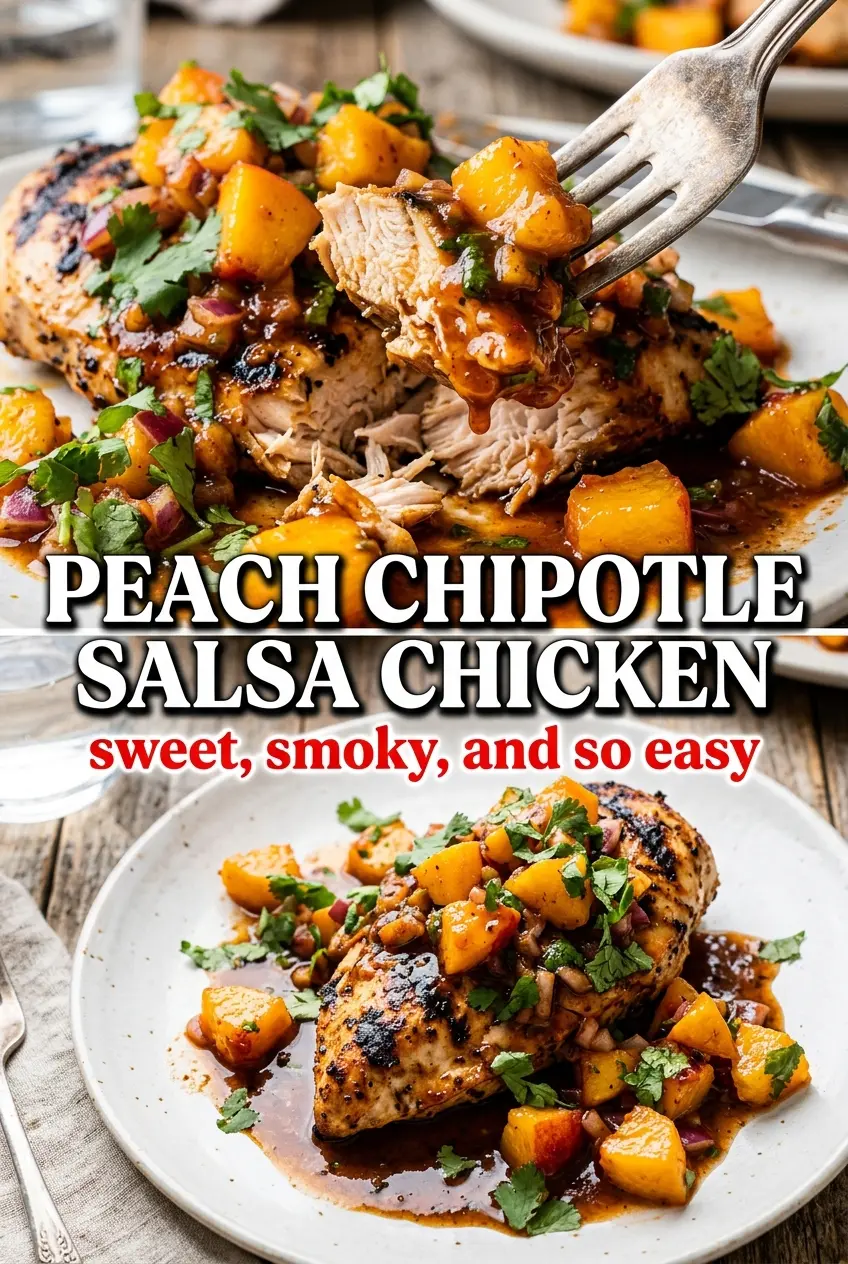
Peach Chipotle Salsa Chicken
Ingredients
Equipment
Method
- Preheat the oven to 400F and grease a baking dish so the chicken won’t stick.
- Season the chicken breasts with salt and pepper, then place them in the baking dish in a single layer.
- Combine peaches, chipotle peppers, adobo sauce, red onion, lime juice, honey, cilantro, cumin, and salt to make a chunky peach chipotle salsa.
- Spoon the peach chipotle salsa generously over each chicken breast so the top is well covered.
- Bake at 400F for 25-30 minutes until the chicken is cooked through (165F internal temperature) and the salsa is caramelized on top with a glossy, sticky look.
- Serve over rice with extra fresh cilantro and lime wedges.