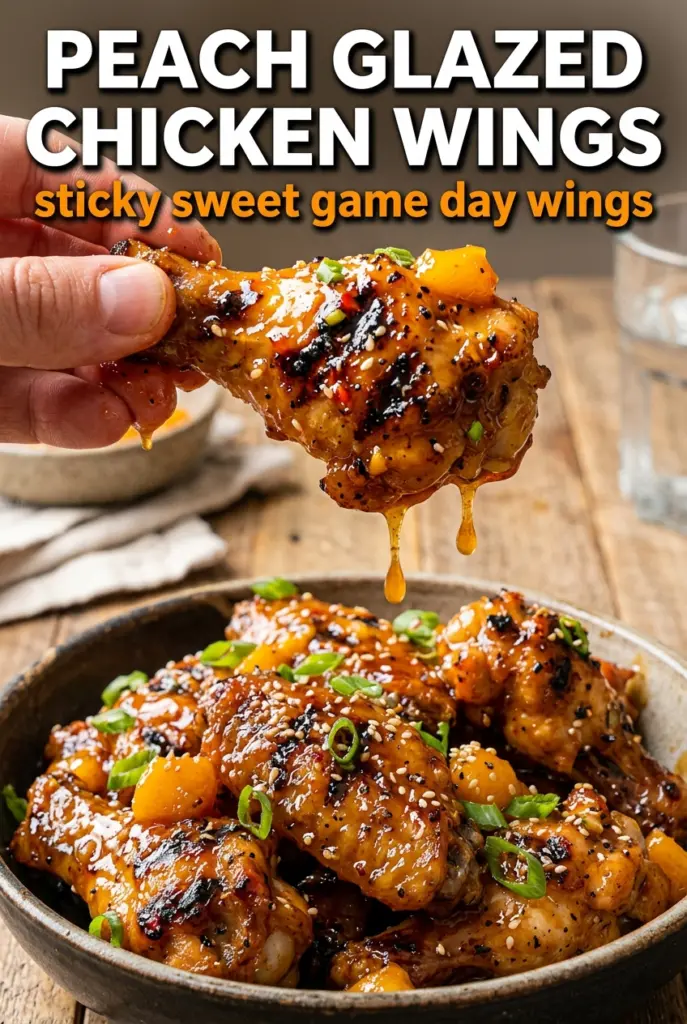
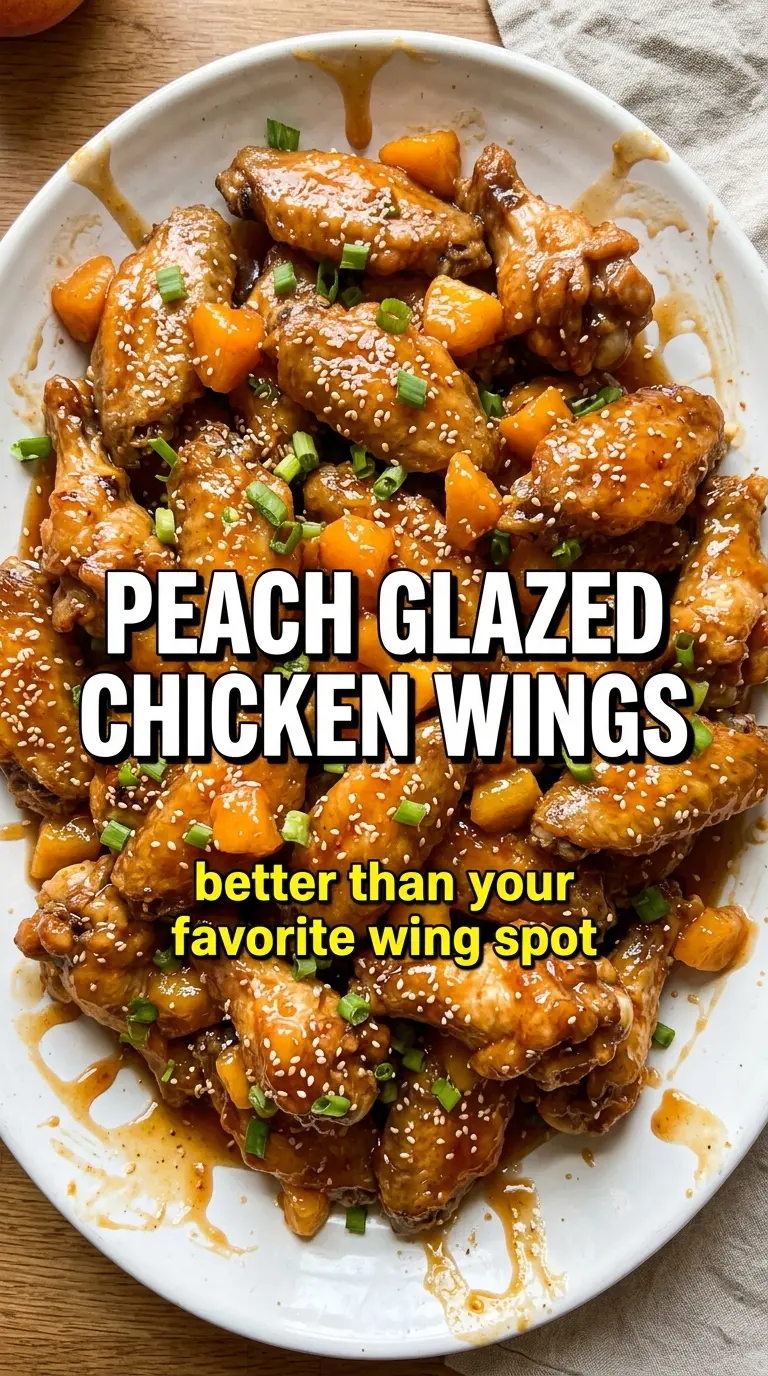
Sticky peach glazed chicken wings hit that sweet-savory lane that keeps people reaching back for one more piece. The skin stays crisp under a thick, glossy glaze, and the peaches bring a bright fruitiness that tastes clean instead of cloying. What makes these wings worth repeating is the contrast: crackly edges, juicy meat, and a sauce that clings in a proper lacquer instead of slipping off the pan.
The trick is treating the wings and the glaze like two separate jobs that come together at the end. Baking powder helps dry and blister the skin in the oven, which gives you the crunch you need before the glaze goes on. Meanwhile, the peach puree cooks down with honey, soy sauce, vinegar, garlic, ginger, and smoked paprika until it becomes thick enough to coat a spoon, not just a thin syrup.
Below, I’ll walk you through the point where most wing recipes go soft, how to get the glaze thick enough to stick, and a few practical swaps if your peaches aren’t at their peak. If you’ve been looking for a wing recipe that feels a little special without getting fussy, this one earns its place fast.
The wings got crisp in the oven, and the peach glaze thickened up beautifully instead of turning watery. I served them straight away and the sticky coating set just enough to stay on the skin.
Save these peach glazed chicken wings for the nights when you want crisp skin and a sticky fruit glaze that actually clings.
The Step That Keeps These Wings Crispy Under the Glaze
The biggest mistake with glazed wings is adding sauce before the skin has actually crisped. If the wings go into the oven damp, or if they’re crowded on the pan, they steam instead of roast and the glaze has nothing sturdy to hold onto. Baking powder helps here because it nudges the skin toward blistered and dry, which is exactly what you want before tossing.
Spacing matters just as much as the coating. Give the wings room on the rack so hot air can move around them, and flip them once so both sides get that deep golden color. When they come out, the skin should look firm and crackly, not pale and soft. That’s the line between a glossy finish and a soggy one.
- Baking powder — Use aluminum-free if that’s what you keep around, but any plain baking powder works. It helps pull moisture from the skin and gives you a crisper finish than seasoning alone.
- Peaches — Fresh ripe peaches make the glaze taste bright and round. If the peaches are soft and fragrant, they’re perfect; if they’re underripe, the glaze can taste flat, so let them sit a day or two first.
- Honey — This gives the glaze body and shine. Maple syrup can work in a pinch, but it changes the flavor and won’t taste as clean with the peach.
- Soy sauce — This is what keeps the glaze from reading as dessert. Use low-sodium if that’s what you have, since the wings also get seasoned with salt before baking.
- Apple cider vinegar — The acid sharpens the peach and cuts the sweetness. Lemon juice can stand in, but vinegar gives a slightly deeper edge that works better here.
What Each Ingredient Is Actually Doing in This Recipe
- Primary ingredient (the star) — Quality matters most. Choose the best you can find.
- Cooking medium (oil, butter, or broth) — This carries flavors and prevents dryness.
- Seasonings (salt, pepper, spices, herbs) — Layer flavors so nothing overpowers. Build depth gradually.
- Aromatics (garlic, onion, herbs) — Cook with fat to bloom flavors. Become the foundation.
- Supporting ingredients — Complement the main ingredient without overpowering it.
- Sauce or liquid (if applicable) — Brings flavors together. Balance richness with acid.
- Acid (lemon, vinegar, wine, or other) — Brightens and prevents flat-tasting results.
- Final finish (garnish, glaze, or sauce) — Prevents one-dimensional taste and adds visual appeal.
How to Get a Thick Peach Glaze Without Burning It
Seasoning the Wings
Toss the wings with salt, pepper, and baking powder until they’re evenly coated, then lay them out in a single layer on the rack. If you see clumps of baking powder, keep tossing until they disappear, because those spots can bake up chalky. The wings should look lightly dusted, not pasty. Once they’re in the oven, leave them alone until it’s time to flip.
Cooking Down the Glaze
While the wings bake, simmer the peach puree, honey, soy sauce, vinegar, garlic, ginger, and smoked paprika in a saucepan over medium heat, then lower the heat once it starts to bubble. You want a steady simmer, not a hard boil, or the sugars can scorch before the peaches thicken. After about 10 minutes, the glaze should coat the back of a spoon and look glossy and reduced. If it still seems thin, give it a few more minutes; it thickens more as it cools.
Tossing and Serving
Move the hot wings straight into a large bowl and pour the glaze over them while everything is still hot. Toss until every ridge and fold is coated, then plate them right away. Waiting too long lets the glaze set in the pan instead of on the wings. If the glaze tightens up before serving, warm it for a minute and toss again, but don’t add water unless it’s absolutely necessary.
How to Adapt These Peach Wings for Different Pans, Peaches, and Diets
Use frozen peaches when fresh ones aren’t great
Frozen peaches work well here because they’re cooked down anyway. Thaw them first and puree or mash them before adding them to the saucepan, then simmer a minute or two longer if the mixture starts out extra watery. The flavor stays fruity and bright, even if the texture is a little softer than fresh.
Make them gluten-free without losing the glaze
Use tamari instead of regular soy sauce and the wings stay just as savory. The rest of the recipe is naturally gluten-free as written, so this swap is clean and simple. Tamari tends to taste a little rounder than soy sauce, which works well with the peach.
Turn them into baked peach BBQ wings
Add a spoonful of your favorite barbecue sauce to the glaze if you want a smokier, more familiar wing flavor. The sauce will turn darker and a little thicker, with less pure peach brightness and more tangy depth. I’d keep the smoked paprika in either way, because it ties the fruit and barbecue notes together.
Air fry the wings for extra crisp skin
If you want more crunch, cook the wings in the air fryer instead of the oven, working in batches so they stay in a single layer. The glaze should still go on after cooking, not before, or it can burn on the hotter surface. You’ll get a slightly tighter crust and a faster cook time, which is useful when you don’t want to heat the oven.
Storage and Reheating
- Refrigerator: Store leftovers in an airtight container for up to 3 days. The skin will soften, but the flavor holds well.
- Freezer: The glazed wings can be frozen, but the skin won’t stay crisp after thawing. Freeze in a single layer first if you want the pieces to stay separate, then reheat from thawed for the best texture.
- Reheating: Warm them on a rack in a 375F oven until hot, about 10 to 15 minutes. The common mistake is microwaving, which turns the glaze sticky but the skin rubbery.
Answers to the Questions Worth Asking
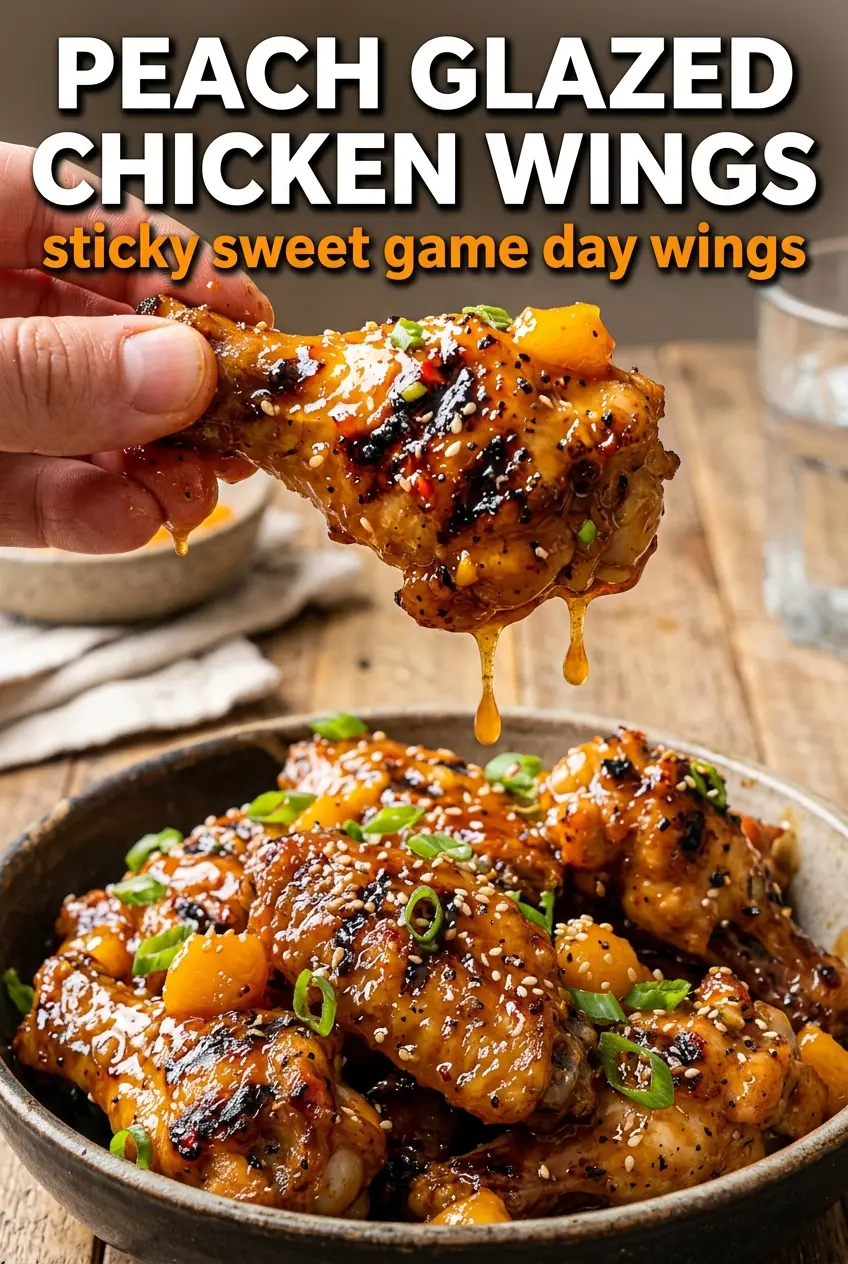
Peach Glazed Chicken Wings
Ingredients
Equipment
Method
- Preheat the oven to 425°F and line a baking sheet with a wire rack so air circulates under the wings.
- Toss the chicken wings with salt, pepper, and baking powder, then spread them on the rack in a single layer so they bake evenly.
- Bake the wings for 20 minutes, then flip halfway so the skin crisps all over.
- Bake for another 20–25 minutes, until the skin is deeply golden and crispy, with a visibly crisp surface when you pierce the thickest parts.
- In a saucepan, simmer the peach puree, honey, soy sauce, apple cider vinegar, garlic, ginger, and smoked paprika for 10 minutes until thickened to a glossy glaze.
- Toss the hot baked wings in the peach glaze until completely coated, so the sauce clings and looks lacquered.
- Serve immediately, since the glaze sets as it cools and the shine dulls slightly as it firms up.