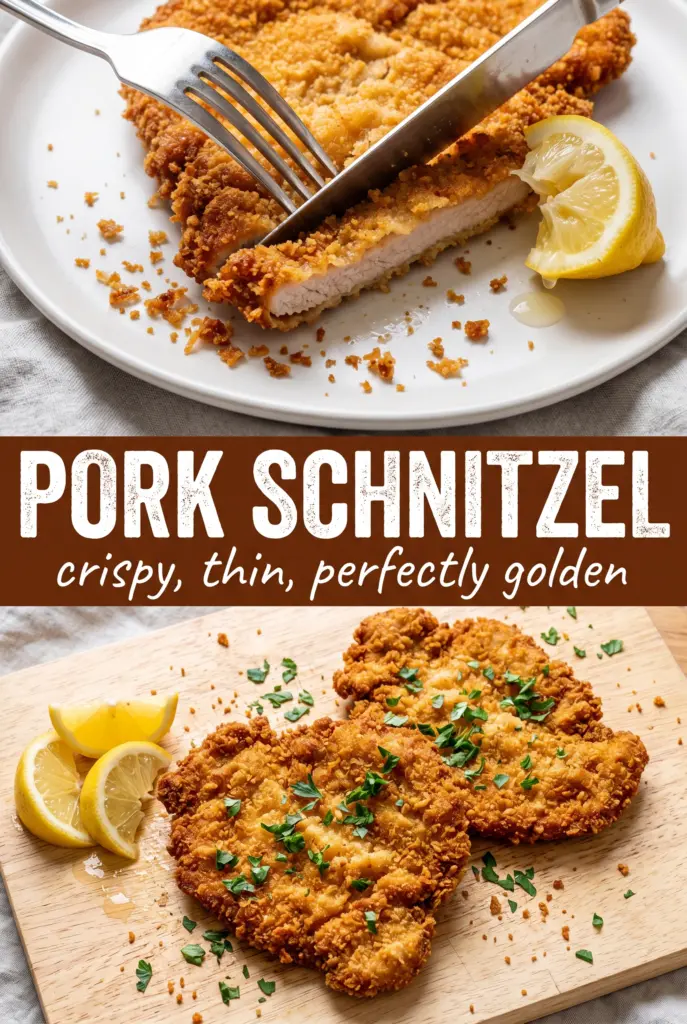
Shatteringly crisp pork schnitzel has a way of disappearing fast, which is usually the best sign you did it right. The crust should lift and crackle when you cut into it, while the pork stays thin, juicy, and tender underneath. A squeeze of lemon at the end wakes up the whole plate and keeps the breading from tasting heavy.
What makes this version work is the balance between thin cutlets, a dry first dredge, and hot oil that stays at the right temperature. Pound the pork evenly to about 1/4 inch so it cooks through in the same short window that the crumbs turn golden. If the oil is too cool, the breading turns greasy; if it’s too hot, the crust browns before the pork has time to cook. Garlic powder in the breadcrumb mixture adds a little depth without taking over the clean, simple flavor that schnitzel should have.
Below, I’ll walk you through the part that matters most: getting the coating to cling without turning gummy, and frying in batches so every cutlet comes out crisp instead of patchy. I’ve also included a few useful swaps and the best way to reheat leftovers without losing that crunch.
The crust stayed light and crisp instead of getting bready, and the pork cooked through in just a few minutes per side. I served it with lemon and parsley like you suggested and my husband kept saying it tasted like the schnitzel we had in Munich.
Crispy pork schnitzel with lemon and parsley is one of those dinners that disappears the second it hits the table.
The Crust Only Stays Crisp If You Fry It Fast and Leave It Alone
Schnitzel fails when the coating has too much time to soak up oil. A thin cutlet, a dry flour layer, and hot shallow frying are what give you that light, blistered crust instead of a dense bread jacket. The other mistake is crowding the pan. Once the schnitzels are packed in, the oil temperature drops and the breading starts to steam before it can brown.
You also want to press the breadcrumbs on firmly, but not so hard that the coating turns pasty. Think even coverage, not a thick shell. If the breading looks sandy or patchy in spots before it hits the pan, it will fry up the same way.
- Pound the pork evenly. Thin, uniform cutlets cook fast and stay tender. If one side is thicker than the other, the thinner edge will dry out before the center is done.
- Use fine breadcrumbs. They cling more evenly than coarse crumbs and give you that classic schnitzel crunch. Panko works if you want a lighter, rougher crust, but it won’t taste quite as traditional.
- Keep the oil shallow and hot. You want the schnitzel to sizzle the moment it lands in the skillet. If the oil barely moves, wait another minute.
What Each Ingredient Is Actually Doing in This Schnitzel
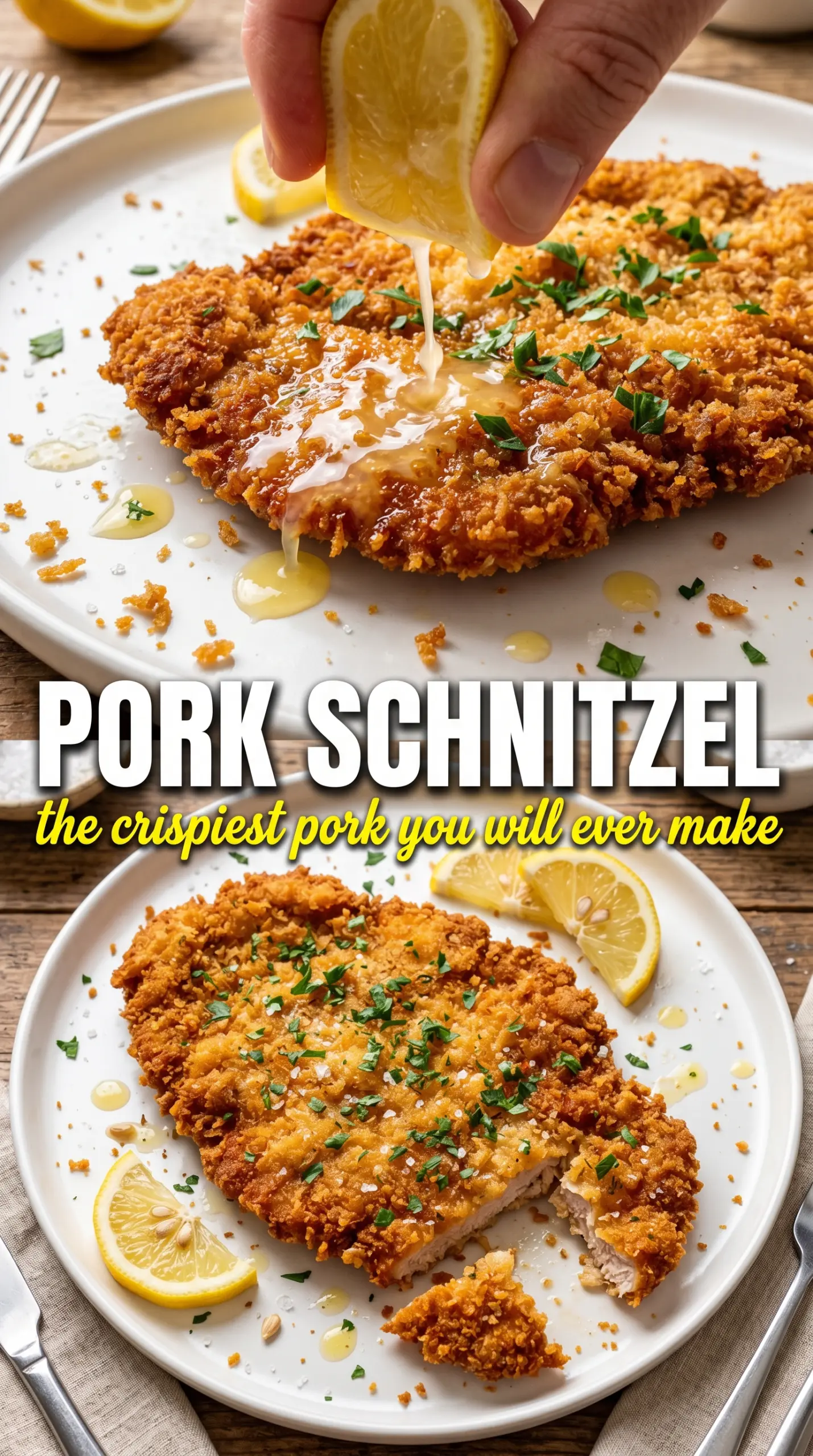
- Pork loin chops are lean enough to fry quickly and stay tender when pounded thin. Boneless is important here because bones make it harder to get an even cutlet. If you use pork cutlets instead, keep them at the same thinness so they cook at the same speed.
- Flour gives the egg something dry to grip. Don’t skip it or the coating can slide off in the pan.
- Egg and milk form the glue layer. The milk loosens the egg just enough so the crumb coating spreads in a thin, even layer instead of clumping.
- Fine breadcrumbs create the crust. Plain crumbs are the most reliable choice, while panko gives a bigger, rougher crunch. If you only have coarse breadcrumbs, pulse them a few times so they don’t fry up gritty.
- Garlic powder adds gentle seasoning to the crust. It should stay in the background, not make the schnitzel taste like garlic bread.
- Lemon wedges and parsley matter more than garnish usually does. Lemon cuts through the fried coating and parsley keeps the plate tasting fresh.
The Frying Window That Makes or Breaks Schnitzel
Season and Set Up the Breading Line
Season the pork first, then set out the flour, egg mixture, and breadcrumbs in that order. A tidy dredging station keeps one hand dry and one hand wet, which stops the coating from clumping into a sticky mess. If the cutlets sit around after breading for too long, the crumbs can get damp, so move straight into the pan once the last piece is coated.
Press the Crumbs Before the Pan
Lightly press each cutlet into the breadcrumbs so every surface is covered. The goal is a thin, even layer that looks like it belongs there, not a thick jacket that threatens to fall off. Shake off any loose crumbs before frying, because those stray bits burn fast and can darken the oil.
Fry Until the Crust Turns Deep Gold
Heat about 1/4 inch of oil until it shimmers, then add the schnitzels without crowding the skillet. Fry for 2 to 3 minutes per side until the crust turns deep golden brown and the pork feels firm but not tough when pressed. If the crust browns before the pork is done, your heat is too high; if it looks pale and greasy, the oil needs more time to heat up.
Drain Briefly and Serve Right Away
Set the schnitzels on paper towels for just a minute, then get them to the table. Waiting too long softens the crust from trapped steam, which is the fastest way to lose that crackly finish. A squeeze of lemon over the top right before serving keeps the breading bright and clean.
How to Adapt This for Different Needs Without Losing the Crunch
Gluten-Free Schnitzel That Still Fries Crisp
Use a gluten-free all-purpose flour blend and gluten-free breadcrumbs in the same amounts. The coating will still turn crisp if the oil is hot and the cutlets are thin, though the crumb can be a little more delicate when you move it to the plate.
Panko for a Rougher, Crunchier Crust
Panko gives you a bigger crunch and a lighter-looking crust. It’s less traditional than fine breadcrumbs, but it works well if you like more texture and a slightly more rustic finish.
Chicken or Veal Instead of Pork
Thin chicken cutlets or veal cutlets can be breaded and fried the same way. Chicken may need an extra minute depending on thickness, while veal stays delicate and cooks fast, so watch the color of the crust instead of relying only on the clock.
Storage and Reheating
- Refrigerator: Store leftovers in an airtight container for up to 3 days. The crust will soften in the fridge, which is normal for fried food.
- Freezer: Schnitzel freezes better after frying than before. Freeze in a single layer, then reheat from frozen in a hot oven or air fryer until crisp and heated through.
- Reheating: Use a 400°F oven or air fryer, not the microwave. The microwave turns the coating soggy; dry heat brings the crust back without overcooking the pork.
Answers to the Questions Worth Asking
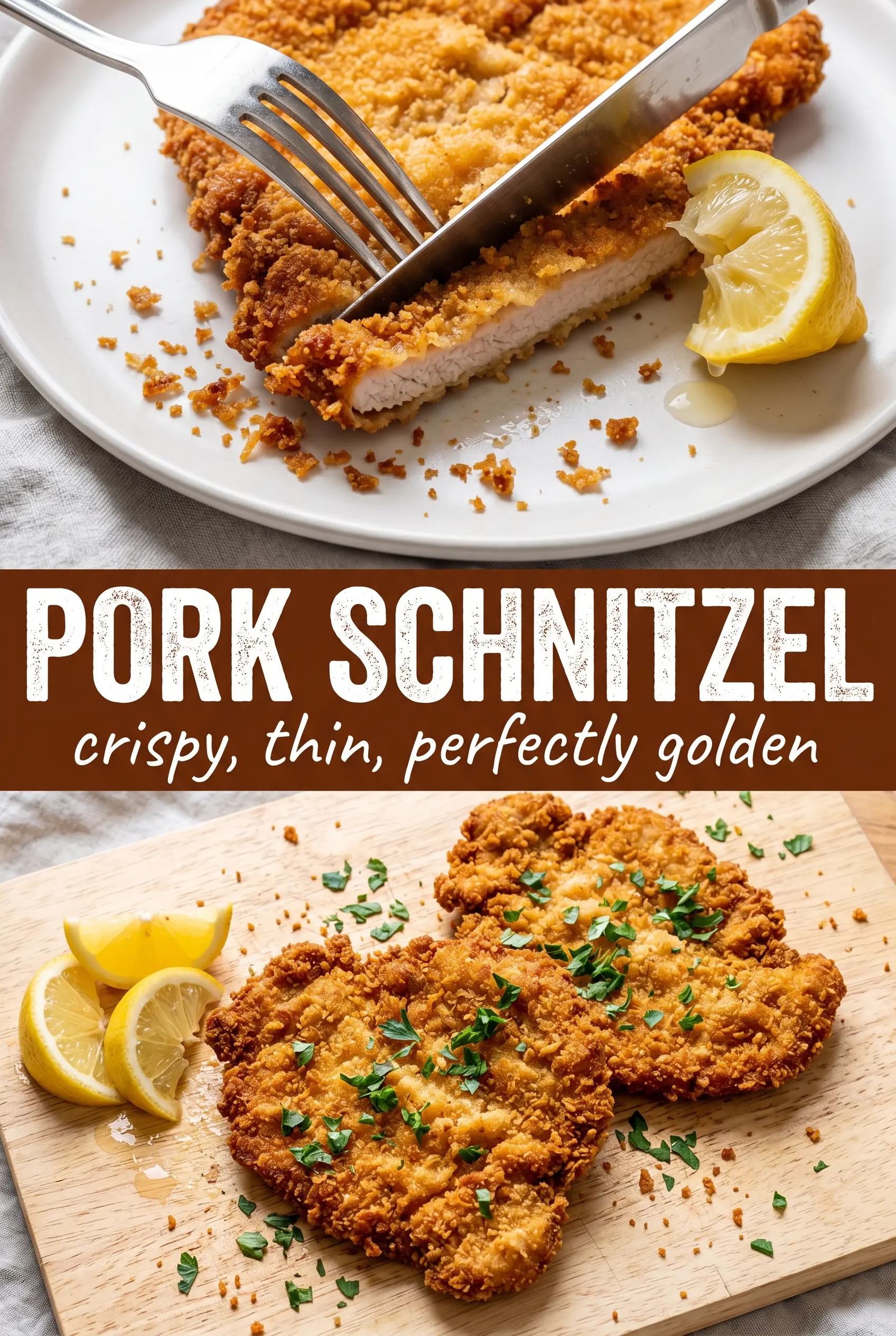
Pork Schnitzel
Ingredients
Equipment
Method
- Season the pounded pork cutlets generously with salt and pepper.
- Set up three shallow dishes: flour, beaten eggs mixed with milk, and breadcrumbs seasoned with garlic powder and salt.
- Dredge each cutlet in flour, then egg, then breadcrumbs, pressing firmly for an even coating.
- Heat 1/4 inch of oil in a large skillet over medium-high heat until shimmering.
- Fry the schnitzels 2–3 minutes per side until deep golden brown, working in batches and not crowding the pan.
- Drain briefly on paper towels and serve immediately with lemon wedges and fresh parsley.