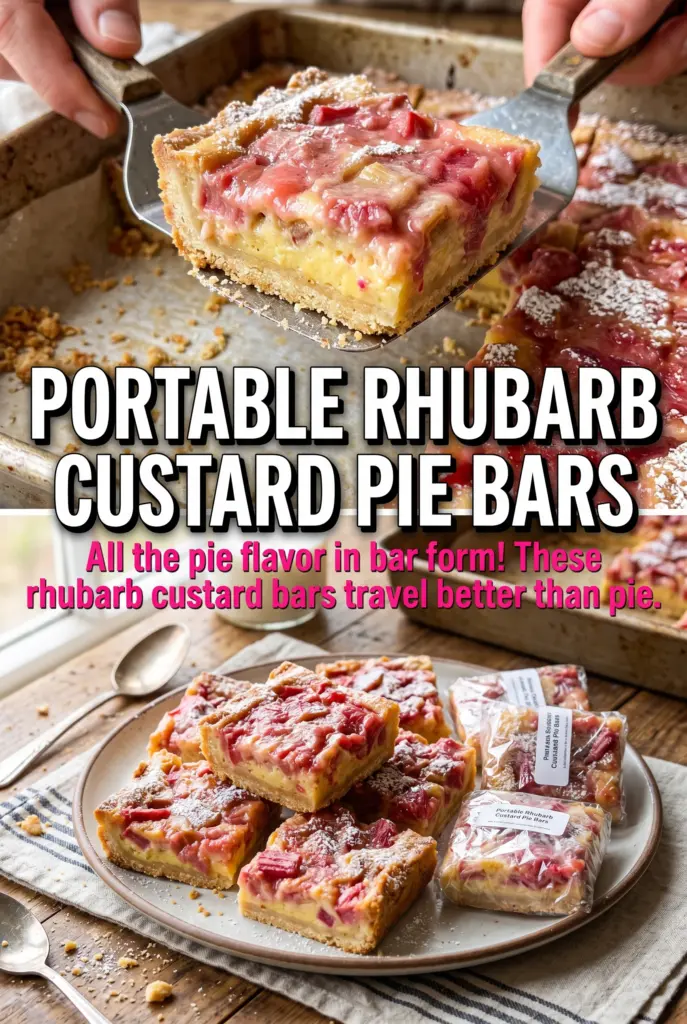
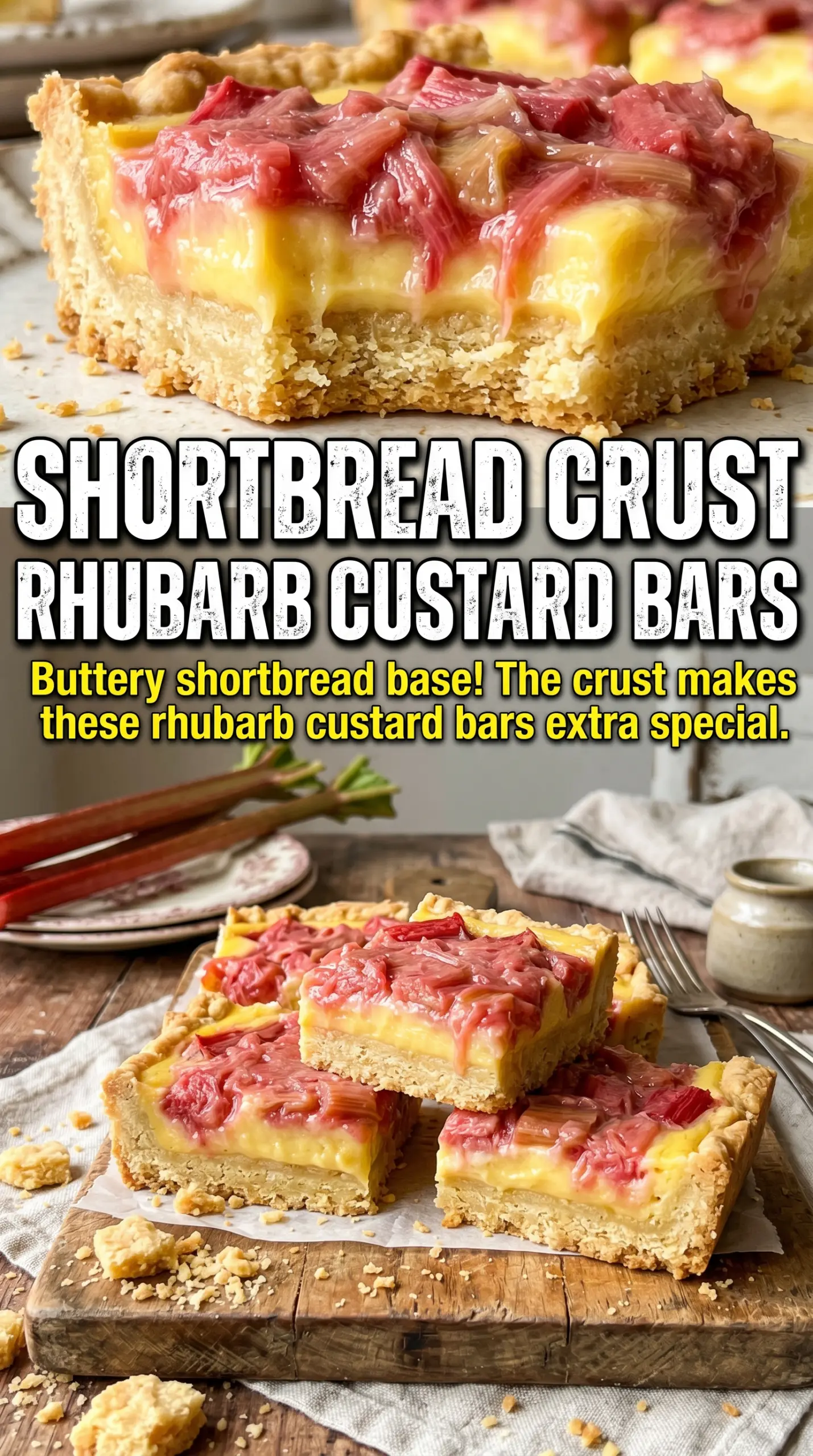
Creamy custard, bright rhubarb, and a buttery shortbread crust come together in these rhubarb custard bars with the kind of clean layers that make people reach for a second piece before they’ve finished the first. The crust bakes up sturdy enough to hold the filling, while the rhubarb softens just enough to stay visible and tangy instead of turning jammy and flat.
What makes this version work is the order: the crust gets a head start in the oven, so it stays crisp under the custard instead of turning soggy. The filling is mixed just until smooth, then poured over the hot crust so it starts setting right away at the bottom. That gives you distinct layers and a slice that holds together after chilling.
Below, I’ve added the one texture cue that matters most when the bars are done, plus a few smart swaps and storage notes if you’re baking ahead or using rhubarb from the freezer.
The custard set up beautifully and the rhubarb stayed bright instead of sinking into the crust. I chilled them overnight and the bars cut into neat squares with a soft, creamy center.
Rhubarb Custard Bars: creamy layers, tart fruit, and a buttery crust that slices clean after a long chill.
The Trick to Keeping the Custard Layer Silky Instead of Grainy
The filling in these bars is closer to a soft baked custard than a fruit pie filling, and that means heat control matters. If the oven runs too hot or the bars go too far, the eggs tighten up and the texture turns bouncy instead of creamy. You’re looking for a set center with just a faint wobble in the middle when the pan comes out.
The other thing that keeps this recipe on track is the hot crust. Pouring the custard over a warm base helps the bottom edge begin setting right away, which keeps the crust from going soft under all that moisture. Rhubarb brings enough juice on its own, so don’t overmix the filling once the fruit goes in or you’ll crush it and lose those little pink pockets throughout the bars.
What Each Ingredient Is Actually Doing in These Bars
- Cold butter — This is what gives the crust its shortbread texture. Cold cubes cut into the flour and sugar stay in little pieces long enough to melt in the oven, which creates that tender, crumbly base instead of a dense cookie layer.
- Fresh rhubarb — Fresh rhubarb holds its shape and gives the bars their sharp, clean tang. Frozen rhubarb can work in a pinch, but thaw it first and drain it well or the filling will loosen and take much longer to set.
- Eggs — The eggs are the structure of the custard. There isn’t a true swap that gives the same sliceable, creamy texture, so this is one place where the recipe needs the real thing.
- Flour in the filling — A little flour steadies the custard so it bakes into neat bars instead of a loose pudding. It’s what keeps the slices standing tall after chilling.
- Powdered sugar — This is optional, but it finishes the bars with a soft look and a gentle sweetness on top. Add it after chilling so it stays white and doesn’t dissolve into the surface.
Building the Layers So the Bottom Stays Crisp
Pressing and Prebaking the Crust
Mix the flour and sugar first, then cut in the cold butter until the mixture looks sandy with some pea-size bits left behind. Press it evenly into the pan and bake until the edges are just starting to turn pale gold. If the crust is underbaked, the custard soaks in and you lose that clean shortbread layer under the bars.
Whisking the Filling Without Beating in Extra Air
Whisk the sugar, flour, salt, and eggs until the mixture is smooth and unified, but stop once it looks glossy and even. You don’t want a foamy custard base, because extra air can make the top puff, then collapse and crack as it cools. Fold in the rhubarb gently so the pieces stay intact and distribute evenly.
Baking Until the Center Just Sets
Pour the filling over the hot crust and return the pan to the oven right away. Bake until the edges are set and lightly golden and the center has just a small jiggle when you nudge the pan. If you wait for the middle to look completely firm in the oven, it usually means the eggs are already overcooked.
Cooling and Chilling for Clean Cuts
Let the pan cool completely on the counter before it goes into the refrigerator. The bars need that full chill to finish setting, and rushing the process will give you soft, messy squares that slump when cut. Once chilled for at least three hours, dust with powdered sugar and slice with a sharp knife wiped clean between cuts.
How to Adapt These Rhubarb Custard Bars for Different Kitchens
Frozen rhubarb version
Thaw the rhubarb completely and drain off as much liquid as you can before folding it into the custard. Frozen rhubarb can save a batch out of season, but if you skip the draining step, the bars can bake up loose and watery instead of neat and creamy.
Gluten-free crust
Swap the all-purpose flour in the crust and filling for a cup-for-cup gluten-free blend with xanthan gum. The texture stays close to the original, though the crust may be a little more delicate when warm, so give it a full chill before cutting.
A less sweet pan
You can reduce the sugar in the filling by up to 1/2 cup if your rhubarb is especially sweet or if you prefer a sharper bar. Go lower than that and the custard loses some of its soft, balanced flavor, so the bars start tasting more eggy than dessert-like.
Dairy-free crust option
Use a solid vegan butter substitute in the crust, choosing one that’s meant for baking rather than spreading. The flavor will be a little less rich than the original, but the crust still bakes into a workable base as long as the substitute stays cold and firm.
Storage and Reheating
- Refrigerator: Store covered for up to 5 days. The crust softens slightly by day two, but the bars still slice well.
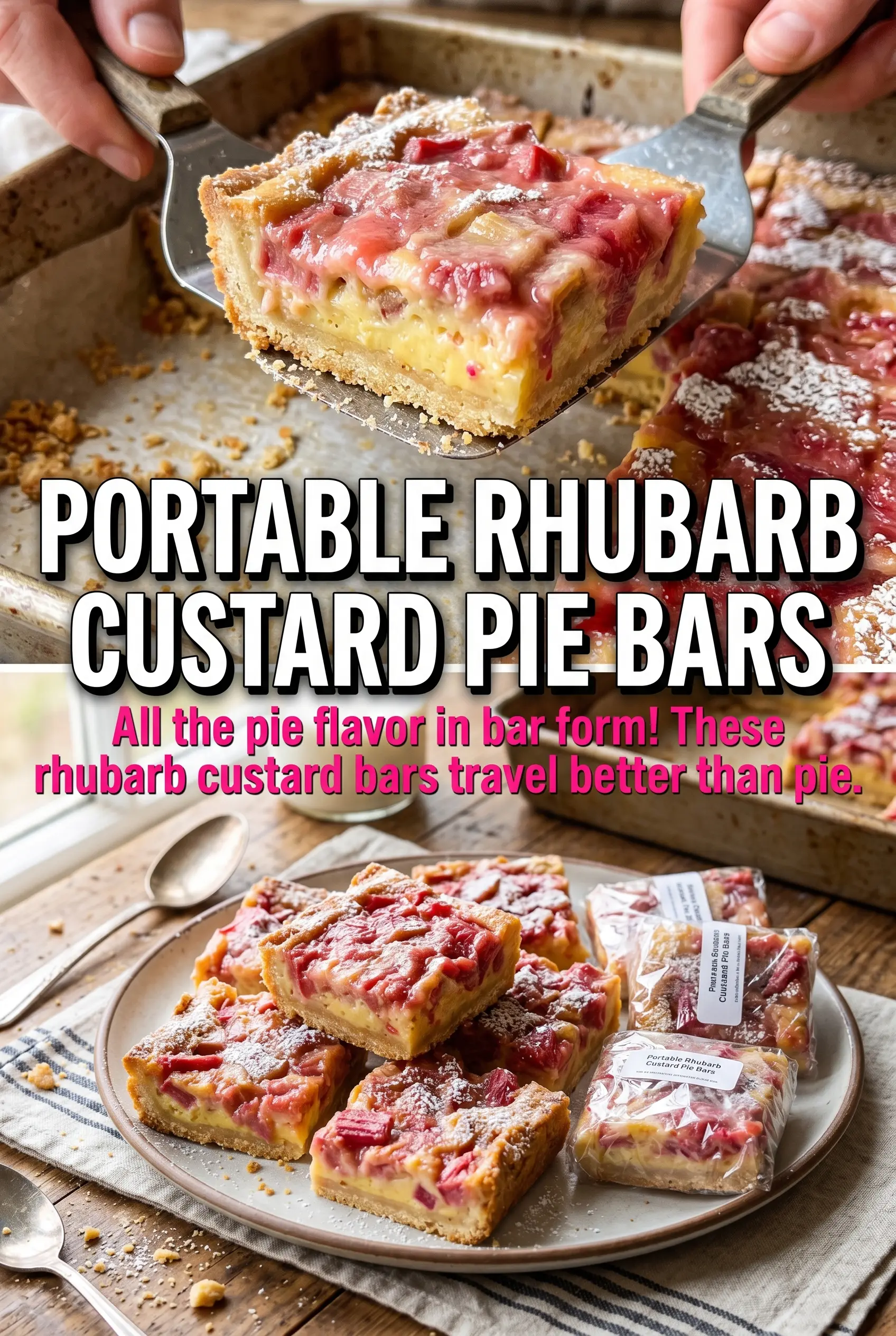
- Freezer: These freeze surprisingly well. Cut into bars, wrap tightly, and freeze for up to 2 months; thaw in the refrigerator overnight.
- Reheating: These are best served chilled or cool, not warmed. If you want the texture to stay intact, don’t microwave them, or the custard will turn loose and the crust will go soft.
Questions I Get Asked About This Recipe
Rhubarb Custard Bars
Ingredients
Equipment
Method
- Preheat the oven to 350°F and line a 9x13-inch pan with parchment paper for easy lifting.
- Mix the all-purpose flour and sugar, cut in the cold butter until the mixture looks crumbly, then press it firmly into the bottom of the pan.
- Bake the crust at 350°F for 15 minutes, until lightly golden.
- Whisk together sugar, all-purpose flour, salt, and beaten eggs until smooth.
- Fold in the finely diced rhubarb, then pour the custard mixture over the hot crust.
- Return to the oven and bake at 350°F for 35-40 minutes, until the custard is set and lightly golden.
- Cool completely at room temperature, then refrigerate for at least 3 hours before cutting into bars.
- Dust the chilled bars with powdered sugar right before serving.