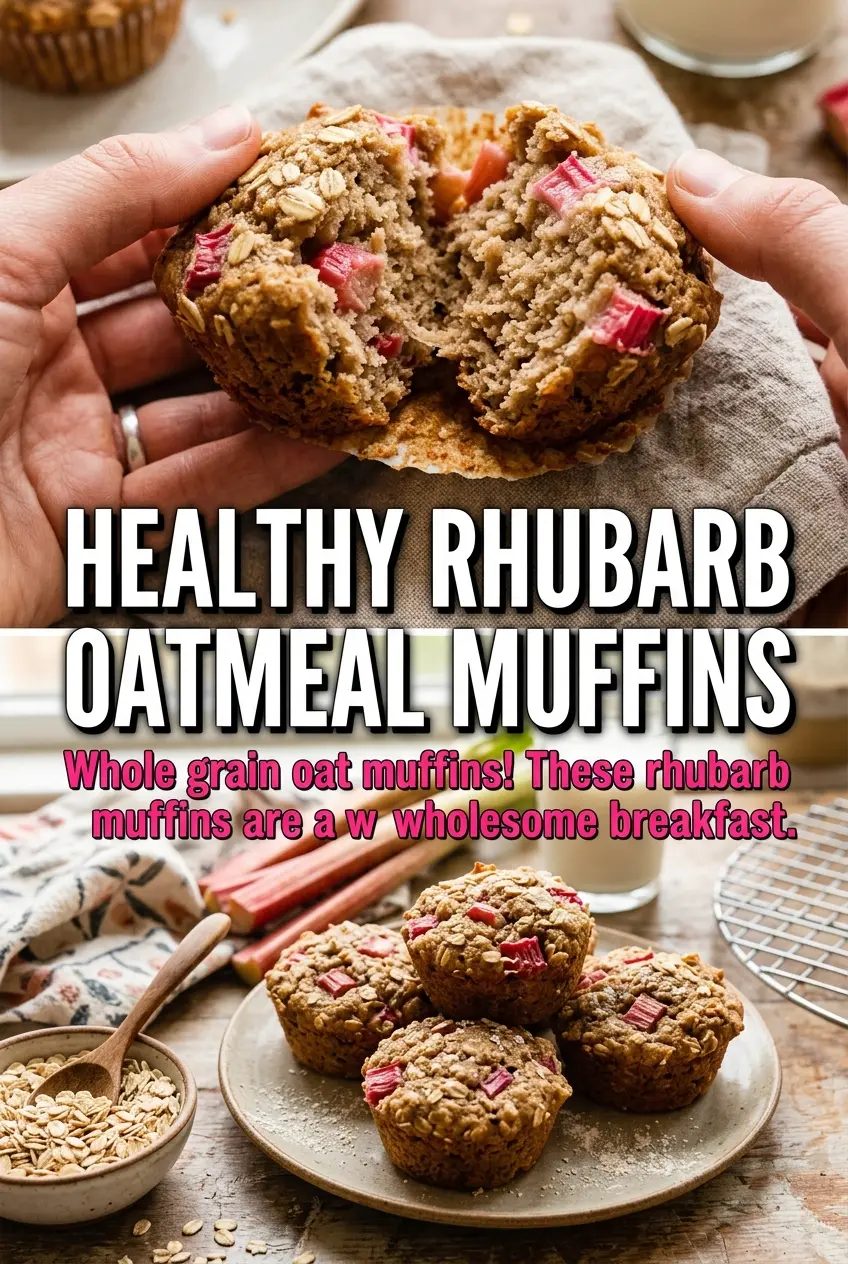
These rhubarb oat muffins bake up tender in the middle with a sturdy, hearty top and little pops of tart fruit in every bite. The oats soften in buttermilk first, which gives the crumb a full, almost creamy texture without turning the muffins heavy. The streusel-style oat topping adds just enough crunch to make them feel bakery-worthy straight from the pan.
What makes this version work is the soak. Old-fashioned oats need a head start, especially in a muffin that bakes fast. Fifteen minutes in buttermilk takes the edge off the oats and helps the batter stay moist for days. The rhubarb goes in at the end so it stays in pieces instead of bleeding through the whole batch. I also keep the mixing gentle. Once the flour goes in, stop as soon as the dry streaks disappear.
Below, I’ve included the one place people usually go wrong with fruit muffins, plus a few swaps that actually make sense if you’re working with what’s in the kitchen.
The oats softened up beautifully in the buttermilk, and the muffins stayed moist for two days without getting gummy. I loved the tart rhubarb against the brown sugar topping.
Pin these rhubarb oat muffins for a breakfast that stays tender, tart, and topped with a little oat crunch.
The Part That Keeps These Muffins From Turning Dense
Fruit muffins often fail for one of two reasons: the oats stay dry and chewy, or the batter gets overmixed once the wet and dry ingredients meet. Both problems show up as a tight crumb and a muffin that eats more like a brick than breakfast. The buttermilk soak handles the first issue by softening the oats before they ever touch the flour, and the quick mix handles the second by keeping the gluten in the flour from tightening up.
Rhubarb adds another wrinkle because it releases water as it bakes. That’s good here, but only if the pieces are folded in at the end and left in distinct chunks. If you stir too long, the rhubarb starts tinting the batter pink and the muffins can turn a little wet around the fruit.
- Soaked oats — They bring body and moisture, but only after they’ve had time to absorb liquid. Dry oats baked straight into the batter stay chewy in a way that doesn’t feel finished.
- Brown sugar — It adds deeper flavor and helps keep the crumb soft. White sugar works in a pinch, but you lose some of the caramel note that suits rhubarb.
- Buttermilk — This gives the muffins a subtle tang and reacts with the baking soda for lift. Plain milk won’t give you the same rise or flavor, though milk plus a teaspoon of lemon juice can stand in.
- Rhubarb — Fresh works best because frozen rhubarb can bleed extra moisture. If you use frozen, add it straight from the freezer and expect a slightly softer crumb.
What Each Ingredient Is Actually Doing in the Bowl
- Old-fashioned oats — These give the muffins their hearty texture. Quick oats turn too soft and disappear into the batter, while steel-cut oats won’t soften enough in the short bake.
- Buttermilk — The soak is part texture, part lift. If you don’t have buttermilk, stir 1 tablespoon lemon juice or vinegar into 1 cup milk and let it sit for 5 minutes before using.
- All-purpose flour — This keeps the crumb tender and stable. Whole wheat flour can replace up to half without ruining the muffins, but the texture will be a little denser and the rhubarb won’t pop quite as brightly.
- Vegetable oil — Oil keeps these muffins moist even after they cool. Melted butter will work, but the muffins will firm up faster once they’re out of the oven.
- Rhubarb — Dice it small enough that it spreads through the batter without sinking. Large chunks can create wet pockets and uneven baking.
How to Move From Soaking to Oven Without Losing the Texture
Softening the Oats
Stir the oats into the buttermilk and let them sit for the full 15 minutes. They’ll look swollen and a little slumpy, which is exactly what you want. That soak is what keeps the muffins from tasting dry in the center. If the oats still look stiff, give them a few more minutes before you add the rest of the wet ingredients.
Mixing the Batter Lightly
Whisk the dry ingredients together first so the baking powder and baking soda distribute evenly. Add the oil, egg, and vanilla to the oat mixture, then pour that into the dry bowl and stir only until the flour disappears. A few streaks at the bottom are better than overmixing, which makes the muffins tough and rounded instead of tender.
Folding in the Rhubarb
Use a spatula and fold just until the rhubarb is scattered through the batter. The batter will be thick, and that’s fine. Thick batter helps keep the fruit suspended instead of sinking to the bottom. If the mixture starts looking streaky pink, stop stirring.
Baking Until Set and Moist
Divide the batter evenly and sprinkle the oat-brown sugar topping over each cup before baking. The muffins are done when the tops are golden, the centers spring back lightly, and a toothpick comes out clean or with a few moist crumbs. Pull them at 20 minutes if your oven runs hot; overbaking dries out the oats fast.
Three Useful Ways to Change These Muffins Without Breaking Them
Make Them Dairy-Free
Swap the buttermilk for an unsweetened non-dairy milk mixed with 1 tablespoon lemon juice or vinegar. The muffins will still rise well, though the flavor will be a little less tangy and the crumb slightly lighter.
Use Frozen Rhubarb
Add frozen rhubarb straight from the freezer instead of thawing it first. Thawed rhubarb lets out too much liquid and can make the centers gummy, while frozen pieces keep their shape better during mixing and baking.
Swap in Half Whole Wheat Flour
Replace up to half the all-purpose flour with whole wheat flour for a nuttier, more robust muffin. The result is a little heartier and less delicate, which fits the oats well, but don’t swap all of it or the muffins can turn dry and heavy.
Storage and Reheating
- Refrigerator: Store in an airtight container for up to 4 days. The oats soften a little more by day two, which actually helps the texture.
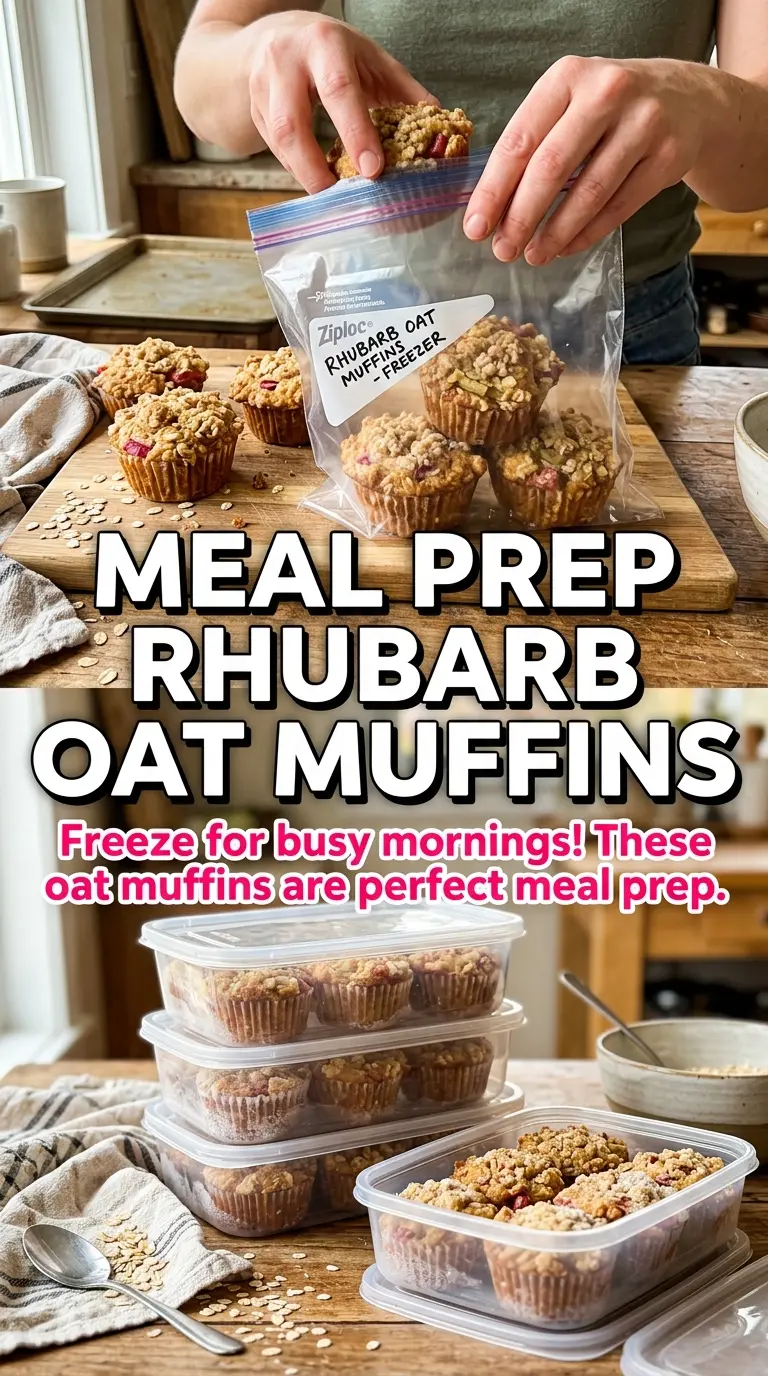
- Freezer: These freeze well. Wrap individually and freeze for up to 2 months so you can grab one at a time.
- Reheating: Warm in a 300°F oven for 6 to 8 minutes or microwave for 15 to 20 seconds. Don’t overheat them or the rhubarb can turn jammy and the crumb dries out.
Answers to the Questions Worth Asking
Rhubarb Oat Muffins
Ingredients
Equipment
Method
- Soak old-fashioned oats in buttermilk for 15 minutes to soften, keeping the mixture at room temperature while it hydrates.
- Preheat the oven to 375°F and line a 12-cup muffin tin with paper liners so the batter can go in immediately.
- Whisk together all-purpose flour, brown sugar, baking powder, baking soda, and salt until evenly combined.
- Add vegetable oil, egg, and vanilla extract to the oat mixture and stir to combine, until the wet mixture looks uniform.
- Pour the wet ingredients into the dry ingredients and mix just until combined, then fold in fresh rhubarb pieces so they stay distributed.
- Divide the batter among muffin cups until evenly filled.
- Sprinkle the tops with oats and brown sugar, visible on the surface like a simple streusel.
- Bake for 20-22 minutes at 375°F until the muffins are golden and a toothpick comes out clean.
- Cool in the pan for 5 minutes before serving, letting the tops set so the muffins release cleanly.