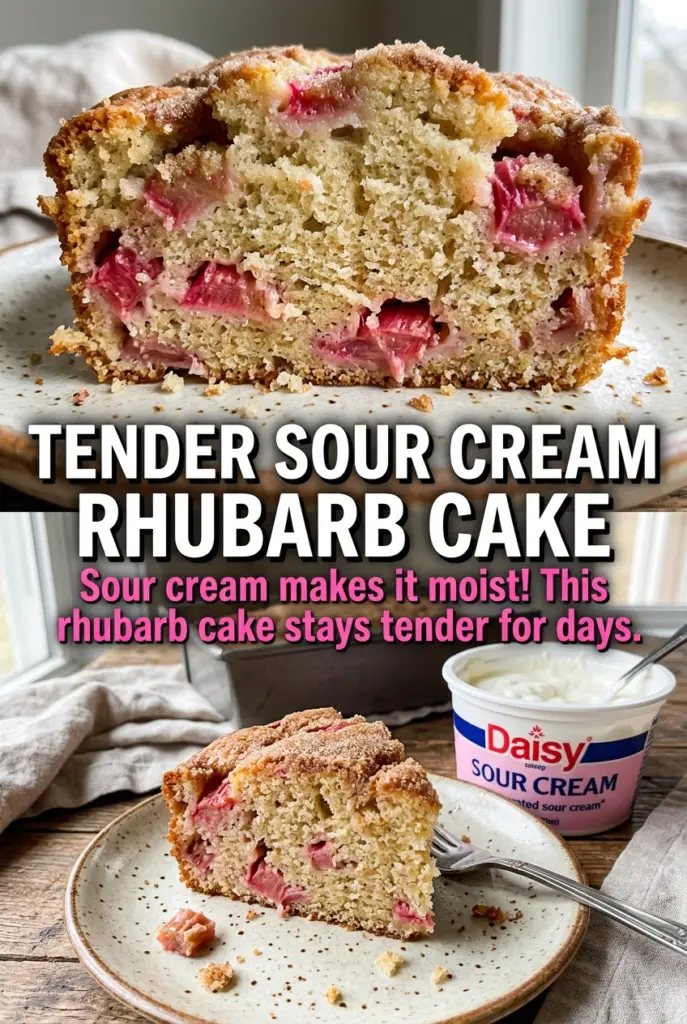
Tender crumb, tart rhubarb, and a cinnamon streusel that bakes into a crisp, golden top give this rhubarb sour cream cake the kind of balance that keeps people coming back for another slice. It cuts cleanly once cooled, but the middle stays soft and moist, with little pockets of rhubarb that keep each bite bright instead of heavy.
The sour cream does the work here. It brings moisture and a little tang, which keeps the cake from tasting flat and helps the crumb stay plush even after a full bake. Oil keeps the texture softer than butter alone would, while the rhubarb goes in at the very end so it stays evenly distributed instead of sinking into a heavy layer at the bottom. The streusel matters too — cold butter and a light hand give you those sandy, crumbly bits that turn crunchy in the oven.
Below, I’ve included the one mixing detail that keeps this cake tender, plus a few smart swaps and storage notes for the slices that somehow make it past the first day.
The streusel came out crisp instead of melting into the batter, and the rhubarb stayed nice and tart without making the cake soggy. Mine was still moist on day two.
Like this rhubarb sour cream cake? Save it to Pinterest for a moist, streusel-topped dessert with tart rhubarb in every slice.
The One Mixing Rule That Keeps This Cake Tender Instead of Heavy
The biggest risk with a cake like this is overworking the batter after the dry and wet ingredients come together. Once the flour is hydrated, extra stirring starts building structure, and that’s how you end up with a tighter crumb instead of the soft, plush texture you want. Stir just until the flour disappears, then stop.
Rhubarb adds moisture as it bakes, which is great for keeping the cake juicy, but it also means the batter needs to stay light enough to support it. Folding the rhubarb in at the end helps keep the pieces distributed without smashing them into the batter. If your cake comes out dense, it’s usually from overmixing or packing the rhubarb too aggressively into the pan.
What Each Ingredient Is Actually Doing in This Cake
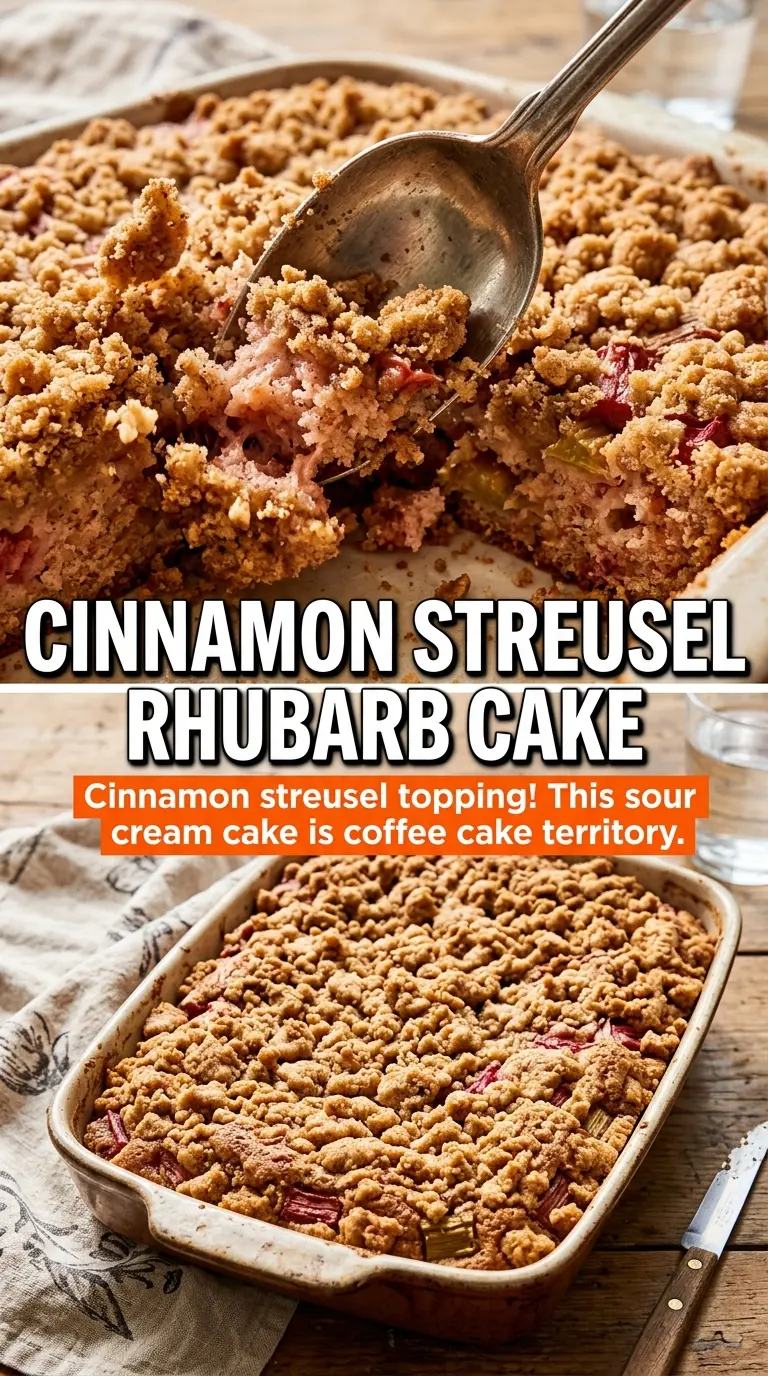
- Sour cream — This is what gives the cake its moist, tender crumb and slight tang. Full-fat sour cream works best here because it brings both richness and structure; thinner dairy substitutes can make the batter looser and the crumb less plush.
- Vegetable oil — Oil keeps the cake soft even after it cools, which is why the texture stays good on day two. Melted butter won’t give quite the same stay-moist result, though it will add a little more buttery flavor if that matters more to you than softness.
- Fresh rhubarb — Fresh rhubarb gives you the clean tart bite that cuts through the sweet batter. If your stalks are especially thick, dice them small so they soften evenly; large chunks can leave wet pockets in the cake.
- Cold butter for the streusel — Cold butter is what keeps the topping crumbly instead of turning into a paste. Cut it in until the mixture looks like coarse sand with a few pea-sized bits left behind.
- Cinnamon and brown sugar — These ingredients don’t just sweeten the top; they give it that coffee-cake feel and a deeper, caramel edge as it bakes.
How to Build the Batter and Streusel Without Losing the Texture
Mix the Dry and Wet Bowls Separately
Start by whisking the flour, sugar, baking soda, and salt in one bowl, then combine the sour cream, oil, eggs, and vanilla in another until the mixture looks smooth and uniform. That separation keeps the leavening evenly distributed, which matters in a cake this dense and moist. If you rush and dump everything together at once, you’ll end up chasing streaks of flour and overmixing the batter trying to fix it.
Fold in the Rhubarb at the End
Once the wet and dry ingredients are just combined, add the rhubarb and fold it in with a spatula. You’re looking for an even batter with visible pieces of fruit, not a perfectly smooth mixture. If the batter looks a little thick, that’s normal; rhubarb releases moisture as it bakes, and thin batter can turn the cake gummy.
Cut the Butter Into the Topping Until It Looks Pebbly
Mix the brown sugar, flour, and cinnamon first, then work in the cold butter until the topping forms uneven crumbs. Stop when some pieces are tiny and some are the size of small peas. If the butter melts from warm hands or overmixing, the topping will disappear into the cake instead of baking into a crisp lid.
Watch the Center, Not Just the Timer
Bake until a toothpick comes out clean or with a few moist crumbs, and the top is set and golden. The edges should pull slightly from the pan, but the center shouldn’t look sunken or wet. If you pull it too early, the middle will collapse when it cools; if you overbake it, the crumb dries out before the rhubarb has a chance to shine.
How to Adapt This Rhubarb Cake for Different Kitchens and Gatherings
Make It Gluten-Free With a 1:1 Baking Blend
A good 1:1 gluten-free flour blend can replace the all-purpose flour in both the cake and topping. The texture will be a little more delicate and slightly less springy, but the sour cream keeps it from feeling dry. Let the cake cool fully before slicing so it holds together cleanly.
Use Frozen Rhubarb When Fresh Isn’t Available
Frozen rhubarb works, but don’t thaw it first or the batter can get watery. Toss it in frozen and fold quickly so it doesn’t bleed too much liquid into the cake. Expect a softer crumb and a little more moisture near the fruit.
Swap in Plain Greek Yogurt for Part of the Sour Cream
You can replace up to half of the sour cream with plain Greek yogurt if that’s what you have. The cake will taste a touch tangier and a little less rich, but the structure still works. Go with full-fat yogurt if possible, since nonfat versions can make the crumb less velvety.
Storage and Reheating
- Refrigerator: Store covered for up to 4 days. The crumb stays moist, and the streusel softens a little after day one.
- Freezer: This cake freezes well. Wrap individual slices tightly and freeze for up to 2 months; thaw in the refrigerator so the topping doesn’t get soggy from condensation.
- Reheating: Warm slices in a 300°F oven for 8 to 10 minutes, or just until the center is no longer chilled. The microwave works in a pinch, but it softens the streusel and can make the crumb feel steamy instead of fresh.
Answers to the Questions Worth Asking
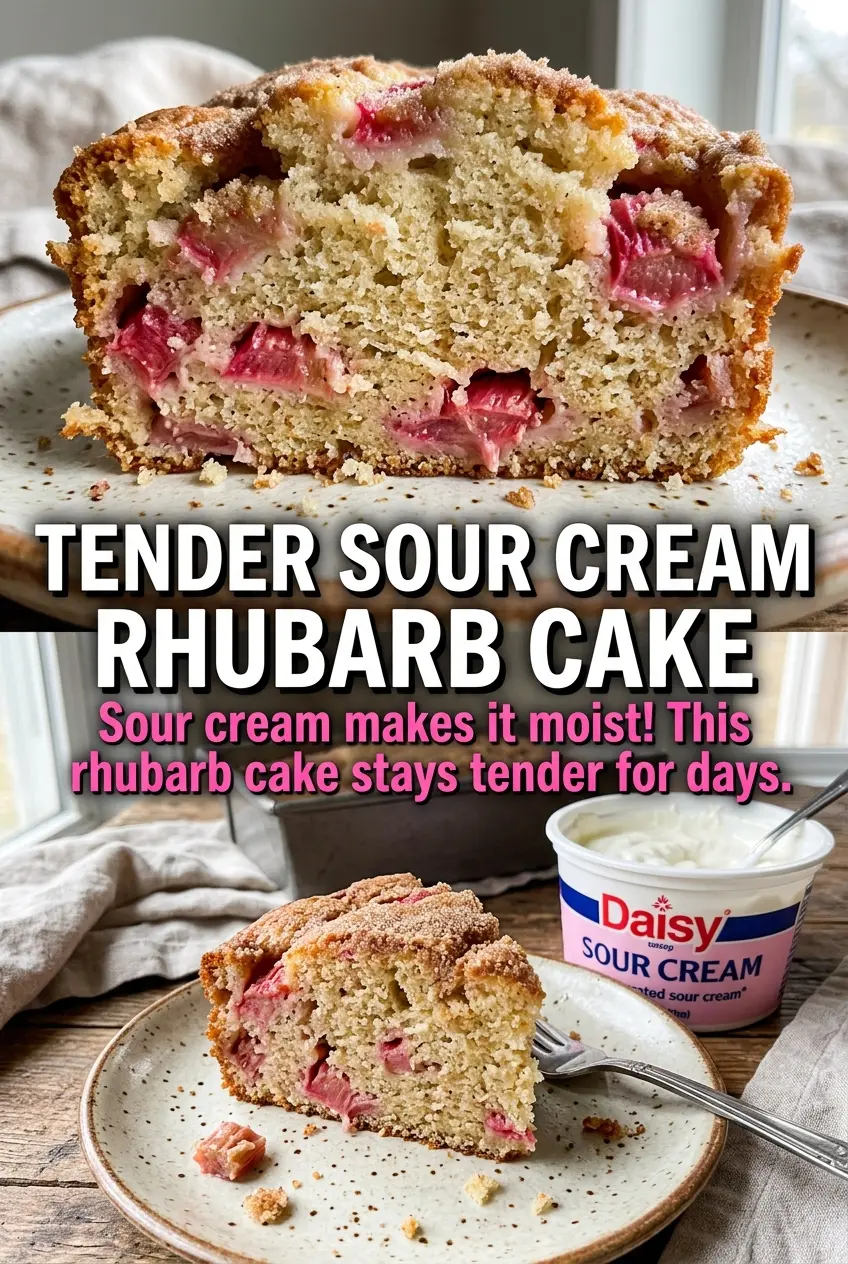
Rhubarb Sour Cream Cake
Ingredients
Equipment
Method
- Preheat the oven to 350°F and grease a 9x13-inch baking pan so the cake releases cleanly after baking.
- Whisk together all-purpose flour, sugar, baking soda, and salt until the dry ingredients are evenly combined and no clumps remain.
- In a separate bowl, mix sour cream, vegetable oil, eggs, and vanilla extract until smooth and combined.
- Pour the wet mixture into the dry ingredients and stir until just mixed, then fold in fresh rhubarb, diced to keep the crumb tender.
- Pour the batter into the prepared pan and spread it evenly so the rhubarb distributes throughout.
- For the topping, mix brown sugar, all-purpose flour, and cinnamon, then cut in cold butter until crumbly with visible small butter bits.
- Sprinkle the streusel topping evenly over the batter for a crunchy, cinnamon-speckled top.
- Bake at 350°F for 45-50 minutes until a toothpick comes out clean, with the center set and the top lightly browned.
- Cool for 30 minutes before serving so the cake firms up and the rhubarb pieces stay defined in the slice.