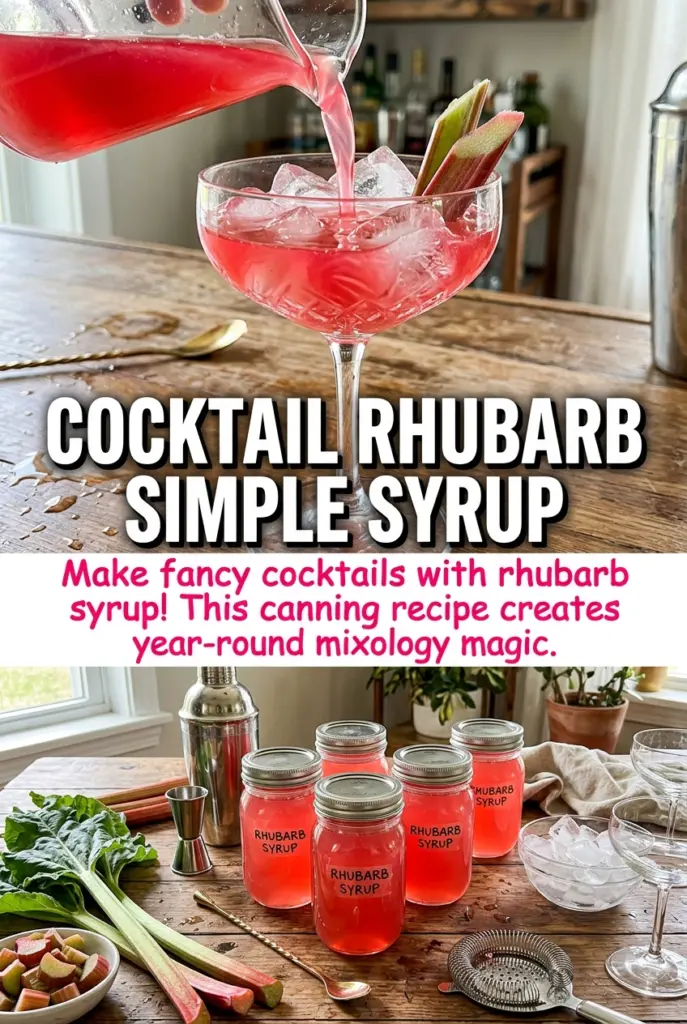
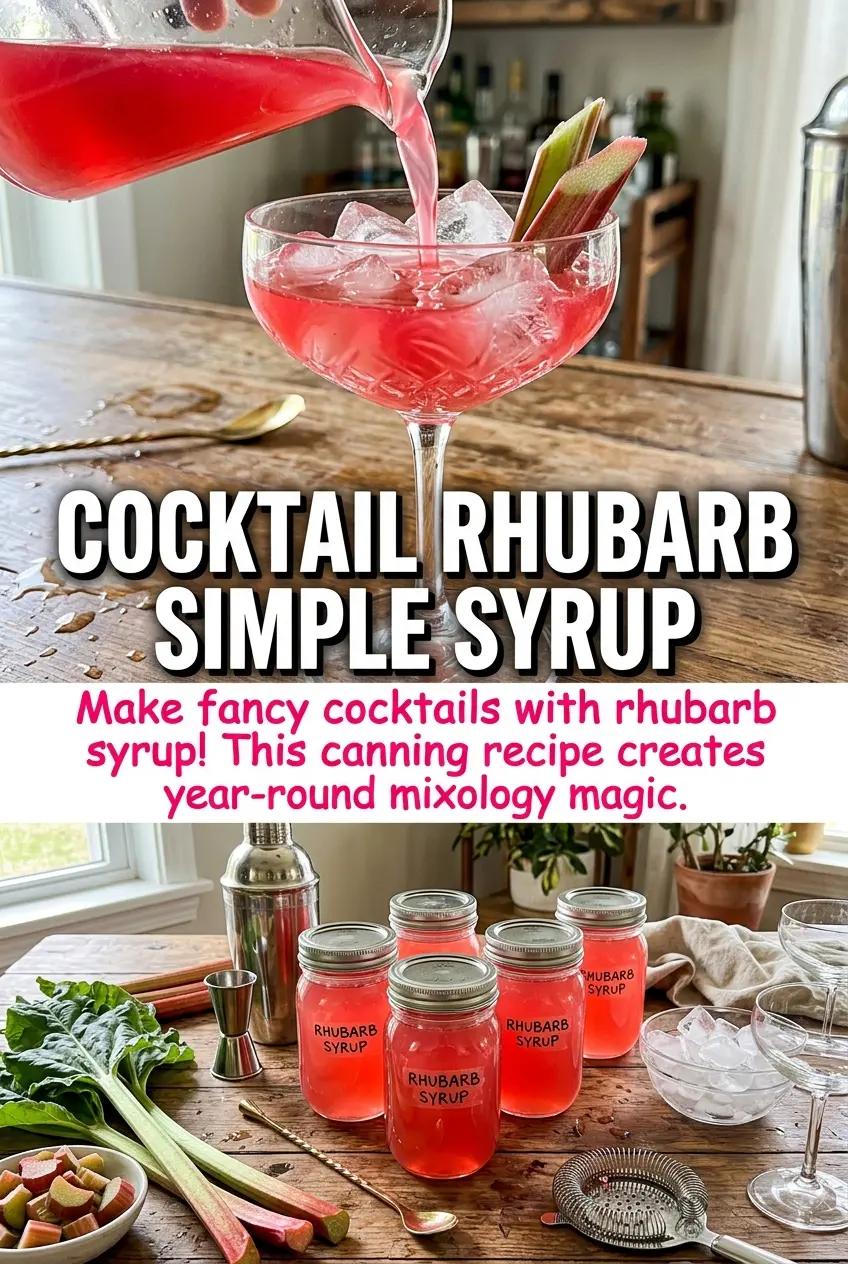
Ruby-pink rhubarb syrup earns its place in the pantry because it tastes like spring in a bottle and pours with the kind of glossy, spoon-coating texture that makes even plain pancakes or sparkling water feel special. The rhubarb brings a bright, tart edge, while the sugar smooths it into something balanced instead of sharp. Canned properly, it keeps that clean fruit flavor without tasting cooked down or dull.
The part that matters most is extracting enough liquid before the sugar goes in. Rhubarb needs a full simmer to collapse, then a good strain to pull out every bit of juice; that’s what gives you a clear syrup instead of a cloudy, pulpy one. The lemon juice doesn’t just add acidity for flavor — it helps sharpen the finish and keeps the syrup from tasting flat once it’s sealed in jars.
Below, I’ll walk through the part that makes the biggest difference in a smooth, pourable syrup, plus the substitutions and storage notes that are actually useful if you want this on hand for cocktails, breakfast, or gifting.
The syrup came out crystal clear and the ruby color was gorgeous in the jar. I strained it through cheesecloth like you said, and it drizzled beautifully over pancakes without getting watery.
Love that jewel-toned rhubarb syrup? Save it to Pinterest for pancakes, cocktails, and sparkling water all season long.
Why Rhubarb Needs to Be Fully Strained Before You Can It
Rhubarb gives up a lot of pectin and pulp as it cooks, and if you rush that part, you’ll end up with a syrup that looks muddy and pours with a little grit. The goal here is a clean, translucent syrup, so the simmered rhubarb has to be soft enough to collapse and then pressed hard through cheesecloth or a fine mesh strainer. Don’t leave liquid behind in the fruit; that’s where the flavor is.
Once the juice is strained, the rest of the process moves fast. Sugar dissolves best in hot rhubarb juice, and a short simmer is enough to finish the syrup without reducing it into candy. The lemon juice keeps the sweetness in check and gives the finished syrup a sharper, brighter edge.
What Each Ingredient Is Actually Doing in This Syrup
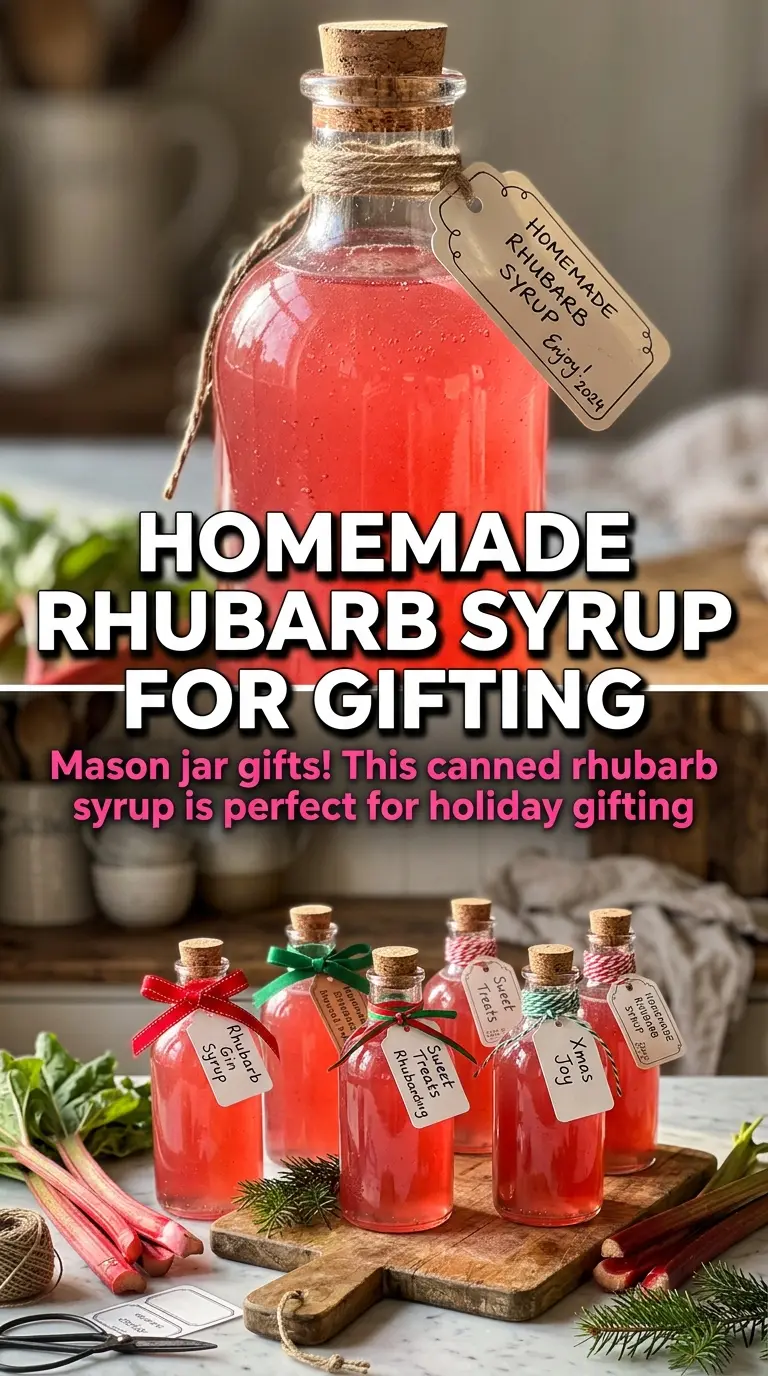
- Rhubarb — Fresh stalks give you the color and tart flavor this syrup is built on. Use crisp stalks with good color if you want a brighter pink finish; pale rhubarb still works, but the syrup won’t look as jewel-toned.
- Sugar — This does more than sweeten. It gives the syrup body and helps it keep in the jar after processing, so swapping in less sugar changes both texture and shelf life.
- Lemon juice — A tablespoon is enough to lift the flavor and keep the syrup tasting lively. Bottled lemon juice works here if that’s what you have, but fresh lemon gives a cleaner finish.
- Water — Water pulls the rhubarb out gently and creates enough volume for a true syrup. Too little water makes the rhubarb catch before it softens; too much leaves you with a thin, under-flavored base.
Building the Syrup Without Losing the Color
Softening the Rhubarb
Combine the chopped rhubarb and water in a large pot and bring it to a boil, then lower the heat and simmer until the pieces are falling apart, about 15 minutes. You’re looking for soft, broken-down fruit and a liquid that has turned rosy, not a hard boil that flings liquid up the sides. If the rhubarb still holds its shape, it hasn’t given up enough flavor yet.
Pressing Out the Juice
Strain the mixture through cheesecloth or a fine mesh strainer and press until the fruit is dry enough that only a little moisture remains. This is the step that determines whether your syrup comes out clear or cloudy. If you stop pressing early, you leave behind a lot of flavor and most of the color.
Finishing the Syrup
Return the strained juice to the pot, add the sugar and lemon juice, and bring it back to a boil. Simmer for 5 minutes, just until the sugar disappears and the syrup looks glossy. Don’t keep cooking it longer than that or it starts to thicken too much before it ever reaches the jar.
Jarring and Processing
Pour the hot syrup into sterilized pint jars, leaving 1/4-inch headspace, then process in a boiling water bath for 10 minutes. Keep the jars hot and work quickly so the syrup doesn’t cool before it’s sealed. If you skip the proper headspace, syrup can bubble out during processing and interfere with the seal.
How to Adapt Rhubarb Syrup for the Pantry You’ve Got
Lower-Sugar Version
You can reduce the sugar a bit, but the syrup will be thinner and less stable on the shelf. The flavor also turns noticeably sharper, which can be nice over sparkling water but less balanced for pancakes or desserts.
Honey for Part of the Sugar
Replace up to half the sugar with mild honey for a rounder, floral finish. The syrup will taste deeper and slightly less bright, so it works best if you want something for tea or cocktails rather than a clean, tart topping.
Frozen Rhubarb
Frozen rhubarb works well here. Use it straight from the freezer and expect a little more liquid in the pot as it breaks down, but the color and flavor still come through nicely.
Storage and Reheating
- Refrigerator: Store sealed jars in the fridge after opening and use within 3 to 4 weeks. The syrup may darken slightly but should stay clear and pourable.
- Freezer: This freezes well if you leave space in the container for expansion. Freeze in small jars or freezer-safe containers so you can thaw only what you need.
- Reheating: Warm gently in a saucepan over low heat or let it come to room temperature on the counter. Don’t boil it again or the syrup can lose some of its fresh rhubarb brightness.
Answers to the Questions Worth Asking
Canning Rhubarb Simple Syrup
Ingredients
Equipment
Method
- Combine the fresh rhubarb and water in a large pot, then bring it to a boil over high heat (you should see rolling bubbles across the surface).
- Reduce the heat to a gentle simmer and simmer for 15 minutes until the rhubarb is very soft and breaking down easily when pressed with a spoon.
- Strain the mixture through cheesecloth or a fine mesh strainer, pressing to extract all the liquid until you have about 4 cups of rhubarb juice (the strained pulp should look quite dry).
- Return the rhubarb juice to the pot, add the sugar and lemon juice, then bring to a boil while stirring so the sugar dissolves as soon as it hits the hot liquid.
- Simmer for 5 minutes until the sugar is completely dissolved, looking for a clear, glossy syrup with no visible graininess.
- Pour the hot syrup into sterilized pint jars, leaving 1/4-inch headspace, and wipe jar rims clean before sealing.
- Process in a boiling water bath for 10 minutes so the jars are covered by at least 1 inch of water and you see a steady boil.
- Let the jars cool completely after processing, then use the syrup over pancakes, in cocktails, or mixed with sparkling water as a ruby-pink drizzle.