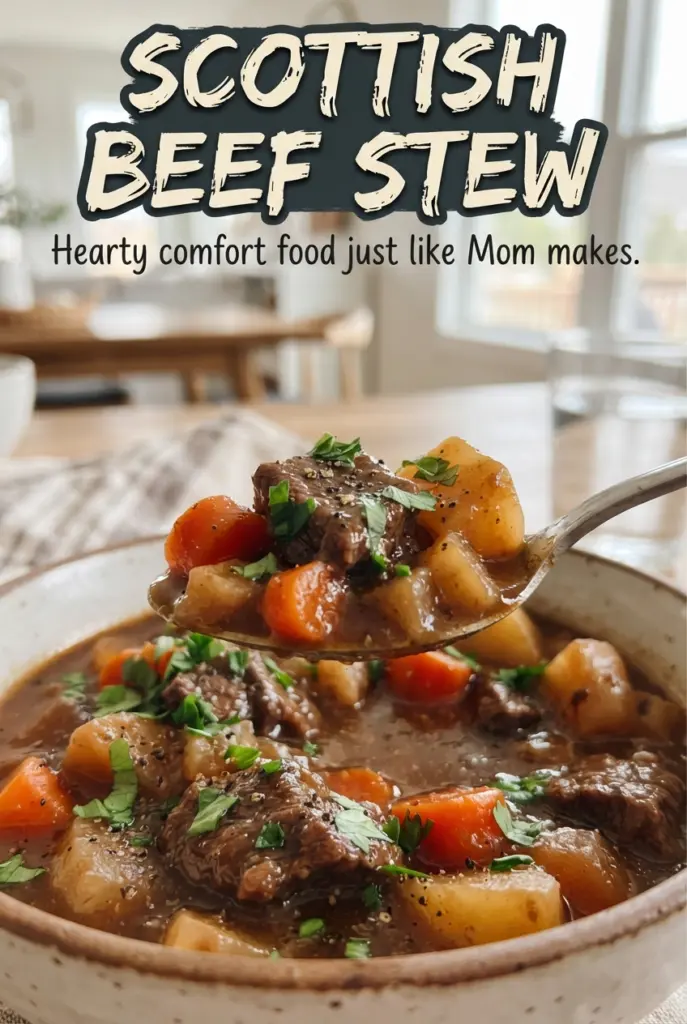
Deep, spoon-coating gravy is what makes Scottish beef stew worth cooking again and again. The beef turns tender without falling apart, the barley gives the broth a nutty chew, and the turnip and carrots melt into the pot just enough to thicken everything from the inside out. It eats like a full meal, not a thin soup pretending to be dinner.
The key is browning the beef in batches and not rushing the onions and leeks. Those two steps build the savory base that gives the broth its depth. A splash of Scottish ale loosens the browned bits on the bottom, and the barley goes in late enough to hold its shape instead of turning mushy.
Below, I’ve included the small timing details that keep the stew rich instead of muddy, plus a few swaps for when you need to work with what’s in the pantry.
The gravy thickened up beautifully and the barley stayed chewy without going soft. I added the turnip right on time and the whole pot tasted even better the next day.
Save this Scottish beef stew for the nights when you want thick gravy, tender chuck, and barley that holds its bite.
The Browning Step That Gives This Stew Its Depth
Most beef stews taste flat because the meat was crowded in the pan and steamed instead of seared. Here, the flour-coated chuck needs room and a bit of patience so the outside turns dark and the pan picks up those browned bits. That fond is what makes the broth taste rounded instead of one-note.
The other place people lose flavor is the onion base. Leeks and onions need enough time to soften and pick up the browned residue before the liquid goes in. If you rush this stage, the stew still cooks through, but it never gets that slow-built, savory backbone that makes every spoonful taste finished.
What Each Ingredient Is Doing in the Pot
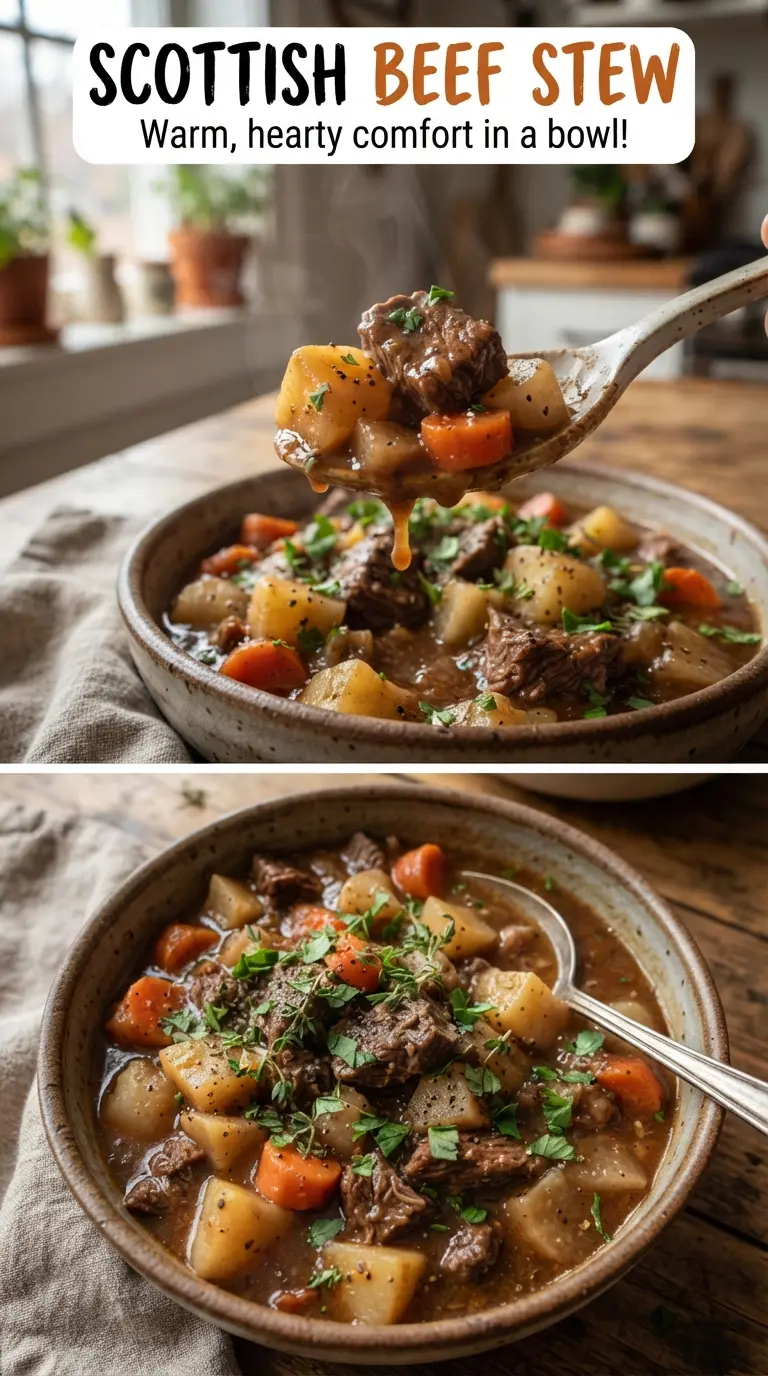
- Beef chuck — This cut is built for long simmering. It starts tough, but the connective tissue melts into the sauce and gives the stew body. Lean stew meat won’t give you the same silky finish.
- Scottish ale — The ale adds malty depth and helps lift the browned bits from the pan. If you don’t want to cook with beer, use extra beef broth and add a teaspoon of balsamic vinegar for a little of that same backbone.
- Pearl barley — This is what turns the pot from beef and vegetables into a true Scottish stew. It thickens the broth naturally and gives each bite a pleasant chew. Don’t swap in quick-cooking barley; it’ll break down before the beef is tender.
- Turnip or swede — This brings an earthy sweetness that plays well with the beef. Swede is the most traditional option if you can find it, but turnip works well and softens into the broth at about the same rate.
- Leeks and onions — Both matter here. The onions build sweetness, while the leeks give the stew a softer, fresher edge that keeps the broth from tasting heavy.
How to Build the Stew So the Beef Turns Tender, Not Stringy
Seasoning and Browning the Beef
Toss the beef with salt, pepper, and flour until every piece is lightly coated. The flour helps the stew thicken later, but it also gives the beef a drier surface so it can brown instead of gray out. Brown the cubes in batches and leave space between them; if the pan looks crowded, stop and split it into another round.
Softening the Onions and Leeks
Once the beef is out, add the butter and oil, then cook the onions and leeks until they collapse and smell sweet, about 6 minutes. You want soft edges and a little color, not caramelization. If the pan looks dry before they’re done, add a splash of broth and scrape up the browned bits as they release.
Building the Broth
Pour in the ale and scrape the bottom of the pot thoroughly. That step matters because the dark bits stuck to the pan carry the flavor from the beef straight into the sauce. Add the broth, Worcestershire sauce, thyme, and browned beef, then bring everything to a steady simmer before covering.
Adding the Barley and Vegetables
Let the beef simmer first so it starts to relax before the barley and vegetables go in. Add the barley, turnip, and carrots during the last 45 to 60 minutes, when the meat is already close to tender. If you add them too early, the barley will turn mushy and the carrots will lose all structure.
Finishing the Pot
When the beef yields easily and the barley is chewy but cooked through, taste the broth and adjust the salt. The parsley goes on at the end for freshness and a little color against the dark gravy. Let the stew stand for 10 minutes before serving; the broth thickens slightly as it cools, and the flavor settles in the best way.
How to Adapt This for Different Pans, Diets, and Pantry Swaps
Gluten-Free Version
Skip the flour on the beef and use a gluten-free all-purpose blend or 1 tablespoon cornstarch mixed with cold water at the end to thicken. Swap the ale for more beef broth, since most beer isn’t gluten-free. The stew will still be rich, just a little lighter in body.
No Ale on Hand
Use an extra cup of beef broth and add 1 teaspoon Worcestershire plus 1 teaspoon balsamic vinegar. You won’t get the same malty note, but you’ll still get enough acidity and depth to keep the stew from tasting flat.
Make It Ahead for Better Flavor
This stew tastes even better the next day because the barley and beef finish absorbing the broth. Cook it fully, cool it, and refrigerate it overnight. The only thing to watch is thickness; add a splash of broth when reheating if the barley has tightened the stew too much.
Slow Cooker Adaptation
Brown the beef and soften the onions first, then move everything to the slow cooker except the barley, turnip, and carrots. Add those in the last 2 hours so they stay intact. If you dump them in at the start, the barley turns bloated and the vegetables go soft.
Storage and Reheating
- Refrigerator: Keep covered for up to 4 days. The barley will continue to absorb broth, so the stew will thicken as it sits.
- Freezer: Freezes well for up to 3 months, though the barley softens a bit after thawing. Cool it completely before freezing in airtight containers.
- Reheating: Warm it gently on the stove over medium-low heat with a splash of broth. High heat can tighten the beef and make the barley break down further, so bring it up slowly and stop as soon as it’s hot.
Questions I Get Asked About This Recipe
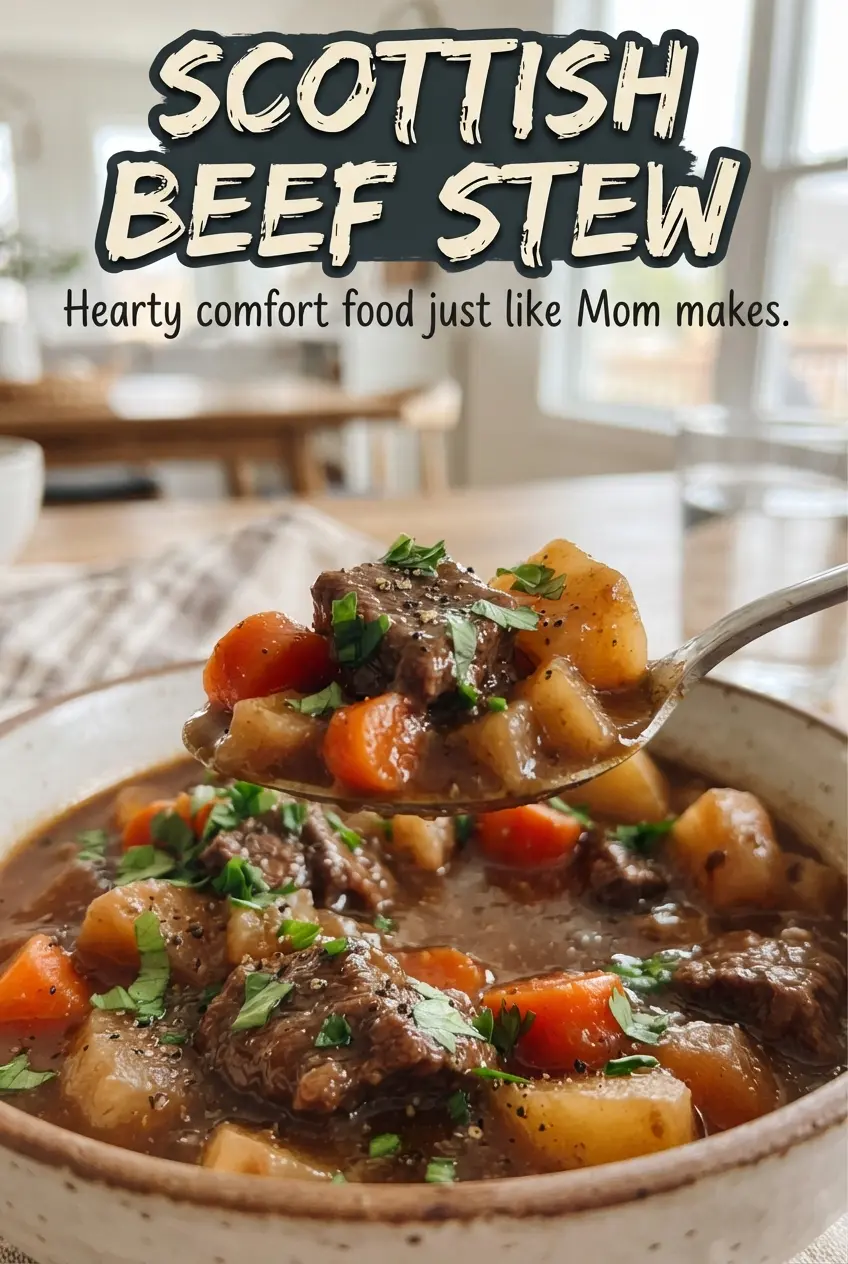
Scottish Beef Stew
Ingredients
Equipment
Method
- Season the beef cubes with salt and black pepper, tossing to coat evenly. You should see a light, speckled seasoning on every piece.
- Add the flour to the seasoned beef and toss until lightly coated. The surface should look dry and dusty rather than wet.
- Heat the butter and vegetable oil in a Dutch oven over medium-high heat, then brown the beef in batches. Cook until deep golden-brown on the outside, about 3–5 minutes per batch, then transfer to a plate.
- Cook the onions and leeks in the same pot for 6 minutes until soft. Stir occasionally until they look glossy and translucent.
- Pour in the Scottish ale (or extra beef broth) and scrape the bottom of the pot to loosen browned bits. Simmer briefly until the liquid looks slightly reduced and the scraping comes clean.
- Add the beef broth, Worcestershire sauce, dried thyme, and the browned beef to the pot. Bring to a simmer so you see steady bubbles around the edges.
- Cover the pot and simmer for 1 1/2 hours. Keep the heat at a gentle simmer, with bubbles that steadily break but do not roll aggressively.
- Stir in the rinsed pearl barley, cubed turnip or swede, and sliced carrots. Make sure the barley is submerged in the broth.
- Simmer uncovered (or partially covered) for 45–60 minutes until the barley and beef are tender. Look for tender beef that yields easily and barley that is fully cooked without being mushy.
- Taste and season to adjust with additional salt and black pepper if needed. Aim for balanced savory flavor and a thick, spoon-coating gravy.
- Top the stew with chopped fresh parsley before serving. Add it at the end so it stays bright green.