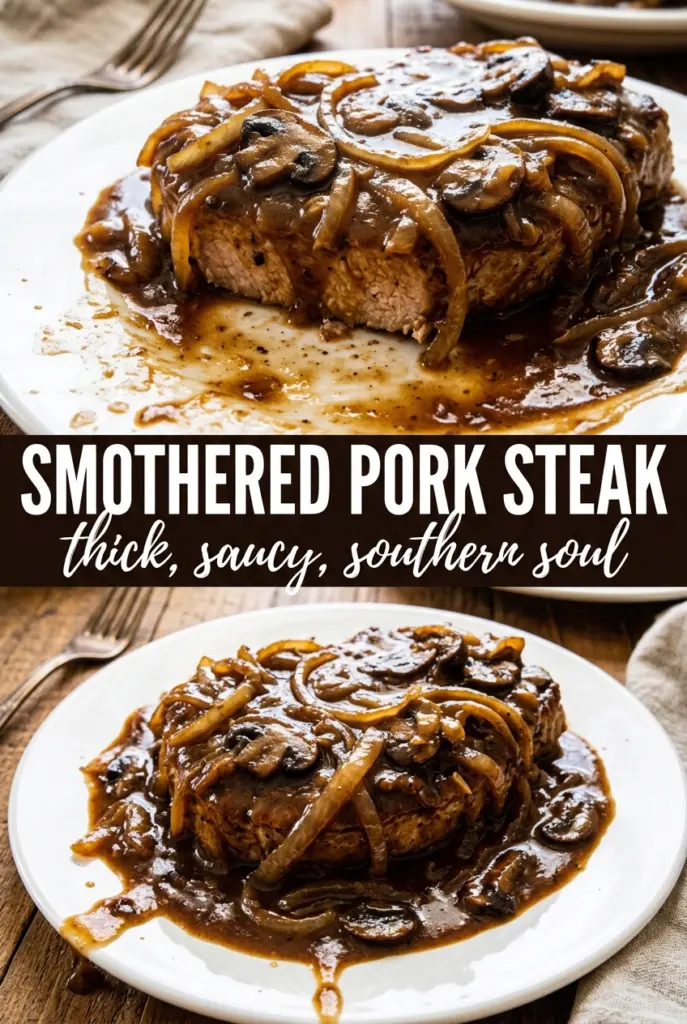
Smothered pork steak earns its place on the table because the meat turns tender without falling apart, and the gravy comes out deep, savory, and clinging to every bite. The sear gives the pork a real crust first, then the onions, mushrooms, and broth turn into a pan gravy that tastes like it cooked for hours even though it didn’t. Spoon it over mashed potatoes, rice, or biscuits and the whole plate starts working together.
What makes this version work is the order. The pork gets dredged lightly in flour before it hits the pan, which helps the gravy thicken later and gives the surface a better brown. Then the onions and mushrooms cook in the same pan, picking up every bit of flavor left behind by the seared meat. The sour cream goes in at the end, off the heat, so the gravy stays smooth instead of grainy or broken.
Below, I’ll walk through the part that matters most: getting the pork tender without drying it out, and building a gravy that turns glossy instead of thin. I’ve also included a few swaps and storage notes for the leftovers, because this dish eats well the next day.
The gravy thickened up beautifully and the pork turned fork-tender right at 25 minutes. I served it over mashed potatoes and my husband went back for seconds before I even sat down.
Save this smothered pork steak for the kind of dinner that turns a simple pan gravy into the best part of the plate.
The Gravy Starts With the Brown Bits, Not the Broth
If the pork ends up tender but the gravy tastes flat, the problem usually started in the pan. You need a good sear on the steaks before the liquid goes in, because those browned bits are what give the gravy its depth. Once the onions and mushrooms start to soften, they help loosen everything from the pan and carry that flavor into the sauce.
The other place people go wrong is rushing the simmer. Pork blade steak needs time in a covered pan to relax and turn spoon-tender, not just heat through. If the gravy looks thin when the pork is done, keep it at a low simmer uncovered for a few minutes after the meat comes out. That’s how it tightens without turning pasty.
- Flour — The light dredge helps the steaks brown and gives the gravy enough body to cling to the meat. Don’t skip it unless you plan to thicken the sauce another way later.
- Pork blade steaks or shoulder steaks — These cuts have enough marbling to braise well. Lean pork chops won’t give you the same tender result in this time frame.
- Chicken broth — It keeps the gravy savory without overpowering the pork. Homemade is great, but a good boxed broth works fine here because the onions, mushrooms, and Worcestershire do a lot of the flavor work.
- Sour cream — This is what rounds out the gravy at the end and gives it a little tang. Full-fat works best; lower-fat versions can split more easily when stirred into hot liquid.
Building the Pan Gravy So It Stays Smooth
Here’s the move that matters most: sear the pork, then use the same pan for the vegetables and liquid. That pan is carrying the flavor you want, and wiping it out would leave the gravy shallow. The onions should turn soft and deeply golden, not burnt, before the garlic goes in for just enough time to smell fragrant.

When the broth and Worcestershire hit the pan, scrape the bottom with a wooden spoon and get every browned spot up into the sauce. Return the pork and keep the heat low enough that the liquid barely bubbles at the edges. If it boils hard, the meat can tighten and the gravy can turn greasy instead of rich.
Season and Sear the Pork
Pat the pork dry, season it well, and dredge it lightly in flour. That flour should look like a thin dusty coat, not a thick breading. Sear the steaks in hot oil until the surface is deep golden and the meat releases easily from the pan. If it sticks, it needs another minute; forcing it tears off the crust.
Cook the Onions and Mushrooms Down
Use the same pan and let the onions and mushrooms take their time. The onions should soften and pick up color, and the mushrooms should lose their raw look and start to brown at the edges. If the pan seems dry, add just a touch more oil. This stage builds the sweet, savory base that makes the gravy taste cooked, not canned.
Braise Until the Pork Gives Easily
Once the broth goes in, tuck the pork back into the pan, cover it, and let it simmer over medium-low heat. You’re looking for very gentle bubbling, not a rolling boil. After about 20 minutes, test the pork with a fork. It should give way without resistance. If it still feels tight, give it another 5 minutes and check again.
Finish With Sour Cream Off the Heat
Pull the pan off the burner before stirring in the sour cream. That keeps the gravy smooth and prevents curdling. Stir until the sauce turns glossy and uniform, then spoon it over the pork right away. The fresh thyme on top is small, but it gives the plate a clean finish against the rich gravy.
How to Adapt This for Different Pans, Tastes, and Leftovers
Make It Dairy-Free
Swap the sour cream for a plain dairy-free sour cream or unsweetened cashew cream. Add it off the heat the same way so the gravy stays smooth. The flavor will be a little less tangy, but the texture stays close.
Make It Gluten-Free
Use a gluten-free all-purpose flour blend for the dredge and verify that your Worcestershire sauce is gluten-free. The flour still helps brown the pork and slightly thickens the gravy, so the dish keeps the same body.
Swap in Pork Chops
Boneless pork chops can work, but they cook faster and dry out sooner. Use a thicker chop and shorten the braise, checking early so they stay juicy. You won’t get quite the same melt-in-your-mouth texture as blade steak, but it still makes a good skillet dinner.
Storage and Reheating
- Refrigerator: Store for up to 4 days. The gravy thickens as it chills, and the pork stays tender.
- Freezer: It freezes well for up to 2 months, though the sour cream gravy may separate slightly when thawed. Freeze in portions for easier reheating.
- Reheating: Warm gently on the stove over low heat with a splash of broth or water. High heat is the mistake here — it can dry out the pork and make the gravy split.
Questions I Get Asked About This Recipe
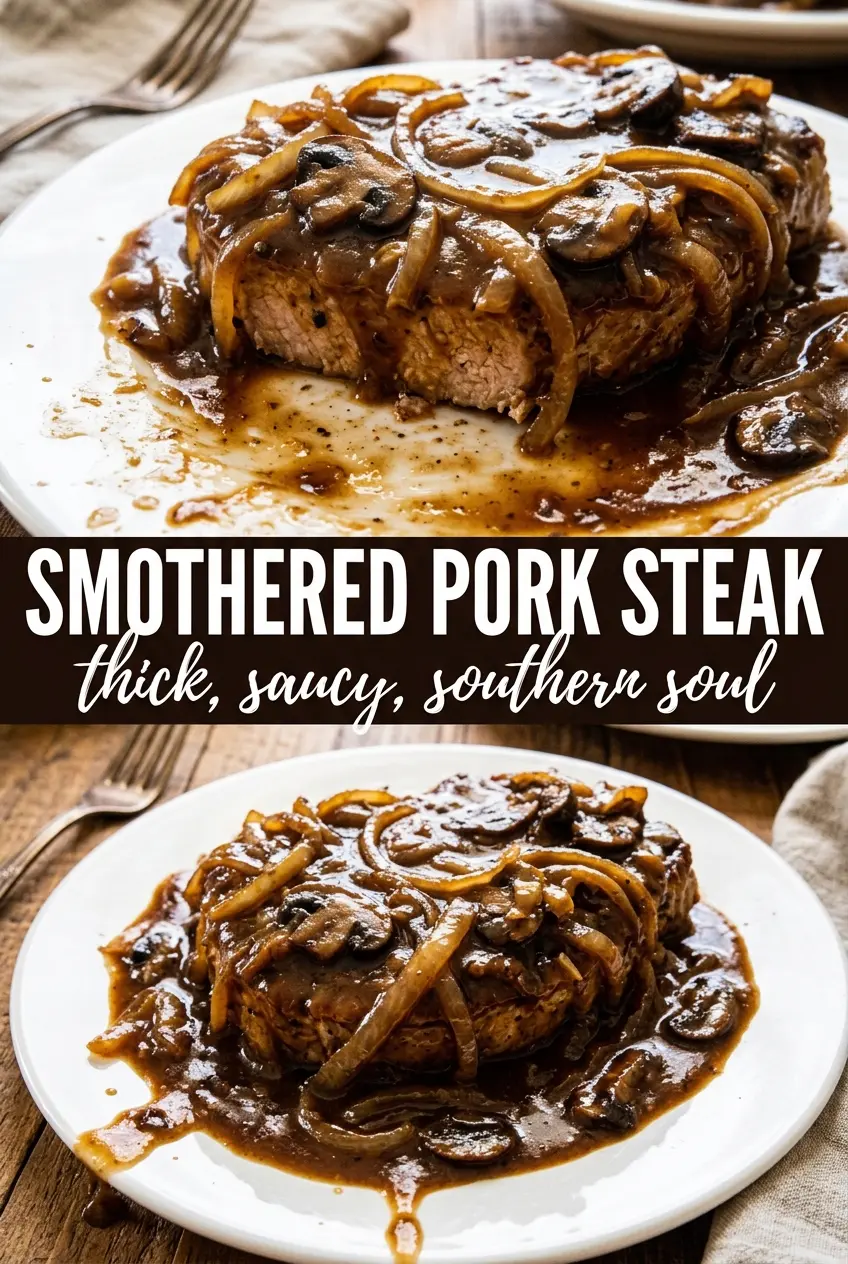
Smothered Pork Steak
Ingredients
Equipment
Method
- Season pork blade steaks with salt, pepper, garlic powder, and paprika to taste, then dredge each steak in flour until coated.
- Set the coated steaks aside while you prepare the pan and aromatics.
- Heat oil in a heavy skillet over medium-high heat until shimmering, then sear the pork steaks for 3–4 minutes per side until golden; set aside.
- In the same pan, add sliced onion and mushrooms and cook for 6–7 minutes, stirring occasionally, until caramelized.
- Add minced garlic and cook for 30 seconds, stirring, until fragrant.
- Pour in chicken broth and stir in Worcestershire sauce, scraping up any browned bits from the pan.
- Return pork steaks to the pan, cover, and braise on medium-low for 20–25 minutes until very tender.
- Remove the pork steaks from the pan and stir sour cream into the gravy until smooth.
- Pour the dark onion gravy over the steaks and garnish with fresh thyme.