
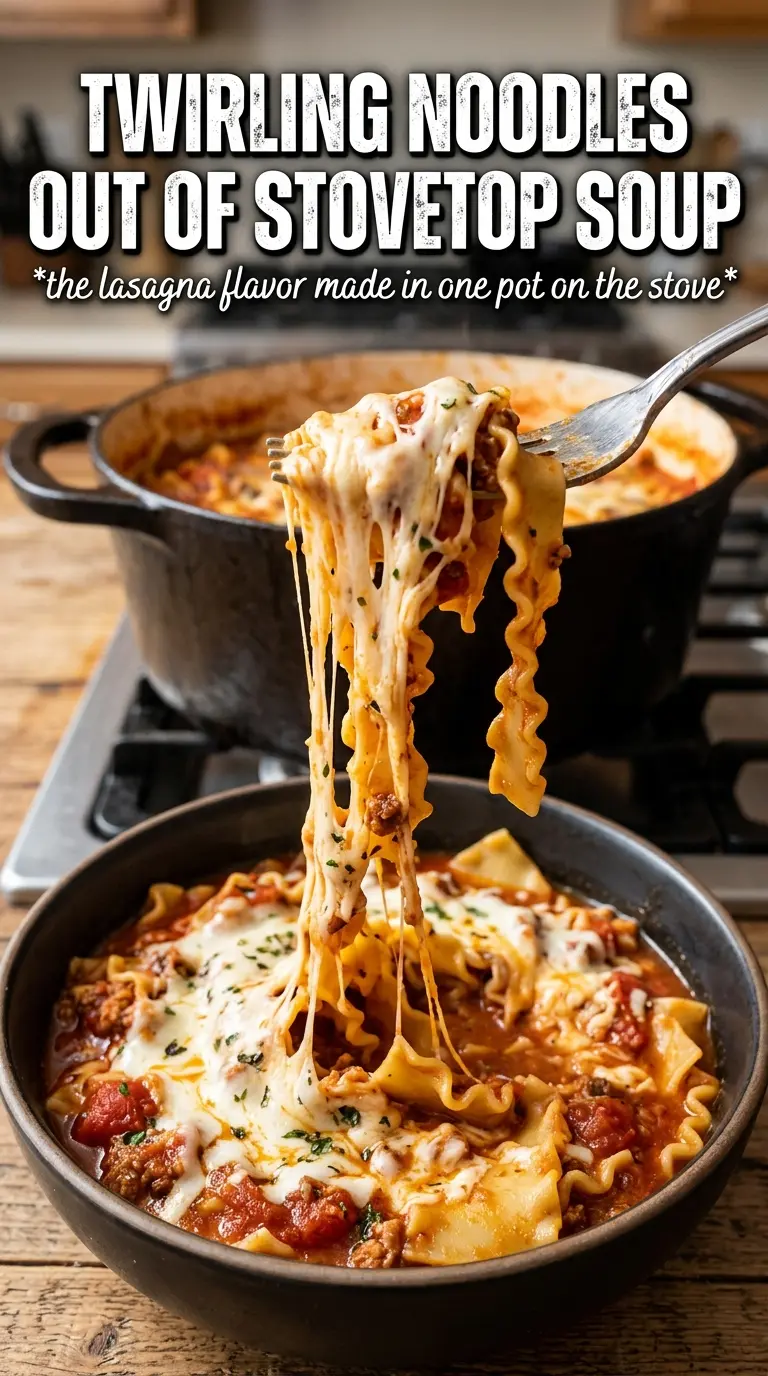
Stovetop lasagna soup hits the bowl with everything people love about lasagna, just in a faster, spoonable form. The broth turns rich and tomatoey, the sausage gives it backbone, and the broken noodles soften into that perfect middle ground between hearty and silky. The best part is the cheese dollop melting into the hot soup, turning each bowl into something creamy, savory, and comforting without any layering or baking.
This version works because the tomato paste gets cooked long enough to lose its raw edge before the broth goes in, and the noodles simmer directly in the soup so they pick up flavor instead of tasting like plain pasta. The fire-roasted tomatoes add a little depth that keeps the broth from tasting flat, and the sausage seasons the whole pot from the start. It comes together in under 30 minutes, but it still tastes like you stood over the stove and built something with care.
The broth turned out rich instead of watery, and the broken noodles stayed tender without getting mushy. My husband went back for a second bowl and said it tasted like lasagna without all the work.
Save this stovetop lasagna soup for the nights when you want all the comfort of lasagna in one quick pot.
The Trick to Keeping the Noodles Tender Instead of Bloated
The biggest failure point in lasagna soup is letting the noodles sit too long in a rolling boil. They keep cooking after the heat is off, and what starts as tender pasta turns soft and swollen fast. This recipe avoids that by adding the broken noodles only after the broth comes to a full boil, then dropping the heat to a steady simmer and checking them early. You want them just tender, with a little bite left in the center, because the soup will continue to thicken as it rests.
The other place this dish can go wrong is overcooking the tomato base before the broth goes in. The tomato paste needs a minute or two in the hot pot so it darkens slightly and loses that sharp, raw taste. That small step gives the broth a deeper, more cooked flavor instead of a thin tomato sauce with water added.
What Each Ingredient Is Doing in the Bowl
- Italian sausage — This is the backbone of the soup. It seasons the broth as it browns, so you get more depth than you’d get from plain ground meat. Mild or hot both work; hot sausage gives you built-in heat, while mild lets the tomato and herbs lead.
- Tomato paste — Don’t skip the cooking time here. A minute or two in the pot turns it from sharp and tinny into something rich and concentrated. That step matters more than using an expensive brand.
- Crushed tomatoes plus fire-roasted diced tomatoes — The crushed tomatoes build the body of the broth, while the diced tomatoes add texture and a little charred sweetness. If you only have regular diced tomatoes, the soup will still work, but it will taste a little flatter.
- Lasagna noodles — Break them into rough 2-inch pieces so they mimic the layered feel of lasagna without turning the bowl awkward to eat. No-boil noodles work here too, but check them a little early because they can soften faster than regular dry noodles.
- Ricotta, mozzarella, and parmesan — This is what gives the soup its lasagna finish. Ricotta brings creaminess, mozzarella melts into the hot broth, and parmesan adds salt and sharpness. Stir the cheeses together just enough to keep the dollop loose and spoonable.
- Fresh basil — Add it at the end. Dried basil in the pot gives background flavor, but fresh basil on top makes the whole bowl taste brighter and keeps the cheese from feeling heavy.
Building the Broth Before the Pasta Goes In
Browning the Sausage
Start with a hot pot and let the sausage get some color before you stir it much. Those browned bits are what give the broth its savory base, and if the meat steams instead of browns, the soup tastes flatter. Drain off excess fat if the pan looks greasy, but leave enough behind to cook the onion. That little bit of fat helps the garlic and tomato paste bloom without sticking.
Cooking Down the Tomato Paste
Once the onion softens and the garlic goes in, stir in the tomato paste and let it cook for a minute or two until it darkens slightly and clings to the bottom of the pot. If it still smells sharp, it needs a little more time. This is the moment that builds depth, because tomato paste needs heat to taste rounded instead of raw.
Simmering the Noodles in the Soup
When the broth and tomatoes are in, bring the pot to a full boil before adding the broken noodles. Then lower it to a steady simmer and stir often so they don’t stick together or settle on the bottom. The noodles should be tender but not collapsing. If they go in too early or boil too hard for too long, they’ll swell and drink up too much broth.
Finishing with the Cheese Dollop
Serve the soup right away and top each bowl with a spoonful of the ricotta mixture. The heat from the soup softens the cheeses without fully melting them, which gives you that lasagna-style contrast of creamy topping and brothy base. If you add the cheese to the pot instead of the bowl, it disappears into the broth and you lose that nice finish.
How to Adjust This Soup Without Losing the Lasagna Feel
Make it dairy-free
Skip the ricotta, mozzarella, and parmesan topping and finish each bowl with a drizzle of good olive oil and chopped basil. The soup itself stays rich and satisfying because the sausage and tomatoes do most of the work. You lose the creamy lasagna-style finish, but the broth still tastes full and savory.
Use ground turkey instead of sausage
Ground turkey works, but it needs help. Add an extra pinch of salt and a little more Italian seasoning, and don’t skip browning it well so the soup still has depth. You’ll get a lighter bowl with less richness, which is great if you want the tomato broth to lead.
Make it gluten-free
Swap in your favorite gluten-free lasagna noodles and watch the pot closely, because they can break down faster than standard pasta. Stir more often near the end of cooking so they don’t clump or stick. The flavor stays the same, but the texture depends on not overcooking them.
Storage and Reheating
- Refrigerator: Store the soup for up to 4 days. The noodles will keep absorbing broth, so expect it to thicken.
- Freezer: Freeze the soup without the noodles for the best texture. Add freshly cooked noodles when you reheat, or the pasta will turn soft and broken.
- Reheating: Warm it gently on the stove over medium-low heat with a splash of broth or water. A hard boil will overcook the noodles and tighten the texture of the broth.