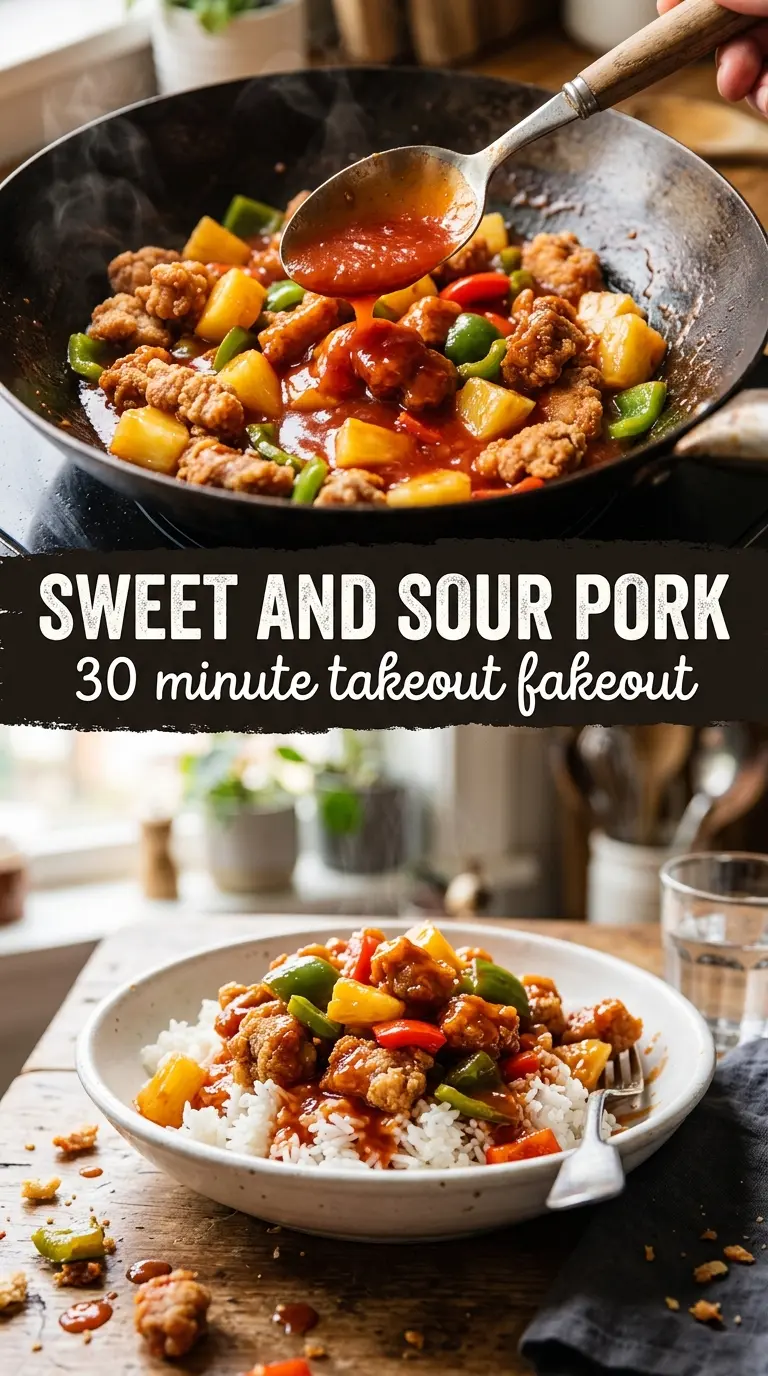
Crispy sweet and sour pork hits the table with the kind of contrast that keeps people going back for another bite: crackly golden pork, glossy red-orange sauce, sharp vinegar, and sweet pineapple all in one forkful. The trick is getting the pork crisp first, then coating it fast enough that it stays shattery around the edges instead of turning soggy in the pan.
This version leans on a simple egg-and-cornstarch marinade, then a flour-and-cornstarch coating that fries up light but sturdy. The sauce is built separately and thickened before the pork goes in, which matters more than most people think. If the pork sits in the sauce too long, the crust softens. If the sauce is too thin, the whole dish turns watery over rice.
Below, I’ll walk through the frying texture, the sauce balance, and the small timing details that keep the peppers bright and the pork crisp. There’s also a storage note and a few practical swaps if you need to work with what’s already in the pantry.
The pork stayed crisp even after I tossed it with the sauce, and the pineapple kept the whole dish bright instead of heavy. My husband said it tasted like the takeout version he always orders, but better.
Sweet and sour pork with crispy fried edges and glossy pineapple sauce is the kind of takeout-style dinner worth keeping on hand for weeknights.
The Crisp Breaks the Moment You Crowd the Pan
The biggest mistake with sweet and sour pork is letting the coating steam instead of fry. Once the pork is coated, it needs hot oil and enough space for the surface to set before it absorbs excess fat. If the pieces touch too much, the coating gets patchy and soft before it ever has a chance to turn crisp.
The sauce timing matters just as much. It should be thickened before the pork goes back in, because a loose sauce runs right off the crust and pools in the bottom of the bowl. You want a sauce that clings in a thin sheen, not one that behaves like soup.
- Batch frying keeps the oil temperature steady. Drop in too much pork at once and the oil falls fast, which gives you greasy coating instead of a clean crunch.
- Cornstarch in both the marinade and the coating helps build a dry, crisp shell. The marinade starts the surface texture, and the flour-cornstarch mix gives it enough structure to survive the toss in sauce.
- High heat for the vegetables keeps the peppers bright and just tender. If they linger too long, they lose their snap and the whole dish starts tasting flat.
What Each Ingredient Is Actually Doing in This Dish
- Pork shoulder or loin — Shoulder gives you a little more richness and stays juicy; loin is leaner and a bit cleaner tasting. Either works, but if you use loin, don’t overcook it in the fryer or it dries out fast.
- Cornstarch — This is doing more than thickening the sauce. It helps the marinade cling to the pork and gives the fry coating that crisp, airy texture you want in Chinese-American takeout-style pork.
- Rice vinegar — It brings the sharp edge that balances the sugar and ketchup. Regular white vinegar works in a pinch, but it tastes harsher, so use a little less and taste the sauce before adding more.
- Pineapple juice and chunks — The juice rounds out the sauce while the chunks add sweet bursts against the fried pork. If you use canned pineapple, keep the juice from the can because it ties the sauce together.
- Ketchup — It gives the sauce its color and body quickly. You can’t fully swap it out and get the same glossy, takeout-style finish, so this is one place where the classic version works best.
The Fry, the Toss, and the Final Glaze
Marinating the Pork
Coat the pork with the egg, soy sauce, and cornstarch, then let it sit for the full 15 minutes so the starch hydrates and the seasoning gets into the meat. The surface should look tacky, not wet. If the pork goes into the coating dripping with marinade, the flour mixture clumps instead of forming an even shell.
Building the Coating
Mix the cornstarch and flour together before you add the pork. That blend is what gives you the crisp shell without making the crust too dense. Press the pieces lightly into the coating, then shake off the excess so you don’t end up with thick, doughy patches after frying.
Frying Until the Shell Sets
Heat the oil to 350°F and fry in small batches until the pork is deep golden and cooked through, about 4 to 5 minutes. The pieces should sound active in the oil and look evenly colored, not pale with dark spots. Pull them as soon as they’re done, then drain on paper towels so the coating stays light.
Thickening the Sauce and Tossing Fast
Stir-fry the peppers and pineapple over high heat for just 2 minutes, then pour in the sauce and bring it to a boil until it turns glossy and thick. The moment it coats the back of a spoon, add the pork and toss quickly. If you wait too long, the sauce tightens too much and turns sticky instead of silky.
How to Adjust the Recipe Without Losing the Takeout Feel
Make it gluten-free
Use gluten-free soy sauce and swap the flour in the coating for more cornstarch or a gluten-free all-purpose blend. The texture will still be crisp, but the shell will be a little lighter and less bread-like.
Use chicken instead of pork
Boneless chicken thighs work best here because they stay juicy through frying and tossing. Cut them into the same size pieces and fry just until cooked through; chicken breasts will work too, but they dry out faster.
Cut the sugar a little
If you like a sharper sauce, reduce the sugar by 1 tablespoon and add a splash more vinegar. The sauce will taste less candy-like and more balanced, though the glaze won’t be quite as sticky-smooth.
How to make it ahead
Fry the pork and cook the sauce separately, then store them apart. Reheat the pork in a hot oven or air fryer before tossing it with the sauce so the crust wakes back up instead of going limp in the microwave.
Storage and Reheating
- Refrigerator: Store leftovers for up to 3 days. The pork will soften once it’s sauced, but the flavor holds up well.
- Freezer: The sauced dish doesn’t freeze well because the crust loses its texture. If you want to freeze it, freeze the fried pork and sauce separately for up to 1 month.
- Reheating: Reheat the pork in a 375°F oven or air fryer until hot and crisp, then warm the sauce in a pan and toss together right before serving. Microwaving the whole dish at once turns the coating soggy fast.
Questions I Get Asked About This Recipe

Sweet and Sour Pork
Ingredients
Equipment
Method
- Marinate the pork in egg, soy sauce, and cornstarch for 15 minutes.
- Mix cornstarch and flour, then coat the marinated pork pieces thoroughly.
- Deep-fry the coated pork at 350°F in batches for 4–5 minutes until golden and cooked through, then drain on paper towels.
- Whisk ketchup, rice vinegar, sugar, soy sauce, cornstarch, and pineapple juice together until smooth.
- Stir-fry red bell pepper, green bell pepper, and pineapple in 1 tablespoon oil over high heat for 2 minutes.
- Pour the sauce into the pan, bring to a boil until thickened, then add the crispy pork and toss to coat.
- Serve the sweet and sour pork immediately over rice.