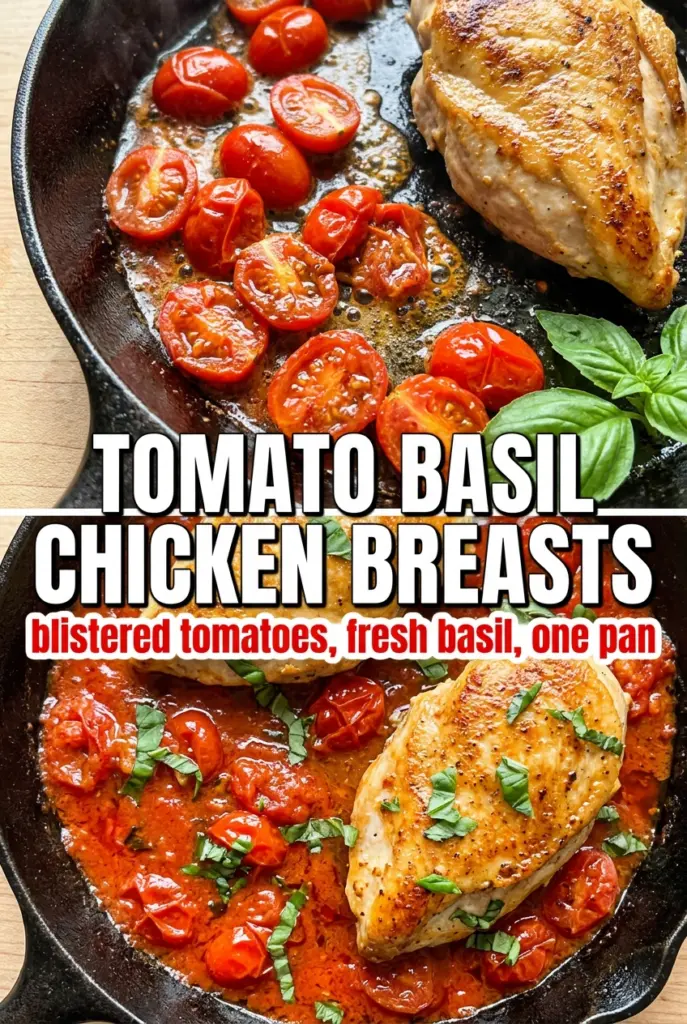
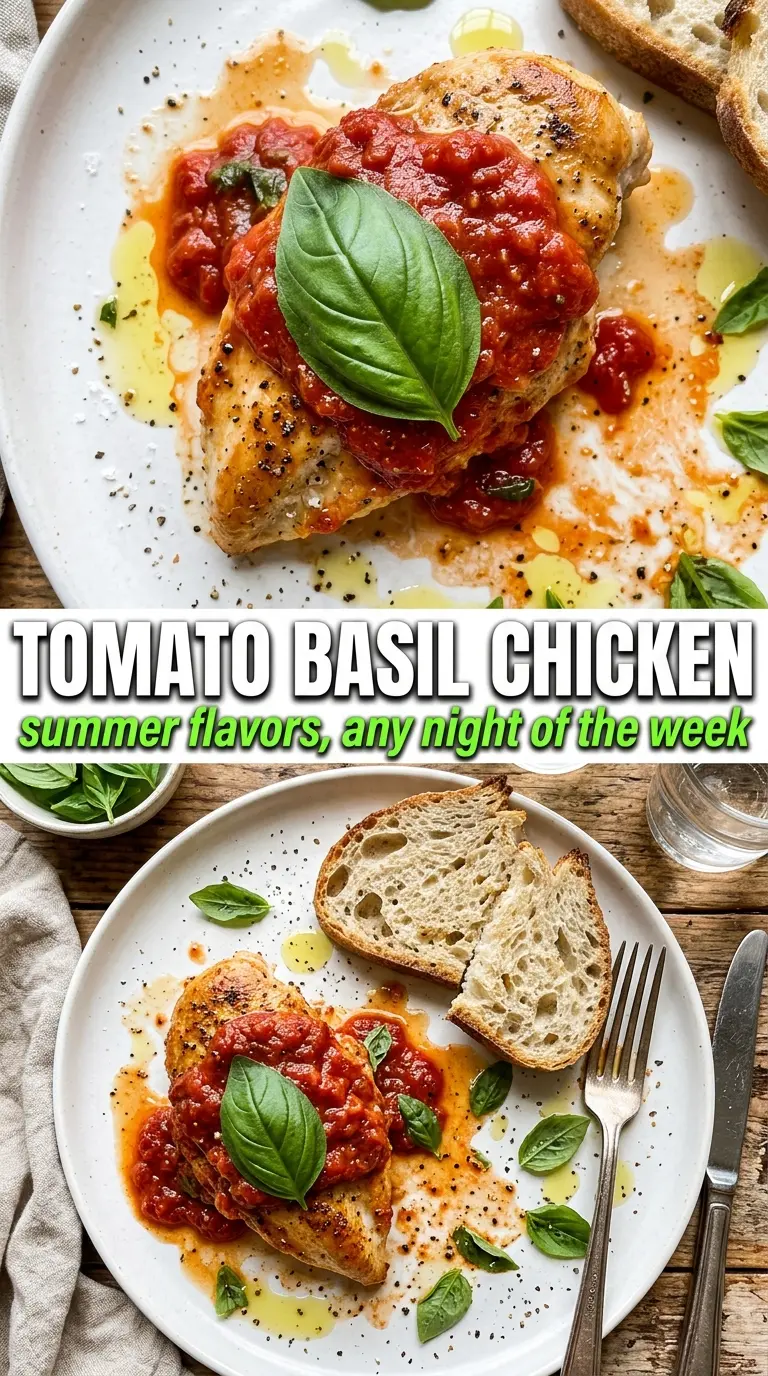
Golden-seared chicken breasts tucked into a bright tomato basil sauce earn a regular place on the dinner rotation for a simple reason: they taste like you worked harder than you did. The chicken stays juicy under a quick pan sauce, the tomatoes break down just enough to turn glossy and sweet, and the basil goes in at the end so it keeps its fresh, peppery edge. It’s the kind of skillet dinner that looks rustic and polished at the same time.
The trick here is building the sauce in the same pan you used for the chicken. Those browned bits on the bottom are the base of the flavor, and the brief splash of white wine or broth loosens them without making the sauce watery. I also like finishing with a little balsamic vinegar, because it pulls the tomatoes into sharper focus and keeps the dish from tasting flat.
Below, you’ll find the small details that matter most: how long to sear the chicken without drying it out, when the tomatoes should be left alone to burst, and which substitutions still give you a skillet dinner worth repeating.
The tomatoes broke down into this glossy sauce and the chicken stayed juicy all the way through. I loved how the basil went in at the end — it tasted fresh, not cooked down.
Save this tomato basil chicken skillet for nights when you want juicy chicken, burst tomatoes, and fresh basil in one pan.
The Secret to Keeping the Chicken Juicy While the Sauce Finishes
Chicken breasts dry out when they spend too long in the pan, especially after the sauce starts reducing. The safer move is to sear them first until they’re golden, then pull them out while you build the tomatoes and pan juices. They go back in only for the final simmer, which warms them through without cooking the edges into ribbons.
Another thing that matters here is heat control. If the pan is screaming hot when the wine or broth goes in, it evaporates too fast and never turns into sauce. A lively bubble is what you want, not a hard boil. That middle ground gives the tomatoes time to soften and the liquid time to concentrate.
What the Tomatoes, Basil, and Parmesan Are Each Doing Here
- Chicken breasts — Boneless, skinless breasts keep this fast and clean, but they need even thickness to cook well. If one side is much thicker, pound it lightly so the whole piece finishes at the same time. That’s the difference between juicy and dry.
- Cherry tomatoes — These are the backbone of the sauce. They burst into a naturally sweet, jammy texture that larger tomatoes rarely match in a quick skillet. If your tomatoes are very large, cut them smaller so they break down before the chicken overcooks.
- Fresh basil — Add it at the end, not early. Heat dulls basil fast, and this dish depends on that bright, green finish to keep the sauce from tasting heavy. Whole leaves on top make the dish look and taste fresher.
- Shaved Parmesan — Parmesan brings salt and a little nuttiness, but it’s not there to melt into the sauce completely. Shaved pieces soften on contact and give each bite a savory finish. Use the real stuff if you can; pre-shredded cheese doesn’t behave the same way and can clump instead of melting smoothly.
- Dry white wine or chicken broth — Wine adds sharper depth, while broth keeps the sauce rounder and a little milder. Either one works, but the wine gives the pan sauce a cleaner edge that plays nicely with the tomatoes and balsamic vinegar.
Building the Pan Sauce in the Right Order
Searing the Chicken First
Season the chicken well before it hits the skillet. The outside should pick up a deep golden crust, and the chicken should release from the pan without a fight when it’s ready to turn. If it sticks badly, it needs another minute. Once both sides are seared, move it to a plate so it doesn’t overcook while the sauce starts.
Letting the Tomatoes Break Down
Garlic only needs about 30 seconds in the hot pan before the tomatoes go in. Any longer and it can turn bitter. Add the halved tomatoes and leave them alone long enough to blister, then stir just enough to help them collapse and release their juices. If the pan looks dry, the tomatoes need another minute, not more liquid.
Reducing the Liquid
After the wine or broth goes in, the pan should bubble steadily and smell sharp for a moment before it settles. That short reduction concentrates the sauce and cooks off the raw edge from the wine. Stir in the Italian seasoning, red pepper flakes, and balsamic vinegar once the liquid has calmed down a bit, then return the chicken and spoon sauce over the top so it finishes in the juices.
Finishing With Basil and Cheese
Fresh basil goes in at the very end, after the heat has dropped a little. That keeps the leaves fragrant instead of wilted and dark. Parmesan can go over the top right before serving, while the sauce is still hot enough to soften it slightly. A drizzle of olive oil gives the skillet a glossy finish and rounds out the sharp edges.
How to Adapt This Skillet for Different Nights
Make It Dairy-Free
Skip the Parmesan and finish with a little extra olive oil and a pinch of salt. You’ll lose the salty, nutty topping, but the sauce still has enough body from the tomatoes and pan juices to stand on its own.
Use Chicken Thighs Instead
Boneless thighs work well here and stay even juicier, though they usually need a few extra minutes to cook through. The flavor gets a little richer, and the sauce tastes a touch deeper because thighs bring more fat to the pan.
Make It Gluten-Free Without Changing the Method
This recipe is naturally gluten-free as written if your broth is gluten-free. The important part is checking the label on the broth or wine substitute, since that’s where hidden additives usually show up.
Swap in Grape Tomatoes When Cherry Tomatoes Are Out
Grape tomatoes work just as well, though they tend to hold their shape a little longer before bursting. Cut any especially large ones in half so the sauce still develops quickly and doesn’t leave you waiting on the tomatoes to soften.
Storage and Reheating
- Refrigerator: Store leftovers in an airtight container for up to 3 days. The basil will darken a bit, but the flavor stays good.
- Freezer: Freeze the chicken and sauce without the basil and Parmesan for up to 2 months. Thaw overnight in the fridge before reheating.
- Reheating: Warm gently in a skillet over low heat with a splash of broth if the sauce has tightened up. High heat can push the chicken past juicy and make the tomatoes taste muddy.
Questions I Get Asked About This Recipe
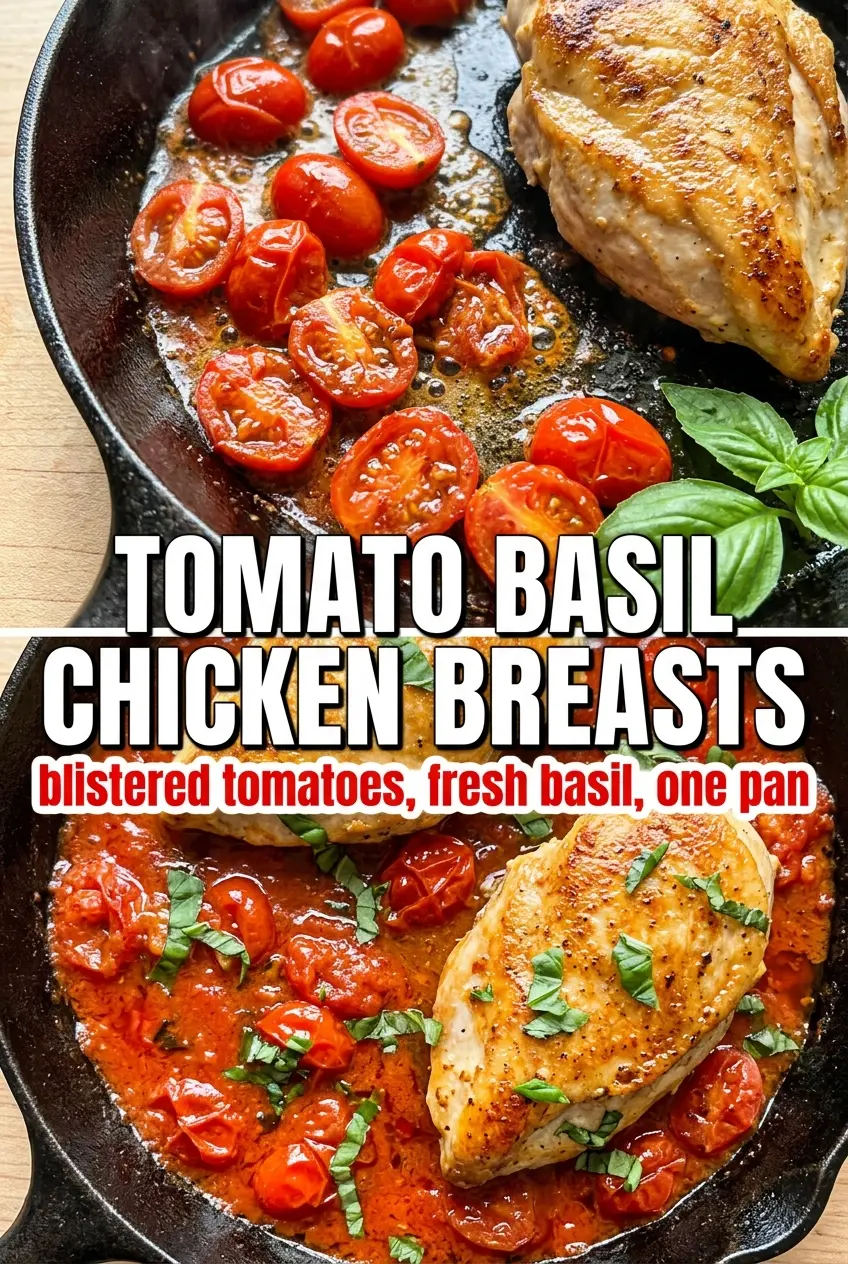
Tomato Basil Chicken Breasts
Ingredients
Equipment
Method
- Season the chicken breasts with salt, pepper, garlic powder, and Italian seasoning to taste.
- Heat olive oil in a large skillet over medium-high heat and sear the chicken for 5-6 minutes per side until golden and the internal temperature reaches 165°F; remove to a plate.
- In the same pan, cook the minced garlic for 30 seconds, stirring so it doesn’t brown.
- Add the halved cherry tomatoes and cook for 3-4 minutes until they burst and release their juices.
- Pour in the white wine and let it bubble for 1 minute.
- Stir in the dried Italian seasoning, red pepper flakes, and balsamic vinegar.
- Return the chicken to the pan and spoon the tomato sauce over each breast; simmer for 2 minutes.
- Scatter the chiffonade fresh basil over the top.
- Finish with shaved Parmesan and a drizzle of extra olive oil before serving.