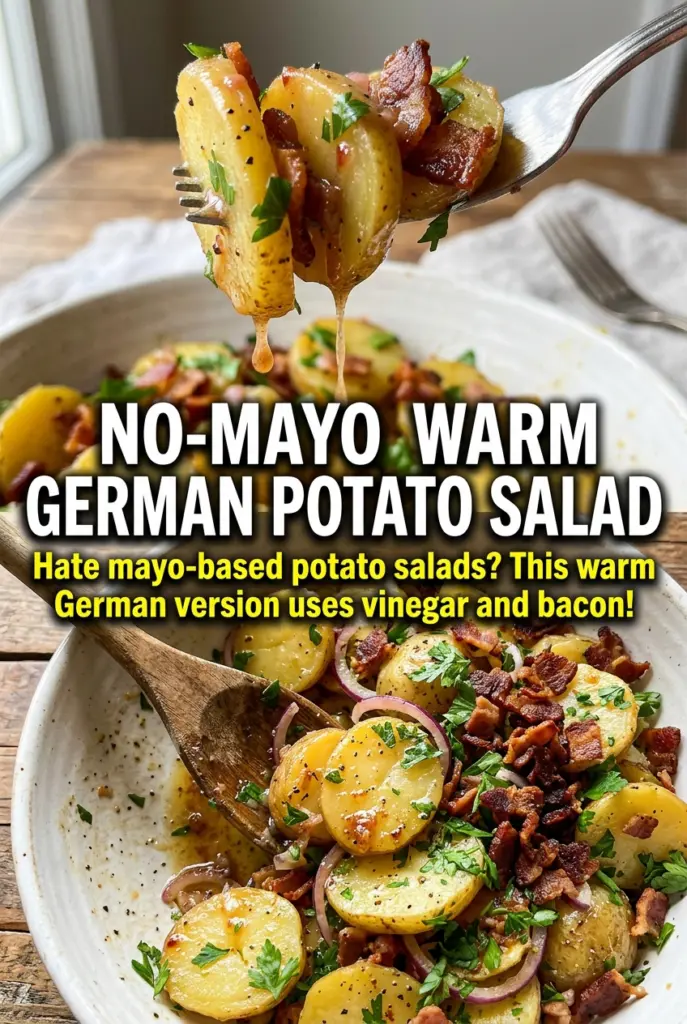
Warm German potato salad lands on the table with tender potatoes that hold their shape, crisp bacon, and a tangy dressing that soaks in while everything is still hot. It’s the kind of side dish that disappears fast because it tastes sharp, savory, and just a little sweet without leaning on mayonnaise at all.
The trick is keeping the potatoes warm when the dressing goes on. That’s what lets the vinegar, mustard, and broth seep into the slices instead of sliding off the surface. Red potatoes work especially well here because they stay intact after boiling, which gives you a salad with definition instead of a bowl of mashed edges.
Below, I’ve laid out the small details that make this version work: how to keep the bacon drippings useful instead of greasy, why the dressing is built in the same pan, and what to do if you want to make it a little lighter or feed a bigger crowd.
The potatoes held their shape and the bacon-vinegar dressing soaked in perfectly. I served it warm and it tasted even better after sitting for 10 minutes.
Save this warm German potato salad for the nights when you want bacon, tangy vinegar, and tender red potatoes all in one bowl.
The Part Most Potato Salads Get Wrong: Letting the Dressing Hit Cold Potatoes
Warm German potato salad depends on timing more than almost anything else. If the potatoes go into the dressing after they’ve cooled completely, they absorb less flavor and the vinaigrette stays on the outside. Hot potatoes act like a sponge, especially when they’re sliced and have lots of surface area, so the tangy dressing settles into the center instead of just coating the bowl.
The other place people lose this dish is with the bacon fat. You want enough drippings left in the pan to soften the onion and carry the vinegar, but not so much that the dressing feels heavy. Three tablespoons is the sweet spot here. It gives the salad depth without turning it greasy.
- Red potatoes — Their waxy texture keeps the slices intact after boiling. Russets break down too easily and turn the salad soft.
- Bacon drippings — This is the base of the dressing, and it brings a smoky edge that oil alone can’t match. If you have less than three tablespoons, top it up with a little neutral oil.
- Apple cider vinegar — The sharpness is what makes the salad taste alive. White vinegar works in a pinch, but it’s a little harsher and less round.
- Dijon mustard — It helps the dressing emulsify and gives it a little backbone. Grainy mustard can work, but the texture will be a little looser.
What the Bacon, Broth, and Mustard Are Each Doing in the Bowl
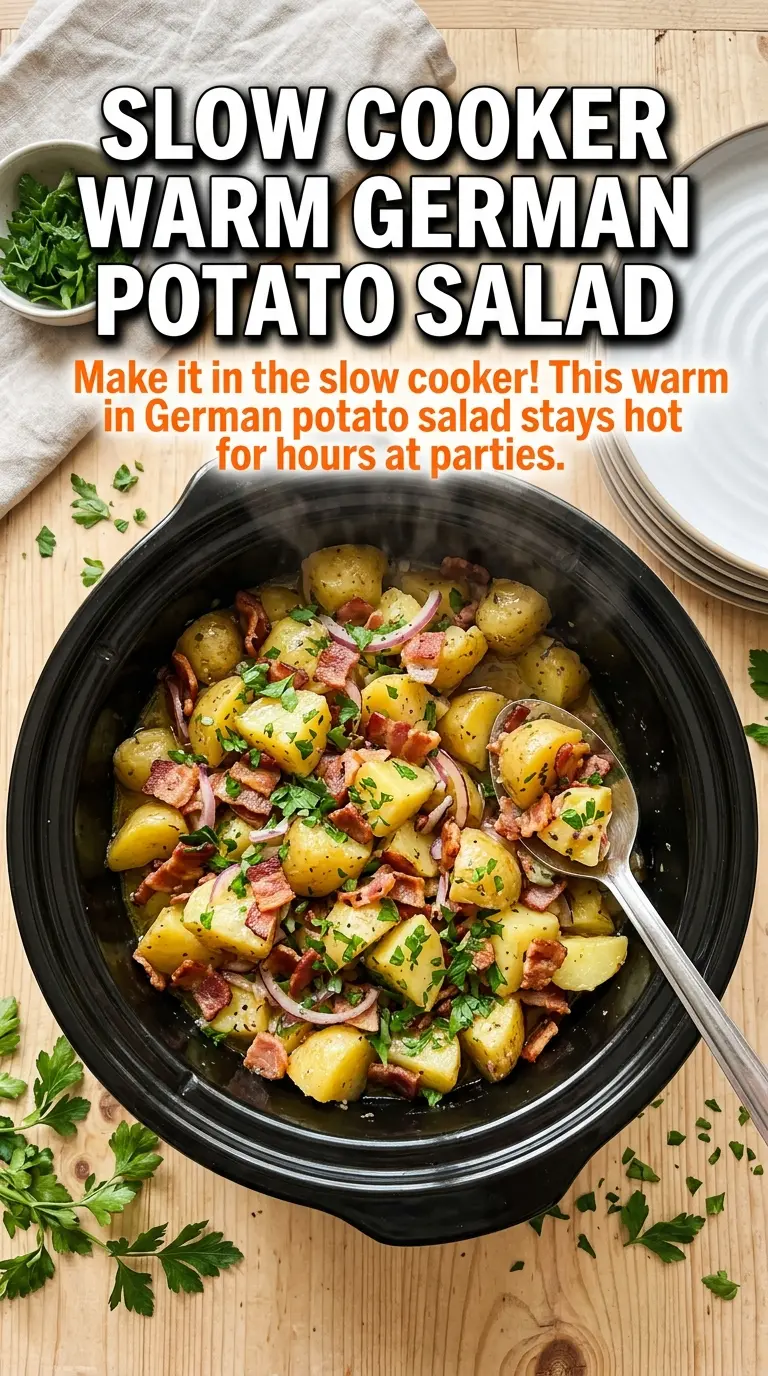
The bacon does more than add crunch. It seasons the whole salad and gives you the fat that carries the onion and vinegar into the potatoes. Cook it until crisp enough to crumble cleanly, because limp bacon gets lost once it hits the warm bowl.
The chicken broth keeps the dressing from tasting sharp or one-note. It stretches the vinegar and sugar into something that tastes balanced instead of aggressively acidic. Use a good broth here if you can, because there isn’t much else in the dressing to hide behind.
Dijon is the quiet helper. It doesn’t announce itself, but it keeps the dressing from separating and makes the whole thing taste more complete. If you skip it, the salad still works, but the dressing won’t cling quite the same way.
Building the Dressing While the Potatoes Are Still Hot
Boiling the Potatoes Without Turning Them to Mush
Slice the potatoes evenly so they cook at the same rate, then boil them until a knife slides in with just a little resistance. If they’re cooked past tender, they’ll start to crumble when you toss them with the dressing. Drain them well and let the steam escape for a minute so the bottom of the bowl doesn’t collect water and dilute the vinaigrette.
Rendering the Bacon and Softening the Onion
Cook the bacon until crisp, then scoop it out and reserve the drippings in the pan. The onion goes into those drippings and should soften, not brown hard, because this dish wants a mellow savory base rather than caramelized sweetness. If the pan looks too dry, the onion will stick and the dressing will taste scorched instead of balanced.
Finishing the Vinaigrette in the Pan
Add the vinegar, sugar, mustard, and broth straight into the warm pan and bring it to a gentle simmer. Stir until the sugar dissolves and the dressing looks slightly glossy. That sheen tells you the mustard has blended in and the flavors are married enough to pour over the potatoes.
Bringing It All Together While It’s Warm
Pour the hot dressing over the potatoes right away, then add the bacon and parsley and toss gently. Don’t stir aggressively or the slices will break apart and the texture will go muddy. Serve it warm, because that’s when the bacon stays crisp and the vinegar smells bright instead of flat.
How to Adjust This Salad Without Losing What Makes It Taste Like It Should
Make It Lighter on the Bacon Fat
If you want a less rich salad, use only 2 tablespoons of the bacon drippings and make up the rest with a neutral oil. You’ll lose a little smoky depth, but the vinegar and mustard still carry the dressing, and the texture stays clean instead of greasy.
Skip the Bacon and Keep It Vegetarian
Use olive oil or a neutral oil in place of the drippings and add a pinch of smoked paprika for a little of that savory edge. The salad won’t taste the same, but the tangy dressing and tender potatoes still make a strong side dish.
Use White Potatoes If That’s What You Have
Yukon Gold potatoes will work if red potatoes aren’t available. They’re a little more buttery and less firm, so stir them even more gently and watch the boil closely. The salad will be softer, but the dressing still clings nicely.
Storage and Reheating
- Refrigerator: Store in an airtight container for up to 4 days. The potatoes will absorb more dressing as they sit, so the salad gets a little more pronounced and less shiny.
- Freezer: I don’t recommend freezing this salad. Potatoes change texture after thawing and the vinaigrette turns watery.
- Reheating: Warm it gently in a skillet over low heat or in short bursts in the microwave. High heat makes the potatoes break apart and can make the bacon tough, so use just enough heat to take the chill off.
Answers to the Questions Worth Asking
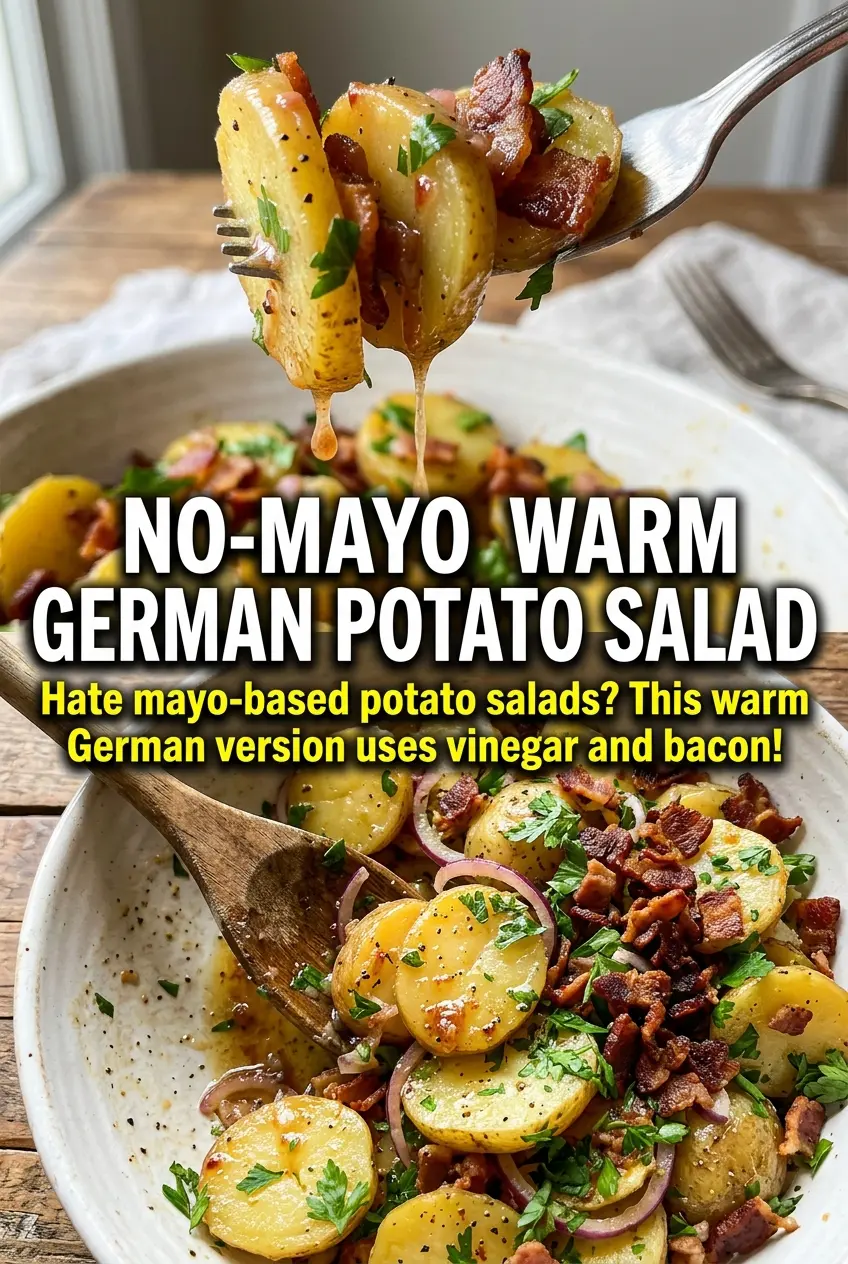
Warm German Potato Salad
Ingredients
Equipment
Method
- Bring a Dutch oven of water to a boil and boil the sliced red potatoes until tender, about 15 minutes, until a knife slides in easily. Visual cue: slices look slightly softened and are no longer firm at the center.
- Drain the potatoes thoroughly and keep them warm. Visual cue: no standing water remains in the pot or strainer.
- Cook the bacon in a cast iron skillet until crispy, then drain, crumble, and set aside. Visual cue: bacon pieces are browned and crisp; reserve 3 tablespoons drippings.
- Sauté the diced onion in the reserved bacon drippings until soft. Visual cue: onions turn translucent and slightly golden, about a few minutes on medium heat.
- Add apple cider vinegar, sugar, Dijon mustard, and chicken broth to the skillet, then bring the mixture to a simmer. Visual cue: small bubbles form around the edges and the dressing looks slightly glossy.
- Pour the hot dressing over the warm boiled potatoes and let them absorb it briefly. Visual cue: potatoes look coated and glistening.
- Add the crumbled bacon and chopped fresh parsley, then toss gently. Visual cue: bacon is evenly distributed and parsley flecks are bright green.
- Serve the warm German potato salad immediately, seasoning with salt and pepper to taste. Visual cue: steam is visible and the dressing coats the potato slices.