Warm potatoes, wilted spinach, and hot bacon vinaigrette make this salad feel hearty enough to stand in for dinner, but it still lands like a side dish that belongs next to anything from roast chicken to grilled sausages. The potatoes catch the sharp dressing while they’re still steaming, the spinach softens just enough to turn silky, and the bacon adds salt and crunch in every bite.
The trick is timing. The vinaigrette has to go over the potatoes while they’re hot so the mustard and vinegar cling instead of sliding off, and the spinach needs that heat to wilt without turning swampy. Red potatoes hold their shape after boiling, which matters here because you want clean slices, not a bowl of mash dressed as a salad.
Below, I’ll walk through the part that matters most: how to keep the potatoes tender but intact, how to build the bacon vinaigrette in the same pan, and what to do if you want to serve this warm salad for a crowd without losing that just-made texture.
The hot bacon dressing coated the potatoes perfectly, and the spinach wilted just enough without turning soggy. I served it right away and the bowl was scraped clean.
Love the way hot bacon vinaigrette melts into the potatoes and wilts the spinach? Save this warm spinach potato salad for the next night you want a side that eats like a full meal.
Why the Warm Dressing Has to Hit the Potatoes First
The biggest mistake with a salad like this is letting everything cool down before it gets dressed. Once the potatoes are lukewarm, the vinaigrette sits on the surface instead of soaking in, and the spinach stays stubbornly raw in the middle of the bowl. Hot potatoes change that. They catch the vinegar, mustard, and bacon fat immediately, which gives the whole dish a fuller, more integrated taste.
That’s also why red potatoes are the right choice here. They hold together after boiling and slice cleanly, so you get distinct pieces that can absorb the dressing without falling apart. If your potatoes are overcooked, they’ll break when you toss them, and the salad turns heavy fast. Stop boiling when a knife slides in with almost no resistance, then drain them right away so they don’t keep steaming in the pot.
What Each Ingredient Is Actually Doing in This Bowl

- Red potatoes — These stay firm and sliceable after boiling, which matters more here than fluffiness. Waxy potatoes hold onto the vinaigrette better than russets, which can get mealy and break down too much.
- Spinach — Fresh spinach wilts from the heat of the potatoes and dressing, so you don’t need to cook it separately. Baby spinach works best because the leaves are tender and fold into the salad without turning stringy.
- Bacon — The bacon does two jobs: it adds crisp, salty bits at the end, and the drippings become the base for the vinaigrette. Thick-cut bacon is fine, but standard bacon renders a little more efficiently for the dressing.
- Red wine vinegar and Dijon mustard — Together they cut the richness of the bacon fat and keep the salad from tasting greasy. Dijon is doing more than flavoring; it helps emulsify the dressing so it clings to the potatoes instead of separating.
- Onion — Cooking the onion in the bacon drippings softens its bite and pulls out a little sweetness. Dice it small so it blends into the dressing instead of dominating the bowl.
- Sugar — Just a little sugar rounds out the vinegar and makes the dressing taste balanced instead of sharp. You don’t need enough to make it sweet; you need enough to keep the tang in line.
Building the Salad While the Dressing Is Still Hot
Cooking the Potatoes to the Right Point
Boil the potato slices until they’re tender but still intact. You want them cooked through enough that a fork goes in without force, but not so soft that the edges start to fray. Drain them well and keep them warm; if they sit in a colander too long, they lose the heat that helps them drink in the dressing.
Rendering the Bacon and Softening the Onion
Cook the bacon until it’s crisp, then pull it out and keep the drippings in the pan. The onion goes into that fat and needs just enough time to turn soft and translucent, not brown and sweet like French onion soup. If the onion starts to scorch, the dressing will pick up a bitter note that’s hard to hide once it hits the spinach.
Whisking the Vinaigrette in the Pan
Add the vinegar, Dijon, sugar, salt, and pepper straight to the warm drippings and bring it to a simmer. The mixture should look glossy and slightly thickened, not oily and separated. If the heat is too high, the vinegar can sharpen aggressively and the mustard can seize up; keep it at a gentle simmer so everything blends smoothly.
Tossing While the Potatoes Are Steaming
Put the spinach in a large bowl, add the hot potatoes, and pour the dressing over the top right away. Toss gently but thoroughly so the leaves collapse just enough and the potatoes get coated on all sides. The spinach should look wilted and glossy, not cooked down into a puddle, and the bacon goes on at the end so it stays crunchy.
How to Adapt It Without Losing the Warm, Tangy Finish
Make it vegetarian
Skip the bacon and cook the onion in a few tablespoons of olive oil instead. You’ll lose the smoky depth and some of the richness, but the vinegar, mustard, and hot potatoes still make a sharp, satisfying warm salad. A pinch of smoked paprika helps replace some of the bacon’s savory edge.
Make it dairy-free and gluten-free as written
This recipe already fits both of those needs without any changes. The texture comes from the potatoes and bacon fat, not from cream or flour, so there’s nothing to replace as long as your mustard is labeled gluten-free if that matters for your kitchen.
Add hard-boiled eggs for a heartier side
Chopped eggs turn this into something closer to a lunch salad and soften the sharpness of the vinaigrette. Add them after tossing so they don’t break up in the bowl, and keep the pieces chunky so they hold their shape next to the warm potatoes.
Storage and Reheating
- Refrigerator: Store leftovers in an airtight container for up to 3 days. The spinach will soften more as it sits, and the dressing will mellow.
- Freezer: I don’t recommend freezing this salad. The potatoes turn grainy and the spinach collapses into an unpleasant texture after thawing.
- Reheating: Warm leftovers gently in a skillet over low heat or eat them cold. If you reheat too hard, the potatoes split and the spinach turns limp fast, so use low heat and stop as soon as the salad loses its chill.
Answers to the Questions Worth Asking
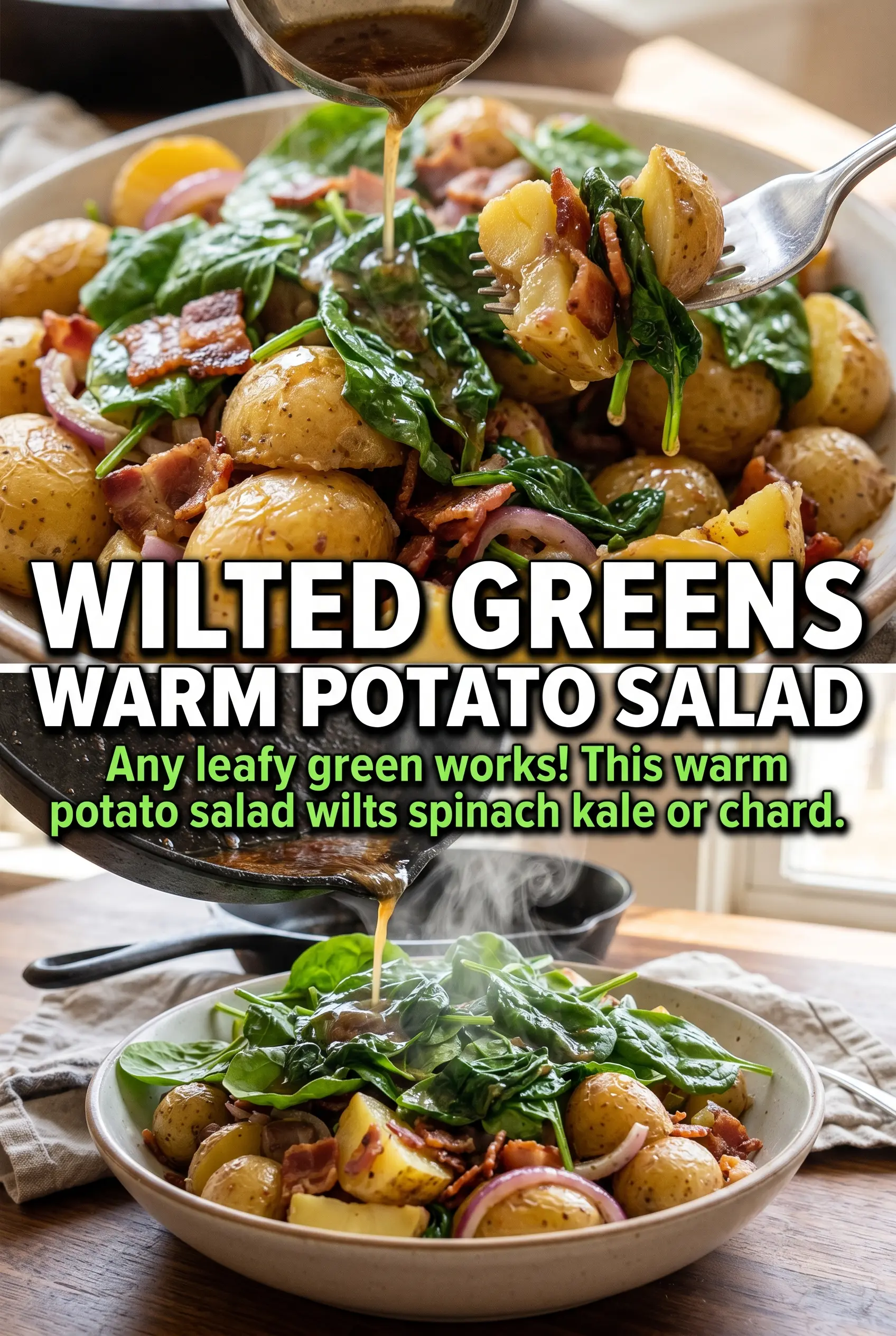
Warm Spinach Potato Salad with Bacon Vinaigrette
Ingredients
Equipment
Method
- Bring a large pot of water to a boil and add the sliced red potatoes; boil until tender, about 20 to 25 minutes, until a knife slides in easily. Drain the potatoes and keep them warm so they stay ready for the hot dressing.
- Cook the bacon in a skillet over medium heat until crispy, about 8 to 10 minutes, then transfer it to a plate and reserve the drippings. Add the diced onion to the bacon drippings and sauté over medium heat for 4 to 6 minutes until softened and lightly golden.
- Add the red wine vinegar, Dijon mustard, sugar, salt, and pepper to the skillet; bring the mixture to a simmer for 2 to 3 minutes. Keep it hot so the dressing will wilt the spinach on contact.
- Place the fresh spinach in a large bowl and add the warm potatoes. Pour the hot dressing over the spinach and potatoes and toss immediately for 30 to 60 seconds, until the spinach is wilted and glossy.
- Crumble the crispy bacon on top and serve immediately while warm, with the salad still steaming.