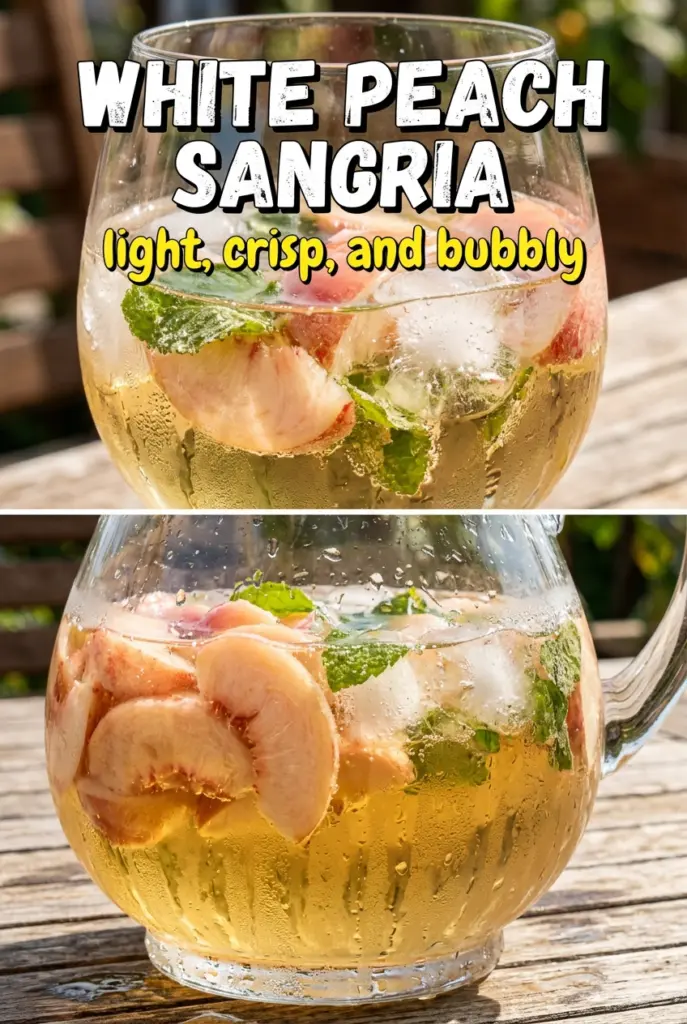
Pale gold white peach sangria is the kind of pitcher drink that disappears faster than you expect because it stays bright, fruity, and just crisp enough to keep people coming back for another glass. The peaches soften into the wine, the pear adds a clean sweetness, and the citrus keeps the whole thing from tasting flat or syrupy. Served ice-cold, it lands somewhere between refreshing and a little celebratory, which is exactly why it earns its place at summer gatherings.
The trick is giving the fruit time to mingle with the wine before you add the sparkling water. That resting time pulls flavor into the base without dulling the bubbles later. A dry white wine keeps the drink balanced, while peach schnapps boosts the peach flavor without making the sangria taste heavy. Fresh mint goes in at the end of the mixing stage so it perfumes the pitcher instead of turning bitter.
Below, I’ll walk you through the exact timing that keeps the sangria lively, plus the small ingredient choices that make the biggest difference. If you’ve ever had sangria taste like watered-down juice, this version fixes that.
I let it chill for 5 hours and the peaches actually tasted like peaches instead of just floating there. The sparkling water at the end kept it light, and the mint made it taste fresh instead of too sweet.
Save this white peach sangria for the next pitcher drink that needs ripe fruit, crisp bubbles, and a four-hour chill to taste its best.
The Part That Keeps White Peach Sangria Bright Instead of Flat
The biggest mistake with sangria is rushing the fruit infusion and then trying to fix the flavor with more sugar. That just gives you a sweeter drink, not a better one. Here, the wine, schnapps, and fruit sit together long enough for the peaches, pear, and citrus to season the base from the inside out.
Dry white wine matters because the fruit and schnapps already bring sweetness. Pinot Grigio keeps things light and crisp; Sauvignon Blanc adds a little more zip. If your peaches are exceptionally ripe, cut the simple syrup back slightly. Overripe fruit can push the drink into cloying territory fast, especially once the sparkling water goes in.
What Each Ingredient Is Doing in the Pitcher

- Dry white wine — This is the backbone of the sangria, so choose one you’d actually drink. A crisp, dry bottle keeps the drink from turning syrupy after the fruit and schnapps do their job. Very cheap wine can taste harsh once chilled, so this is the place to spend a little more.
- Peach schnapps — This gives the drink its obvious peach note and helps it taste like sangria instead of white wine with fruit in it. There isn’t a perfect swap if you want the same punchy peach flavor, though apricot liqueur can stand in if that’s what you have. Use it sparingly if your wine is already on the sweeter side.
- Simple syrup — This lets you fine-tune sweetness after you taste the fruit and wine together. If your peaches are ripe and fragrant, you may not need the full amount. Start with less rather than more, because bubbles and ice both soften sweetness later.
- Peaches and pear — The peaches bring the main flavor, while the pear adds a softer, cleaner sweetness and holds its shape nicely in the pitcher. Slice them thin enough to release flavor, but not so thin they turn mushy after chilling. If the peaches aren’t at peak ripeness, let them sit longer in the sangria so they can soften and perfume the wine.
- Lemon and orange — These keep the drink lively. The lemon adds brightness, and the orange rounds out the edges. Slice them thin so the peel can scent the sangria without overpowering it.
- Fresh mint — Mint should smell fresh and cool, not grassy. Tear it gently or leave the leaves whole so it perfumes the pitcher without turning the drink bitter.
- Sparkling water — Add this at the very end or you’ll lose the lift that makes the sangria feel fresh. Plain sparkling water keeps the fruit front and center. If you use a flavored sparkling water, make sure it’s not sweetened, or the whole drink gets muddled.
How to Build the Flavor So the Bubbles Stay Lively
Mix the Base First
Combine the wine, peach schnapps, and simple syrup in a large pitcher before the fruit goes in. That gives you a chance to taste the base and adjust sweetness before the fruit starts releasing juice. Stir gently so you aren’t knocking out the wine’s freshness. If it already tastes too sweet at this stage, don’t add more syrup just because the recipe calls for it.
Let the Fruit Sit and Work
Add the peaches, pear, lemon, orange, and mint, then cover the pitcher and chill it for at least 4 hours. Four hours gives the fruit time to flavor the wine without going soft and tired. Overnight works too if you want a deeper fruit infusion. If you’re serving it the same day, don’t skip the chill time or the sangria will taste thin.
Finish With Sparkling Water at the Last Minute
Right before serving, pour in the sparkling water and stir once or twice. That last step keeps the drink bright and lively instead of flat. If you add the bubbles too early, they fade while the pitcher sits in the fridge. Serve it over ice, spooning a few fruit slices into each glass so every serving tastes like the pitcher did.
Three Ways to Adjust This Sangria Without Losing the Balance
Make it less sweet
Use all dry white wine, cut the simple syrup to 2 tablespoons, and choose a very crisp sparkling water. This keeps the sangria refreshing and lets the fruit lead instead of the sugar. It’s the best version if your peaches are already very ripe.
Make it alcohol-free
Swap the wine for a dry white grape juice or white peach juice, then add a little extra lemon juice to keep it from tasting flat. You’ll still get the fruit-forward flavor, but it will drink more like a sparkling punch than a true sangria. Chill it the same way so the fruit has time to infuse the base.
Use what’s in the fruit bowl
Nectarines can replace peaches, and green grapes can stand in for the pear if that’s what you have. Keep the citrus in place, because it balances the sweetness and gives the sangria structure. If you swap out both the peach and pear, taste before serving and adjust the syrup in small amounts.
Make it ahead for a crowd
Mix the wine, schnapps, syrup, and fruit up to a day ahead, but hold the sparkling water until just before serving. That gives you the convenience of a make-ahead pitcher without sacrificing the bubbles. Keep the pitcher covered and well chilled so the fruit stays fresh tasting.
Storage and Reheating
- Refrigerator: Store covered for up to 2 days. The fruit softens over time and the bubbles fade, so it’s best on day one.
- Freezer: Don’t freeze sangria. The texture turns watery and the fruit loses its fresh bite.
- Reheating: Not applicable. If it has been sitting overnight, add fresh sparkling water and a few new ice cubes before serving to wake it back up.
Questions I Get Asked About This Recipe
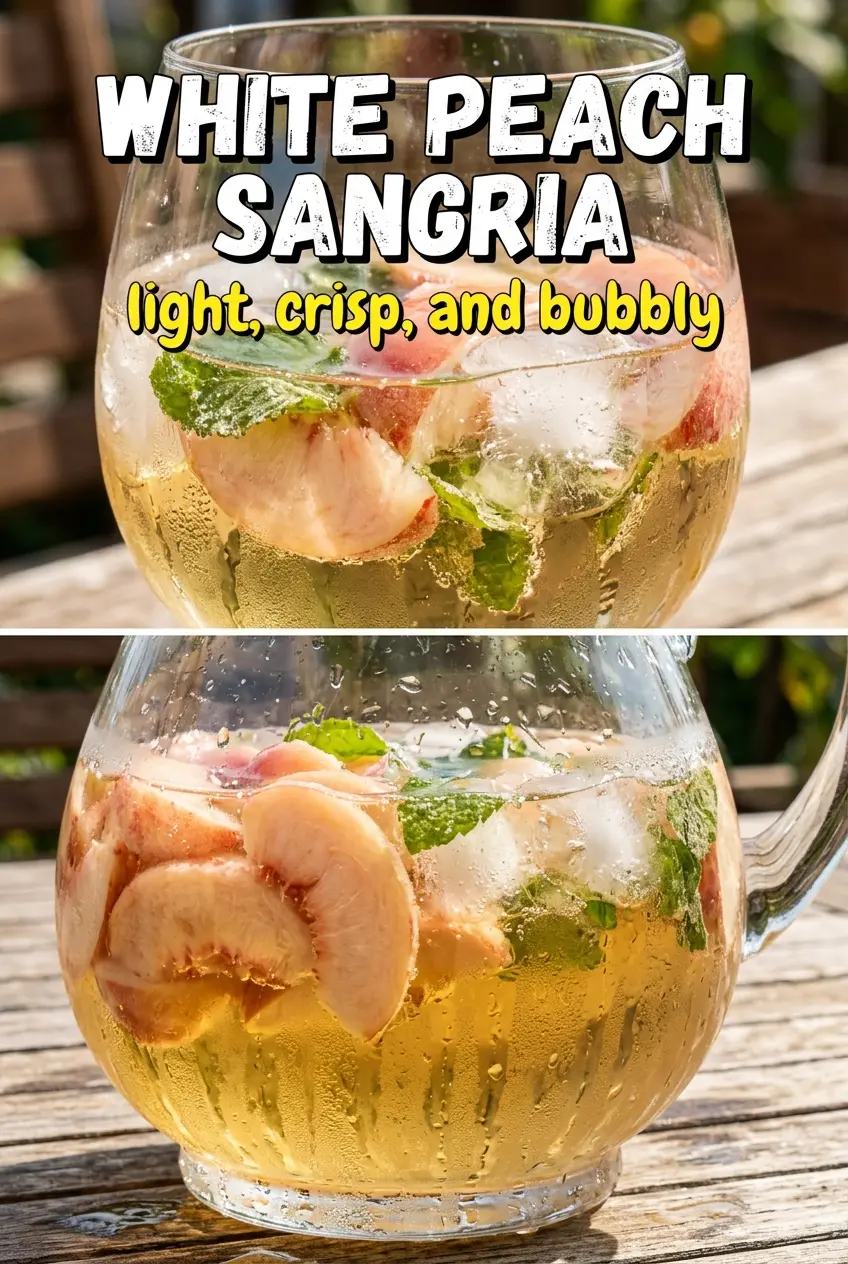
White Peach Sangria
Ingredients
Method
- Combine the dry white wine, peach schnapps, and simple syrup in a large pitcher.
- Add the sliced peaches, pear, lemon, and orange slices, then add the fresh mint leaves.
- Stir gently until the syrup and mint are evenly distributed.
- Cover the pitcher and refrigerate for at least 4 hours or up to overnight.
- Just before serving, top the pitcher with the sparkling water.
- Stir gently to keep the fruit floating and the carbonation lively.
- Serve over ice in wine glasses with the fruit spooned into each glass.
- Garnish each glass with extra fresh mint and a peach slice on the rim.