
Jammy cranberry sauce with bright, tart berries and a glossy finish earns its place on the table because it tastes clean and fresh, not canned-sweet. The berries burst just enough to thicken the pot on their own, and the whole thing lands between spoonable and sliceable once it cools. That texture is the difference between a sauce that disappears and one people actually go back for.
This version works because the sugar fully dissolves before the cranberries go in, so the sauce starts smooth instead of grainy. A full boil helps the berries pop quickly, then a short simmer keeps the flavor lively instead of turning dull and jam-like. You only need the three basics here, but the timing matters more than extra ingredients ever would.
Below, I’ve included the small details that keep cranberry sauce glossy, thick, and balanced, plus a few ways to adjust it if you want a softer set or a sharper bite.
The berries burst right on time and the sauce thickened up beautifully after chilling. I liked that it stayed bright and tangy instead of turning too sweet, and it was perfect with leftover turkey the next day.
Save this jammy 3 Ingredient Cranberry Sauce for a glossy, tart-sweet side that sets perfectly as it chills.
The Secret to Cranberry Sauce That Sets Instead of Staying Watery
The biggest mistake with cranberry sauce is pulling it off the heat too early. Cranberries need enough time to burst and release their natural pectin, which is what gives the sauce its body after it cools. If it still looks loose in the pan, that’s normal; it thickens as the temperature drops.
The other place people go wrong is heat. A hard boil for the first minute or two is fine, but once the berries go in, a steady simmer is all you need. Boiling it too aggressively after that can make the liquid evaporate too fast before the berries have a chance to break down evenly.
What the Three Ingredients Are Actually Doing Here
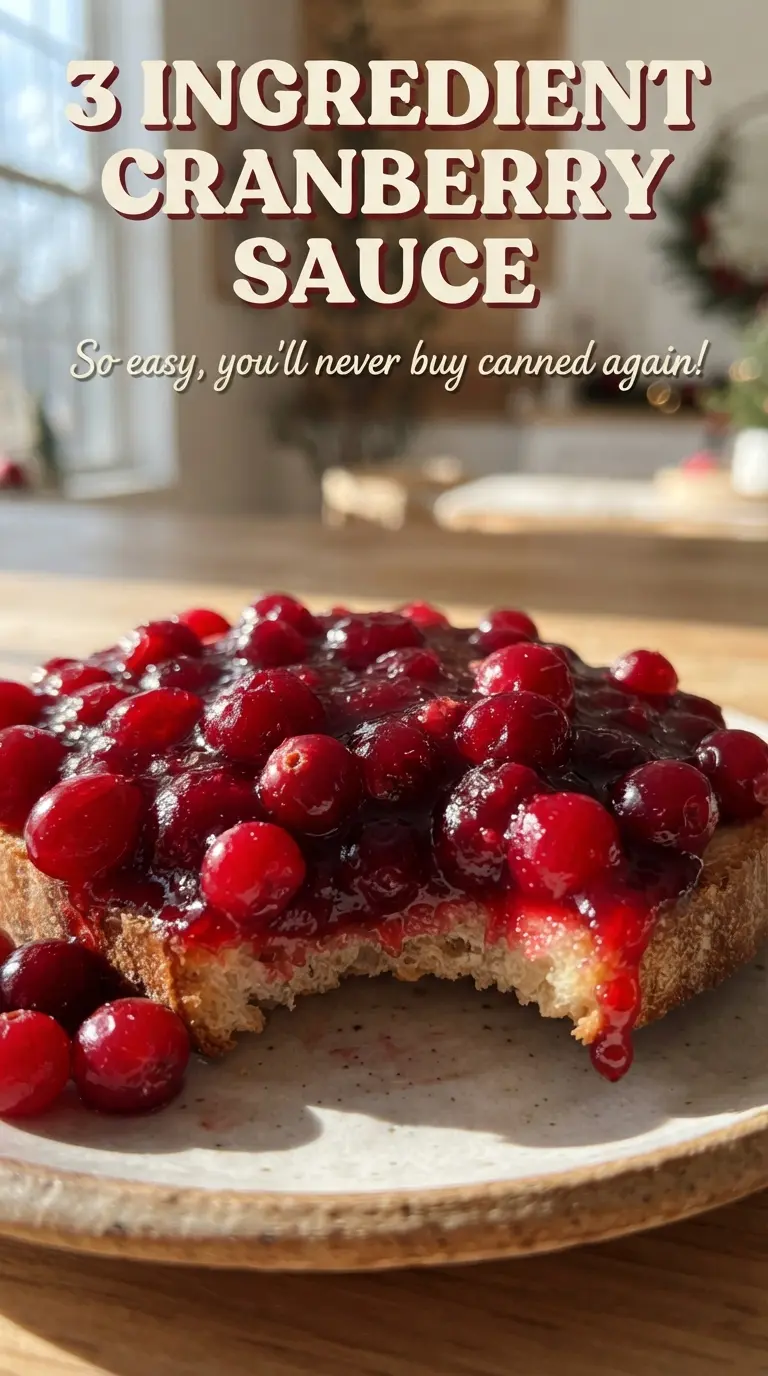
- Fresh cranberries — These are the backbone of the sauce. They burst into the liquid, bring the sharp tartness, and naturally help the sauce thicken as they cook. Frozen cranberries work too; add them straight from the freezer and expect a minute or two more simmer time.
- Granulated sugar — Sugar balances the tart berries and gives the sauce that glossy, spoonable finish. Brown sugar will taste deeper and a little molasses-like, but it changes the clean cranberry flavor. If you want a sharper sauce, you can reduce the sugar slightly, but the texture will be looser.
- Water — Water creates the syrup the cranberries cook in, and it keeps the sauce from scorching before the berries release their juices. There isn’t a great substitute here unless you want to shift the flavor with orange juice or apple juice, which will make the sauce sweeter and less straightforward.
How to Cook It So the Berries Burst at the Right Time
Making the Syrup First
Start with the sugar and water and bring them to a full boil, stirring until the sugar disappears completely. That step matters because undissolved sugar can leave a gritty texture at the bottom of the pan. Once the liquid is clear and bubbling, it’s ready for the cranberries.
Cooking the Cranberries
Add the cranberries and bring the pot back to a boil, then drop the heat to a steady simmer. You’ll hear some berries pop within a couple of minutes, and that’s what you want. Stir occasionally so the berries on the bottom don’t overcook while the ones on top stay whole.
Cooling for the Final Set
Take the pan off the heat when most of the berries have burst and the liquid looks slightly syrupy. The sauce will seem a little loose at this point, but it tightens as it cools and firms up even more in the fridge. If it looks perfectly thick in the pan, it will usually end up too firm once chilled.
How to Adjust the Flavor Without Losing the Texture
Make it with frozen cranberries
Frozen cranberries work with no thawing needed. They may take a little longer to come back to a boil, but the texture ends up just as good. This is the easiest swap when fresh berries aren’t in season or you’re cooking ahead.
Use less sugar for a sharper sauce
Cut the sugar back slightly if you want a brighter, more tart finish. The sauce will still set, but it won’t be as glossy or as sweet. That works well if you’re serving it alongside rich savory dishes.
Swap in orange juice for part of the water
Replacing some of the water with orange juice adds a softer citrus note and a little extra sweetness. Keep part of the liquid plain water so the sauce doesn’t turn heavy or overly sweet. This is the best change if you want a more festive edge without adding extra ingredients.
Make it ahead and chill overnight
Cranberry sauce is better after it chills because the texture firms up and the flavor settles. If it seems a little loose right after cooking, don’t panic. Cover and refrigerate it, and it will thicken into that classic jammy consistency by serving time.
Storage and Reheating
- Refrigerator: Store covered for up to 10 days. It will continue to set and may look firmer after a night in the fridge.
- Freezer: It freezes well for up to 2 months. Cool it completely first, then pack it into an airtight container with a little room at the top.
- Reheating: Serve it cold or let it sit at room temperature. If you warm it, do it gently on low heat with a splash of water, just until loosened. High heat can make it thin out and lose that glossy finish.
Answers to the Questions Worth Asking

3 Ingredient Cranberry Sauce
Ingredients
Equipment
Method
- Bring the sugar and water to a boil in a saucepan, stirring until the sugar dissolves.
- Add the cranberries and return to a boil, then keep the mixture at a steady boil so the berries begin popping.
- Reduce heat and simmer for 10 minutes, stirring occasionally, until the berries burst and the sauce thickens slightly.
- Remove from heat and cool completely before serving so the sauce thickens as it cools.
- Chill until serving, letting it fully set for a spoonable, jammy consistency.


