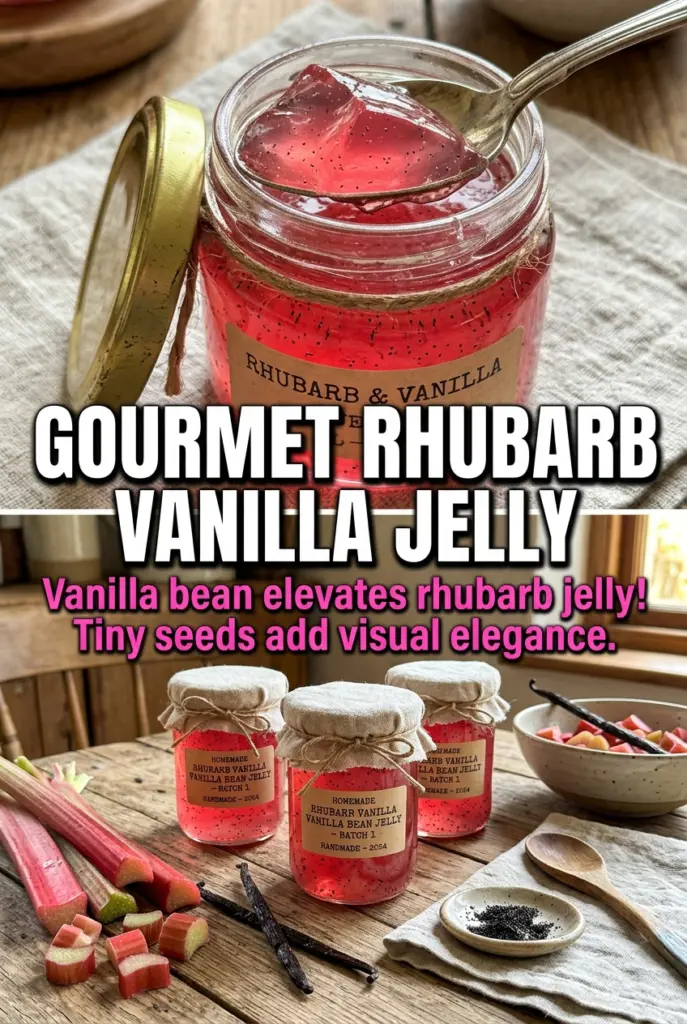
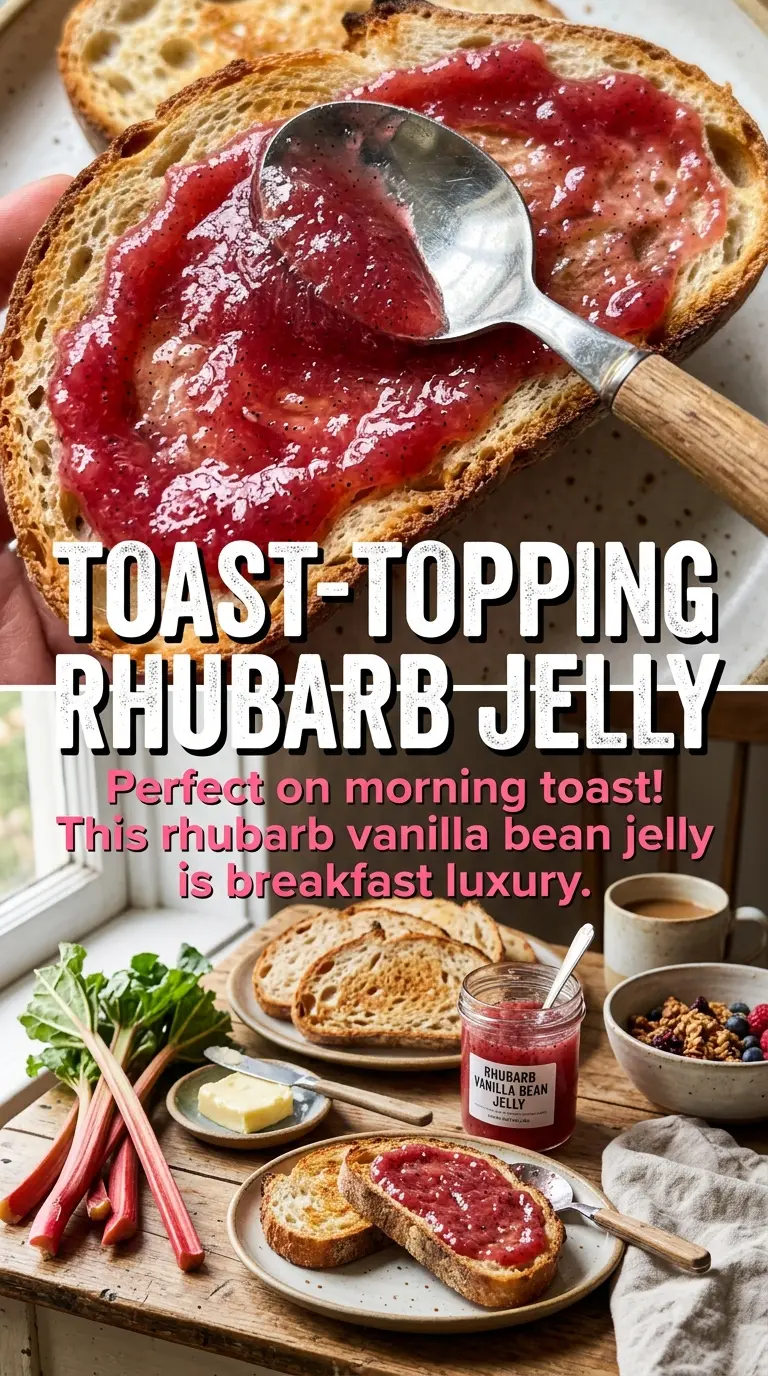
Ruby-pink rhubarb jelly with vanilla bean specks is the kind of preserve that earns a permanent spot on the shelf. It sets up glossy and clear, with a bright tart edge from the rhubarb and a warm, round finish from the vanilla that keeps it from tasting one-note. Spread it on toast and it looks almost stained glass in the light.
What makes this version work is the balance between the rhubarb juice and the sugar-pectin mix. Rhubarb gives you gorgeous color and sharp flavor, but it needs enough liquid extracted to turn into a clean jelly instead of a cloudy mash. The vanilla bean is simmered with the fruit, not added at the end, so the jelly picks up that soft speckled look and a deeper flavor as it cooks.
Below you’ll find the exact timing that helps the jelly set properly, plus the small canning details that keep the jars sealed and the texture smooth. If you’ve ever had a fruit jelly come out loose or dull, this method fixes a lot of that.
The jelly set beautifully overnight, and the vanilla really softened the rhubarb without hiding it. I got exactly six half-pint jars, and the texture was crystal clear instead of cloudy.
Like this ruby-pink rhubarb vanilla bean jelly? Save it to Pinterest for the next time you want a bright, clear preserve with real vanilla specks.
The Step That Keeps Rhubarb Jelly Clear Instead of Cloudy
Most rhubarb jellies go muddy because the fruit gets cooked down too hard or pressed too aggressively while the solids are still breaking apart. Here, the rhubarb is simmered just until it gives up its flavor, then strained before the pectin and sugar go in. That separation matters. You want juice, not pulp, because pulp weighs down the set and steals the clean translucent look that makes this jelly special.
The other place people slip is the boil. Once the sugar goes in, the mixture needs a hard, active boil for the full minute so the pectin can do its job. A lazy simmer won’t set the same way, and if you keep it on the heat too long after that point, the jelly can turn sticky instead of spreadable.
What Each Ingredient Is Doing in the Jar
- Rhubarb — This is the backbone of the jelly. Fresh stalks give you the tart, bright flavor and the pink tone; older, stringier stalks can work, but the color and juice yield won’t be as strong.
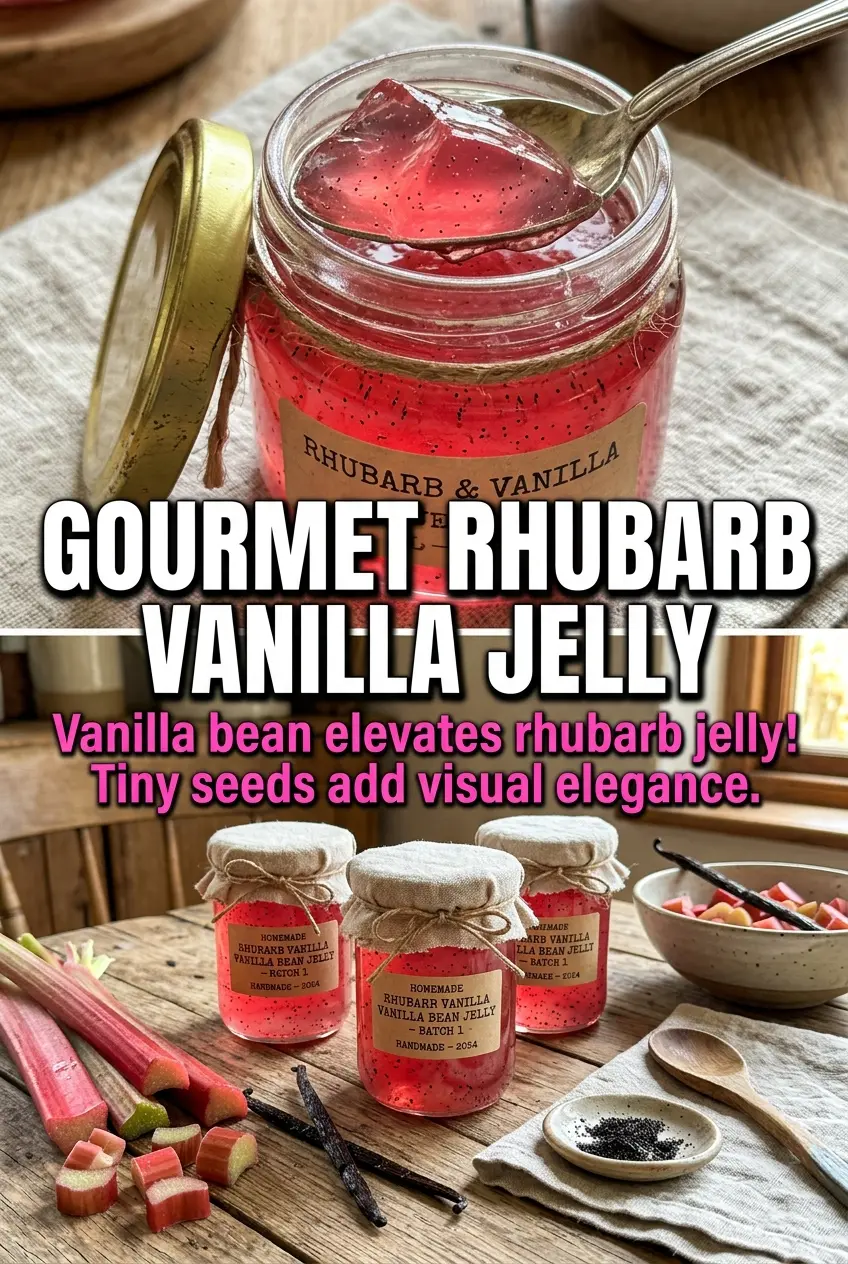
- Vanilla bean — A real vanilla bean gives you those visible specks and a mellow aroma that extract can’t fully match here. Split it lengthwise, scrape the seeds, and simmer both the seeds and pod with the rhubarb so the flavor gets built into the base.
- Powdered pectin — This is what helps the jelly set in the short cook time. Don’t swap in a different pectin type unless you adjust for the package directions, because the boil timing and sugar ratio can change.
- Lemon juice — This sharpens the flavor and helps the pectin set reliably. Bottled lemon juice is fine here because consistency matters more than freshness in a canned preserve.
- Sugar — The sugar isn’t just for sweetness; it’s part of the structure. Add it all at once after the pectin is dissolved so the boil stays strong and even.
Turning the Juice into Jelly Without Losing the Set
Softening the Rhubarb
Put the rhubarb, water, vanilla bean, and scraped seeds into a large pot and simmer for about 15 minutes. The pieces should collapse and look pale, and the liquid will turn a muted pink. Don’t cook it until it’s dry or jammy; you want enough liquid left to strain easily. If the pot starts to look low, lower the heat, because scorching at this stage can leave the jelly tasting flat and cooked.
Straining for a Clean Finish
Pour the mixture through cheesecloth or a fine mesh strainer and press just enough to extract the juice. You’re aiming for about 3 1/2 cups. If you force every last bit of pulp through, the jelly can turn cloudy and the final texture can feel heavy. Lift out the vanilla pod once the liquid is strained so it doesn’t keep releasing woody bitterness.
Boiling for the Set
Return the juice to the pot, stir in the pectin and lemon juice, and bring it to a rolling boil before adding the sugar. Pour the sugar in all at once, then bring it back to a hard boil for exactly one minute while stirring constantly. The boil should stay high and active across the surface. If it only bubbles at the edges, the pectin won’t fully activate and the jelly may stay loose.
Jarring and Waiting It Out
Skim off any foam, ladle the jelly into sterilized jars, and leave 1/4-inch headspace. Process the jars in a boiling water bath for 10 minutes, then let them sit untouched for 24 hours. That waiting time matters more than people think. If you tilt or move the jars early, the set can be uneven and the surface may wrinkle as it cools.
How to Adapt This Rhubarb Vanilla Bean Jelly for Your Pantry
Make It with Frozen Rhubarb
Frozen rhubarb works well if that’s what you have. Thaw it first so it releases its liquid into the pot, then measure the juice after straining instead of guessing from the original volume. The color may be a little softer, but the set will be the same if you still end up with about 3 1/2 cups of liquid.
Use Vanilla Extract When You Don’t Have a Bean
You can replace the bean with 1 to 2 teaspoons of pure vanilla extract, but add it after the jelly comes off the heat. Extract won’t give you the speckled look or the same deep infused flavor, but it still brings the roundness that keeps the rhubarb from tasting sharp.
Cut the Sugar and Keep the Structure
This recipe depends on sugar for both sweetness and set, so lowering it changes the result. If you need a reduced-sugar version, use a pectin made for low-sugar preserves and follow that package’s sugar range exactly. Swapping sugar amounts without changing the pectin usually leaves you with syrup instead of jelly.
Storage and Reheating
- Refrigerator: Unopened sealed jars keep for up to 1 year in a cool, dark pantry; once opened, refrigerate and use within 3 to 4 weeks. The texture may loosen slightly after opening, which is normal.
- Freezer: This jelly isn’t the best freezer candidate because canned preserves hold better on the shelf. If you skip canning and want to freeze a small batch, leave extra headspace and expect a softer set after thawing.
- Reheating: Jelly isn’t usually reheated; let it come to room temperature before serving so it spreads cleanly. If the jar has been chilled, give it a few minutes on the counter before spooning so you don’t tear your toast.
Questions I Get Asked About This Rhubarb Jelly
Rhubarb Vanilla Bean Jelly
Ingredients
Equipment
Method
- Combine fresh rhubarb, water, and vanilla bean (pod and seeds) in a large pot, then simmer at 100°C for 15 minutes. You should see steady bubbling as the rhubarb softens and releases color.
- Strain the rhubarb mixture through cheesecloth or a fine mesh strainer, pressing to extract all liquid, to yield about 3 1/2 cups. The strained liquid should look ruby-pink and translucent with no visible fruit chunks.
- Return the rhubarb juice to the pot and stir in powdered pectin and lemon juice. The mixture should turn evenly mixed and slightly thickened-looking before the boil.
- Bring to a rolling boil at 100°C, add sugar all at once, and stir constantly. The pot should return to a hard boil that you can maintain.
- After adding sugar, boil hard at 100°C for 1 minute while stirring constantly. The jelly mixture should look glossy and actively bubbling.
- Remove the pot from heat, skim off foam, and remove the vanilla bean pod. The surface should look clearer once the foam is gone.
- Ladle the hot jelly into sterilized jars, leaving 1/4-inch headspace. You should see vanilla bean specks suspended through the ruby-pink jelly.
- Process jars in a boiling water bath at 100°C for 10 minutes. The jars should stay fully submerged and upright as the time runs.
- Let jars sit undisturbed to set completely for 24 hours. You’ll notice the jelly has transformed from liquid to a firm, translucent gel.