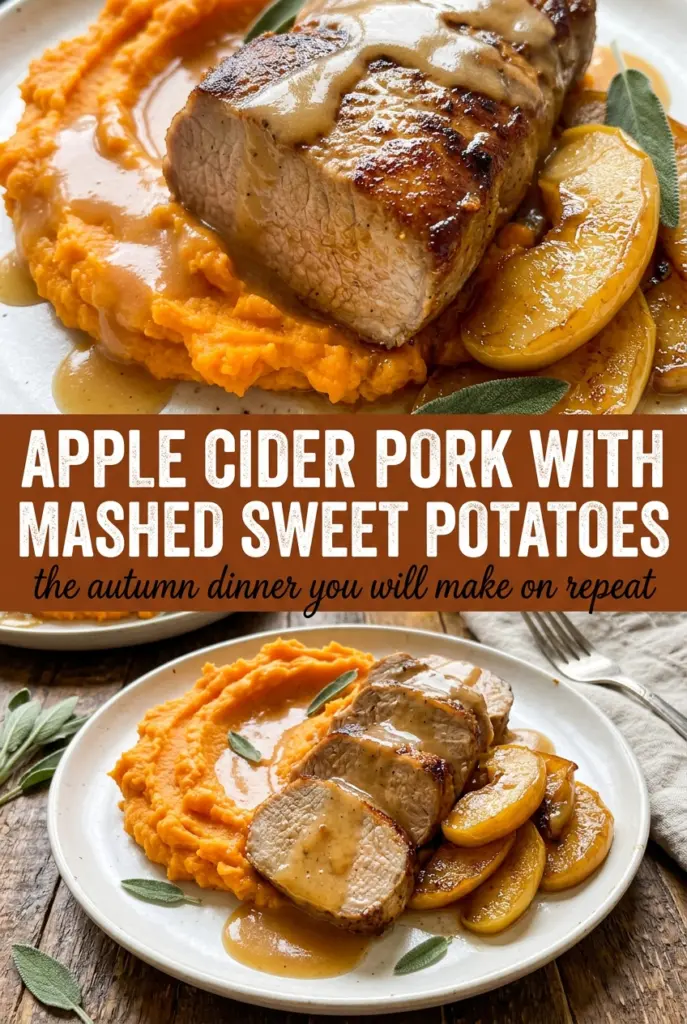
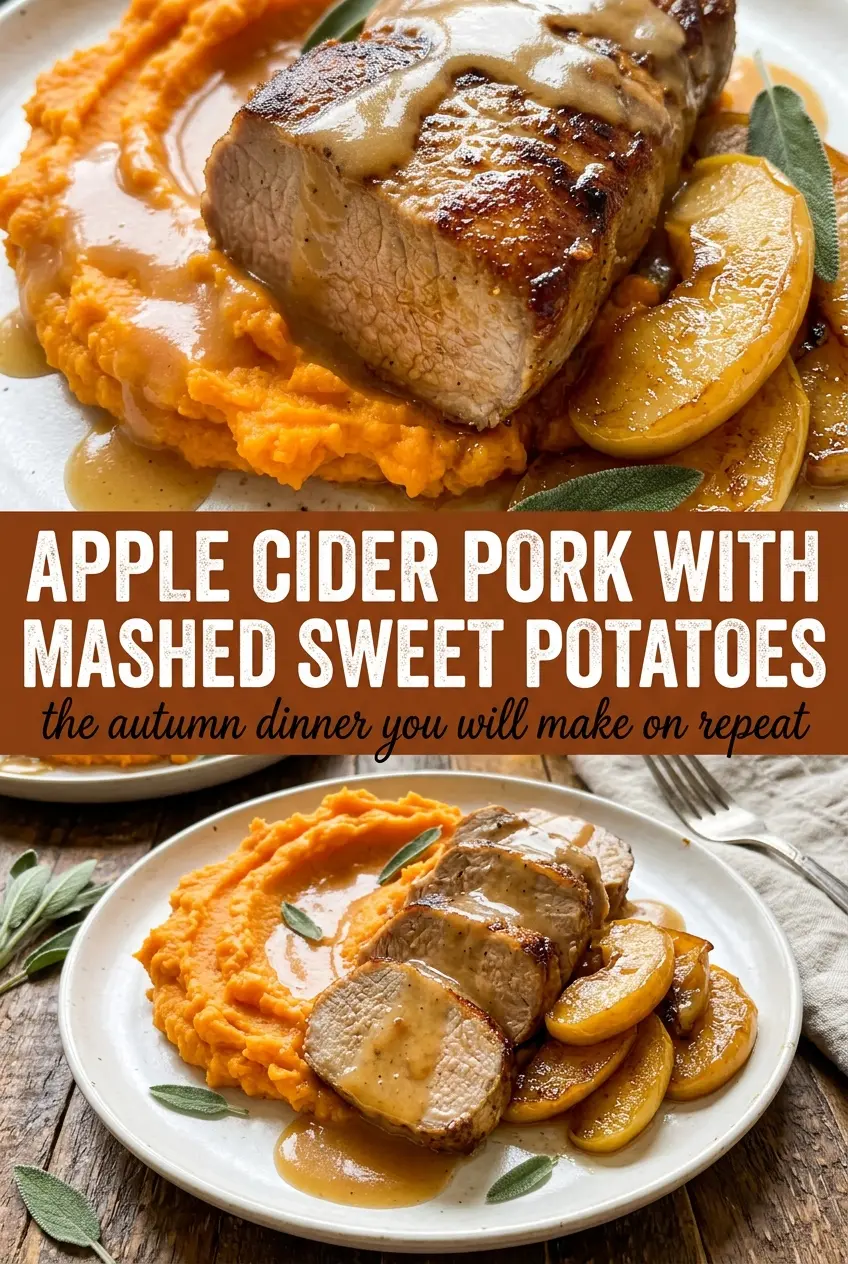
Pork chops get a lot more interesting when they’re finished in a cider pan sauce that tastes bright, savory, and just a little glossy at the edges. Paired with mashed sweet potatoes, the whole plate lands in that sweet-savory zone that feels comforting without turning heavy. The apple slices on the side aren’t decoration here; they echo the cider in the sauce and give each bite a soft, caramelized finish.
What makes this version work is the order. The chops are seared first so the pan builds a proper brown fond, then the onion and garlic pick up that flavor before the cider goes in. Dijon gives the sauce backbone, thyme keeps it from tasting flat, and a short simmer is enough to cook the pork through without drying it out. The sweet potatoes stay silky because they’re mashed with butter and cream while still hot, which keeps them smooth instead of gluey.
Below, I’ve included the small details that matter most: how to keep the pork juicy, when the sauce is ready to spoon over everything, and what to change if you need to work with what’s already in the kitchen.
The cider sauce reduced down into this gorgeous, spoon-coating glaze, and the pork stayed juicy even after the last 5-minute simmer. The sweet potatoes were the perfect base with the apples on top.
Bookmark these apple cider pork chops with mashed sweet potatoes for the night you want a one-pan sauce that tastes finished, not fussy.
The Pan Sauce Starts with the Sear, Not the Cider
The biggest mistake with pork chops in a fruit-based sauce is treating the cider like the main event. It isn’t. The real flavor starts when the chops hit hot oil and leave those browned bits stuck to the pan. If the pan isn’t properly seared, the cider just tastes sweet and thin instead of deep and savory.
Another place people lose the dish is overcooking the pork while waiting for the sauce to thicken. Thin chops dry out fast. Bone-in chops give you a little insurance, but the short simmer still matters. Once the chops go back into the pan, the sauce should bubble gently, not boil hard.
The goal is a sauce that clings to the meat and pools lightly into the sweet potatoes, not a broth you have to chase around the plate. That happens when you reduce the cider and broth just enough for the liquid to look glossy and lightly syrupy before the pork returns to the pan.
What Each Ingredient Is Actually Doing in This Dish

- Bone-in pork chops — These stay juicier than boneless chops and give you a little more time before they dry out. If you only have boneless, reduce the simmer time by a minute or two and check early; they cook faster and can go from tender to chalky in a hurry.
- Apple cider — Use real cider, not apple juice if you can help it. Cider brings a sharper, more complex apple flavor that holds up against the pork and mustard, while juice can taste flat once reduced.
- Dijon mustard — This doesn’t make the sauce taste mustardy. It gives the pan sauce body and keeps the cider from leaning too sweet, which matters once the apples go in at the end.
- Fresh thyme — Dried thyme works in a pinch, but fresh thyme gives the sauce a cleaner, woodsy note that fits the cider and pork. Strip the leaves before adding them so you don’t end up with stiff little stems in the sauce.
- Sweet potatoes — Their natural sweetness plays off the cider, but the starch also makes them the right base for a sauce like this. Mash them while hot with butter and cream so they stay smooth instead of turning dense.
- Apple slices — A firm apple holds its shape when pan-fried in butter. Soft baking apples can collapse before they caramelize, so choose one that will brown at the edges and still look like slices on the plate.
The Short Simmer That Keeps the Pork Juicy
Building the Sweet Potato Base
Start the sweet potatoes first so they can stay warm while you finish the pork. Boil them until a knife slides through without resistance, then drain them well; extra water in the pot is what turns mash loose and bland. Mash with butter, cream, salt, and a pinch of cinnamon while they’re still hot enough to melt everything smoothly. If they sit too long before mashing, they turn thicker and can pick up a grainy texture.
Getting a Deep Sear on the Chops
Season the pork generously and lay it into hot oil without crowding the pan. You’re looking for a brown crust that releases on its own after 4 to 5 minutes, not pale meat that has to be scraped free. If the chops stick hard, the heat is too low or the pan is too crowded. Flip once and sear the second side the same way; that crust is the base of the sauce.
Reducing the Cider into Sauce
After the chops come out, cook the onion until it softens and picks up the browned bits from the pan, then add the garlic for just 30 seconds. Once the cider and broth go in, keep the simmer active but not aggressive. You want the liquid to reduce a little and lose the sharp raw edge of the cider. Stir in the Dijon and thyme before the chops go back so the seasoning spreads through the whole pan instead of sitting on top.
Finishing with Apples and Butter
Return the pork only long enough to finish cooking through and warm the sauce around it. The center of the chops should be just cooked, with a little spring when pressed and juices that run clear. Cook the apple slices in butter at the end so they stay intact and pick up golden edges. If you cook them too early, they soften and disappear into the sauce before they reach the plate.
Bone-in vs. boneless pork chops
Bone-in chops give you better texture and a little more forgiveness in the pan. Boneless chops work, but they need a shorter simmer and a close eye so they don’t dry out. If you’re using boneless, pull them as soon as they hit 145°F at the thickest part.
Make it dairy-free
Use olive oil instead of butter for the apples and swap the cream in the mash for unsweetened oat milk or a splash of extra broth. The sweet potatoes will be a little lighter and less rich, but the pork and cider sauce still carry the dish.
Swap the sweet potatoes for Yukon golds
If you want a more neutral base, Yukon gold potatoes give you a buttery mash that lets the cider sauce stand out more. You lose some color and natural sweetness, but you gain a cleaner, more classic pork-and-gravy feel.
Add a little heat
A pinch of red pepper flakes in the pan with the onion gives the cider sauce a sharper edge without turning it spicy. It works especially well if your cider runs sweet or your apples are very mellow.
Storage and Reheating
- Refrigerator: Store the pork, sauce, and mashed sweet potatoes separately for up to 3 days. The sauce may thicken as it chills, and the apples will soften.
- Freezer: The pork and sauce freeze well for up to 2 months. The mashed sweet potatoes can be frozen too, though the texture may loosen a bit after thawing.
- Reheating: Warm the pork and sauce gently on the stove over low heat with a splash of broth if needed. Reheat the sweet potatoes separately and stir in a little cream to bring back the smooth texture. Avoid high heat, which tightens the pork and can split the sauce.
Answers to the Questions Worth Asking
Apple Cider Pork with Mashed Sweet Potatoes
Ingredients
Equipment
Method
- Boil the sweet potatoes until tender, then drain and mash until smooth.
- Stir in 3 tablespoons butter, 1/4 cup cream, salt, and a pinch of cinnamon, then keep warm.
- Season the pork chops with salt and pepper to taste.
- Heat the olive oil in a skillet over medium-high heat and sear the pork chops for 4–5 minutes per side, then set aside.
- Cook the diced onion in the same pan for 3 minutes.
- Add the minced garlic and cook for 30 seconds.
- Pour in the apple cider and chicken broth, then simmer for 3 minutes.
- Stir in the Dijon mustard and fresh thyme, return the pork chops to the pan, and simmer for 5 minutes until cooked through.
- Melt 2 tablespoons butter in the skillet and pan-fry the apple slices until golden.
- Serve pork chops over the mashed sweet potatoes, spoon over the cider-thyme sauce, and top with the golden apple slices.