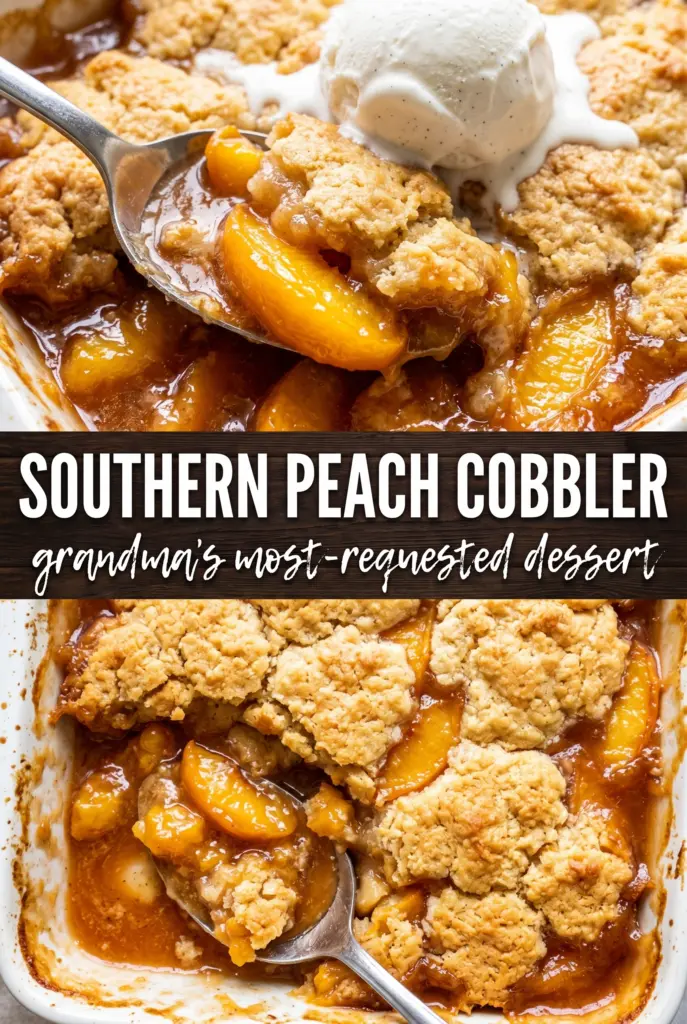
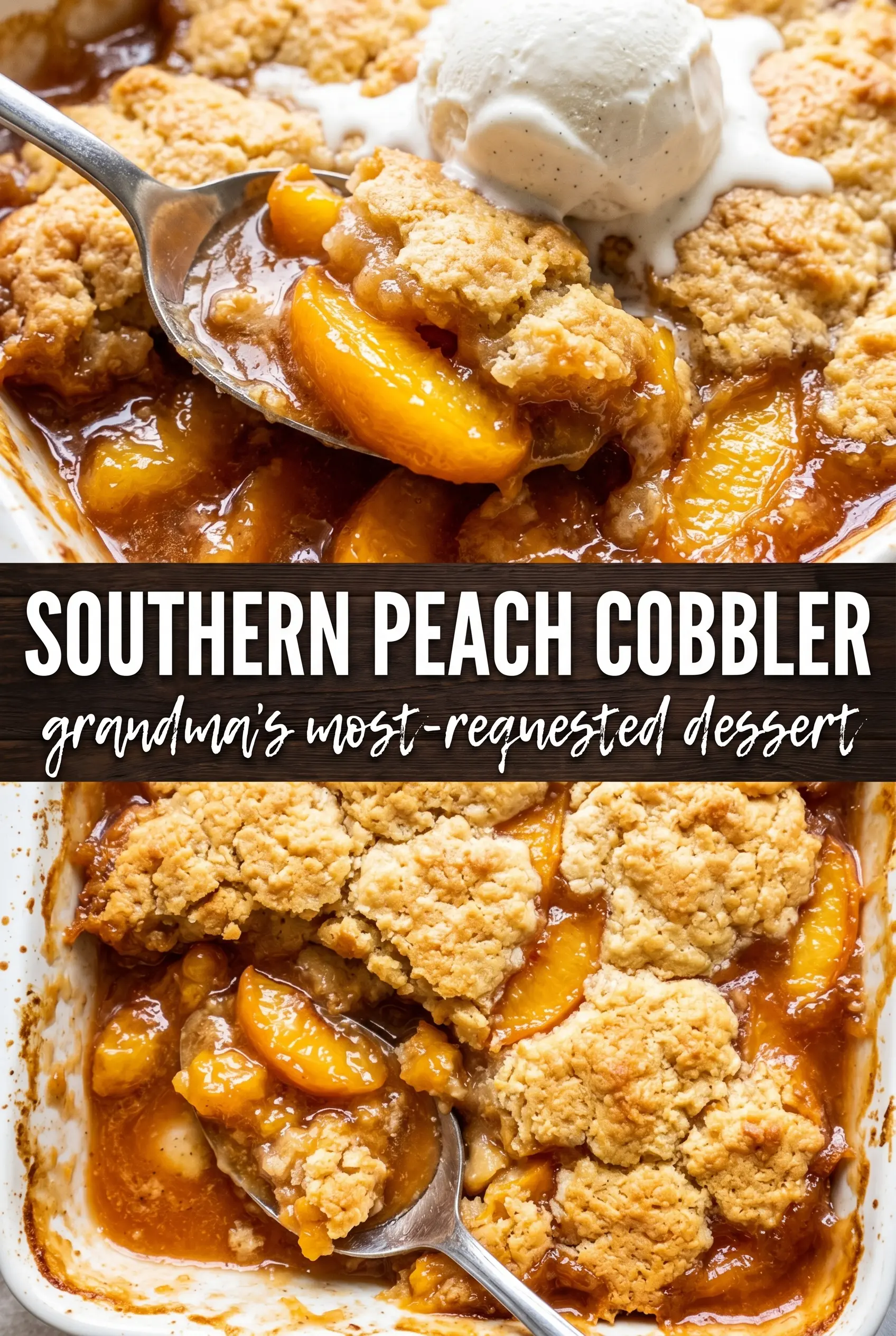
Golden, buttery crust with bubbling peaches underneath is the kind of dessert that disappears fast, especially when the fruit turns syrupy and the top bakes up with those craggy, browned edges. This Southern peach cobbler lands somewhere between spoon cake and biscuit-topped dessert, and that’s exactly why it works: the batter rises up through the fruit instead of sitting on top like a separate layer.
The trick is in the order. Melting the butter in the baking dish gives the bottom of the crust a head start, and pouring the batter straight over it creates that rich, almost caramelized edge people fight over. The peaches go on last with all their juices, which means the filling stays bright and soft instead of drying out in the oven.
Below, I’m walking through the parts that matter most: how to keep the batter from turning tough, why the peach juices should stay in the pan, and how to adapt this when you only have frozen fruit on hand.
The peaches bubbled up through the crust exactly like the photo, and the edges baked into this crisp, buttery layer that tasted like the best part of a peach pie.
Save this Southern peach cobbler for the first time you want a bubbling peach filling and a deeply browned, biscuit-like crust.
The Secret to Cobbler That Bakes Up, Not Out
Most cobblers fail in one of two ways: the topping turns dense, or the fruit sinks into a gummy layer at the bottom. This version avoids both because the batter is thin enough to rise through the butter and peaches, but not so thin that it disappears into the pan. The result is a lifted, tender crust with pockets of syrupy fruit underneath.
Resist the urge to stir once the batter and peaches are in the dish. That’s what preserves the layers that give cobbler its texture contrast. The butter needs to stay in the bottom of the pan, and the peach juices need to run around the batter on their own. That movement in the oven is what creates those caramelized edges and the golden top.
What Each Ingredient Is Actually Doing in This Cobbler

- Fresh peaches — Use ripe peaches that smell fragrant and give slightly at the stem. They’re the whole point of the dessert, and fresh fruit gives you a cleaner, brighter filling than canned peaches. If your peaches are firm, let the sliced fruit sit with the sugar a full 10 minutes so it can start releasing juice before it hits the oven.
- Granulated sugar — Half goes with the fruit to draw out juices, and half goes into the batter for sweetness and browning. That split matters. If you cut the sugar too much, the fruit can taste flat and the crust won’t caramelize the same way.
- Butter — Melted butter in the baking dish is what gives the bottom and edges that rich, almost fried-pastry flavor. Use real unsalted butter here. A substitute won’t give the same flavor or the same crisp, browned finish around the rim.
- Whole milk — Whole milk keeps the batter tender and gives it enough richness to bake into a soft, biscuit-like crust. Lower-fat milk will work in a pinch, but the topping comes out a little drier and less plush.
- Baking powder — This is the lift. It helps the batter rise up around the peaches instead of baking into a flat layer. Fresh baking powder matters; if yours has been sitting open for months, the cobbler can bake up heavy.
Building the Batter and Letting the Oven Do the Work
Getting the Peaches Juicy First
Toss the sliced peaches with half the sugar, cinnamon, nutmeg, and lemon juice, then let them sit until there’s a glossy puddle at the bottom of the bowl. That short rest pulls out enough juice to make the filling syrupy without turning it watery. If your peaches are underripe, don’t skip this step — they need that time to soften and loosen up before baking.
Melting the Butter in the Pan
Put the butter straight into the baking dish and let the oven melt it while it preheats. You want it fully melted, hot, and evenly coating the bottom of the dish, because that’s what keeps the crust from sticking and helps it brown underneath. If the butter is only partly melted, the batter can land in cold spots and bake unevenly.
Pouring and Leaving It Alone
Whisk the batter until just combined, then pour it over the melted butter without stirring. Spoon the peaches and every drop of their juices over the top and stop there. As it bakes, the batter rises through the fruit on its own, so stirring at this stage ruins the layered texture and gives you a dense, muddled pan instead of a proper cobbler.
Baking Until the Top Cracks and Browns
Bake until the top is deep golden and the filling is bubbling through the crust in several spots, not just around the edges. That bubbling tells you the fruit has thickened enough. If the top looks done but the filling isn’t moving, give it a few more minutes; underbaked cobbler tastes floury in the center and loses the contrast that makes it good.
Three Ways to Adapt Southern Peach Cobbler Without Losing the Texture
Use Frozen Peaches When Fresh Aren’t at Their Peak
Frozen peaches work well here, but thaw them first and drain off the excess liquid so the cobbler doesn’t turn soupy. They’ll soften a little more than fresh peaches during baking, which gives you a very tender filling. The flavor is still good, especially if you bump the cinnamon slightly.
Make It Dairy-Free
Swap the butter for a good plant-based butter and use an unsweetened non-dairy milk with some body, like oat milk. The crust will still rise and brown, though the flavor is a little less rich than the original. Avoid thin milks like almond milk if you can, since they don’t give the batter the same soft texture.
Add a Little More Southern Pantry Flavor
A pinch of vanilla or a little extra nutmeg gives the filling a warmer finish without changing the structure of the dessert. If you want a deeper, more old-fashioned taste, use a mix of white and light brown sugar in the fruit. Brown sugar adds molasses notes and a darker syrup around the peaches.
Storage and Reheating
- Refrigerator: Store covered for up to 4 days. The crust softens as it sits, but the flavor stays good.
- Freezer: It freezes better than you’d think, though the topping won’t stay crisp. Cool completely, wrap tightly, and freeze for up to 2 months.
- Reheating: Warm in a 325F oven until the center is hot and the edges start to sizzle again. The microwave works for a single serving, but it softens the crust even more and can make the filling loosen up.
Answers to the Questions Worth Asking
Southern Peach Cobbler
Ingredients
Equipment
Method
- Preheat the oven to 350F.
- Toss the sliced peaches with 1/2 cup sugar, cinnamon, nutmeg, and lemon juice, then let sit 10 minutes to release juices.
- Place the butter in a 9x13 baking dish and set it in the oven to melt while juices release.
- Whisk the flour, remaining 1/2 cup sugar, baking powder, salt, and milk together until just combined.
- Pour the batter over the melted butter and do not stir.
- Spoon the peach mixture and all its juices over the batter and do not stir.
- Bake for 45-50 minutes, until the crust is deeply golden and the peach filling is bubbling up through the top.
- Serve warm with vanilla ice cream.