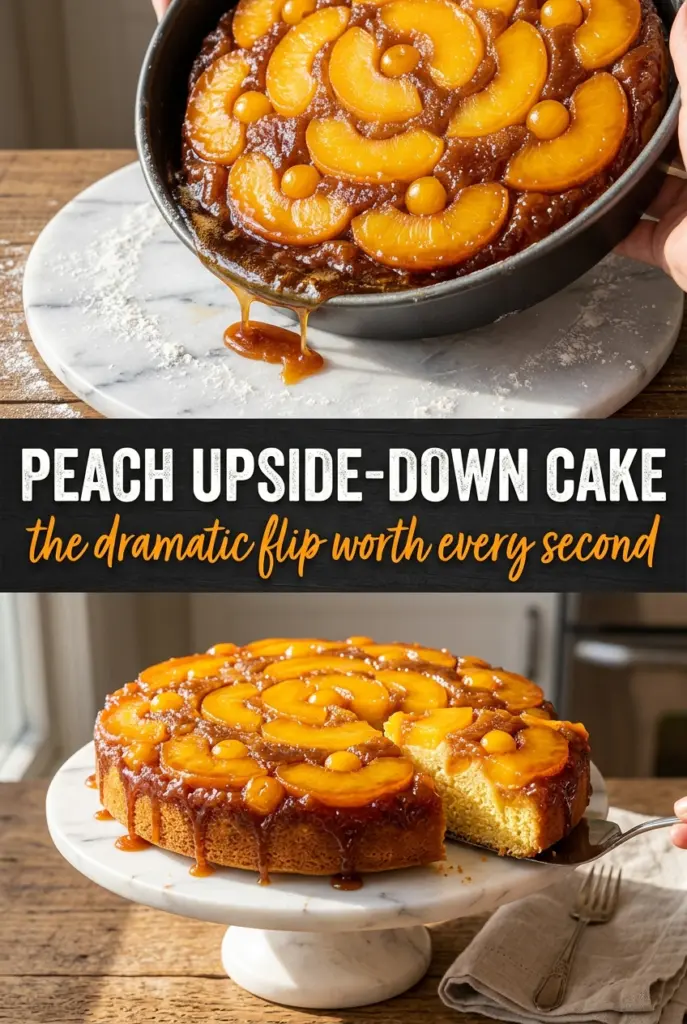
Golden cake and caramelized peaches are a hard combination to beat, especially when the fruit bakes down into a glossy layer that turns syrupy at the edges and stays tender in the center. This peach upside-down cake lands somewhere between homey and showy: the kind of dessert that looks like you spent all afternoon on it, even though the work is straightforward and the payoff is immediate.
What makes this version work is the balance. The brown sugar and butter melt into a proper caramel base, but the cake itself stays light enough to lift the fruit instead of burying it. Peaches bring a lot of moisture on their own, so the batter needs enough structure from the flour and eggs to hold up without turning dense. Buttermilk keeps the crumb soft and gives the cake a little tang, which keeps the whole dessert from tasting flat once the caramel takes over.
Below, I walk through the part that matters most: how to arrange the fruit so it releases cleanly, how to mix the batter without toughening it, and what to watch for right before you invert the cake so the topping stays intact.
The peaches came out beautifully caramelized and the cake flipped in one piece after just 5 minutes of cooling. I was worried it would stick, but the topping released cleanly and the buttermilk crumb stayed soft even the next day.
Save this peach upside-down cake for the next time you want caramelized fruit, a soft buttermilk crumb, and a clean flip without the drama.
The reason the fruit layer releases cleanly instead of welding itself to the pan
The biggest failure with an upside-down cake is usually the topping, not the cake. If the butter and brown sugar aren’t spread evenly, you get dry patches that cling to the pan and make the flip messy. If the fruit is packed too tightly, the juices have nowhere to go and the topping turns slippery instead of glossy. A little overlap is good. A tight jammed-in layer is not.
The other thing that matters is the rest time. Pulling the cake out and waiting too long lets the caramel cool and harden in the pan, which is how peaches stick. Five minutes is the sweet spot: hot enough for the glaze to stay loose, but cool enough that the cake won’t collapse when you invert it.
- Brown sugar — This is the caramel layer, so packed measurement matters. Loose brown sugar gives you a thin, sandy topping instead of a proper glaze.
- Peaches — Use fruit that’s ripe but still firm. Very soft peaches melt down too much and can turn the top into jam.
- Buttermilk — This keeps the crumb tender and adds enough acidity to balance the sweetness. Whole milk works in a pinch, but the cake won’t stay quite as plush.
- Cast iron skillet or cake pan — A cast iron skillet gives the best caramelization and a clean presentation, but a well-greased 9-inch round cake pan works fine if that’s what you have.
What Each Ingredient Is Actually Doing in This Peach Recipe

- Peaches (the star ingredient) — Ripe peaches are essential. Quality impacts final dish.
- Sugar (the sweetness) — Enhances peach flavor without overpowering. Adjust based on ripeness.
- Lemon juice (the brightness) — Brings out peach flavor and prevents cloying. Essential, not optional.
- Butter or oil (the richness) — Carries flavors and creates satisfying texture. Don’t skip.
- Spices (cinnamon, ginger, or nutmeg) — Warm up peach flavor without overwhelming. Use in balance.
- Texture element (nuts, crumble, or crispy topping) — Prevents monolithic texture. Add before serving.
- Optional thickener (cornstarch or flour) — Creates right consistency. Essential for thick fillings.
- Finishing touch (fresh herbs, glaze, or garnish) — Adds aroma and visual appeal. Keeps fresh.
Mix the batter just enough, then let the oven do the rest
Build the caramel base first
Pour the melted butter into the pan and sprinkle the brown sugar evenly over it so every slice gets the same amount of caramel. Arrange the peach wedges in concentric circles, overlapping them slightly so the top looks full after inversion. Don’t leave open spaces unless you want bare patches of caramel on the finished cake.
Whip the butter and sugar until they lighten
Beat the softened butter and granulated sugar for a full 2 minutes, until the mixture looks paler and fluffy instead of grainy. That step traps air, which helps the cake rise without turning heavy. Add the eggs one at a time so the batter stays smooth; if it looks curdled after the first egg, keep going and it will come back together once the flour goes in.
Alternate dry ingredients and buttermilk
Add the flour mixture and buttermilk in alternating additions, starting and ending with flour. This keeps the batter from breaking and helps it hold its structure over the juicy fruit. Stop mixing as soon as the last streak of flour disappears; overmixing at this stage gives you a tight crumb instead of a soft one.
Invert while the caramel is still loose
Bake until a toothpick comes out clean and the top is set with a light golden color, then cool for 5 minutes only. Run a knife around the edge if needed, place a plate over the pan, and flip in one confident motion. If you wait much longer, the caramel starts cementing itself to the pan and the peaches can tear when you turn it out.
Three ways to adapt this peach upside-down cake without losing the texture
Make it gluten-free with a cup-for-cup blend
A good 1:1 gluten-free flour blend works here because the cake doesn’t rely on gluten for structure the way a loaf cake does. The crumb will be a touch more delicate, so let it cool the full 5 minutes before flipping and use a gentler hand when slicing.
Use nectarines or plums when peaches aren’t at their peak
Nectarines swap in seamlessly and give you the same caramelized fruit layer without peeling. Plums work too, but they’re juicier and sharper, so the finished cake tastes a little more tart and the topping will look deeper and darker.
Skip the dairy, but expect a slightly less tender crumb
Use plant-based butter in both the topping and the cake, and replace the buttermilk with a mix of unsweetened non-dairy milk and 1 teaspoon vinegar or lemon juice. The cake will still bake up well, though the crumb won’t have quite the same richness as the original.
Storage and Reheating
- Refrigerator: Store covered for up to 4 days. The fruit stays moist, but the caramel layer firms up in the cold.
- Freezer: It freezes well in slices. Wrap tightly and freeze for up to 2 months, then thaw in the refrigerator overnight.
- Reheating: Warm slices in a 300F oven for 10 to 12 minutes. The microwave softens the cake fast, but it also makes the topping watery and uneven.
The things that trip people up with peach upside-down cake
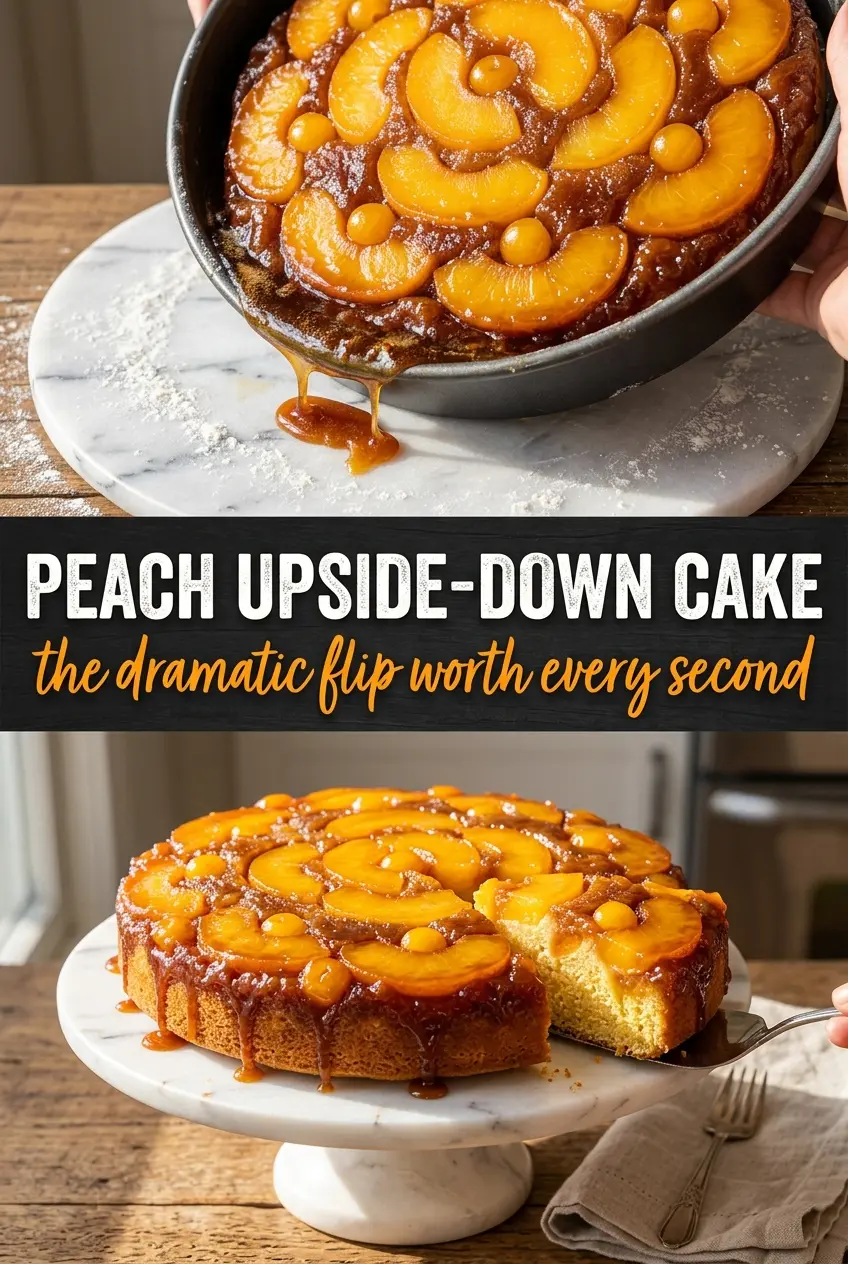
Peach Upside-Down Cake
Ingredients
Equipment
Method
- Preheat the oven to 350F (175C) so it’s fully hot before baking. This keeps the cake from baking unevenly.
- Pour the melted butter into a 9-inch round cake pan or cast iron skillet and sprinkle the brown sugar evenly over it. Watch for an even brown layer covering the bottom.
- Arrange the peach wedges in concentric circles over the brown sugar, slightly overlapping. Press lightly so the wedges stay in place as the batter rises.
- Beat the softened butter and granulated sugar for 2 minutes until fluffy, then add the eggs one at a time, followed by the vanilla extract. Look for a paler, thicker mixture after mixing.
- Alternate adding the flour mixture (all-purpose flour, baking powder, salt) and buttermilk, starting and ending with flour. Keep mixing just until smooth—no dry streaks, no overmixing.
- Pour the batter gently over the peaches and smooth the top so it’s evenly covered. This prevents gaps where fruit topping can peek through.
- Bake at 350F (175C) for 35–40 minutes until a toothpick comes out clean. The top should look set and lightly golden.
- Cool for 5 minutes, then invert immediately onto a plate. You want the caramelized brown sugar glaze still warm so the peaches release cleanly.