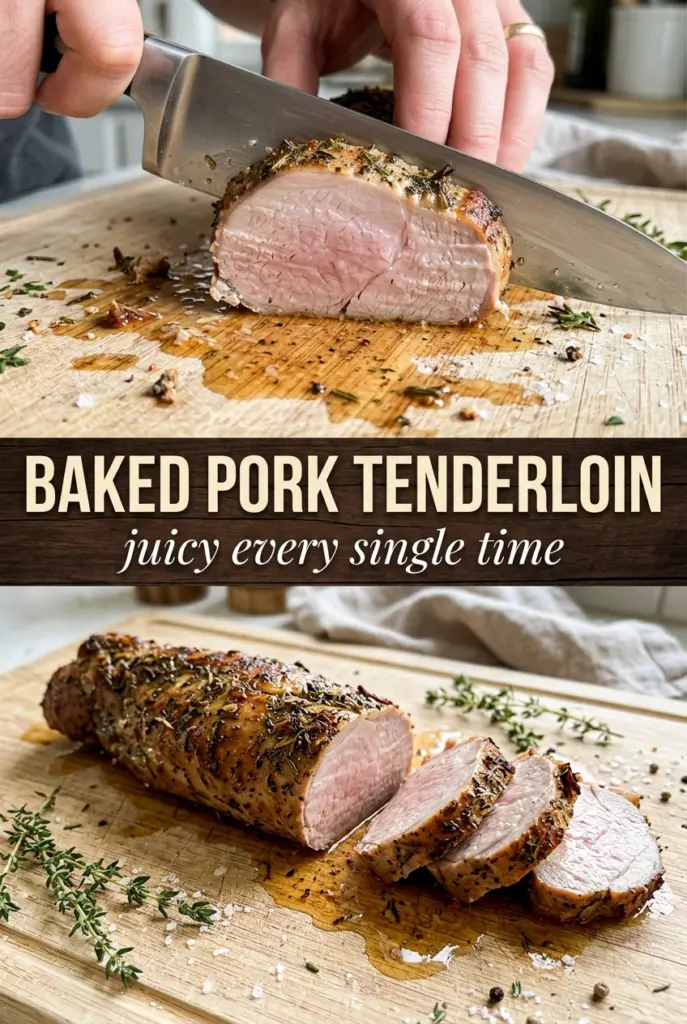
Juicy baked pork tenderloin earns its place on the weeknight rotation when the outside turns deeply seasoned and the center stays blush-pink and tender. The trick is that you don’t cook it like a slow roast. Pork tenderloin is lean, delicate, and fast, which means a hot oven, a quick sear, and a short rest give you slices that stay moist instead of drying out.
The herb rub does a lot of the work here. Garlic, smoked paprika, thyme, rosemary, and onion powder build a savory crust, while the olive oil helps the seasoning cling and promotes browning in the skillet. Searing first matters because it gives the tenderloin color before it goes into the oven, so you don’t end up with pale meat that tastes steamed.
Below you’ll find the exact timing that keeps pork tenderloin juicy, plus the temperature cue that matters more than the clock. If you’ve ever pulled pork from the oven and found it dry by the time you sliced it, this method fixes that problem.
The crust turned out gorgeous and the pork stayed juicy all the way through. I pulled it right at 145 and after the rest it sliced perfectly, no dry edges at all.
Save this baked pork tenderloin for a fast dinner with a golden herb crust and a juicy center that slices cleanly.
The Sear Is What Keeps Pork Tenderloin Juicy, Not the Oven
Pork tenderloin dries out when it spends too long in the heat. That’s why the sear matters so much here. It gives the outside a head start on color and flavor, then the oven finishes the center before the meat has a chance to overcook.
The other thing people miss is carryover cooking. Pork tenderloin keeps cooking after it leaves the oven, so pulling it at 145°F and letting it rest for 5 minutes matters more than waiting until it looks completely done in the pan. If you slice too soon, the juices run out onto the board instead of staying in the meat.
- Patting the pork dry first helps the seasoning stick and keeps the skillet from steaming the surface.
- A hot skillet builds that golden crust fast, which is the point. You’re not trying to cook the pork through on the stovetop.
- The rest time is short, but skip it and the slices won’t hold onto their juices.
What Each Ingredient Is Actually Doing in This Pork Tenderloin
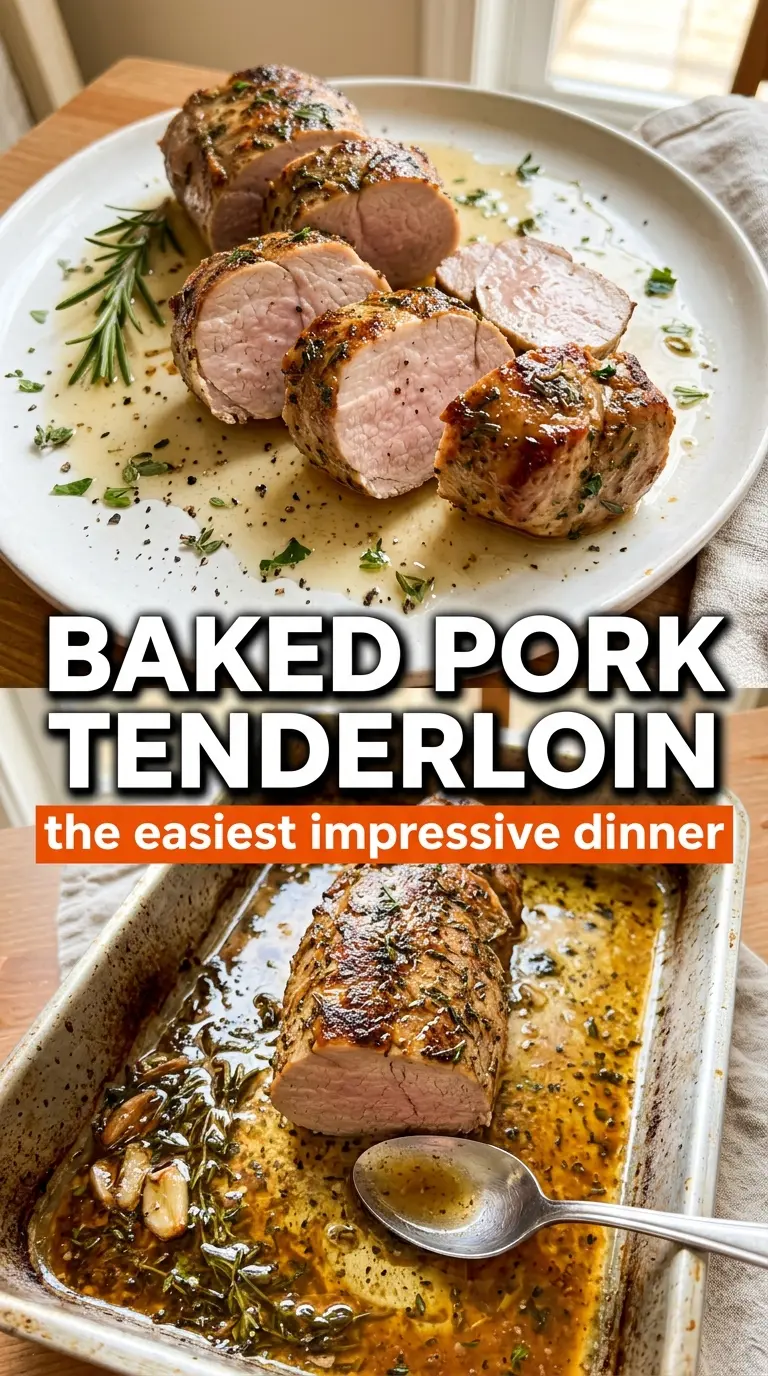
Pork tenderloins are the right cut for this method because they cook quickly and stay tender when you stop at the correct internal temperature. Don’t swap in pork loin without adjusting the timing — it’s thicker and takes much longer.
Olive oil carries the spices and helps the exterior brown. You don’t need expensive oil here, but you do want enough to coat the meat evenly so the rub doesn’t fall off in the pan.
Garlic, smoked paprika, thyme, rosemary, and onion powder build the crust. Smoked paprika adds depth and color, while the dried herbs hold up better than fresh in the oven. Fresh rosemary works best as a garnish at the end, where it keeps its aroma instead of burning.
Salt and black pepper are what wake up the whole rub. Season generously and evenly, because pork tenderloin is lean enough that underseasoning shows up fast in every slice.
From Skillet to Oven Without Losing the Crust
Drying and Seasoning the Pork
Pat the tenderloins dry before anything else. Moisture on the surface blocks browning, and a damp roast will never get the same crust. Mix the oil, garlic, paprika, thyme, rosemary, onion powder, salt, and pepper into a paste, then rub it over every side of the pork so the seasoning cooks into the meat instead of sitting in patches.
Building the Sear
Heat an oven-safe skillet over medium-high until it’s hot enough that the pork sizzles the second it lands in the pan. Sear each side for about 2 minutes until the surface turns golden and lightly crisped. If the heat is too low, the pork will gray before it browns, and you’ll lose both flavor and texture.
Roasting to Temperature
Move the skillet straight into the 425°F oven and roast until the thickest part reaches 145°F, usually 18 to 22 minutes. Start checking early if your tenderloins are on the smaller side, because even a few extra minutes can push them past juicy and into dry. Use an instant-read thermometer in the center, not a guess based on color.
Resting Before Slicing
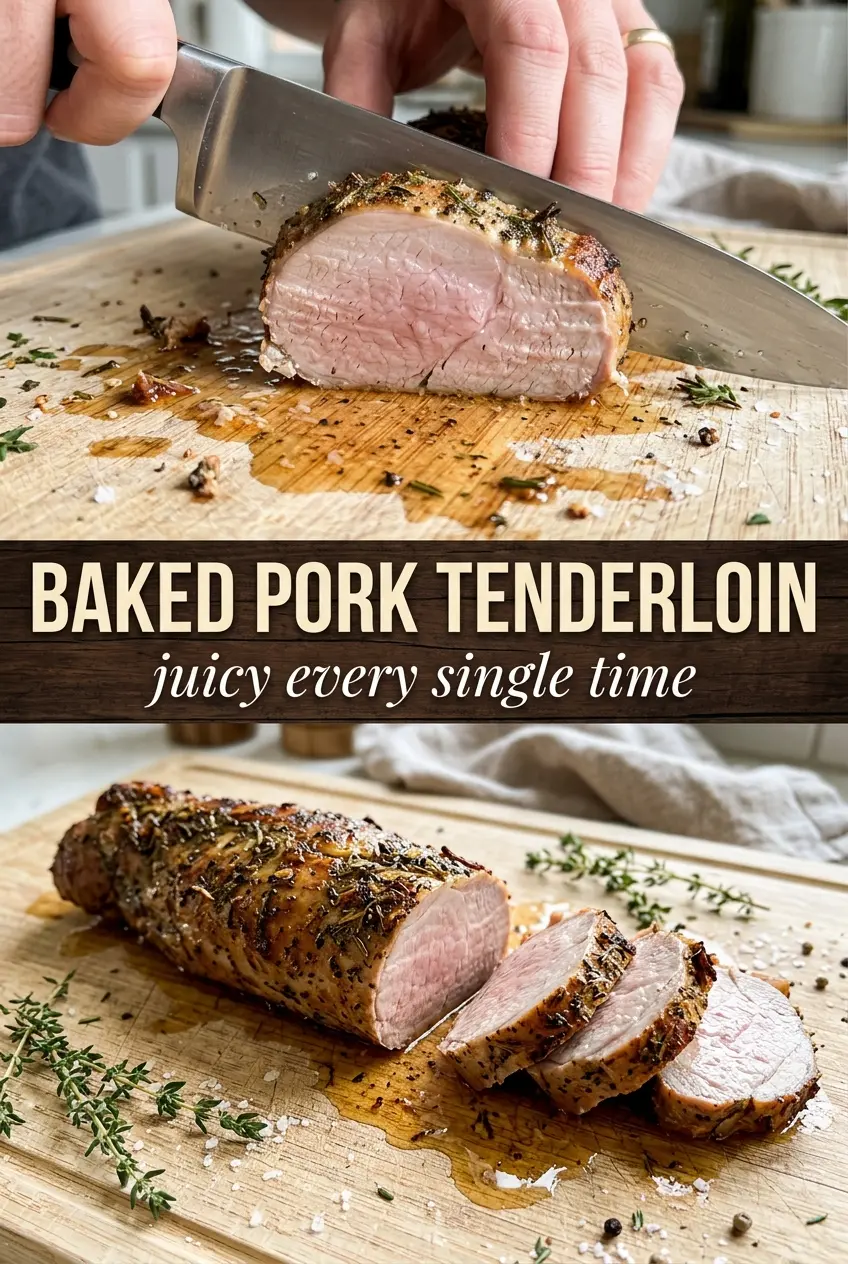
Take the skillet out and let the pork rest for 5 minutes before cutting. That pause lets the juices settle back into the meat, and the temperature will rise a little more as it sits. Slice on a slight diagonal for the best-looking pieces and the most tender bite.
How to Adapt This for Different Dinners and Diets
Use fresh herbs instead of dried
If you have fresh thyme or rosemary, chop them finely and use about three times the amount of dried. Fresh herbs taste brighter but they can scorch faster, so keep most of them in the rub and save a few soft leaves for garnish.
Make it dairy-free and gluten-free without changing a thing
This recipe is naturally both dairy-free and gluten-free, which makes it easy to serve with almost anything. Keep an eye on any side dishes or pan sauces you add later, since those are the parts that usually introduce allergens.
Turn it into a stronger garlic-forward roast
If you love a punchier savory crust, add an extra clove or two of garlic and a pinch of crushed red pepper. The garlic won’t overwhelm the pork if you keep the sear hot and don’t let the mince burn before the pan goes into the oven.
Storage and Reheating
- Refrigerator: Store sliced pork in an airtight container for up to 4 days. It stays tender, though the crust softens a little in the fridge.
- Freezer: It freezes well for up to 2 months. Wrap tightly and freeze in slices or whole, then thaw overnight in the refrigerator before reheating.
- Reheating: Reheat gently in a covered skillet with a splash of broth or in a low oven. High heat will push the pork past 145°F again and dry out the lean slices fast.
Answers to the Questions Worth Asking
Baked Pork Tenderloin
Ingredients
Equipment
Method
- Preheat the oven to 425°F while you prep the tenderloins.
- Pat pork tenderloins dry, then mix olive oil with garlic, smoked paprika, thyme, dried rosemary, onion powder, salt, and pepper.
- Rub the herb mixture all over both tenderloins so they’re evenly coated.
- Heat an oven-safe skillet over medium-high heat and sear tenderloins 2 minutes per side until golden all over.
- Transfer the skillet to the oven and roast for 18–22 minutes, until the internal temperature reaches 145°F.
- Rest the tenderloins for 5 minutes before slicing to keep the juices in the meat.
- Slice and serve, garnishing with fresh rosemary and any pan juices from the skillet.