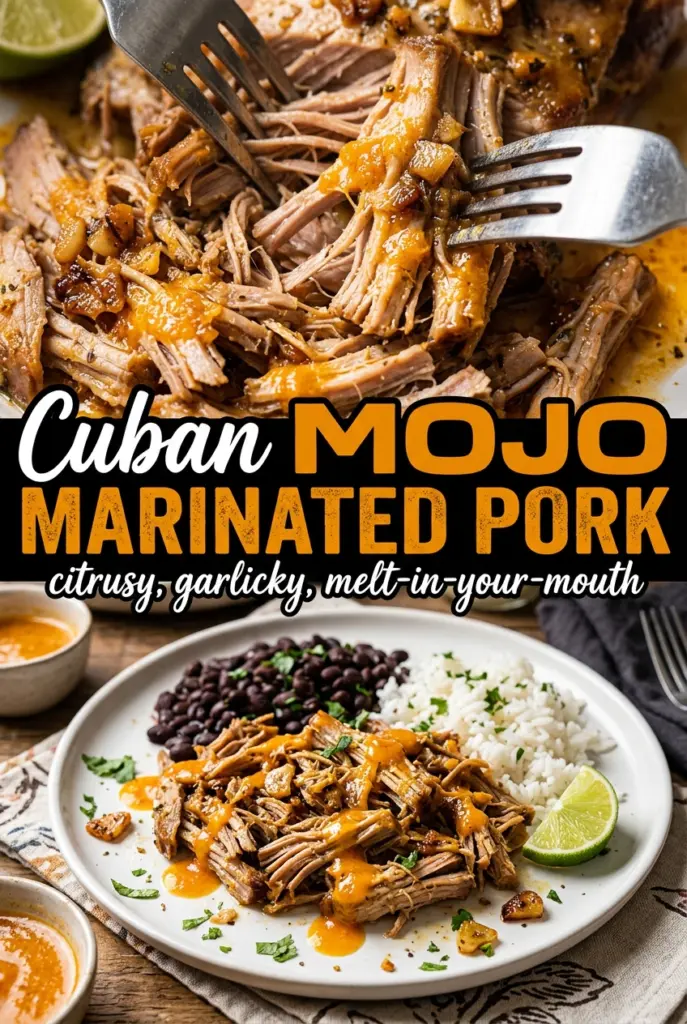
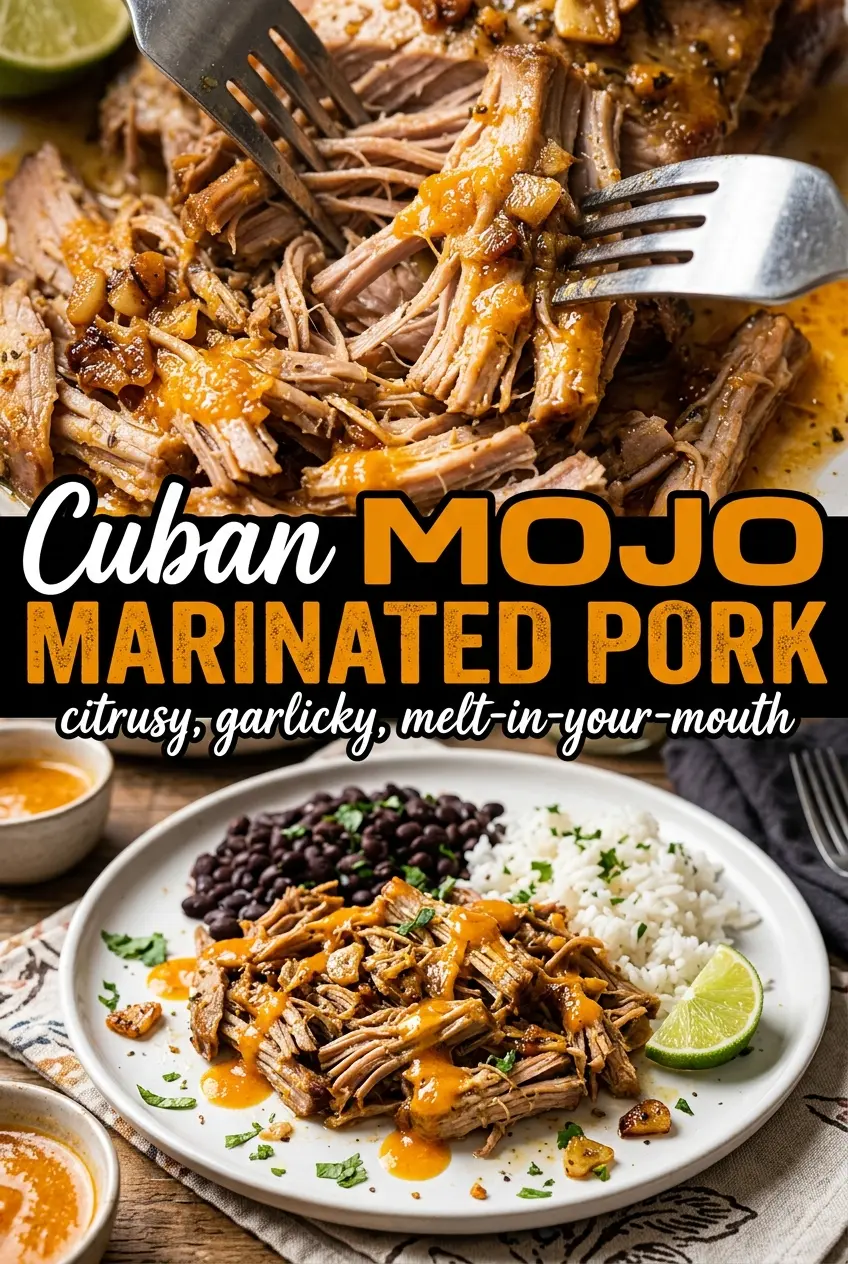
Slow-roasted Cuban mojo pork earns its place at the table because it gives you two things at once: meat that shreds into juicy, tender pieces and a crust that turns dark, sticky, and deeply savory at the edges. The orange, lime, garlic, and cumin work their way into the pork during the marinade, then the uncovered finish brings the surface all the way to a caramelized, crackly crust without drying out the center.
The trick is giving the marinade enough time to do its job and then roasting in two stages. The covered portion cooks the pork gently and protects the surface, while the final uncovered blast concentrates the juices and browns the outside. If you rush that last stage, you get pale pork with good seasoning but no real mojo character; if you skip the rest, the juices run out the moment you cut into it.
Below, I’ll walk through the parts that matter most: how to keep the citrus marinade balanced, how to know when the pork is ready to shred, and what to do if you want the flavor to go even deeper the next day.
The pork came out unbelievably tender, and the citrus-garlic marinade made the whole kitchen smell incredible. I let it go the full overnight and the crust was deeply browned while the inside shredded with almost no effort.
Save this Cuban mojo pork for the nights when you want a citrusy, garlic-packed roast with a crispy, caramelized finish.
The Marinade Needs Time, Not More Heat
Mojo pork fails in two common ways: the marinade tastes sharp and thin, or the outside dries out before the center turns tender. The answer isn’t more citrus or a hotter oven. It’s time. The garlic, cumin, oregano, and citrus need a long enough soak to work into the meat, and the roast needs a covered first stage so the shoulder breaks down slowly instead of seizing up.
That final uncovered stretch matters just as much. The pork should be cooked through enough to shred easily, but the surface needs time to lose moisture and brown. If the pan stays covered the whole time, you get tender pork without the deep roast flavor that makes lechón asado so satisfying. If you uncover it too early, the crust can dry out before the inside is ready.
- Pork shoulder or butt — This cut has enough fat and connective tissue to stay juicy through a long roast. Lean pork won’t give you the same pull-apart texture.
- Fresh orange and lime juice — Fresh juice gives the marinade brightness and real acidity. Bottled juice works in a pinch, but it tastes flatter and can push the marinade toward harshness.
- Garlic — Eight cloves sounds bold because it should. Garlic is a main flavor here, not background seasoning, and mincing it fine helps it spread evenly through the marinade.
- Olive oil — The oil helps carry the garlic and spices across the meat and keeps the roast from tasting dry on the surface. Any neutral oil can work, but olive oil gives the marinade a rounder finish.
- Cumin, oregano, and smoked paprika — These are the backbone of the seasoning. If you skip the cumin, the pork loses that unmistakable Cuban profile.
- Cilantro — Stir it in at the end of the marinade so it stays fresh and green. If cilantro tastes soapy to you, leave it out rather than swapping in parsley; parsley won’t bring the same flavor.
What Each Ingredient Is Actually Doing in This Pork Dish
- Pork (cut properly for the method) — Pat dry so it browns instead of steams. Even thickness ensures uniform cooking.
- Oil or butter (the browning medium) — High-heat oil essential for proper searing. Creates pan flavor.
- Seasonings (salt, pepper, spices) — Build flavor boldly. Pork carries the entire profile.
- Aromatics (garlic, onion, ginger) — Cook with fat to bloom flavors. Become foundation of dish.
- Sauce or liquid (the moisture keeper) — Keeps lean pork from drying. Balance richness with acid.
- Vegetables (if using) — Layer by cooking time so everything finishes together. Hard vegetables first.
- Acid (vinegar, wine, citrus) — Brightens sauce and prevents heavy flavor. Add near end.
- Proper doneness (145°F, slightly pink center) — Pork is safe at this temp and stays juicy. Higher temps dry it out.
How to Roast It So the Outside Caramelizes and the Inside Stays Juicy
Building the Mojo
Blend the marinade until the garlic is finely broken down and the mixture looks emulsified, not watery. You want the citrus, oil, and spices to cling to the pork instead of sliding off in the bag. Score the shoulder with shallow cuts so the marinade has more surface area to work into, but don’t cut so deep that the meat starts falling apart before roasting. The pork should smell sharply garlicky and citrusy as soon as it goes in.
The Covered Roast
Place the pork in a roasting pan and pour every drop of marinade over it. Cover tightly with foil so the steam stays trapped; that moisture is what helps the shoulder turn tender over the first couple of hours. Roast at 325°F until the meat is clearly softened and a fork slides into the thickest part with little resistance. If the pan isn’t sealed well, the marinade evaporates early and the surface can dry before the center is ready.
The Caramelized Finish
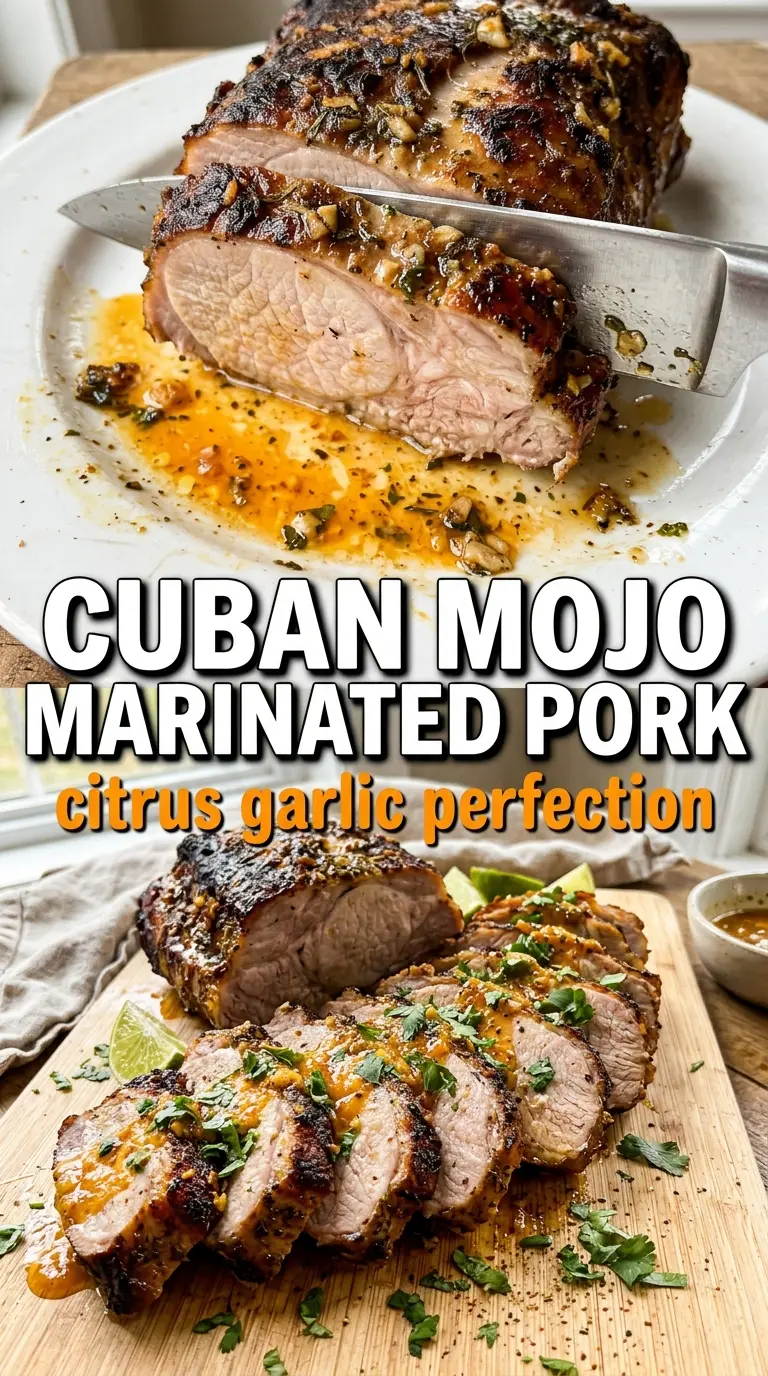
Uncover the pork and keep roasting until the exterior turns deep golden brown with dark, sticky edges. This is where the flavor gets concentrated, so don’t pull it too soon because the meat feels tender already. The internal temperature should reach about 190°F for shreddable pork shoulder; that higher finish is what breaks down the last of the connective tissue. If the surface starts getting too dark before the pork is done, tent it loosely with foil for the last part of the roast.
Resting Before You Shred
Let the pork rest before pulling it apart. The juices settle back into the meat during those minutes, and the crust stays intact instead of collapsing into the pan. If you shred it immediately, the meat will still be good, but it won’t hold the same juiciness. Use two forks or gloved hands, and keep some of the pan juices nearby to moisten the shredded pork if needed.
What to Change When You Need a Different Version
Make It Dairy-Free and Gluten-Free Without Any Extra Work
This recipe already fits both diets as written, so the only thing to watch is what you serve with it. Keep the marinade simple and don’t add soy sauce or packaged seasoning blends unless you’ve checked the label. That keeps the pork bright, clean, and easy to pair with rice, beans, or roasted vegetables.
Use Pork Loin Only If You Adjust Your Expectation
Pork loin can work, but it won’t shred the same way because it’s much leaner. If you use it, shorten the cook time and pull it as soon as it reaches a safe temperature instead of waiting for that 190°F shreddable stage. You’ll get slices with good flavor, not pull-apart roast meat.
Turn the Leftovers Into a Crispy Sandwich Filling
The next day, reheat the pork in a skillet with a spoonful of its juices until the edges start to crisp. That gives you a second layer of texture that plain reheating in the microwave can’t match. It’s the best way to bring back the roasted crust after the meat has chilled.
Storage and Reheating
- Refrigerator: Store the shredded pork in its juices for up to 4 days. The flavor gets even better on day two.
- Freezer: This freezes well for up to 3 months. Cool it completely, portion it with a little pan liquid, and freeze in airtight containers or bags.
- Reheating: Warm it covered in a 300°F oven or in a skillet over low heat with a splash of the reserved juices. Don’t blast it in a hot pan or it will dry out before the center is hot.
Answers to the Questions Worth Asking
Cuban Mojo Marinated Pork
Ingredients
Equipment
Method
- Blend the garlic, orange juice, lime juice, olive oil, cumin, dried oregano, smoked paprika, and cilantro until smooth. Blend until no garlic chunks remain and the mixture looks evenly emulsified.
- Score the pork shoulder all over with a sharp knife, then place it in a zip-lock bag. Pour the marinade over the pork and seal the bag.
- Refrigerate the pork 4–8 hours or overnight. Keep it chilled so the citrus and garlic penetrate while you prep the oven and roasting setup.
- Preheat the oven to 325°F. Let the oven fully reach temperature before roasting.
- Place the pork in a roasting pan, pour the marinade over, and cover tightly with foil. Ensure the foil seals closely so steam helps keep the interior juicy.
- Roast covered for 2.5 hours at 325°F. Keep the pan covered through this stage for even slow cooking.
- Uncover the pork and roast 30–45 more minutes at 325°F. Roast until the outside is golden and caramelized and the internal temperature reaches 190°F.
- Rest the pork 15 minutes before shredding or slicing. Wait until it’s slightly cooled so juices redistribute and shredding stays tender.
- Serve with lime wedges and cilantro. Add lime juice over the sliced pork just before eating for a bright finish.